Tex-Mex Recipes
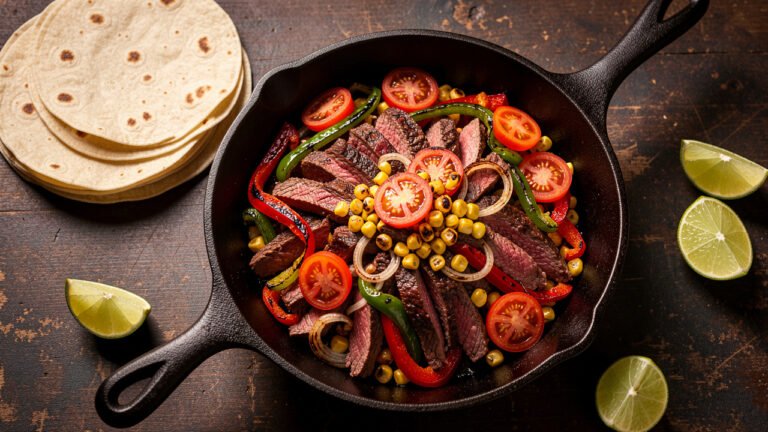
Skirt or Flank Steak, Sweet Charred Corn, Raw Heirloom Tomatoes
Last updated: July 23, 2026
Fajitas live or die on two things: how hard you sear, and which direction your knife goes. Everything else is seasoning. I have cooked this exact plate for a crowd more times than I can count, and the failures were never about the marinade.
The corn and heirloom tomatoes are what pull it out of the ordinary. Charred kernels bring a smoky sweetness that stands up to the beef, and cool raw tomato slices cut through the fat right when you need it.
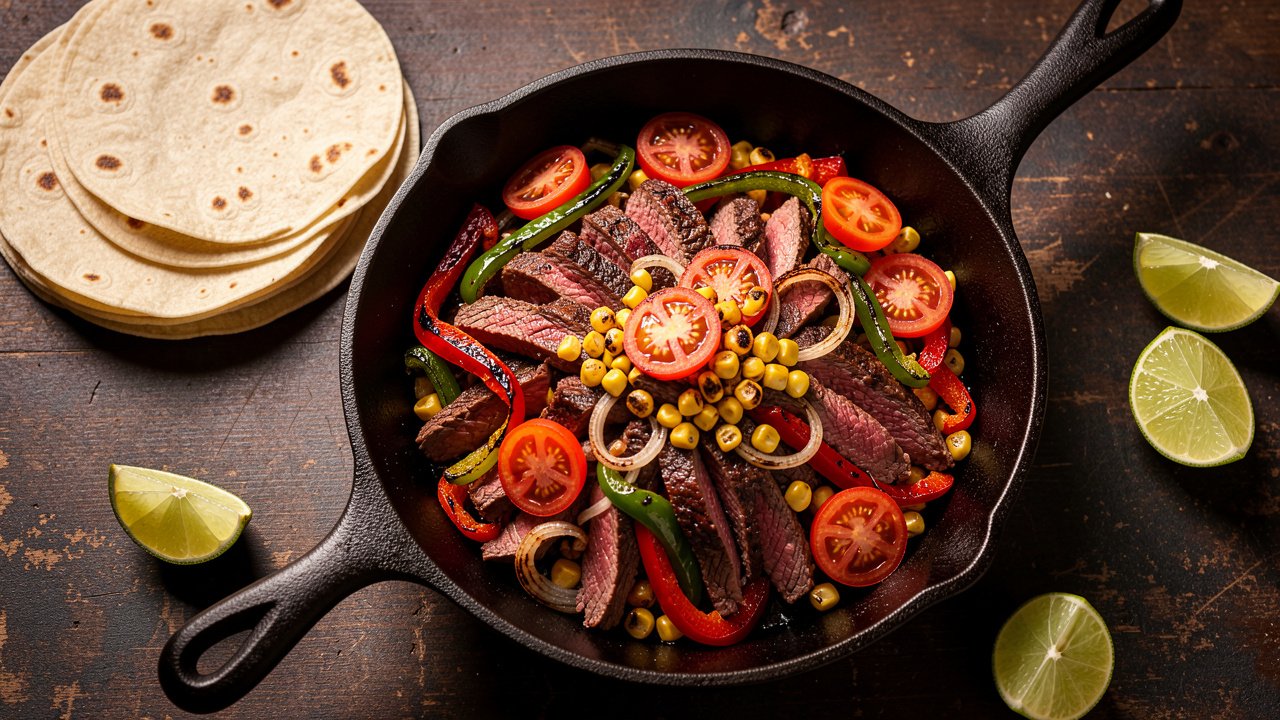
Why These Charred Corn Steak Fajitas Work
Skirt and flank are lean, beefy cuts that were made for fast, violent heat. They cook through in a few minutes a side, which means the outside can build a dark crust before the inside overshoots.
Char is doing most of the flavor work here. A dry surface on a ripping hot pan browns instead of steaming, and that browning is the difference between fajitas that taste like a restaurant and fajitas that taste like boiled beef.
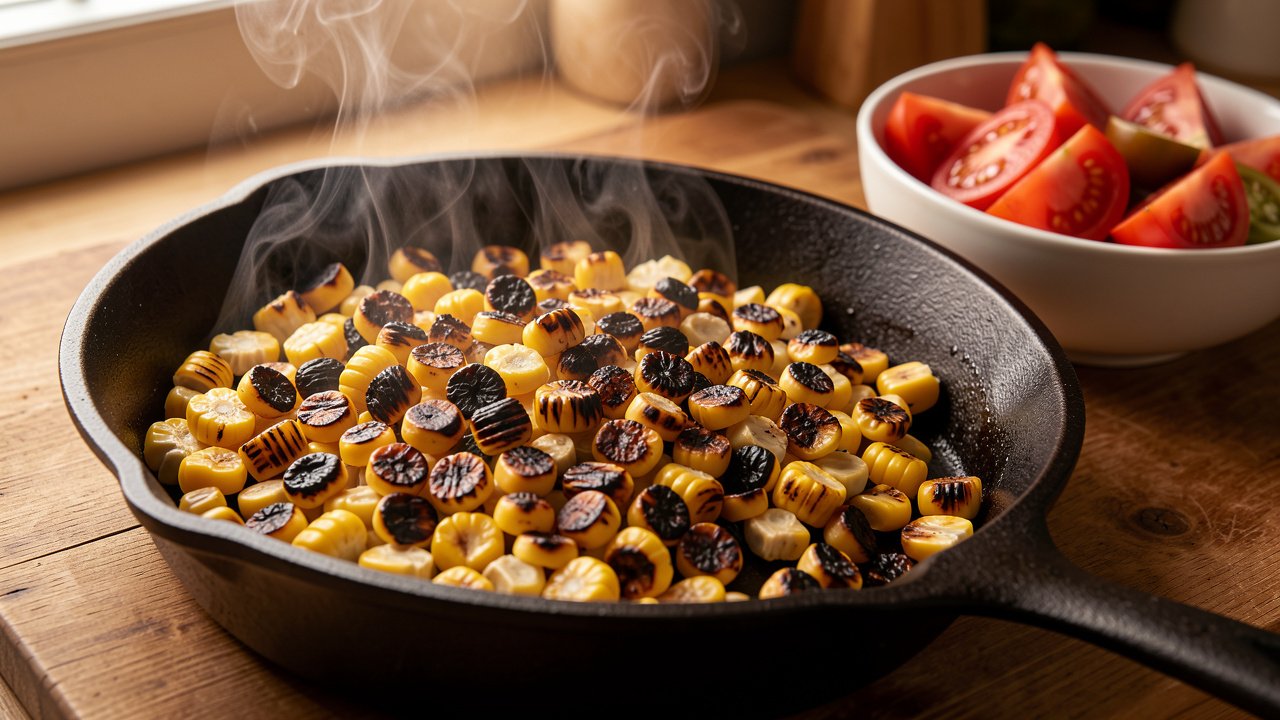
The corn earns its place by adding sweetness and a little pop of texture against the soft peppers. Toasting the kernels in a dry pan concentrates their sugar, so they read as smoky rather than starchy.
Pro observation: Listen to the pan. A loud, aggressive sizzle means the surface is drying and browning. A soft hiss with visible steam means there is too much moisture and you are stewing the meat.
Ingredients
Kitchen Measurement Converter
Quickly convert between common cooking measurements without leaving the recipe. Pick a category, enter a value, and the result updates instantly.
Ingredient Notes and Substitutions
Skirt vs Flank Steak
Outside skirt is the classic fajita cut. It is looser, fattier, and cooks in about three minutes a side. Flank is thicker, leaner, and slightly cheaper, so it needs a minute or two longer.
Heirloom Tomatoes
Buy them heavy and fragrant at the stem end. Brandywine, Cherokee Purple, and Green Zebra all work. Firm cherry tomatoes are a fine backup when heirlooms are out of season.
Corn
Fresh ears in summer are worth the extra minute of cutting. Frozen kernels work year round, but thaw and pat them very dry first or they will steam in the pan.
Tortillas
Flour tortillas are traditional for fajitas and hold up better to juicy fillings. Corn tortillas taste great but tear more easily, so use two stacked together.
Cheese and Toppings
Cotija is salty and crumbly and does not melt into a puddle. Skip it entirely for a dairy-free plate; the fajitas do not need it to taste finished.
Equipment
- Large cast iron skillet
- Sharp chef’s knife
- Cutting board with a groove
- Instant-read thermometer
- Tongs
- Clean kitchen towel
Before You Start
1. Marinate early, but not too early. Lime and spices need one to four hours. Past that, the acid breaks down the surface proteins and the outer layer of meat turns mushy and chalky once cooked.
2. Get everything cut and within reach. The actual cooking runs about twenty minutes with no pauses, so slice your vegetables and open the tortilla package before the pan goes on.
3. Plan to eat right away. Fajita meat goes grey and cools fast, so call everyone to the table before you slice.
Slicing Across the Grain: The Step That Decides Everything
Skirt and flank both have long, coarse muscle fibers running in one obvious direction. You can see them without squinting: they look like tightly packed threads all pointing the same way.
Cut thin slices straight across those threads and each bite is a stack of short, tender fibers your teeth go through easily. Cut along them instead and you are chewing on rope. No amount of marinade, resting, or careful cooking fixes a with-the-grain slice.
How to find the grain on skirt steak
On skirt, the fibers run across the short width of the strip, not down its length. So cut the long strip into shorter four to five inch lengths first, then slice each of those pieces thinly across the fibers.
How to find the grain on flank steak
Flank is a wide rectangle with the grain running the long way, corner to corner. Lay it flat, spot the direction of the threads, and slice at a right angle to them, holding your knife at a slight angle for wider pieces.
Do this every time: Look at the raw steak before it goes in the pan and note which way the fibers run. Char and grill marks hide the grain once it is cooked, and that is exactly when people guess wrong.
Step-by-Step Fajita Instructions
Marinate the Steak
Whisk the lime juice, olive oil, garlic, chili powder, cumin, smoked paprika, salt, and pepper in a dish. Add the steak, turn it to coat, and refrigerate one to four hours.
Pull it out thirty minutes before cooking so it loses the fridge chill. Cold meat drops the pan temperature and fights the sear.
Char the Corn and Salt the Tomatoes
Stand each ear upright and cut the kernels off with a downward stroke. Toss them into a dry, screaming hot skillet in a single layer and leave them alone for two minutes, then stir and cook two more until spotted black in places. Tip them into a bowl.
Cut the heirloom tomatoes into thick wedges, scoop out the wettest seed pockets, and toss with a pinch of salt in a colander. Let them drain while you cook so they do not flood the plate later.
Blister the Peppers and Onions
Add a tablespoon of oil to the same pan and lay in the sliced peppers, onions, and jalapeno. Spread them out and let them sit still for three minutes before touching them.
You want real black edges, not a gentle sweat. Stir, then cook another three to four minutes until the onions are floppy and the peppers have soft, blackened corners. Move them to the corn bowl.
Sear the Steak Hard
Pat the steak completely dry with paper towels. This is not optional. A wet surface steams and will never brown no matter how hot the pan is.
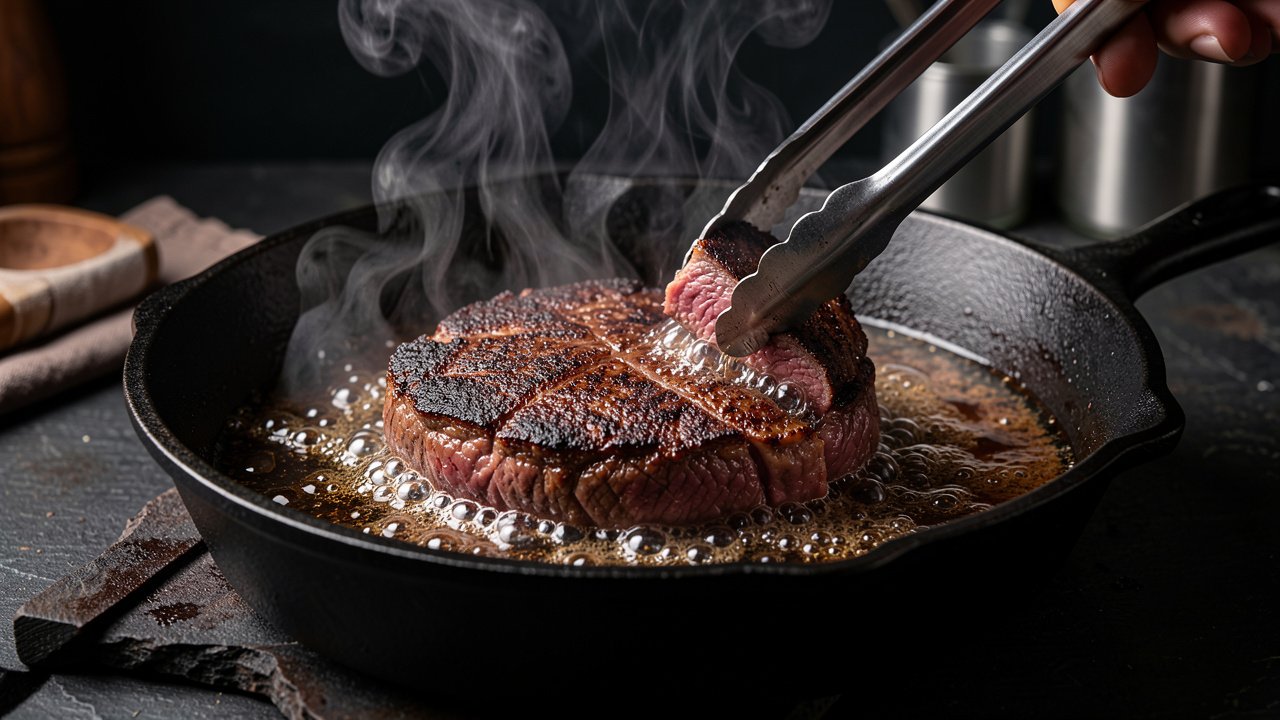
Add the remaining oil to the empty skillet and heat until it just starts to shimmer and smoke. Lay the steak down in a single uncrowded layer, working in two batches if you have to, and do not move it for three minutes.
Flip once. Cook another two to three minutes for skirt, or three to four for flank, and pull it at 125 to 130F on an instant-read thermometer.
It carries up to about 130 to 135F while resting, which is medium-rare. Both cuts turn tough and dry past medium.
Rest the Steak and Warm the Tortillas
Move the steak to a board and let it rest five to ten minutes before your knife goes anywhere near it. Cutting early dumps the juices onto the board instead of leaving them in the meat.
Use that time for tortillas. Warm each one in a dry hot skillet for twenty to thirty seconds a side, or hold it briefly over a gas flame until it puffs and picks up a few dark freckles.
Stack them in a clean kitchen towel and fold it over as you go. Trapped steam keeps them soft; cold tortillas crack the moment you fold them.
Slice Across the Grain and Serve Sizzling
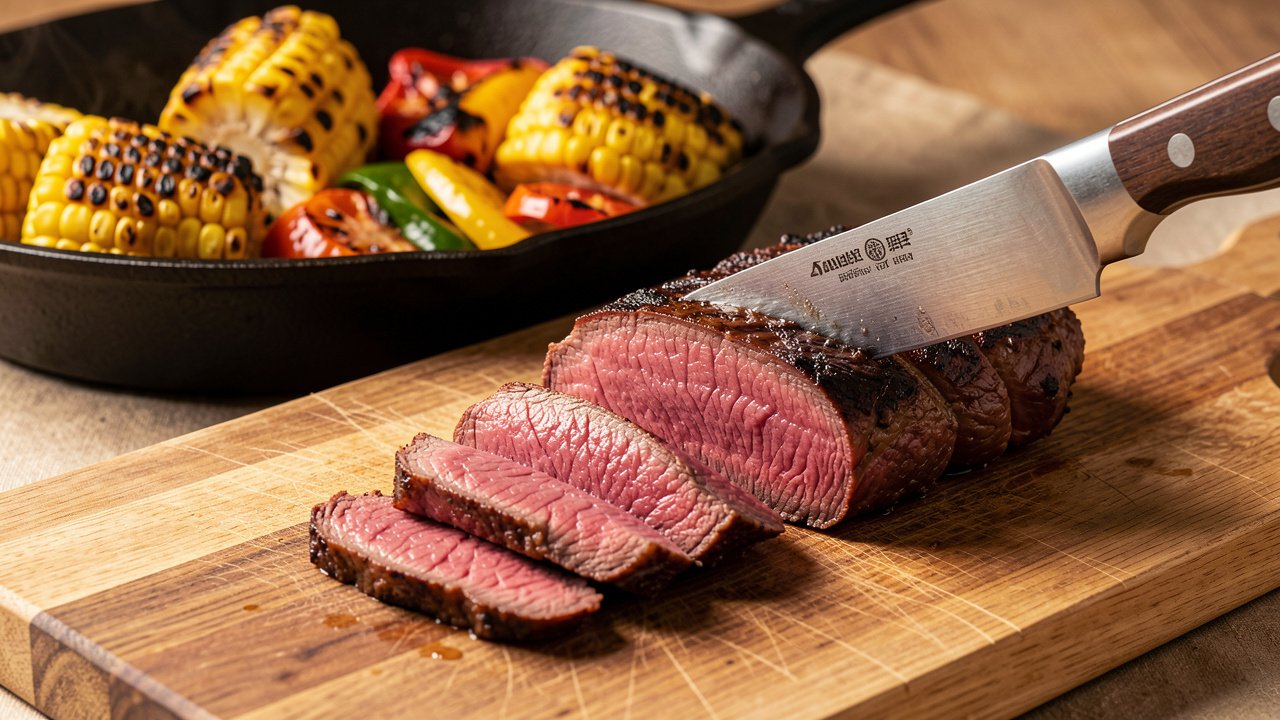
Find the direction of the fibers, then slice thin, about a quarter inch, straight across them. Return the peppers, onions, and corn to the hot skillet for thirty seconds, then pile the sliced steak on top.
Scatter the drained heirloom tomatoes, cilantro, and cotija over everything and take the whole skillet to the table with the tortillas and lime wedges. Serve immediately while it is still audibly sizzling.
Chef’s Tips From Real Fajita Testing
Cook in stages, never all at once. Peppers, corn, and steak release water at different rates, and dumping them in together drops the pan below browning temperature.
Preheat cast iron for a full five minutes over medium-high before anything touches it. A flick of water should skitter across the surface and vanish, not sit and bubble.
Pour the juices that pool under the rested steak back over the sliced meat right before serving.
Fajita Variations
Serving Suggestions
- Cilantro lime rice and black beans
- Sliced avocado or a quick guacamole
- Sour cream and pickled red onions
- A bowl of fresh tomato salsa
Nutrition Facts
Values are estimates for one serving with two tortillas, and vary with the cut of beef and toppings you use.
Make-Ahead Tips
The prep splits cleanly from the cooking. Slice the peppers and onions and cut the corn off the cob up to a day ahead, and keep them in separate covered containers in the fridge.
Wait on the tomatoes. Cut and salted more than an hour early, they go soft and lose the firm bite that makes them worth using raw.
Storage, Freezing and Reheating
Common Fajita Mistakes to Avoid
Troubleshooting Tough or Bland Fajitas
Meat is stringy and chewy? You almost certainly sliced with the grain. Turn the remaining steak ninety degrees and try again; the difference is immediate.
No browning at all? The pan was not hot enough or the steak was wet. Take everything out, reheat the skillet until it smokes, and start over with a dry surface.
Plate is watery? The tomatoes were not seeded and drained, or the vegetables went back into the pan too early and released their liquid.
Where Skirt Steak Fajitas Came From
Fajitas started with Mexican ranch hands in South Texas who were paid in cuts nobody else wanted, including the skirt.
The name comes from the Spanish word for a small belt or strip, which is exactly what the cut looks like.
Tomatoes have always ridden along as the fresh element. If you like that raw-tomato finish, our tomato mozzarella salad and fresh tomato sauce without sugar use the same idea.