Italian Recipes
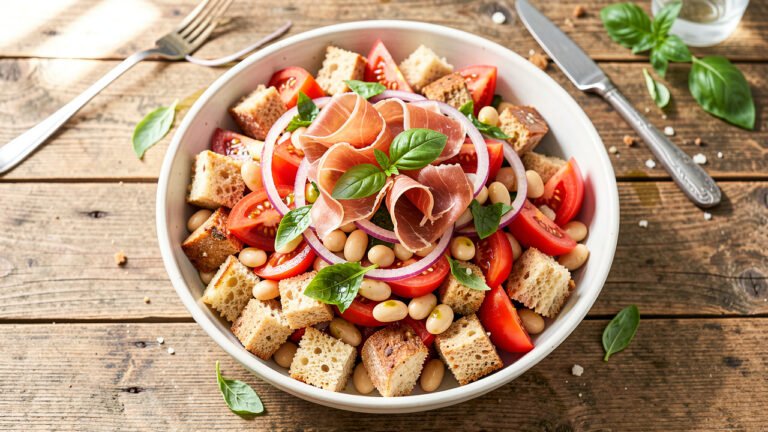
Tuscan Bread Salad With Tomatoes, Cannellini Beans and Smoked Turkey
Last updated: September 29, 2026
Panzanella was invented by cooks who refused to throw out bread. Stale loaves were too good to waste, so they were revived with the juice of summer tomatoes and a slick of olive oil. That single idea is still the whole point of the dish.
Everything else here is about texture. The craft is getting the bread to drink that tomato juice and stop right there, before it slumps into paste. Get the timing right and every bite is soft, tangy and a little chewy at the edges.
Why This Tuscan Bread Salad With White Beans Works
The bread has to be genuinely stale, and it has to be sturdy. An open-crumb country loaf with a real crust holds its shape while it absorbs. Soft sandwich bread dissolves into paste the second the dressing hits it.
Day-old or older is not a shortcut you are taking. It is the requirement, and it is the reason this dish exists at all.
Then comes the part most people get wrong. The tomato juice is the dressing. When you cut ripe tomatoes and salt them, they release a pool of sweet, savory liquid within fifteen minutes, and that pool is the best-tasting thing in the bowl.
Nearly everyone tips it down the drain and reaches for bottled dressing instead. Catch it in a bowl, whisk it with olive oil and vinegar, and you have a dressing you cannot buy.
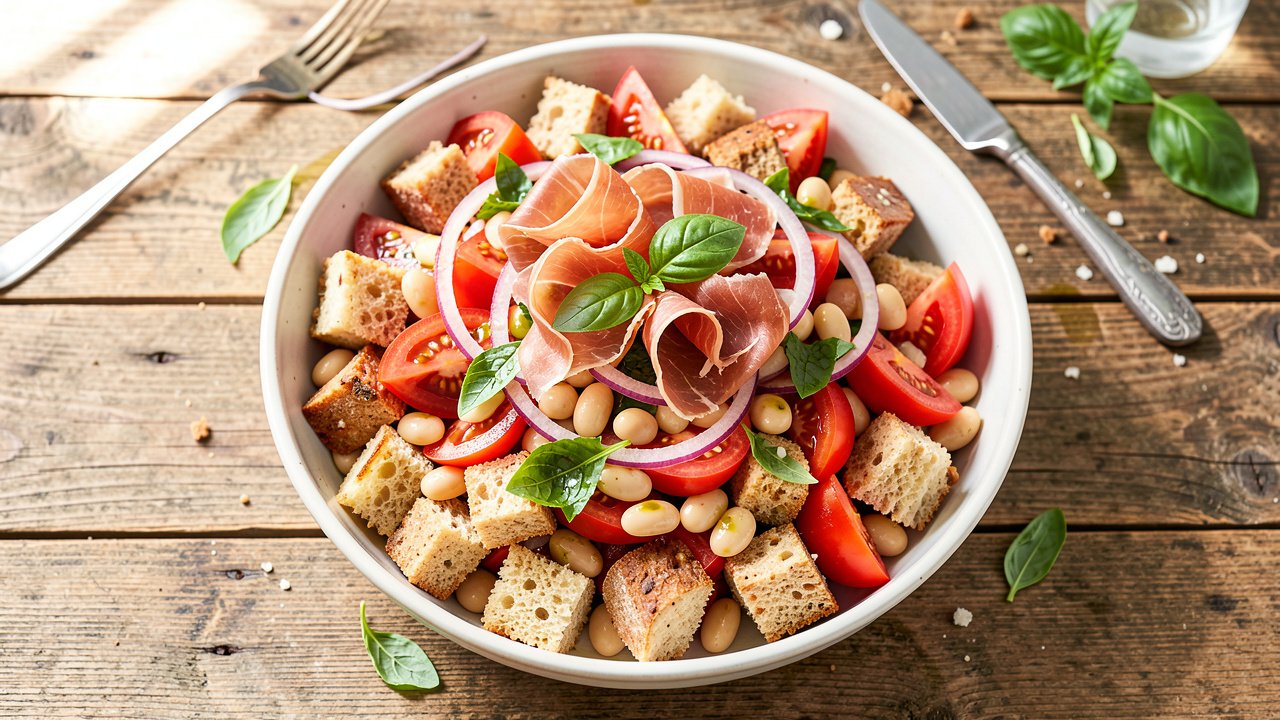
The beans and the smoked turkey turn a side salad into dinner. Cannellini beans add a soft, creamy weight between the bread chunks, and the smoked turkey brings salt and richness that plain vegetables cannot.
Pro observation: Press a cube of dressed bread between your fingers. It should give like a damp sponge and spring back a little. If it stays stiff in the center it needs more time, and if it smears it has gone too far.
Ingredients
Kitchen Measurement Converter
Quickly convert between common cooking measurements without leaving the recipe. Pick a category, enter a value, and the result updates instantly.
Ingredient Notes & Substitutions
Tomatoes
Use ripe, juicy summer tomatoes and nothing else. Out-of-season tomatoes are firm and dry, and with no juice there is no dressing and no reason to make this salad.
A mix of shapes is nice. Heirlooms, beefsteaks and halved cherry tomatoes all work, so buy whatever smells sweet at the stem.
Cannellini Beans
Canned cannellini beans are perfect here. Drain and rinse them well so the starchy canning liquid does not cloud the dressing.
Remember that beans soak up dressing the same way bread does. Season a little more assertively than feels right, then taste again after they go in.
Smoked Turkey
Buy it sliced thin enough to be almost translucent. Thick slabs turn chewy and dominate the bowl, while paper-thin ribbons melt into the salad.
Thinly sliced smoked chicken or turkey pastrami both substitute well. For a vegetarian bowl, leave it out and add extra beans plus a handful of olives for salt.
Olive Oil
With this few ingredients, the oil is a flavor, not a lubricant. A grassy, peppery extra virgin olive oil is worth the money in a dish where you taste it straight.
Red grape vinegar is the classic partner. Apple cider vinegar works if you prefer something rounder and less sharp.
Equipment
- Large wide salad bowl
- Medium bowl and colander
- Serrated bread knife
- Sharp paring knife
- Small whisk or fork
- Sheet pan (only if drying bread)
Before You Start Your Panzanella
1. Check your bread the day before. Leave the loaf uncovered on the counter overnight so the crumb dries out and firms up. This is the one piece of planning the recipe asks for.
2. Take the tomatoes off the counter, not out of the fridge. Cold dulls their flavor and slows the release of juice, so store them at room temperature until you cut them.
3. Set out two bowls. One catches the tomato juice while the tomatoes sit, the other holds the bread. Keeping them separate until the last moment is what protects the texture.
Step-by-Step Instructions
Cube the Bread
Cut or tear the stale loaf into pieces about one inch across, crust and all. Torn edges catch more dressing than knife-cut ones, so tear where the bread lets you.
If your bread is still soft, do not skip ahead. Spread the cubes on a sheet pan and dry them in a 300F oven for 10 to 12 minutes, tossing once. You want them dry and crisp to the touch, pale and papery, not toasted brown.
Salt the Tomatoes and Save the Juice
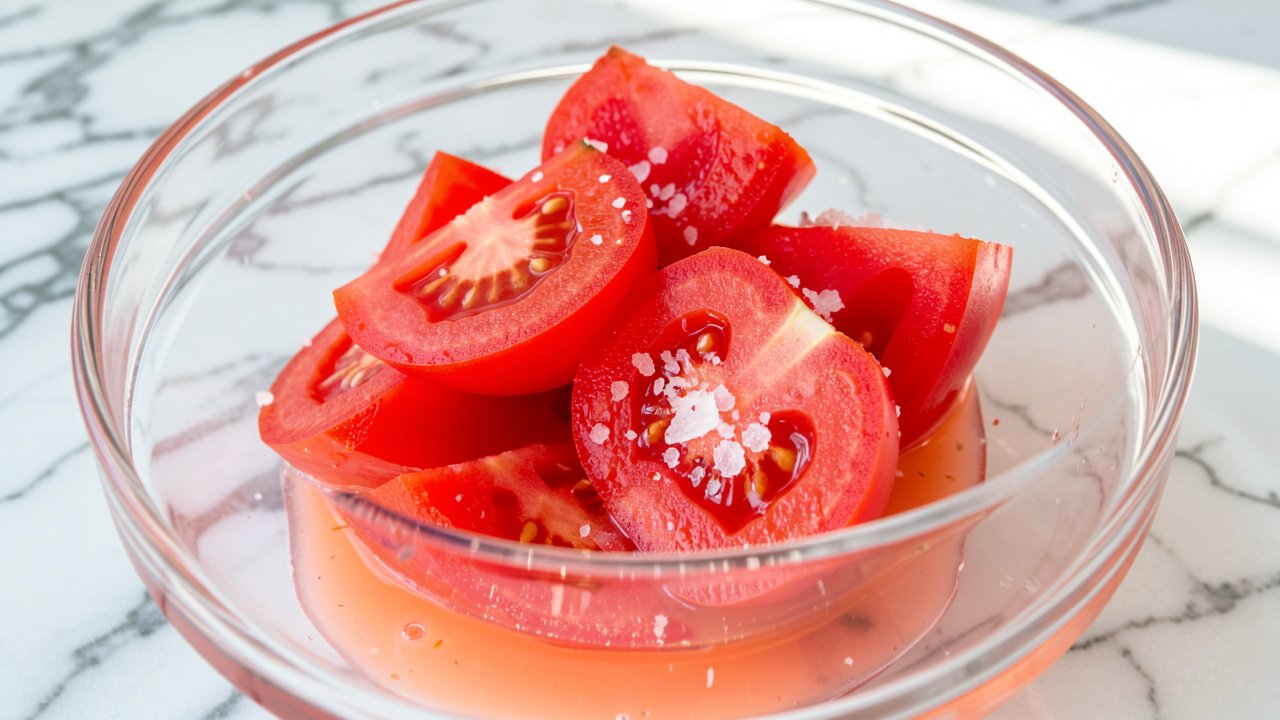
Cut the tomatoes into rough wedges or thick chunks over a medium bowl so nothing escapes. Sprinkle them with the kosher salt and toss gently.
Let them sit for 15 to 20 minutes. The salt pulls water out of the cells and you will see a shallow pool of pink-orange juice gather at the bottom. Do not pour that away, because it is the base of your dressing.
Take the Bite Out of the Onion
Slice the red onion as thinly as you can manage. Raw red onion is harsh and it lingers, which is why a good panzanella never tastes of it aggressively.
Drop the slices into a small bowl of cold water for 10 minutes, or straight into the vinegar if you want them faintly pickled. Drain well before they go in the salad.
Whisk the Dressing
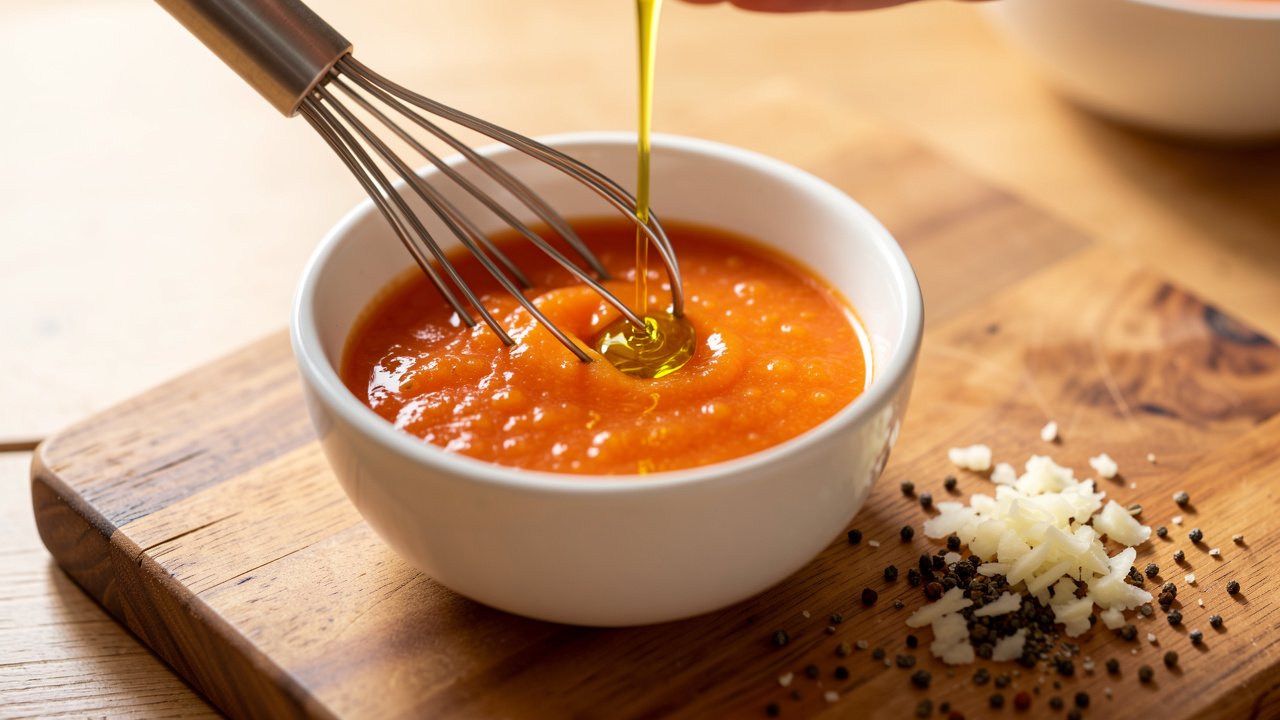
Pour the collected tomato juice into a bowl, leaving the tomato pieces behind. Add the olive oil, the red grape vinegar, the grated garlic clove and the black pepper, then whisk until it looks slightly cloudy and combined.
Taste it on a piece of bread rather than off the spoon. It should read a touch too salty and a touch too sharp on its own, because the bread and the beans will mute it.
Dress the Bread and Wait
Put the bread cubes in your big salad bowl and pour about two thirds of the dressing over them. Toss with your hands so every piece gets touched, then leave it alone for 20 to 30 minutes.
This window is the whole game. Less than 20 minutes and you are eating dry croutons in a salad; more than an hour and the bread goes to wet cardboard with no structure left. Check at 20 minutes and stop when the cubes are soft outside and barely chewy in the middle.
Fold In the Tomatoes and Beans
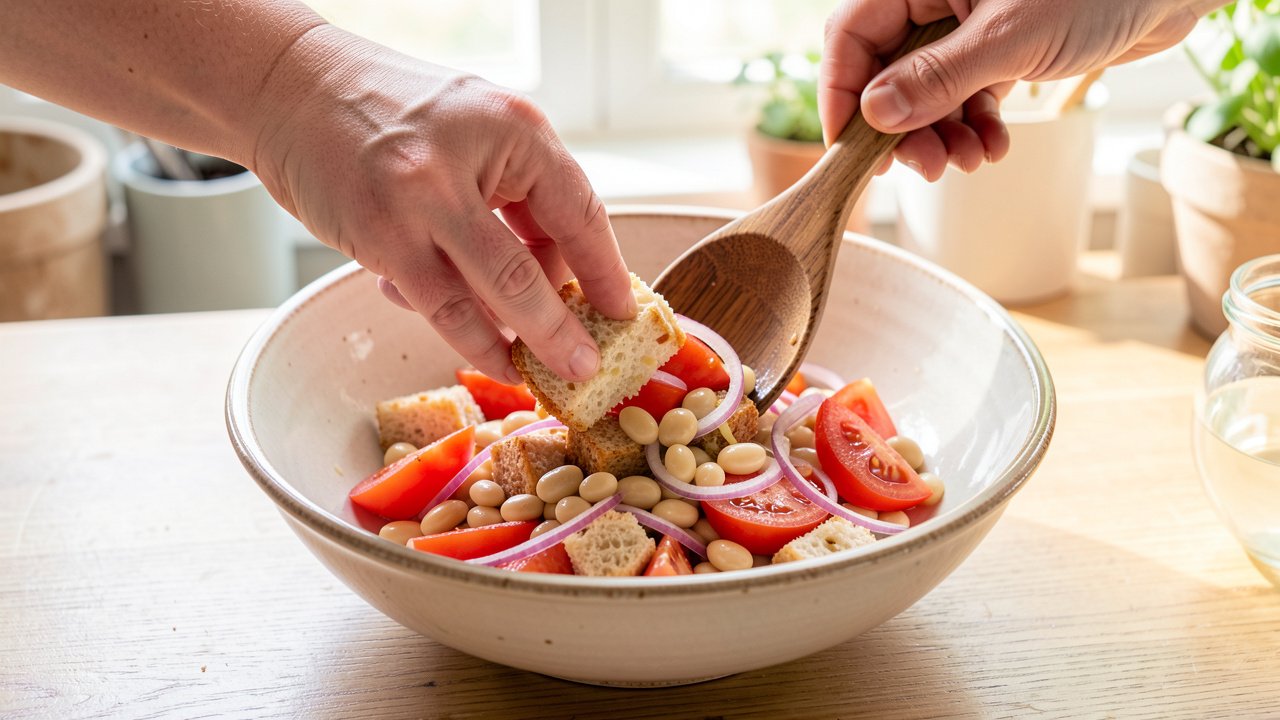
Add the salted tomatoes, the drained cannellini beans, the drained onion and the cucumber to the bowl. Pour over the rest of the dressing and fold everything together gently with a wide spoon.
Fold, do not stir hard. The bread is fragile now and rough handling breaks it down into mush. Taste and add flaky salt if the beans have flattened the seasoning.
Add the Basil and Smoked Turkey Last
Tear the basil leaves by hand and scatter them over the top now, at the very end. Basil bruises and blackens fast once it meets salt and acid, so it goes in last or it turns dark and slick.
Drape the smoked turkey over the salad in loose ribbons just before it reaches the table. Folded in early it goes limp and soggy; added at the end it stays silky and separate. Finish with a last drizzle of olive oil and serve with forks.
Chef’s Tips From Real Kitchen Testing
Keep the bread pieces big. Anything smaller than a walnut loses its structure quickly and gives you a bowl of savory pudding instead of a salad you can spear.
Serve it cool but never straight from the fridge. Refrigeration makes the olive oil turn thick and waxy, so give the bowl 15 minutes on the counter first.
If your tomatoes give up less juice than expected, stretch the dressing with a splash of the cold water you soaked the onion in rather than more vinegar.
Ways to Change Up This Bread Salad
Serving Suggestions
- A chilled sparkling grape juice or a tart hibiscus iced tea
- Grilled chicken thighs or sausages from the same fire
- A platter of ripe melon with more smoked turkey
- Marinated olives and a wedge of pecorino
Nutrition Facts
Values are estimates per serving and shift with the loaf you use and how much smoked turkey you drape on top.
Make-Ahead Notes
You can do almost everything early except the assembly. Cube and dry the bread up to two days ahead and keep it in a paper bag at room temperature so it stays dry.
Slice and soak the onion, rinse the beans, and whisk the oil, vinegar and garlic a few hours ahead. Cut and salt the tomatoes only when you are ready to eat, then combine everything in the last half hour.
Storage and Leftovers
Common Mistakes to Avoid
Troubleshooting Your Panzanella
Bread still hard in the middle? Give it another 10 minutes and toss again. If it is stubbornly dry, your loaf was very dense, so add a spoonful of dressing and wait.
Liquid pooling in the bottom of the bowl? Add a handful of fresh bread cubes and fold them through. They will drink the excess in a few minutes.
Tastes flat? It is almost always underseasoned rather than underdressed. Add flaky salt and a small splash of vinegar, then taste again after a minute.
Where Panzanella Comes From
Panzanella belongs to the Tuscan tradition of cucina povera, the cooking of people who wasted nothing. Local bread is famously made without salt, which means it goes stale quickly and practically demands a second life.
Early versions leaned on onion and whatever greens were around, and tomatoes only became standard much later. Beans and cured meats are a modern Tuscan habit rather than a strict rule, and they fit because the region eats both constantly.
If you like tomatoes served raw and barely dressed, the same instinct runs through our tomato mozzarella salad. Browse the full collection of tomato recipes for more summer ideas.