Mexican Recipes
Toasted Fideo Noodles in a Chipotle Tomato Sauce
Last updated: November 12, 2026
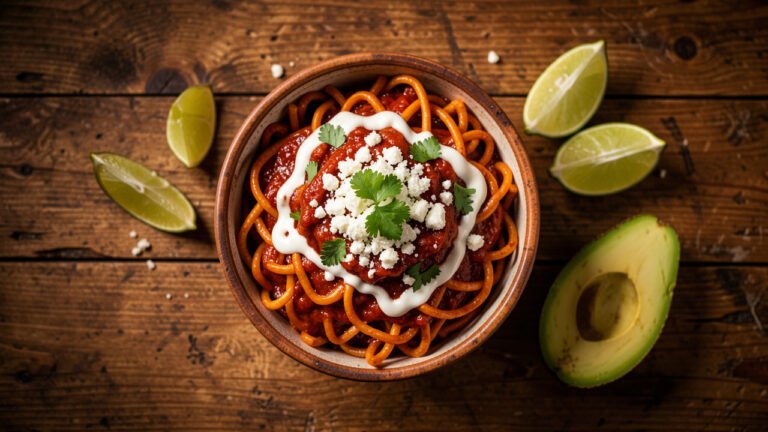
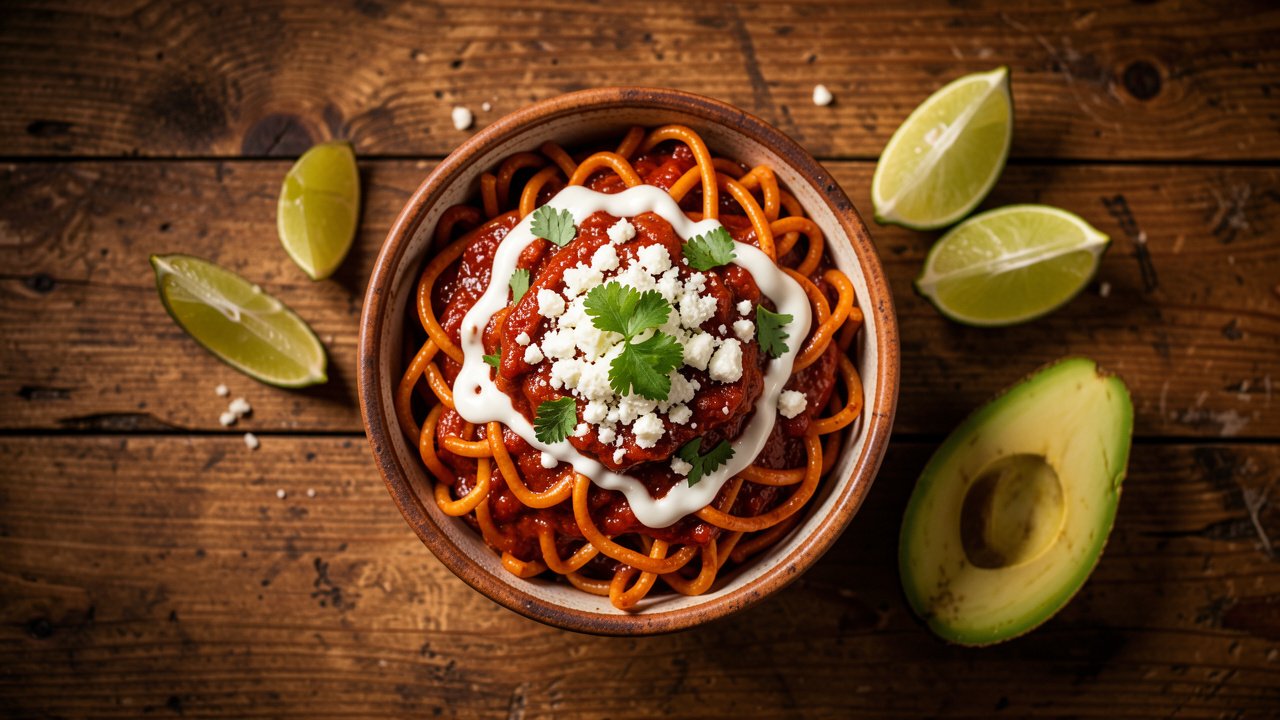
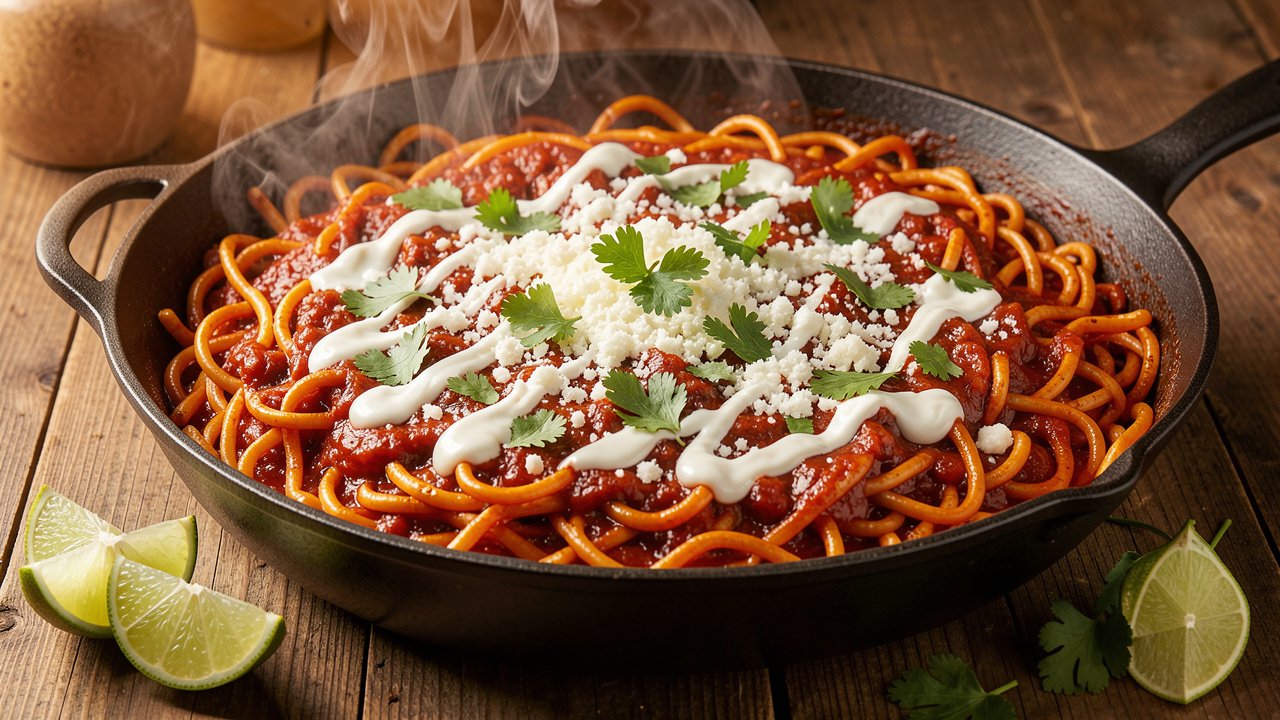
Fideo seco is the kind of dish that lives in the memory of almost every Mexican kitchen. Thin, short noodles are toasted in a little oil until they turn deep gold and smell of warm toast, then simmered in a smoky chipotle tomato sauce until the liquid disappears and every strand is coated and tender. The word “seco” means dry, and that is exactly the goal: not a soup, but a pan of glossy, flavor-soaked noodles.
It is weeknight cooking at its most comforting, built from a handful of pantry staples and a blender of ripe tomatoes. You toast the fideo, fry a smooth tomato sauce until it darkens, then bring the two together with just enough broth to cook the noodles through. A drizzle of crema, a shower of crumbled cheese, and a scatter of cilantro turn a humble pan of pasta into something you will crave.
Why This Fideo Seco Works
Great fideo seco is really two things done well: noodles toasted to a deep, even gold, and a tomato sauce fried hard enough to turn sweet and smoky. Get those two right and the dish almost cooks itself. The recipe here toasts the fideo properly, builds a blended chipotle tomato sauce, and uses a measured amount of broth so the noodles finish dry and coated rather than swimming.
The toasting step is what separates fideo seco from plain pasta. Dry noodles stirred in hot oil until they color develop a nutty, roasted flavor that carries all the way through the finished dish. Skip it or rush it and the noodles taste flat; let them go too far and they turn bitter, so this is the moment that rewards your full attention.
The sauce does the rest of the heavy lifting. Ripe tomatoes, onion, garlic, and a couple of chipotle chiles in adobo go into the blender, then that puree is fried in the same pan until it darkens and thickens. Frying the sauce, rather than just simmering it, concentrates the tomato and softens the smoke of the chipotle into something round and deep.
Then it is all about the liquid. You return the toasted noodles to the pan, add just enough broth to cook them through, and let it simmer until nearly dry. The fideo drinks up the sauce as it softens, so every strand ends up seasoned from the inside out, glossy, and ready for a drizzle of crema and a handful of cheese.
Pro observation: Fideo seco is fully halal as written, with no forbidden ingredients. All of its depth comes from toasted noodles, fried tomato, garlic, and smoky chipotle, so it is naturally meat-free yet rich enough to stand as a main.
Ingredients
Kitchen Measurement Converter
Need to convert an amount while you measure? Pick a category, enter a value, and the result updates instantly.
Ingredient Notes & Substitutions
Fideo Noodles
Fideo are thin, short wheat noodles sold coiled or cut, often labeled fideo cortado. If you cannot find them, break thin spaghetti or vermicelli into one-inch pieces for the same effect. Angel hair works too; just watch it closely, since the thinner the noodle the faster it toasts.
Tomatoes
Ripe Roma tomatoes blend into a smooth, sweet sauce, but any ripe red tomato works. Out of season, a 28-ounce can of whole or crushed tomatoes is a reliable swap and saves blending. Drain canned tomatoes lightly so the sauce fries down quickly in the pan.
Chipotle in Adobo
Canned chipotle chiles in adobo bring smoke and gentle heat. Start with two and add more for a spicier pan. For a milder, smoke-only version, use a teaspoon of the adobo sauce alone, or stir in smoked paprika if you prefer no chile heat at all.
Crema & Cheese
Mexican crema adds a cool, tangy drizzle; sour cream thinned with a little milk stands in nicely. Cotija gives a salty, crumbly finish, though queso fresco or a mild feta work well. Keep both off the heat and add them only at the table.
Equipment
- Large deep skillet or wide pot
- Lid for the pan
- Blender or food processor
- Wooden spoon
- Sharp knife and board
- Fine sieve for the sauce
Before You Start
1. Toast the fideo to a deep, even gold before any liquid touches it. Under-toasted noodles taste raw and give the dish a pale, flat flavor, while charred ones turn bitter; stir them constantly so the whole batch colors evenly in four to six minutes.
2. Blend and strain the tomato sauce until it is completely smooth. Unblended pulp and skins leave watery pockets and keep the sauce from coating each strand, so push the puree through a sieve before it ever hits the pan.
3. Measure the broth to the noodles, not by eye. Pour in too much and the dish stays soupy instead of seco; too little and the fideo scorches on the pan bottom before it softens, so stick to two cups for this amount of pasta.
Step-by-Step Instructions
Fideo seco moves fast once the noodles are toasted, so blend the sauce and chop the onion first. Have the broth measured and the crema, cheese, and cilantro ready at the table, since the finished pan is best served the moment it turns dry.
Blend the Tomato Sauce
Core the tomatoes and roughly chop half the onion. Add the tomatoes, that half onion, the garlic, chipotle chiles, cumin, and oregano to a blender with a splash of the broth, and blend until completely smooth. Pour the puree through a fine sieve into a bowl so the sauce is silky and free of skins.
Toast the Fideo
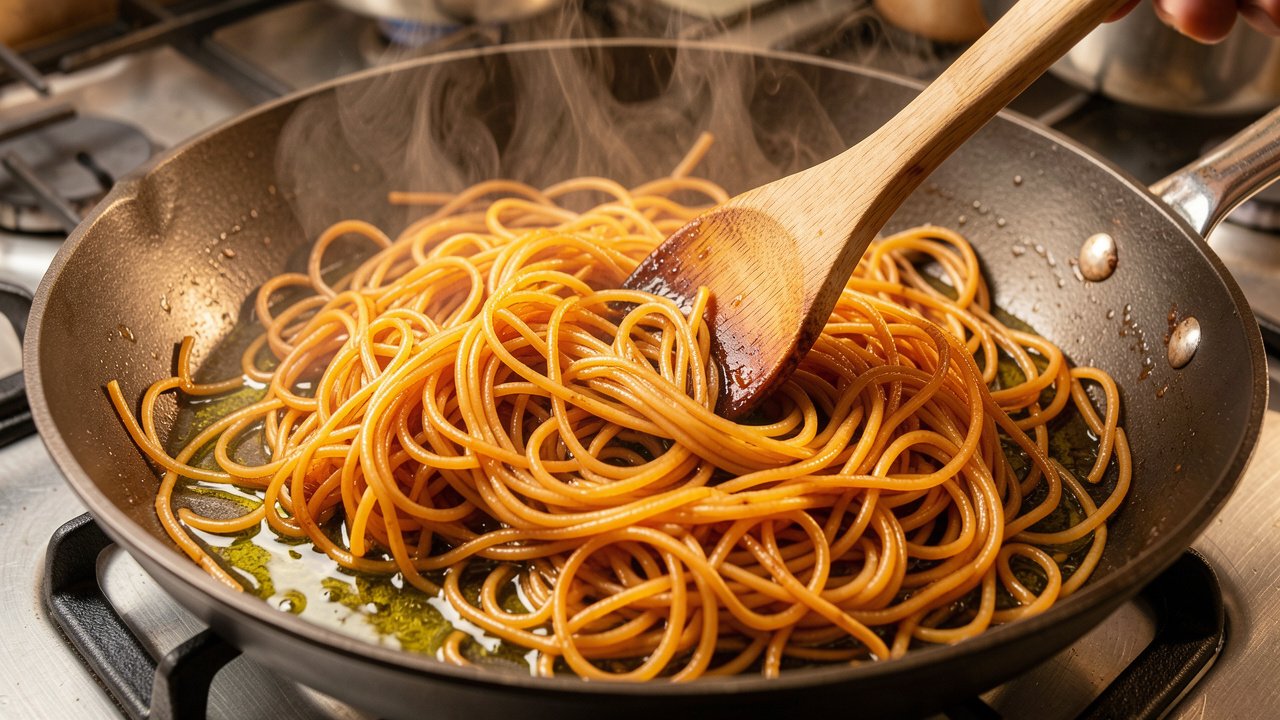
Warm the olive oil in a large deep skillet over medium heat. Add the dry fideo and stir almost constantly for 4 to 6 minutes, until the noodles turn an even, deep golden brown and smell nutty. This toasting is the signature flavor of fideo seco, so stay with the pan and do not let any pieces scorch.
Fry the Tomato Sauce
Scoop the toasted noodles onto a plate and set aside. In the same pan, soften the remaining chopped onion for 2 to 3 minutes, then pour in the strained tomato sauce. Let it fry and bubble, stirring now and then, for about 5 minutes, until it darkens in color and thickens enough to leave a trail behind the spoon.
Simmer the Fideo
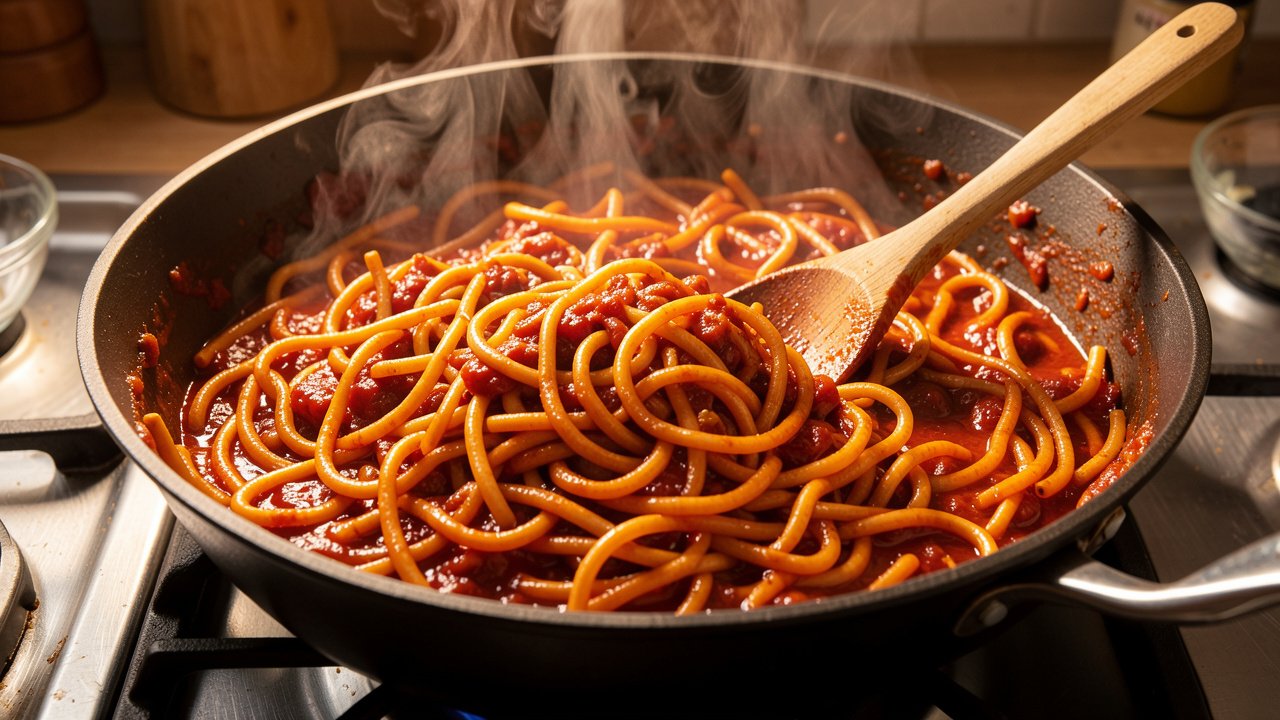
Return the toasted noodles to the pan and pour in the vegetable broth. Stir so every strand is coated, bring to a gentle simmer, then cover and cook 8 to 10 minutes. The noodles will soften as they drink up the sauce, so give the pan a stir once or twice to keep anything from sticking to the bottom.
Cook Until Dry
Uncover the pan and keep cooking a few more minutes, stirring gently, until the fideo is tender and almost all the liquid has cooked away. The finished dish should be moist but dry, which is what “seco” means, with the sauce clinging to each strand rather than pooling in the pan.
Garnish and Serve
Take the pan off the heat and let it rest for 2 minutes so the noodles settle and firm up. Drizzle with Mexican crema, scatter the crumbled cotija and chopped cilantro over the top, and serve warm, with lime wedges on the side for squeezing over each plate.
Chef’s Tips From Real Kitchen Testing
Toast the fideo to a true deep gold, not pale beige. The darker, nuttier color is the whole flavor of the dish, so keep the heat at medium and stir without stopping until it is evenly browned.
Fry the blended sauce before adding the noodles back. Letting the puree bubble and darken in the pan concentrates the tomato and rounds off the raw edge of the chipotle for a deeper, sweeter sauce.
Pull the pan when it is just dry, not bone dry. The noodles keep absorbing as they rest, so a pan that looks faintly saucy off the heat will settle into a perfect, glossy seco by the time it reaches the plate.
Recipe Variations
Serving Suggestions
- Sliced avocado or a spoon of guacamole on top
- Lime wedges for squeezing over each plate
- Warm corn tortillas to scoop up the noodles
- A fresh green salad or quick cabbage slaw
Nutrition Facts
| Nutrient | Amount per serving |
|---|---|
| Calories | 380 |
| Protein | 12 g |
| Carbohydrates | 58 g |
| Fat | 11 g |
| Saturated Fat | 4 g |
| Fiber | 4 g |
| Sugar | 7 g |
| Sodium | 620 mg |
Values are estimates per serving and vary with the exact brands and toppings you use.
Make-Ahead Tips
The blended tomato sauce can be made up to two days ahead and kept covered in the refrigerator, which actually deepens its flavor. When you are ready to eat, toast the fideo fresh and bring it together with the sauce and broth, since freshly toasted noodles give the best texture and the dish takes only minutes to finish.
Storage, Freezing & Reheating
Common Mistakes to Avoid
Troubleshooting
Noodles still soupy? Uncover the pan and simmer a few minutes longer so the extra broth cooks off; the fideo should be coated, not swimming, before you pull it from the heat.
Fideo scorched on the bottom? The heat was too high or the pan ran dry. Keep it at a gentle simmer, stir once or twice while covered, and add a small splash of broth if it dries out before the noodles are tender.
Dish tastes flat? The noodles were likely under-toasted or the sauce under-fried. Next time take the fideo to a deeper gold and let the tomato puree darken in the pan before the broth goes in.
A Note on Mexican Cooking
Fideo arrived in Mexico by way of Spain, and the word traces back even further to the Arabic-Andalusi “fidaws”, the thin wheat noodles of medieval Iberia. “Seco” simply means dry, naming it against its cousin the sopa aguada, the brothy fideo soup served in a bowl. In Mexican homes, fideo seco is everyday comfort food, cheap, quick, and endlessly varied from one cook to the next.
The dish it is most often confused with is Spanish fideua, which shares the same noodle ancestry but goes a very different way. Fideua is essentially a paella made with noodles instead of rice, cooked with seafood and saffron in a wide pan. Fideo seco keeps no seafood at all; it is a dry tomato-and-noodle dish, smoky with chipotle and finished with crema and cheese, eaten as a side or a light main. For more of this tomato-forward table, try a bowl of sopa azteca or a plate of Mexican entomatadas.
What keeps fideo seco on weeknight tables is exactly what created it: it is forgiving, thrifty, and built from the pantry. Toast the noodles well, fry the tomato sauce until it is deep and smoky, and top it the way your family likes, and you have a pan of pasta that tastes unmistakably of a Mexican kitchen.