Mexican Recipes
Mexican Tortilla Soup
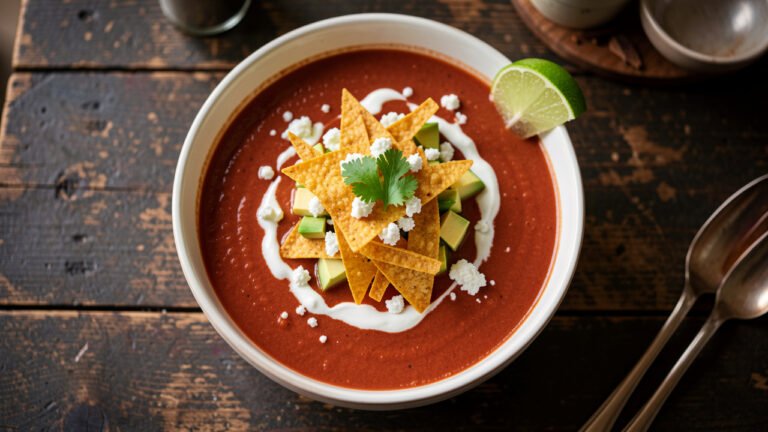
Sopa Azteca is the soup that turns a few tomatoes and a couple of dried chiles into something that tastes like it simmered all day. The magic is not a long ingredient list; it is the order of operations. You char the vegetables, blend them into a rust-red puree, and then fry that puree hard in a little oil so it caramelizes before the broth ever goes in.
The other half of the dish is texture. Freshly crisped tortilla strips go into the bowl first, the hot soup is poured over them, and you get that irresistible moment where some strips stay crunchy and some soften into the broth. Avocado, cheese, and crema cool it all down. I learned quickly that skipping the frying-the-puree step gives you thin tomato water instead of Sopa Azteca.
Why This Sopa Azteca Works
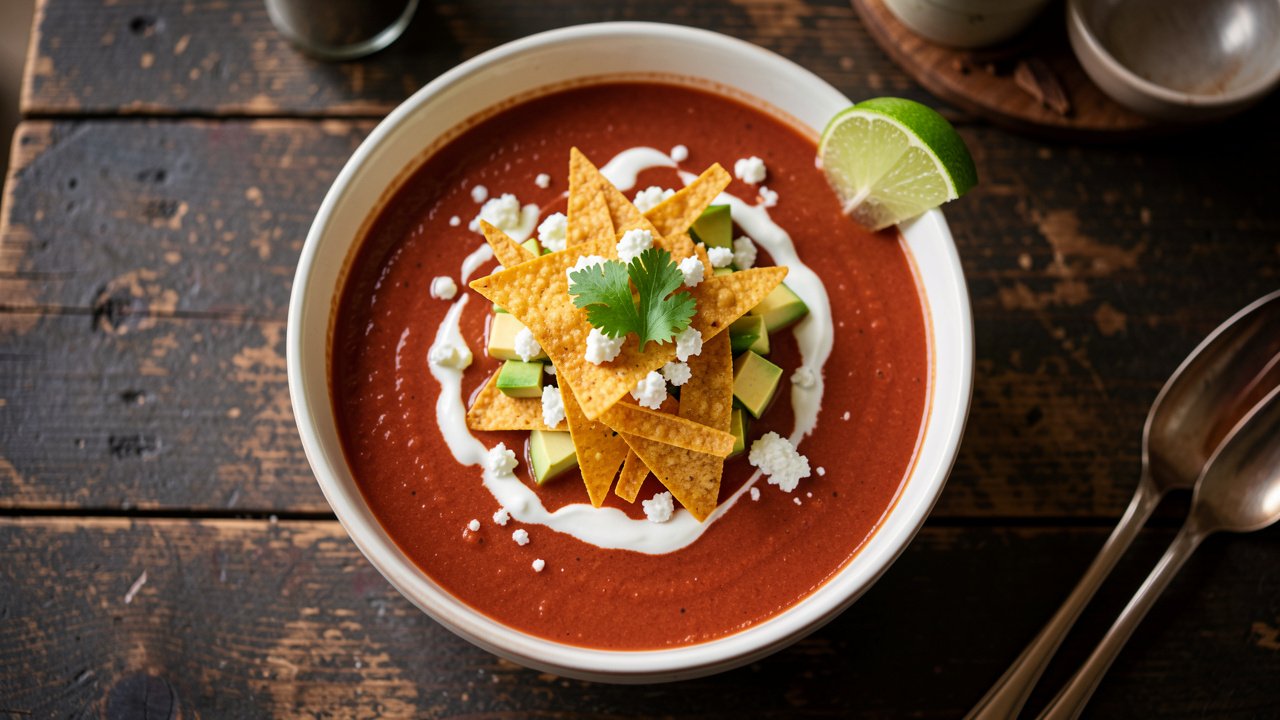
Sopa Azteca, also called sopa de tortilla, is a study in contrast. The broth is smoky and a little tart, the tortilla strips add crunch, the avocado and crema bring cool richness, and a squeeze of lime lifts everything at the table. Each spoonful tastes slightly different depending on what you scoop up, which is exactly why the soup is so addictive.
The single most important step is frying the tomato and chile puree. Once your roasted tomatoes, onion, garlic, and soaked chiles are blended smooth, you pour that puree into hot oil and let it sizzle and darken for several minutes before adding broth. This concentrates the sugars and tames the raw, sharp edge of the chiles, giving the soup its deep color and rounded flavor.
Roasting the vegetables first is the other quiet secret. Blistering the tomatoes, onion, and garlic under a broiler or in a dry skillet builds a smoky backbone you cannot fake with raw produce. It only takes a few minutes and the char blends right into the puree.
It is also forgiving and flexible. Keep it vegetarian with a good vegetable broth, or stir in shredded chicken to make it a full meal. The toppings are where you make it your own, and everyone at the table can build their bowl exactly how they like it.
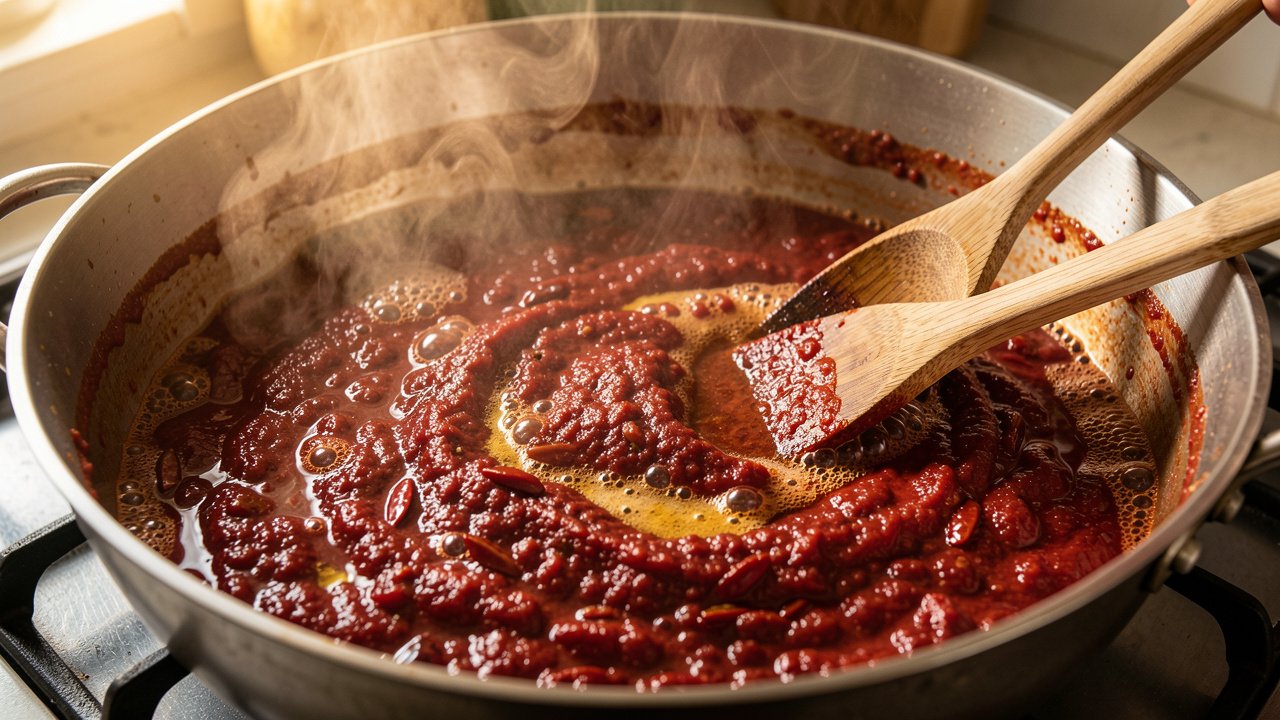
Pro observation: The puree is ready for broth when it has thickened to a paste, darkened a shade, and the oil starts to bead at the edges of the pot. That is the moment the flavor deepens from raw tomato to true Sopa Azteca.
Ingredients
Kitchen Measurement Converter
Quickly convert between common cooking measurements without leaving the recipe. Pick a category, enter a value, and the result updates instantly.
Ingredient Notes & Substitutions
Tomatoes
Ripe red tomatoes give the sweet-tart body of the broth. Roma or plum tomatoes have less water and roast down cleanly. Out of season, one 14-ounce can of whole tomatoes blends into a reliable base.
Dried Chiles
Pasilla brings a mild, raisiny depth and ancho adds gentle sweetness and color. Toast them briefly and soak in hot water until soft. Guajillo is a fine swap if that is what your market carries.
Tortilla Strips
Use corn tortillas, not flour, for the crisp strips and their toasty aroma. A day-old stack fries up crunchier. Baking the strips is an easy lighter option if you prefer to skip frying.
Broth and Toppings
A good chicken or vegetable broth carries the whole soup, so use one you would happily sip. For the toppings, queso fresco is traditional, but a mild cotija or a soft feta works. Crema can be swapped for a spoon of sour cream loosened with a little milk.
Equipment
- Large pot or Dutch oven
- Blender
- Skillet for frying strips
- Slotted spoon
- Sharp knife and board
- Sheet pan or comal
Before You Start
1. Stem and seed the chiles. Tear the dried pasilla and ancho open, shake out the seeds, and discard the stems before toasting. This keeps the broth smooth and controls the heat.
2. Cut the tortilla strips evenly. Stack the tortillas and slice them into thin, even strips so they crisp at the same rate and none of them burn.
3. Set up your toppings first. Dice the avocado, crumble the cheese, and cut the lime before the soup is done, so every bowl comes together while the broth is piping hot.
Step-by-Step Instructions
Roast the Vegetables and Toast the Chiles
Char the tomatoes, halved onion, and unpeeled garlic in a dry skillet or under the broiler until blistered and blackened in spots, about 8 to 10 minutes, turning as needed. Meanwhile, tear open the pasilla and ancho chiles, remove the seeds, and toast the pieces in a dry pan for 15 to 20 seconds a side until fragrant. Cover the toasted chiles with hot water and soak 10 minutes to soften.
Fry the Tortilla Strips
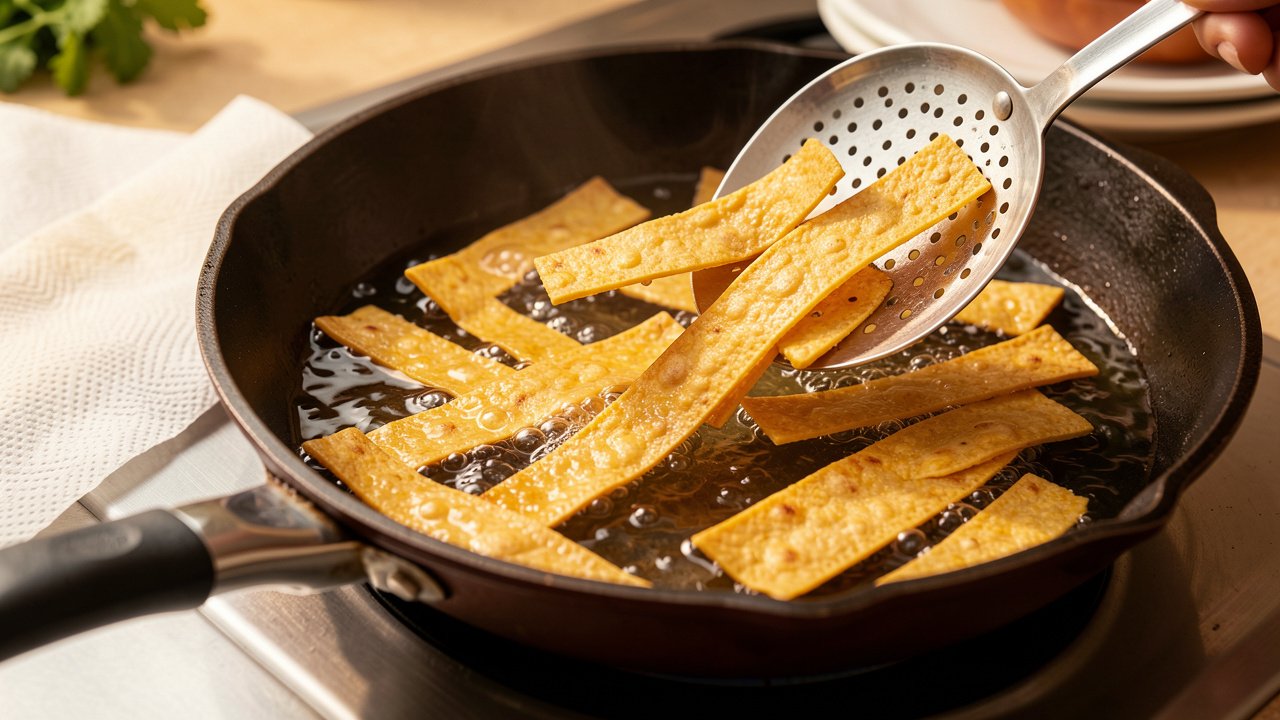
Heat about 2 tablespoons of oil in a skillet over medium-high heat. Fry the tortilla strips in batches, turning, until golden and crisp, 2 to 3 minutes per batch. Lift them out with a slotted spoon and drain on paper towels, then sprinkle lightly with salt. Set aside for serving.
Blend the Base
Peel the charred garlic and drain the soaked chiles. Add the roasted tomatoes, onion, garlic, chiles, cumin, and Mexican oregano to a blender with a splash of the broth. Blend until completely smooth, adding a little more broth if needed to get the blades moving. A silky puree here means a silky soup later.
Fry the Puree
Heat the remaining 1 tablespoon of oil in a large pot over medium-high heat. Pour in the puree, standing back as it may splatter, and cook, stirring often, for 5 to 7 minutes. It will thicken to a paste, darken a shade, and the oil will start to bead at the edges. This frying step is what gives Sopa Azteca its deep, rounded flavor.
Simmer the Soup
Pour in the remaining broth and add the bay leaf and the salt. Bring to a boil, then lower the heat and simmer gently, uncovered, for 15 minutes so the flavors meld and the broth reduces slightly. Taste and adjust with more salt. If using shredded chicken, warm it through in the broth now. Discard the bay leaf before serving.
Build the Bowls and Serve
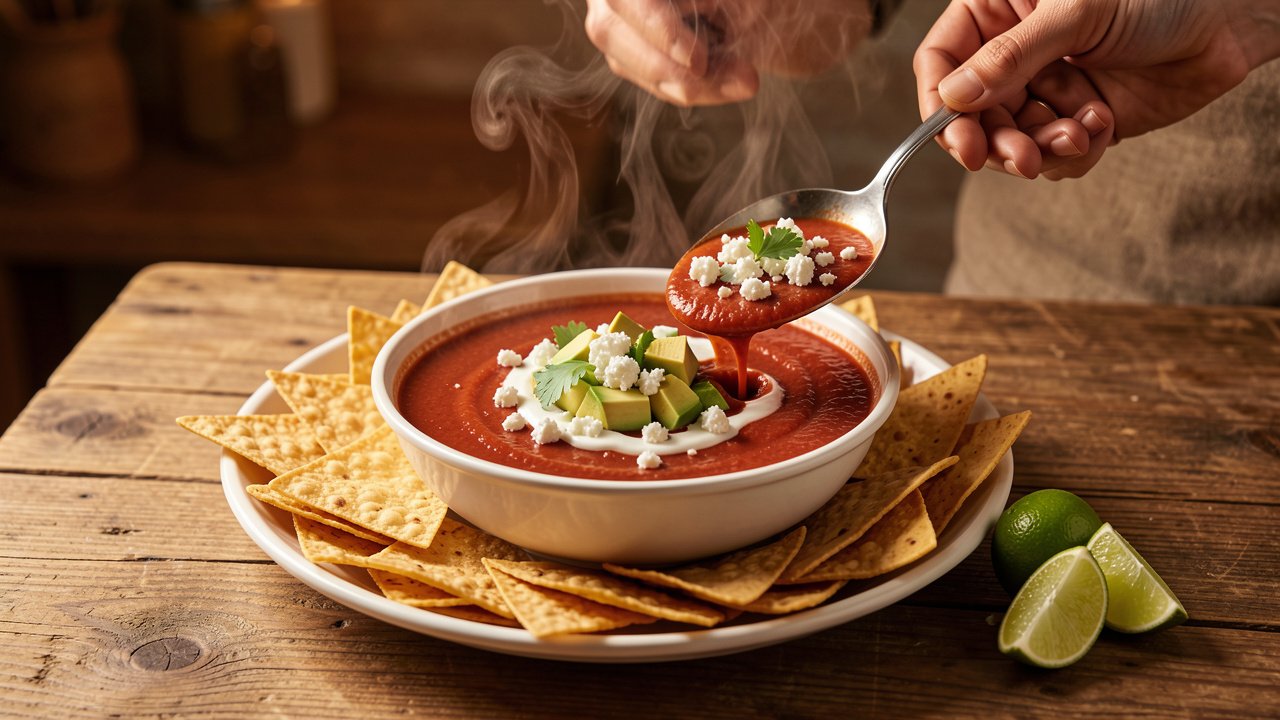
Put a small handful of crisp tortilla strips in the bottom of each bowl and ladle the hot soup over them. Top with diced avocado, crumbled queso fresco, a swirl of crema, and plenty of chopped cilantro. Serve right away with lime wedges so everyone can squeeze fresh juice over the top.
Chef’s Tips From Real Kitchen Testing
Do not skip frying the puree. Simmering raw blended tomatoes and chiles in broth gives you thin, sharp soup; frying it first is what makes it taste slow-cooked and deep.
Keep the tortilla strips separate until serving. If you dump them in the pot they go soggy in minutes. Adding them to each bowl at the last second keeps the contrast alive.
Toast the dried chiles just until fragrant, never until they smoke. Scorched chiles turn the whole broth bitter, and there is no fixing it once it happens.
Recipe Variations
Serving Suggestions
- Extra tortilla strips and lime wedges on the side
- Warm corn tortillas or a simple avocado salad
- A spoon of fresh tomato salsa for extra tang
- Diced radish and shredded lettuce for crunch
Nutrition Facts
| Nutrient | Amount per serving |
|---|---|
| Calories | 340 |
| Protein | 11 g |
| Carbohydrates | 30 g |
| Fat | 21 g |
| Saturated Fat | 6 g |
| Fiber | 6 g |
| Sugar | 6 g |
| Sodium | 720 mg |
Values are estimates per serving and vary with the exact ingredients, broth, and toppings you use.
Make-Ahead Tips
The broth is the ideal make-ahead component, because the roasted-chile flavor deepens overnight. Prepare the soup through the simmering step, cool, and refrigerate. Fry the tortilla strips and prep the avocado, cheese, and crema fresh on the day you serve, since those toppings do not keep well once cut. Reheat the broth gently and build the bowls just before eating.
Storage, Freezing & Reheating
Common Mistakes to Avoid
Troubleshooting
Broth tastes flat? It usually needs salt and a squeeze of lime. The acid at the end is what makes the smoky chile flavor pop.
Soup too bitter? The dried chiles were probably over-toasted or a few seeds slipped in. Balance it with a pinch of sugar and a little extra broth.
Broth too thin? Let it simmer uncovered a few minutes longer to reduce, or blend in an extra roasted tomato to give it more body.
A Note on Mexican Cooking
Sopa Azteca comes from central Mexico, and it shows off two ideas that run through the whole cuisine. The first is the dried chile: pasilla and ancho are not about raw heat but about layered, almost fruity depth, coaxed out by toasting and soaking rather than a quick pinch from a jar. The second is the play of textures, the crisp fried tortilla against the soft broth, that defines so many Mexican dishes. That crisp-tortilla contrast is the same instinct behind chilaquiles and totopos. If you like bright, tomato-forward bowls, our creamy Indian tomato soup scratches a similar itch, and a spoon of homemade fresh tomato salsa is a natural finishing touch on top of this soup.
Frequently Asked Questions
More Tomato Recipes to Try
Last updated: September 29, 2026