Spanish Recipes
Valencian Seafood Noodles in a Saffron Tomato Sofrito
Last updated: November 4, 2026
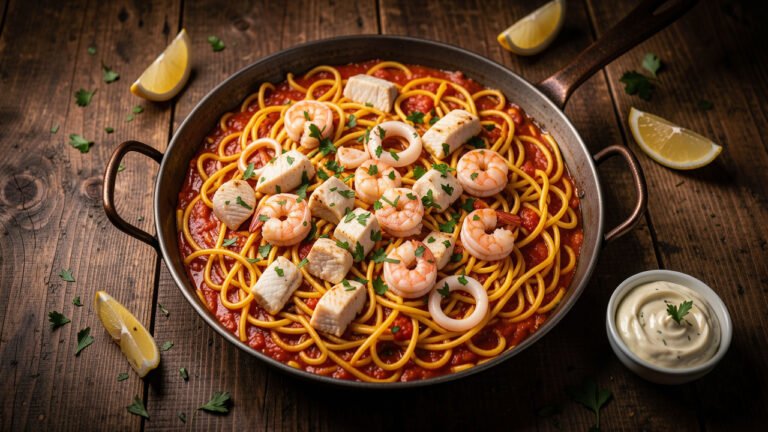
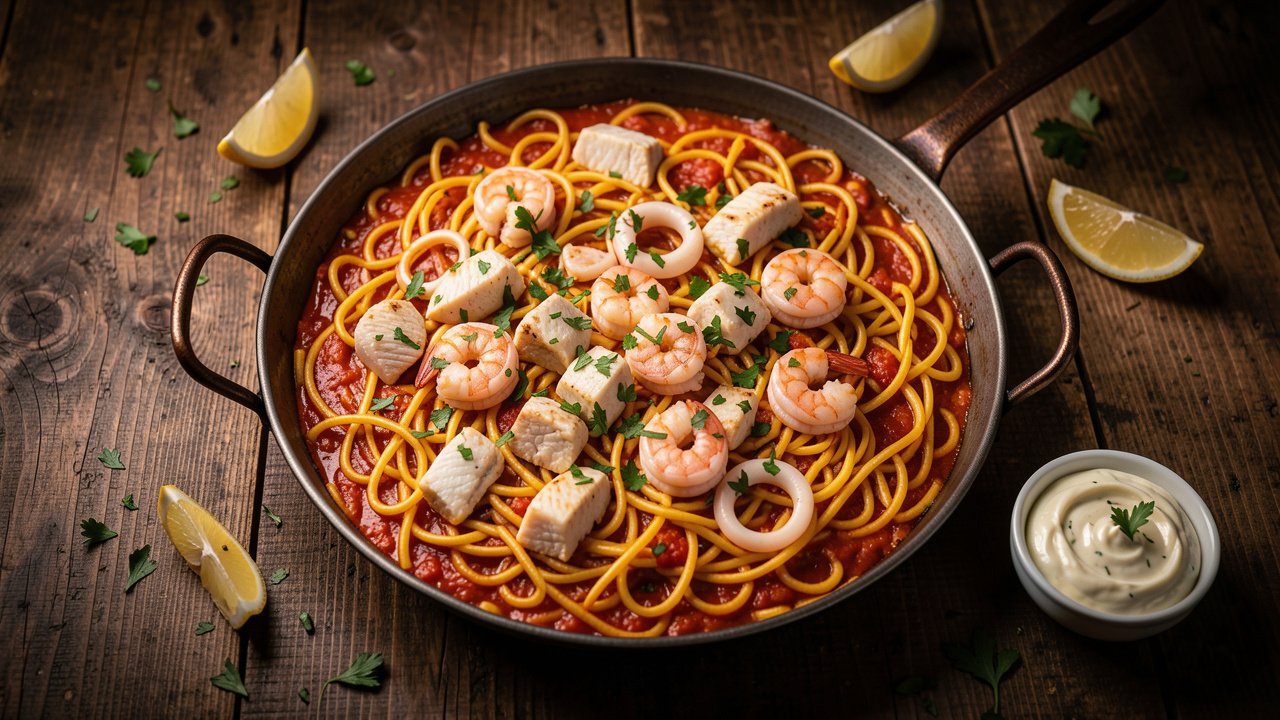
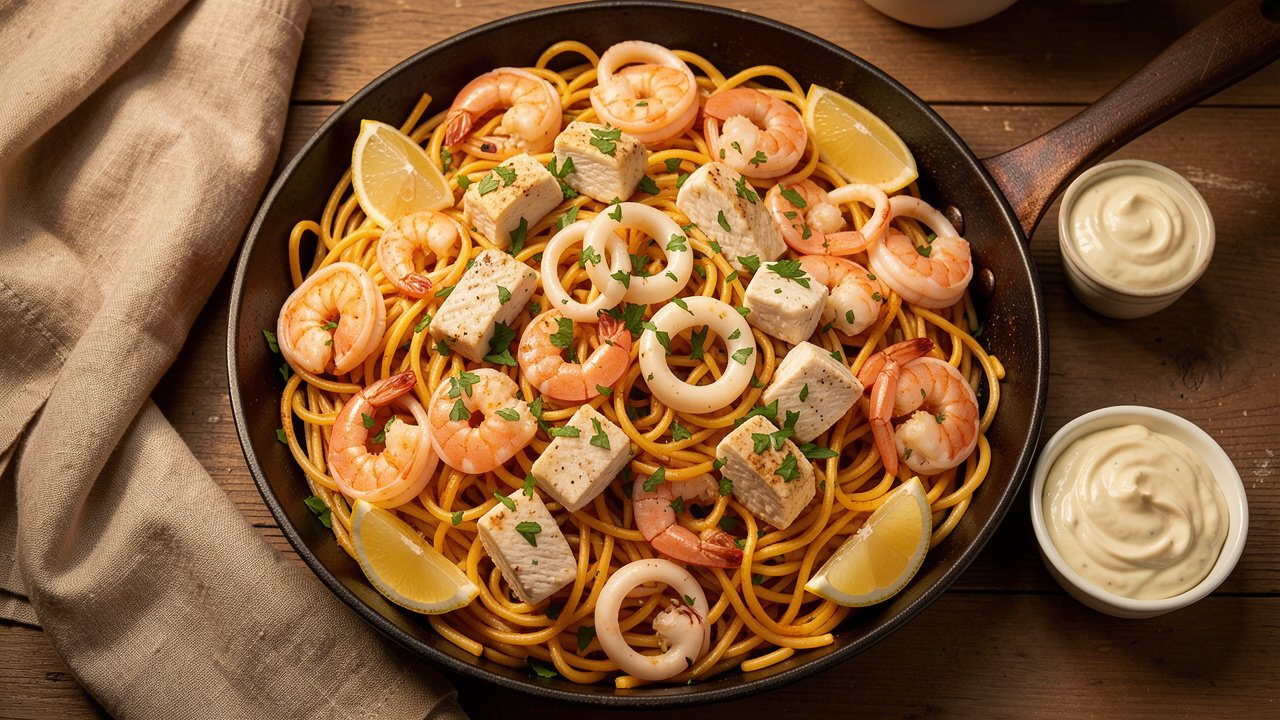
Fideua is what you get when the coast of Valencia looks at a pan of paella and decides to swap the rice for noodles. Short lengths of thin pasta, called fideos, are toasted until nutty, then cooked right in a saffron-scented tomato sofrito with shrimp, squid, and chunks of white fish until every strand drinks up the seafood stock. The payoff is the socarrat, the lightly crisped layer that forms where the noodles meet the hot pan.
Like its rice cousin, fideua is a one-pan affair built on a good sofrito and the discipline to leave it alone at the end. You brown the noodles, build the tomato base, pour in hot stock, add the seafood, and then resist stirring so the bottom can caramelize. Serve it straight from the pan with lemon and a spoonful of garlicky alioli.
Why This Fideua Works
Great fideua rests on three moves done well: toasting the noodles for depth, building a proper sofrito for sweetness, and leaving the pan alone at the end so a socarrat can form. Get those right and you have a dish that tastes far more complex than its short ingredient list suggests.
Toasting the fideos in olive oil before any liquid touches them is the step home cooks most often skip, and it is the one that matters most. Browning the pasta until it smells nutty gives the finished dish a toasty backbone, much like toasting rice does for a pilaf. It also helps each strand stay separate rather than collapsing into a sticky mass.
The sofrito is the flavor engine. Onion and garlic soften slowly in olive oil, then grated ripe tomato is cooked down until jammy and the raw water has driven off, concentrating its sweetness. Smoked paprika and a pinch of bloomed saffron fold in here, coloring the whole pan a deep amber-red before the stock arrives.
Finally, the stock is measured, not endlessly ladled in. Fideua is meant to finish dry, with the noodles tender and the base crisp, so you add a set amount of hot seafood stock and let it cook away without stirring. Hold your nerve for the last couple of minutes and the bottom caramelizes into the socarrat that makes the dish.
Pro observation: Fideua is fully halal as written, with no forbidden ingredients. The pan gets all of its depth from toasted noodles, a slow tomato sofrito, smoked paprika, saffron, and a good seafood stock, so nothing is missing.
Ingredients
Kitchen Measurement Converter
Need to convert an amount while you measure? Pick a category, enter a value, and the result updates instantly.
Ingredient Notes & Substitutions
Fideo Noodles
Fideua is traditionally made with short, thin fideo noodles, sold as fideo numbers 2 to 4 in Spanish aisles. If you cannot find them, snap thin spaghetti or vermicelli into roughly one-inch lengths. Avoid thick pasta, which will not drink up the stock the same way.
The Seafood
A mix of shrimp, squid, and firm white fish such as monkfish or cod is classic. Keep the pieces generous so they stay tender. Mussels or clams make a fine addition; nestle them in with the seafood so they steam open in the last few minutes.
Tomato & Sofrito
Grated ripe tomato is traditional and cooks down into a jammy base; a few spoonfuls of crushed tomatoes work in a pinch. Cook the sofrito patiently until it darkens, as this is where the deep, slightly sweet flavor of fideua comes from.
Saffron, Paprika & Stock
Saffron gives the signature color and aroma; bloom it in a little warm stock first. Sweet smoked paprika adds smoky depth. Use a good fish or seafood stock, warmed before it goes in, so the pan never drops off the simmer when you add it.
Equipment
- Wide paella pan or large skillet
- Box grater for the tomato
- Wooden spoon
- Sharp knife and board
- Small pan for the stock
- Ladle
Before You Start
1. Get the stock hot and keep it hot. Fideua finishes with a measured pour of stock that must stay at a simmer; adding cold stock drops the pan temperature and the noodles turn gummy instead of toasting through, so warm it in a separate pan first.
2. Bloom the saffron in a spoon of warm stock. Crushed dry saffron scattered straight into the pan barely releases its color or perfume, while threads steeped in warm liquid for a few minutes stain the whole dish amber and carry their aroma into every noodle.
3. Use a wide pan, not a deep pot. Fideua needs a thin layer of noodles against hot metal to build its socarrat; piled deep in a narrow pot they steam into a soft tangle and the prized crisp bottom never forms.
Step-by-Step Instructions
Fideua moves fast once the stock goes in, so have the seafood cleaned, the tomato grated, and the stock simmering before you start. Work in a wide pan and resist the urge to stir once the noodles are cooking, so the base can crisp into a socarrat.
Prep the Seafood and Aromatics
Peel and devein the shrimp, cut the cleaned squid into rings, and cut the fish into generous chunks; keep the seafood cold. Finely chop the onion, mince the garlic, and grate the ripe tomatoes on the coarse side of a box grater. Warm the stock in a separate pan and steep the saffron threads in a spoonful of it.
Toast the Fideo Noodles
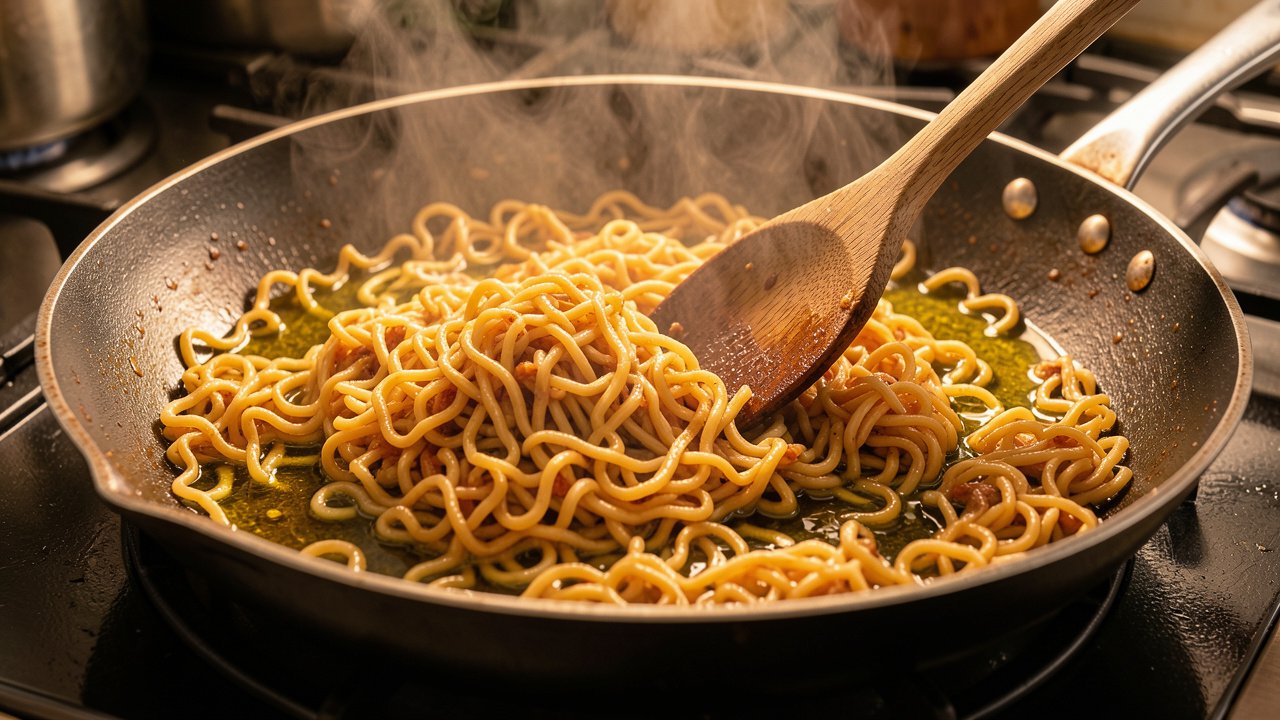
Warm the olive oil in a wide pan over medium heat, then add the fideo noodles. Stir them almost constantly for 3 to 4 minutes until they turn an even golden brown and smell nutty, like toasted bread. Scoop the toasted noodles out onto a plate and set them aside; this toasting is what gives fideua its depth.
Build the Tomato Sofrito
In the same pan, add the onion with a pinch of salt and cook 4 to 5 minutes until soft, then stir in the garlic for a minute. Add the grated tomato and the smoked paprika and cook, stirring, for 6 to 8 minutes until the mixture darkens and turns jammy and most of the tomato water has cooked away. This slow sofrito is the base of the whole dish.
Add the Noodles and Stock
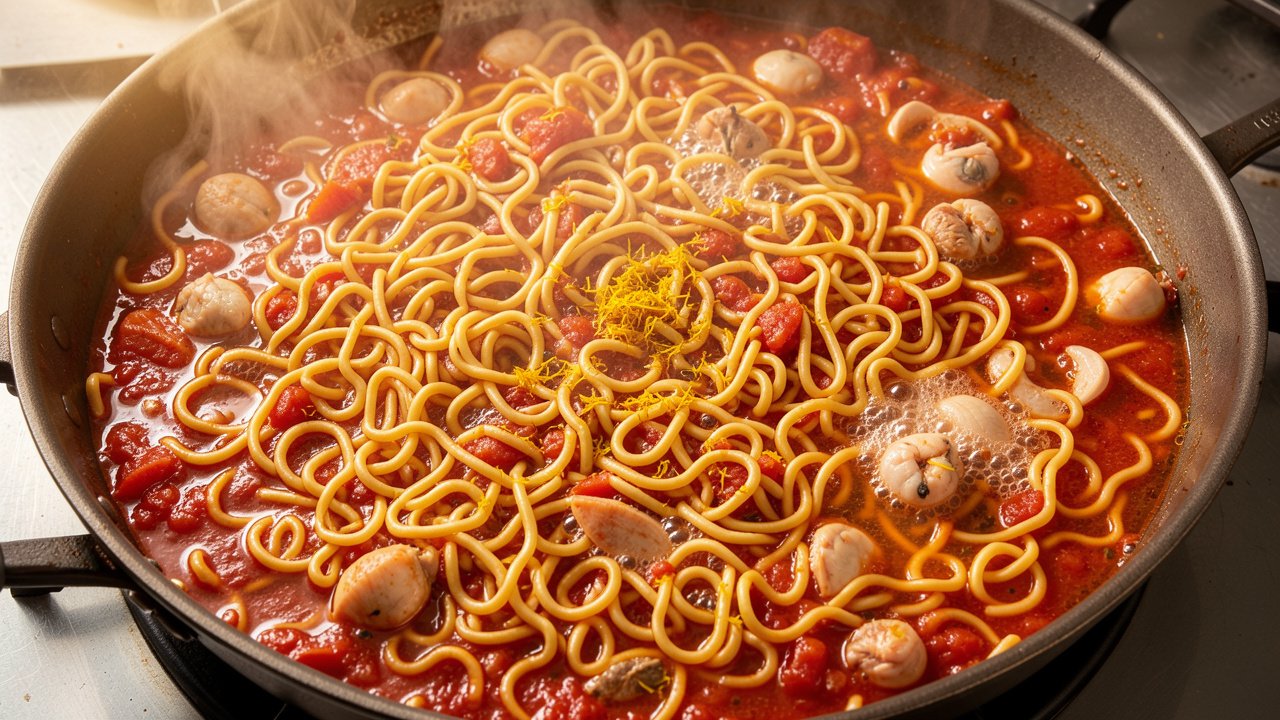
Return the toasted noodles to the pan and stir to coat them in the sofrito. Pour in the hot stock along with the bloomed saffron and its liquid, then season with salt and pepper and spread the noodles into an even layer. Bring to a lively simmer and cook, without stirring, for about 6 minutes so the noodles start to drink up the stock.
Nestle in the Seafood
Tuck the fish chunks, squid rings, and shrimp into the noodles, pressing them lightly into the liquid. Keep the pan at a steady simmer and cook, still without stirring, for another 4 to 5 minutes, until the stock is almost gone, the shrimp are pink, and the fish is opaque. The noodles should be tender with their tips standing up slightly.
Crisp the Socarrat and Serve
Once the liquid has nearly cooked away, raise the heat to high for the final 1 to 2 minutes; listen for a gentle crackle and smell for toasty, not burnt, notes as the base caramelizes into the socarrat. Pull the pan off the heat, scatter over the parsley, and let it rest 5 minutes. Serve straight from the pan with lemon wedges and a spoonful of garlicky alioli.
Chef’s Tips From Real Kitchen Testing
Toast the noodles until they are a deep, even gold before any liquid goes near them. Pale fideos give a flat dish; properly toasted ones taste nutty and hold their shape through the simmer.
Measure the stock rather than ladling by feel. Fideua is meant to finish dry with a crisp base, so too much liquid leaves it soupy and the socarrat never forms.
Stop stirring once the stock is in. Leaving the noodles undisturbed lets the bottom caramelize; constant stirring releases starch and turns the pan into a gummy tangle.
Recipe Variations
Serving Suggestions
- A spoonful of garlicky alioli over the top of each serving
- Lemon wedges to squeeze over the noodles
- A simple green salad with a sharp vinegar dressing
- Grilled or roasted red peppers on the side
Nutrition Facts
| Nutrient | Amount per serving |
|---|---|
| Calories | 480 |
| Protein | 34 g |
| Carbohydrates | 52 g |
| Fat | 12 g |
| Saturated Fat | 2 g |
| Fiber | 4 g |
| Sugar | 6 g |
| Sodium | 820 mg |
Values are estimates per serving and vary with the exact seafood and brands you use.
Make-Ahead Tips
The sofrito is the perfect make-ahead component. Cook the onion, garlic, tomato, and paprika down into a jammy base up to two days in advance and refrigerate it. You can also toast the noodles ahead and keep them in a sealed jar. When it is time to eat, warm the sofrito, add the noodles and hot stock, and finish with the fresh seafood so it is never overcooked.
Storage, Freezing & Reheating
Common Mistakes to Avoid
Troubleshooting
Noodles still soupy at the end? There was too much liquid or the heat was too low. Raise the heat and let the excess stock bubble away uncovered for a few minutes until the pan is nearly dry.
No socarrat forming? The base needs direct high heat at the very end. Crank the flame for the last minute or two and listen for a gentle crackle, pulling the pan off before it smells scorched.
Noodles gummy or clumped? They were stirred too much or the stock went in cold. Next time, toast well, add hot stock, spread level, and leave the pan undisturbed.
A Note on Spanish Cooking
Fideua comes from the Valencian coast, and its name is Valencian and Catalan, from fideus, meaning noodles. The story most often told traces it to the fishing town of Gandia, where a cook is said to have run short of rice for the crew’s paella and reached for noodles instead; the swap stuck and became a dish in its own right. Whatever the exact origin, fideua grew up as a working boat’s meal, built from a good sofrito and whatever the day’s catch allowed.
It is paella’s noodle cousin, and that is the nearest point of confusion: fideua uses the same saffron tomato sofrito and aims for the same crisp socarrat base, but toasted fideo noodles replace the rice, giving a nuttier, slightly chewier result. Where paella leans on broad grains of rice, fideua leans on browned pasta, and the toasting step is what sets its flavor apart. It shares a soul with other tomato-and-seafood pots of the wider coast, from the San Francisco cioppino to the clam-studded Portuguese cataplana and the Basque tuna stew marmitako, all of them fishermen’s dishes that turn a modest catch into something generous.
What keeps fideua on Valencian tables is exactly what created it: it is forgiving, communal, and built around one pan set in the middle of the table. Toast the noodles well, build an honest sofrito, add the freshest seafood you can find, and chase that crisp socarrat, and you have a dish that tastes of the Mediterranean coast.