Sandwich Recipes
Crispy Thick-Cut Beef Bacon, Cornmeal-Fried Tomatoes and Avocado
Last updated: September 29, 2026
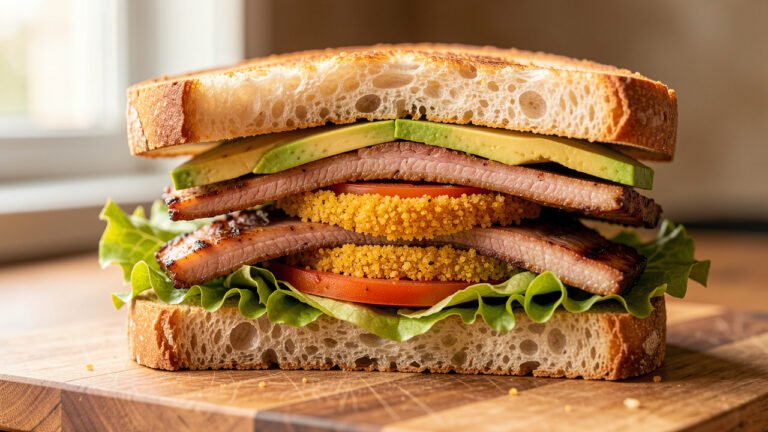
Two swaps turn a familiar sandwich into something worth the effort. Thick-cut beef bacon gives you a hearty, meaty bite that thin strips cannot, and a breaded fried tomato brings crunch and warm acidity instead of a cold, watery slice.
Both swaps come with a catch. Thick-cut beef bacon needs gentle heat to render before fast heat to crisp, and fried tomatoes are a wet ingredient that fights its own coating. Get those two things right and the rest is assembly.
Why This Crispy Beef Bacon BLT Works
A thin strip of beef bacon crisps in minutes and all but vanishes into the sandwich. Thick-cut beef bacon is a heartier slice with more meat between the fat, which is why it earns a two-stage plan to render and then crisp.
Gentle oven heat first melts out a good share of the fat and firms the strips. Fast skillet heat second dries and browns the surface into crackling edges. Skip either stage and you get a sandwich that chews like a rubber band.
The fried tomato solves a different problem. A raw slice leaks juice into the bread and turns cold against the hot beef bacon, while a breaded slice holds its shape, warms through, and adds a crunch that plays off the soft avocado.
Pro observation: The beef bacon is ready to leave stage one when the fat has turned translucent and the strips have shrunk and firmed but not yet gone brittle.
Ingredients
Kitchen Measurement Converter
Quickly convert between common cooking measurements without leaving the recipe. Pick a category, enter a value, and the result updates instantly.
Ingredient Notes and Substitutions
Beef Bacon
Ask for thick-cut beef bacon, roughly a quarter inch per slice, with clear stripes of meat and fat rather than one solid fat cap. Thinner supermarket beef bacon works too, but it crisps faster, so watch it closely and pull it sooner.
Tomatoes for Frying
Choose firm fruit that is underripe to just barely ripe, still green-shouldered or pale red. Green tomatoes are the classic pick because they are dense and tart. Save your dead-ripe heirlooms for a tomato mozzarella salad instead.
Coating
Fine cornmeal gives the sandiest, most durable crust. Panko fries lighter and shatters more, so use it if you want crunch over grit. Do not use plain flour alone; it goes pasty against tomato juice.
Bread and Mayo
Use a sturdy country loaf cut about three quarters of an inch thick, since soft sandwich bread collapses under the weight. Full-fat mayonnaise is doing structural work here, so light versions leave a wetter sandwich.
Equipment
- Rimmed sheet pan and wire rack
- Oven with a broiler
- Heavy cast-iron skillet
- Metal tongs and a spatula
- Wire cooling rack
- Three shallow dredge bowls
Before You Start Building the Sandwich
1. Take the beef bacon out of the fridge fifteen minutes early. Strips that start closer to room temperature render more evenly and crisp without seizing up in the pan.
2. Salt the tomatoes before you set up the dredge. They need about fifteen minutes to release surface water, and that is dead time you can spend heating oil and toasting bread.
3. Have everyone at the table first. The window between frying and eating is short, so build the sandwiches last, not first.
Step-by-Step Instructions
Season the Beef Bacon
Pat the beef bacon strips completely dry so they crisp instead of steam. Beef bacon is already cured, so go easy on the salt; dust the strips with pepper and smoked paprika, then stir the brown sugar into a splash of the stock and brush a thin glaze over one side. Scatter the crushed garlic on top.
Lay the strips flat on a wire rack set over a sheet pan. You want air moving under them so the fat renders and drips away while the top stays dry.
Oven-Crisp Until the Fat Renders
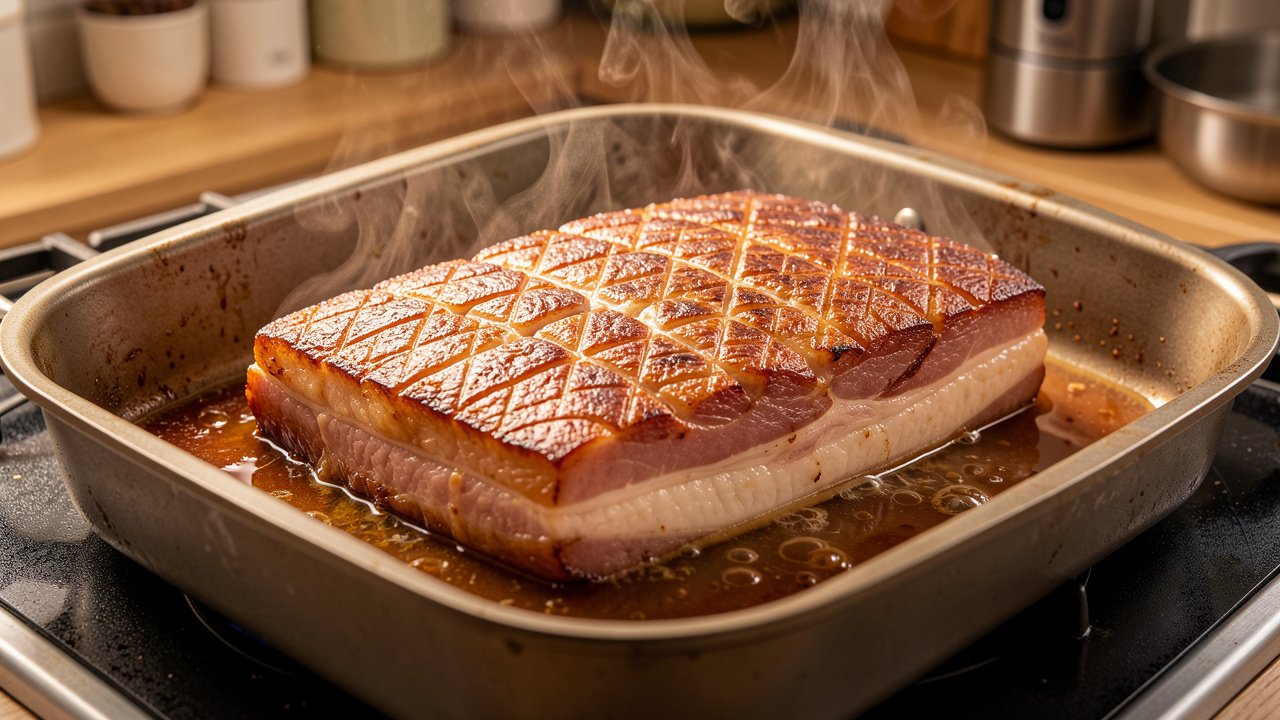
Bake the strips uncovered at 400F for eighteen to twenty-two minutes. You are waiting for two things: fat that has visibly rendered onto the pan below, and strips that have gone deep bronze and firmed at the edges.
The kitchen will smell sweet and smoky within ten minutes. That is the sugar in the glaze caramelizing against the rendering fat, and it is the signal you are on track.
Rest and Firm on a Rack
Lift the strips onto a clean wire rack and let them rest for five minutes. As they cool slightly, the rendered fat sets and the edges firm from chewy toward crisp.
This short rest matters because beef bacon keeps crisping as it cools. Rushing straight from oven to skillet steams the strips against each other, while a few minutes on the rack keeps every edge open to the air.
Finish Crisp in a Hot Skillet
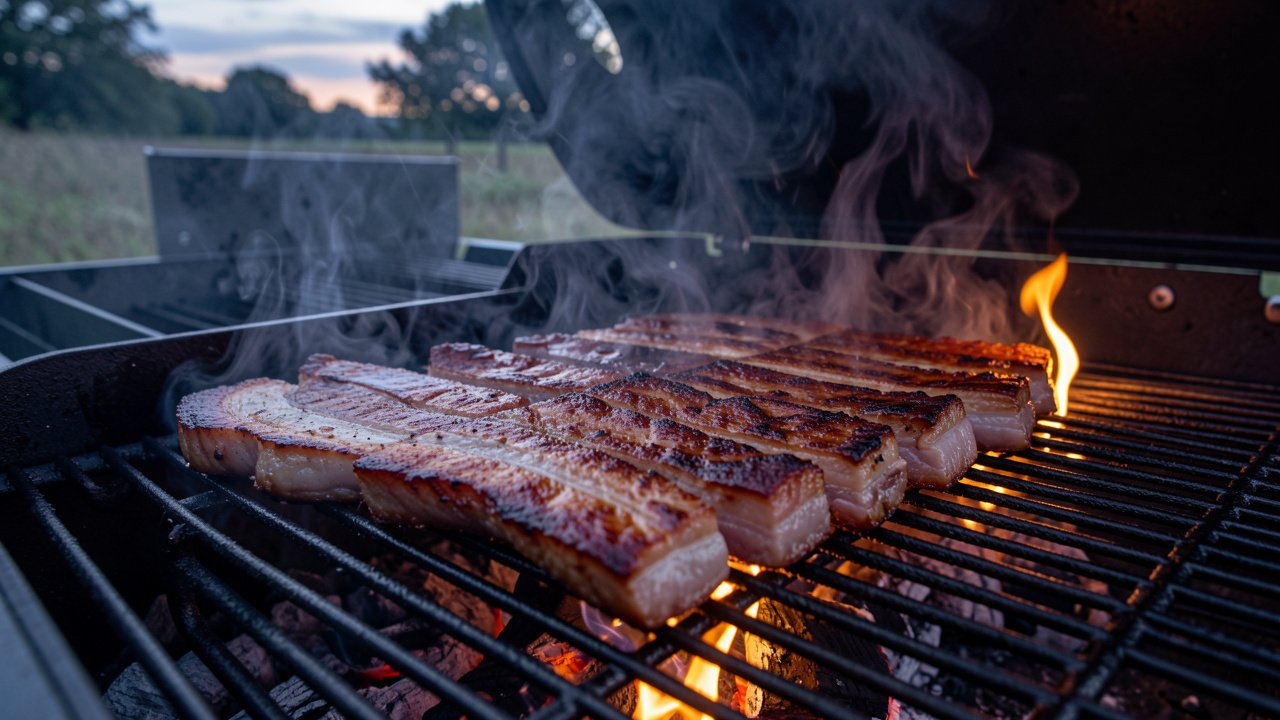
Set a heavy dry skillet over medium-high heat. Once it is hot, lay the rested strips in a single layer without crowding, working in batches if your pan is small.
Sear one to two minutes per side until the edges bubble and go dark and crackly. The strips release more fat as they cook, so tip off the excess as it pools; that keeps the beef bacon frying crisp instead of stewing in it.
Bread and Fry the Tomatoes
Cut the tomatoes into slices a generous half inch thick. Thinner slices turn to pulp in the pan. Salt them, lay them on a rack for fifteen minutes, then blot both faces dry with a towel.
Set up three bowls: seasoned flour, then the eggs beaten with buttermilk, then cornmeal. The dry flour grips the damp tomato, the egg grips the flour, and the cornmeal grips the egg. Skip a layer and the crust slides off in the oil.
Heat an inch of oil to 350F to 365F. Fry two or three slices at a time for about two minutes per side, until the crust is deep gold. Below that range the coating drinks oil and turns greasy; above it, the crust burns before the tomato is even warm.
Toast, Layer, and Serve
Move the fried tomatoes straight to a wire rack, never a plate lined with paper. On paper the underside steams in its own trapped moisture and goes limp within a minute.
Toast the bread and spread mayonnaise on the inner face of every slice, corner to corner. That fat layer is a moisture barrier, which is the whole reason it goes on before anything wet touches the bread.
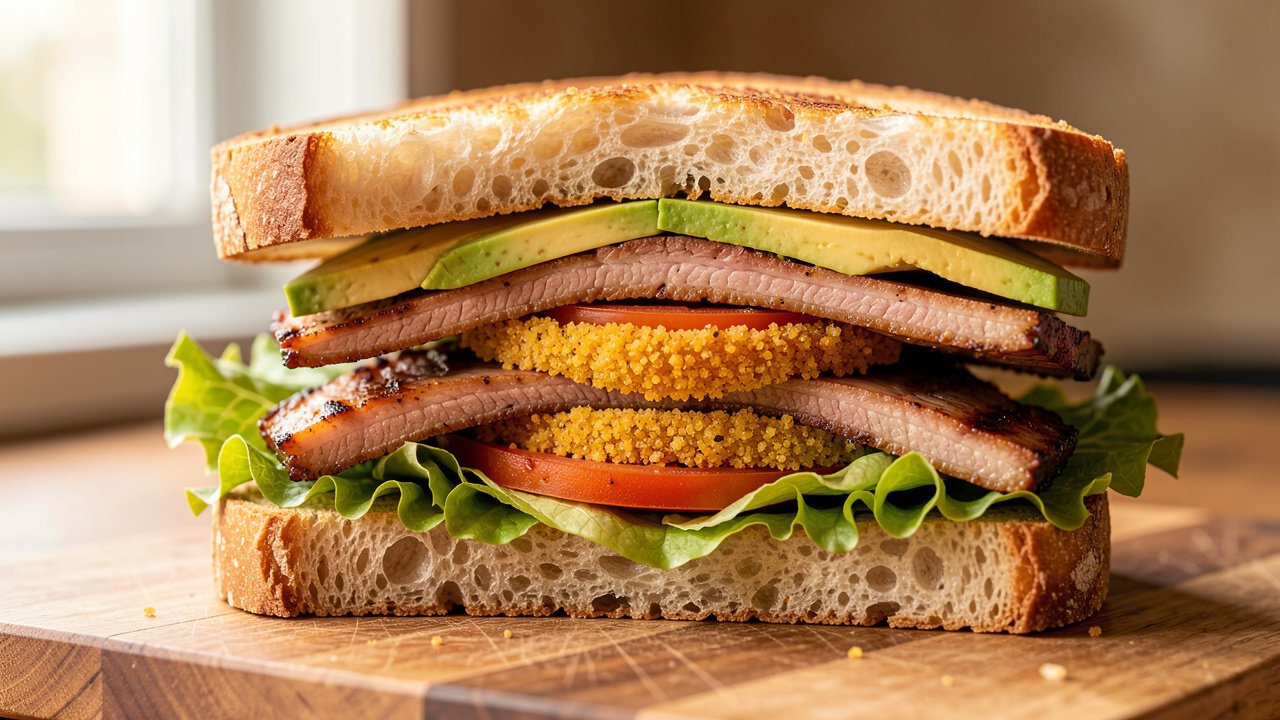
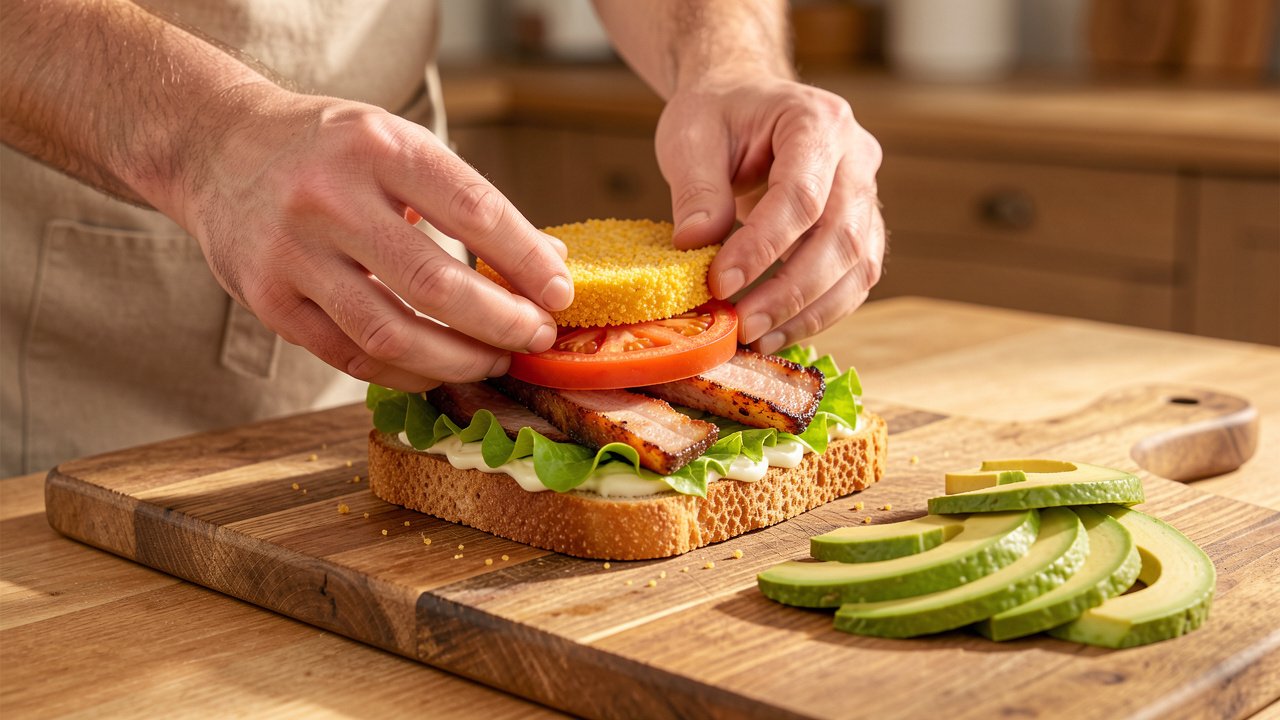
Now layer in order: lettuce against the bread on both sides, then the hot fried tomato, then the crisp beef bacon, then sliced avocado. Keep the avocado as a distinct layer instead of mashing it into the bread, where it soaks straight in. Finish with flaky salt, close it up, cut on the diagonal, and eat right away.
Beef Bacon Crisping and Texture
Beef bacon comes cured and cooked through, so there is no long doneness window to chase here. The whole job is texture: rendering the fat and crisping the edges without scorching the lean.
Here is the part most recipes gloss over. Thick-cut beef bacon carries more meat between the fat than a thin strip, so it needs a touch longer than you expect. The oven stage does the patient rendering, and the skillet stage does the fast browning.
The goal is fully rendered fat and a crackling edge. Pull the strips too early and the fat stays soft and rubbery, with a flabby chew instead of a snap. Give them a little longer and that same fat turns glassy and crisp.
Worth knowing: Under-crisped beef bacon is a texture failure, not a safety issue. Since beef bacon is already cured and cooked through, the only fix is a few more minutes of heat.
Chef’s Tips From Real Kitchen Testing
Pick an avocado that yields to gentle pressure at the stem end, not one that is soft all over. Slice it at the very last moment so the cut faces do not brown while you cook everything else.
Fry in batches of two or three slices. Crowding the pan drops the oil temperature fast, and once it falls below about 340F the coating starts absorbing instead of sealing.
Save the rendered fat from the sheet pan and skillet. Strained and chilled it keeps for weeks in the fridge and makes the best roast potatoes you will cook all year.
Sandwich Variations
Serving Suggestions
- Vinegar-dressed slaw to cut the fat
- Salt-and-vinegar chips or crisp fries
- A chilled sparkling lemonade or apple juice
- Quick pickles and hot sauce on the side
Nutrition Facts
Values are estimates for one whole sandwich and vary with how much fat renders off the beef bacon and how much oil the coating takes on.
Make-Ahead Tips
The beef bacon is the make-ahead part, and it is happy to wait. Oven-crisp the strips up to two days before you plan to eat and chill them, then finish in a hot skillet on the day to bring back the snap.
Mix the dredges ahead too. Everything else is last-minute by design.
Storage, Freezing and Reheating
Common Mistakes to Avoid
Troubleshooting Your BLT
Coating slid off in the oil? The tomato was still wet when it hit the flour. Blot the slices harder next time and press each layer on firmly.
Beef bacon still chewy after the skillet? The oven stage was cut short. Return the strips to a 400F oven for another five to eight minutes to finish rendering the fat, then crisp them again.
Bottom slice already soggy? The mayonnaise layer had gaps, or the lettuce was skipped. Both need full coverage to work as a barrier.
Where the Fried Tomato Comes From
Frying firm tomatoes is a Southern American habit born of practicality: gardeners ended each season with fruit that would never ripen, and a hot skillet made it delicious anyway.
It suits a BLT, which already leans on tomato acidity to balance fat. For tomatoes in that same supporting role, try our fresh tomato salsa and no-sugar fresh tomato sauce work the same angle.
Frequently Asked Questions
More Tomato Recipes to Try
Culinary Reviewer: Ghazala Shakeel