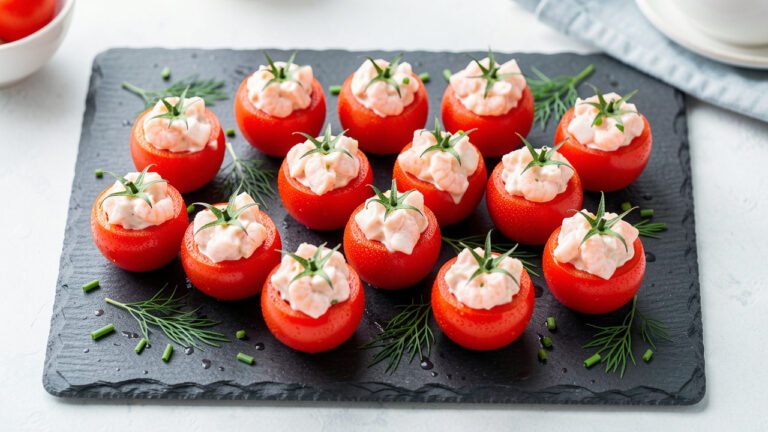
Party Appetizers
Cold, No-Bake, Bite-Size Party Appetizer
Last updated: September 29, 2026
These are one-bite appetizers, not a dinner course. Each cherry tomato holds about a teaspoon of cold shrimp salad, so a guest picks one up, eats it whole, and reaches for another.
I have made these for enough backyard parties to know exactly where they go wrong. Watery shells and rubbery shrimp ruin more batches than any seasoning mistake, and both are easy to prevent once you know the trick.
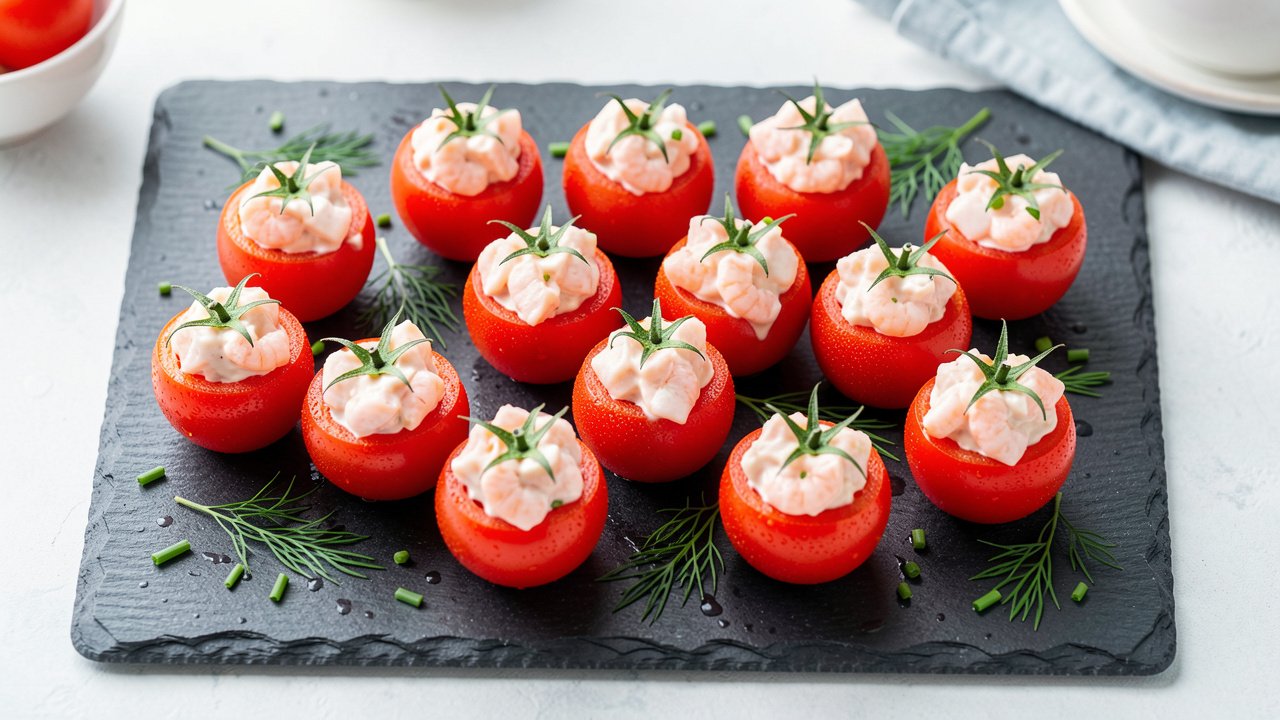
Why These Shrimp Stuffed Cherry Tomatoes Work
Most stuffed tomato recipes are baked and eaten with a fork. This one is the opposite. The tomatoes stay raw and cold, so the shells keep their snap and the filling stays thick and creamy.
That cold, no-bake approach is also what makes them practical for a party. You can prep every component ahead, keep it in the fridge, and assemble in ten minutes while guests are arriving.
The whole recipe comes down to two failure points. Shells that were never drained leak juice onto the platter, and shrimp that cooked thirty seconds too long turn springy and tough.
Everything below is built around avoiding those two problems. Get them right and the rest of the recipe is just chopping and stirring.
Pro observation: A properly drained shell feels slightly tacky inside when you touch it with a fingertip, not slick. That dry-ish surface is what lets the creamy filling grip instead of slide.
Ingredients for Creamy Shrimp Filling and Tomato Shells
Kitchen Measurement Converter
Quickly convert between common cooking measurements without leaving the recipe. Pick a category, enter a value, and the result updates instantly.
Ingredient Notes and Smart Substitutions
Which Tomatoes to Buy
Choose large, firm cherry tomatoes or small cocktail tomatoes with thick walls. Thin-skinned ones tear the moment you scoop them, and grape tomatoes are usually too small and too narrow to fill.
Shrimp Size
Medium shrimp, around 41 to 50 per pound, are ideal because they chop down neatly. Raw is better than pre-cooked, since pre-cooked shrimp are almost always overdone already and taste watery.
The Creamy Base
Full-fat cream cheese is the most reliable binder. Greek yogurt tastes great but is looser, so if you use it, cut it with cream cheese rather than swapping one for one.
Herbs and Acid
Chives and dill suit shrimp better than basil here. Lemon juice keeps the filling from tasting flat, but add it by the teaspoon so the base does not thin out.
Equipment
- Small serrated knife
- Melon baller or 1/4 tsp spoon
- Wire cooling rack
- Small saucepan
- Bowl for ice water
- Piping bag or zip-top bag
Before You Start
1. Build the timeline backward. The shells need 20 to 30 minutes upside down and the filling needs at least 30 minutes in the fridge, so start both before you do anything else.
2. Set up an ice bath first. Fill a bowl with ice and water before the shrimp go in the pan. You will have about ten seconds to move them once they are done.
3. Soften the cream cheese. Cold cream cheese fights the spoon and leaves lumps that clog a piping tip. Twenty minutes on the counter is enough.
How to Make Stuffed Cherry Tomatoes Step by Step
Cut and Steady the Tomato Shells
Slice the top quarter off each cherry tomato with a small serrated knife. Then shave a paper-thin sliver off the bottom so the tomato stands upright on the platter.
Go carefully on that bottom cut. If you slice through into the cavity, the shell will leak from underneath no matter how well you drain it.
Hollow and Drain the Shells
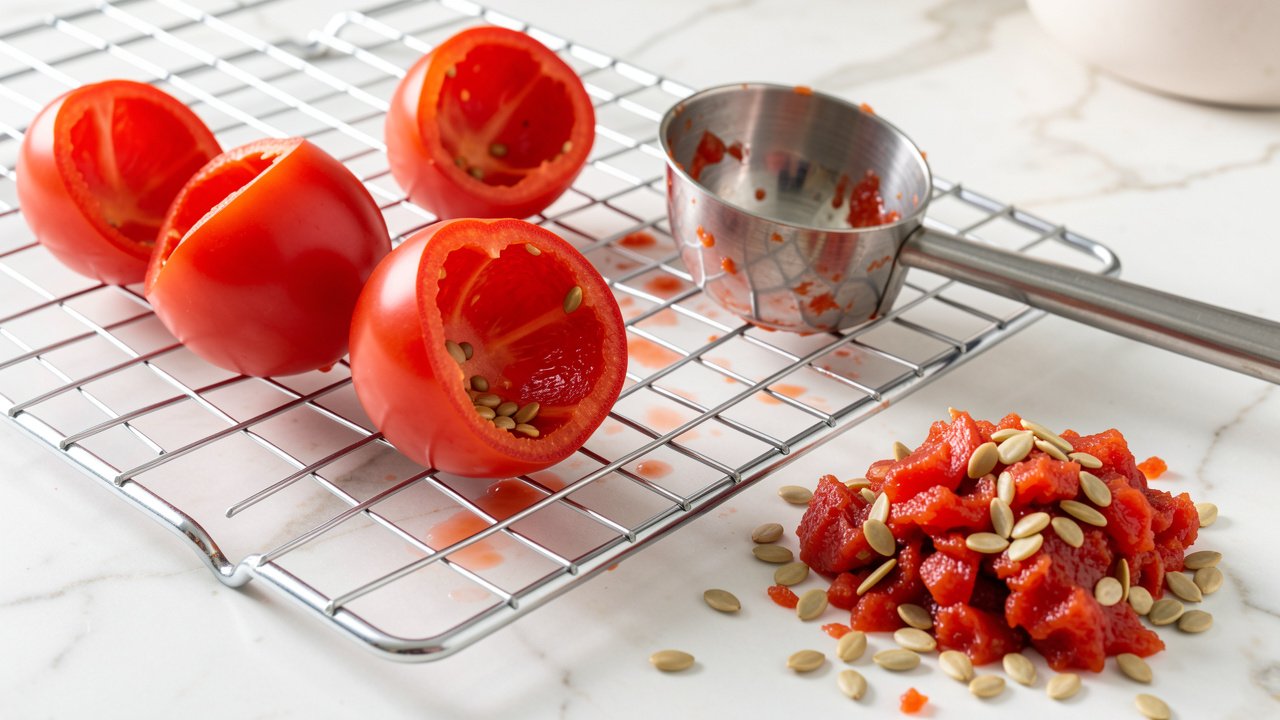
Scoop out the seeds and pulp with a melon baller or the tip of a quarter-teaspoon measuring spoon. Work around the inside wall rather than digging straight down, which keeps the wall thick enough to hold its shape.
Sprinkle a small pinch of salt inside each shell, then set them upside down on a wire rack or a folded paper towel for 20 to 30 minutes. The salt pulls out the last of the juice and you will see a real puddle underneath by the end.
This is the single step people skip, and it is the number one reason stuffed tomatoes fail. Skip it and the filling floats away on a pool of tomato water within twenty minutes of hitting the table.
Poach the Shrimp Gently
Bring a saucepan of salted water to a bare simmer, with small bubbles rising but no rolling boil. Slide in the shrimp and cook 2 to 3 minutes, which is genuinely all they need.
Watch the shape instead of the clock. A shrimp curled into a loose C is done, while one pulled into a tight O has gone too far and will chew like a rubber band.
The USDA guidance for shrimp is an internal temperature of 145F, and they are safe once the flesh is opaque all the way through. On a piece this small a thermometer is awkward, so the color and curl cues are the practical test.
Shock in Ice Water and Chop Fine
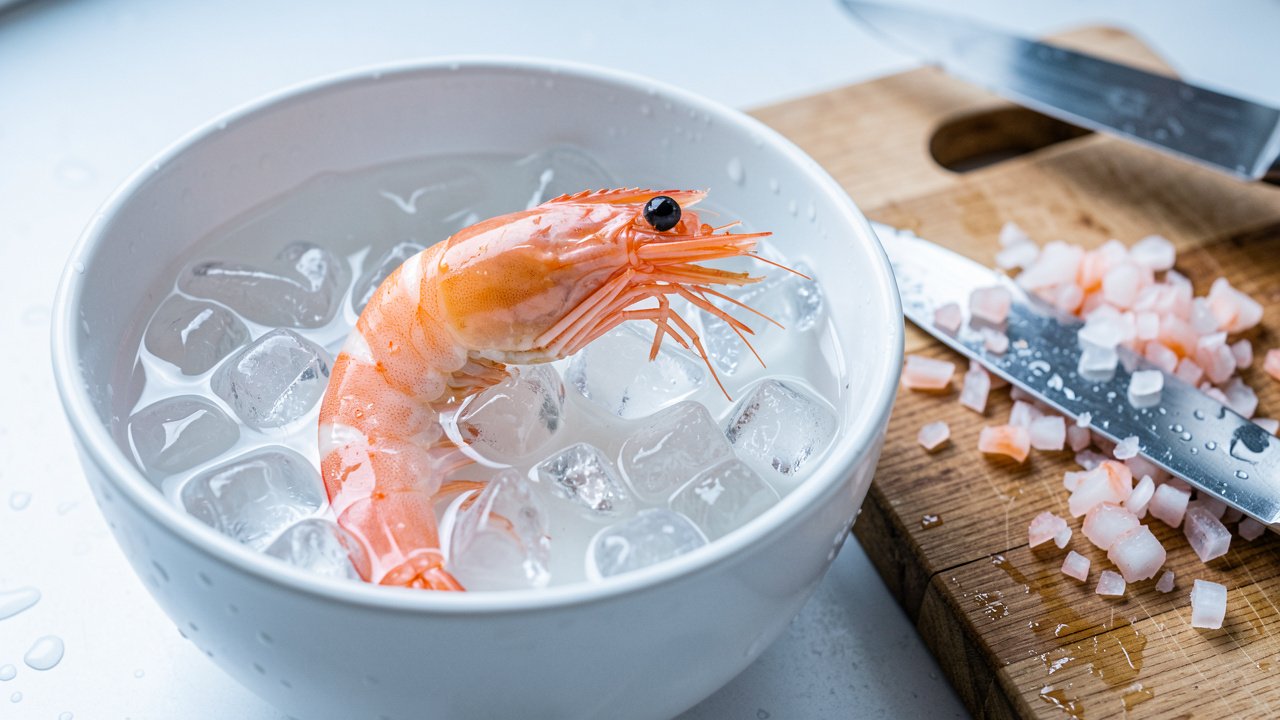
Move the shrimp straight into the ice bath the second they turn pink and opaque. Carryover heat keeps cooking them in a warm pan, and these will sit in a fridge for a while afterward, so stopping the heat cold matters more here than in a hot dish.
Once chilled, pat them very dry and chop them fine, into pieces roughly the size of a pea. Big chunks will not pass through a small tomato opening and they make the filling break apart when you pipe it.
Mix and Chill the Creamy Filling
Beat the softened cream cheese with the mayonnaise, lemon juice, Dijon, garlic powder, and hot sauce until completely smooth. Then fold in the shrimp, celery, chives, dill, salt, and pepper.
The filling has to be thick enough to hold a peak on the spoon. A loose dressing runs straight out of the shell, so drain anything watery, especially the celery, before it goes in.
Cover and refrigerate at least 30 minutes. Chilling firms the cream cheese back up so the filling keeps its shape instead of slumping.
Pipe the Filling and Serve Cold
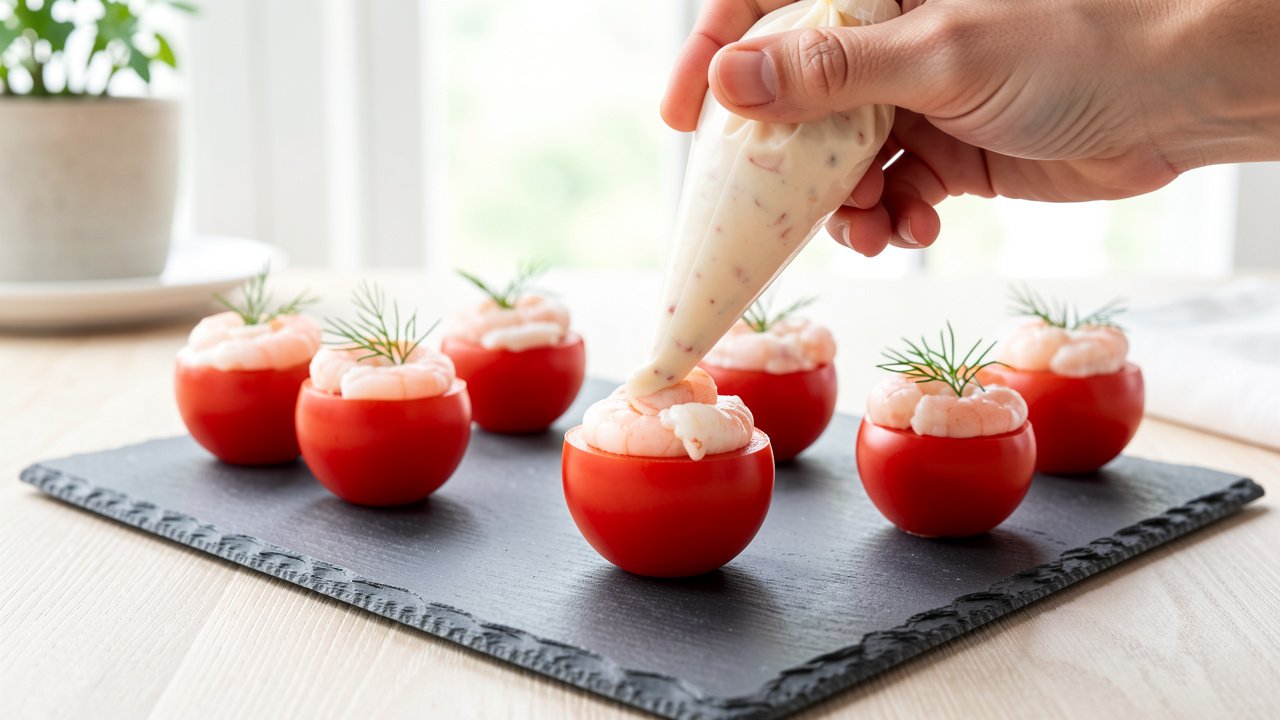
Spoon the cold filling into a piping bag, or a zip-top bag with about half an inch snipped off one corner. For an opening this small a bag is genuinely faster than a spoon, and the tops come out neat instead of smeared.
Fill each shell so the filling mounds just above the rim. Top with a little extra dill or chive, and serve them straight from the fridge while they are still cold and firm.
Chef’s Tips From Real Kitchen Testing
Buy two or three extra tomatoes beyond what you need. A couple always split at the bottom cut, and having spares saves you a second trip to the store.
Save the scooped tops and stir the firmest bits into a salsa or salad. Discard the wet seed jelly, which adds nothing but liquid.
Taste the filling after it has chilled, not before. Cold mutes salt and acid, so a mix that seemed well seasoned at room temperature often needs another pinch and a squeeze of lemon.
Chill the serving platter in the freezer for ten minutes before plating. It keeps the bites cold noticeably longer on a warm patio.
Recipe Variations
Serving Ideas for Cold Shrimp Tomato Bites
- Bedded on crushed ice to stay cold outdoors
- Alongside sparkling water with lemon
- On a board with olives, cornichons, and crackers
- Next to a green herb salad for a light lunch
They also fit neatly onto a bigger tomato-forward spread. A bowl of fresh tomato salsa and a platter of tomato mozzarella salad cover the table without repeating a single texture.
Nutrition Facts
Estimates per serving of 3 stuffed tomatoes, and they shift with the shrimp size and the cream cheese you choose.
Make-Ahead Plan for Parties
Prep the two components separately up to one day ahead. Hollow, salt, and drain the shells, then store them in a covered container in the fridge, and keep the filling in its own sealed bowl.
Do not stuff them the night before. Filled tomatoes weep as they sit, and by morning the platter is swimming even if you drained the shells properly.
Stuff within about an hour of serving. That is enough lead time to get the platter looking right and short enough that everything stays firm.
Storage and Food Safety
Common Mistakes to Avoid
Troubleshooting Watery or Rubbery Results
Liquid pooling on the platter? The shells did not drain long enough. Lift the tomatoes onto fresh paper towel, blot the platter dry, and give any unfilled shells another fifteen minutes upside down.
Shrimp chewy and springy? They overcooked. Nothing fixes it after the fact, so next batch pull them at the loose C stage and shock them faster.
Filling will not squeeze through the bag? The shrimp pieces are too big. Tip it back onto the board, chop the chunks smaller, and stir it back together.
Tomatoes tipping over? The bottoms were not flattened enough. Shave another whisper off the base, keeping the cut well clear of the cavity.
Frequently Asked Questions
More Tomato Recipes to Try
Culinary Reviewer: Ghazala Shakeel
Reviewed for: cold-appetizer technique and seafood food safety