Italian Recipes
Bold Tomato Pasta
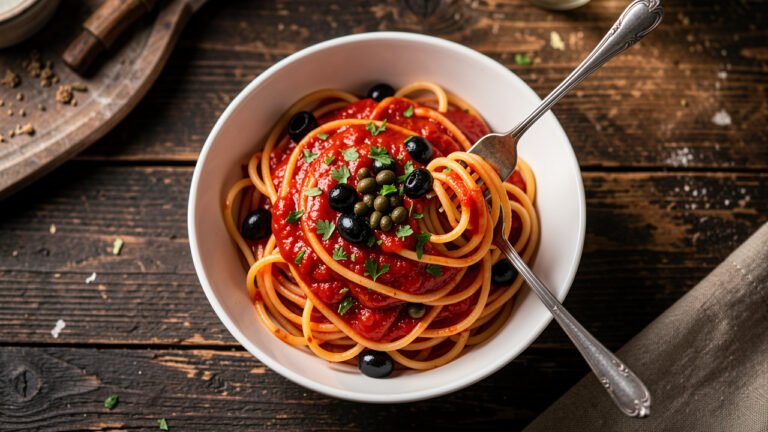
Puttanesca is the pasta you reach for when the fridge looks empty but the pantry is full. Almost everything in it keeps for months, so a jar of capers, a tin of anchovies, a handful of olives, and a can of tomatoes can turn into a loud, satisfying dinner on a weeknight. The flavor is far bigger than the effort.
The name has a colorful reputation in Naples, but the cooking is simple and honest. You are really just building a fast tomato sauce and letting a few salty, briny pantry staples do the heavy lifting. Once you have made it once, you will have the rhythm memorized and can pull it together without a recipe.
This version keeps the balance classic and controlled. It leans on melted anchovies for depth, good olives and capers for brine, and just enough red pepper flakes to warm the back of your throat. Below you will also find an honest vegetarian take that skips the anchovies without leaving the sauce tasting empty.
Why This Spaghetti alla Puttanesca Recipe Works
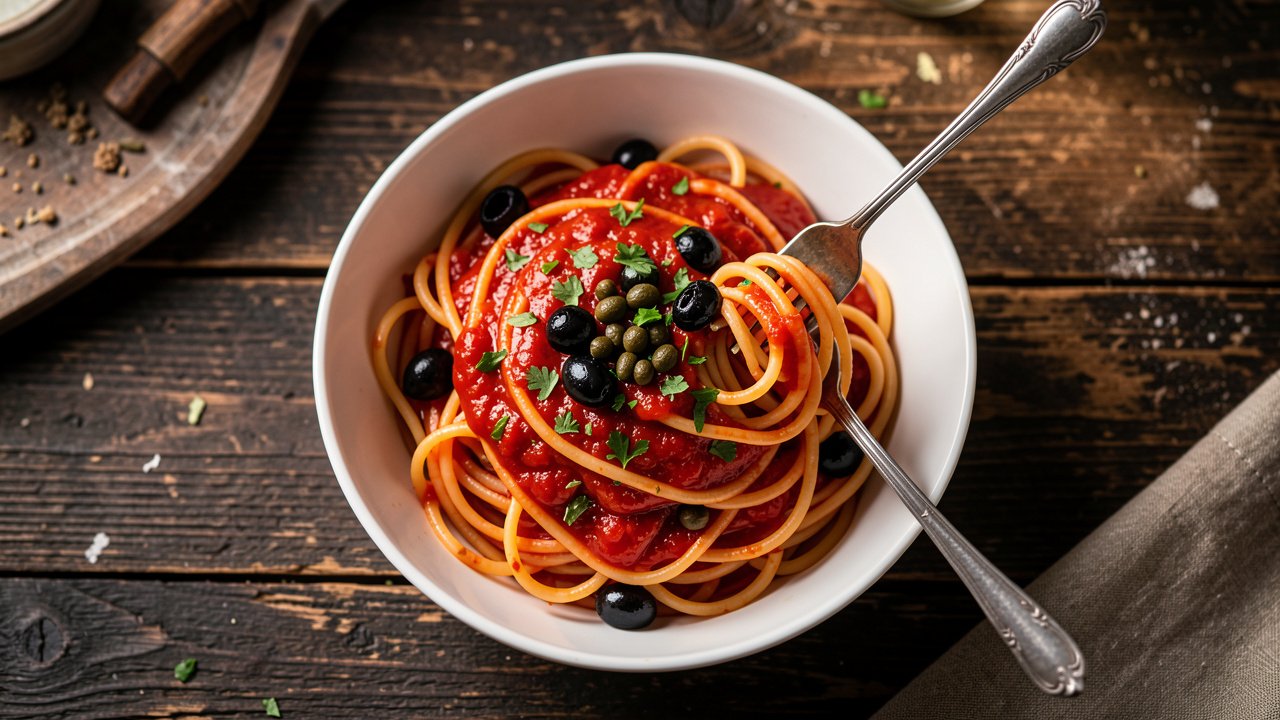
Puttanesca works because every ingredient in it is a flavor bomb, and they all pull in the same savory direction. Anchovies, capers, and olives are each packed with glutamates, the natural compounds that make food taste rich and meaty. Layer them into a tomato sauce and you get depth that normally takes hours of simmering, in a fraction of the time.
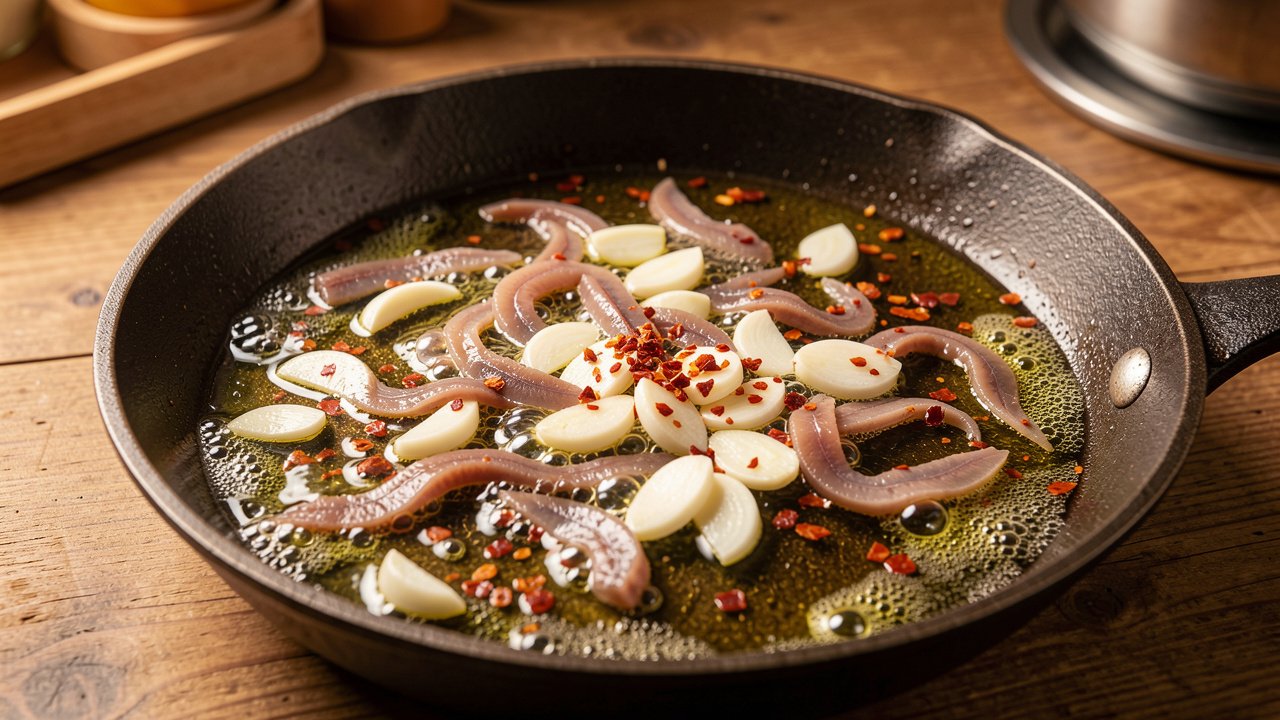
The single most important step is melting the anchovies. You do not lay them on top of the pasta; you cook them gently in warm oil with the garlic until they dissolve completely. What is left behind is not fishiness but a round, savory hum under the whole dish, and even people who swear they hate anchovies rarely notice they are there.
Balance is the other quiet secret of a good puttanesca. The olives, capers, and anchovies are already salty, so you go easy on any added salt and let the tomatoes and a little pasta water round everything out. Taste before you reach for the salt shaker, because it is very easy to tip this sauce over the edge.
It is also fast and forgiving. The sauce cooks in about the same time the spaghetti needs to boil, so the whole thing lands on the table in roughly half an hour. Once you know the rhythm, puttanesca becomes the reliable pantry dinner you can throw together without a shopping trip.
Pro observation: The anchovies are fully melted when you can no longer see any fillet shapes in the oil and the whole pan smells nutty and savory rather than sharp. That is your cue to add the tomatoes.
Spaghetti alla Puttanesca Ingredients
Kitchen Measurement Converter for Puttanesca
Quickly convert between common cooking measurements without leaving the puttanesca recipe. Pick a category, enter a value, and the result updates instantly.
Puttanesca Ingredient Notes and Substitutions
Puttanesca Tomatoes
Canned San Marzano or whole peeled tomatoes give the sweetest, most reliable base. Crush them by hand or with a spoon as they go in. Good fresh tomatoes work in summer, but canned are usually more consistent for this sauce.
Olives for Puttanesca
Use real Kalamata or Gaeta olives, not the bland canned black ones. Buy them whole and pit them yourself for the best flavor and texture. Pitted olives save time but can taste a little flat.
Anchovies in Puttanesca
Oil-packed anchovy fillets melt smoothly and season the whole sauce. Salt-packed ones are excellent but need rinsing first. Do not skip them unless you are making the vegetarian version below.
Capers for Puttanesca
Salt-packed capers have the cleanest, brightest flavor once rinsed, while brined capers are more convenient. Either works; just drain them well so the sauce does not turn too sharp or too salty.
Equipment for Puttanesca
- Large pot for pasta
- Wide skillet or saute pan
- Wooden spoon
- Sharp knife and board
- Colander
- Tongs or pasta fork
Before You Start Your Puttanesca
1. Fill the pasta pot first. The sauce and the spaghetti finish at nearly the same time, so get a big pot of water heating before you do anything else.
2. Go easy on the salt. The olives, capers, and anchovies bring plenty of salt of their own, so salt the pasta water normally but wait to add any salt to the sauce.
3. Prep the pungent bits. Slice the garlic thin, pit and halve the olives, and drain the capers before the pan gets hot, because this sauce moves quickly once it starts.
Step-by-Step Puttanesca Instructions
Start the Pasta Water for Puttanesca
Bring a large pot of water to a rolling boil and salt it well, about a tablespoon. While it heats, thinly slice the garlic, pit and halve the olives, drain the capers, and chop the parsley. Having everything ready means the sauce and spaghetti stay in sync.
Melt the Anchovies for Your Puttanesca
Warm 1/4 cup of olive oil in a wide skillet over medium-low heat. Add the sliced garlic, anchovy fillets, and red pepper flakes, and cook gently for 2 to 3 minutes, stirring, until the anchovies dissolve into the oil and the garlic turns pale gold. Keep the heat low so the garlic does not burn and turn bitter.
Add Olives and Capers to the Puttanesca
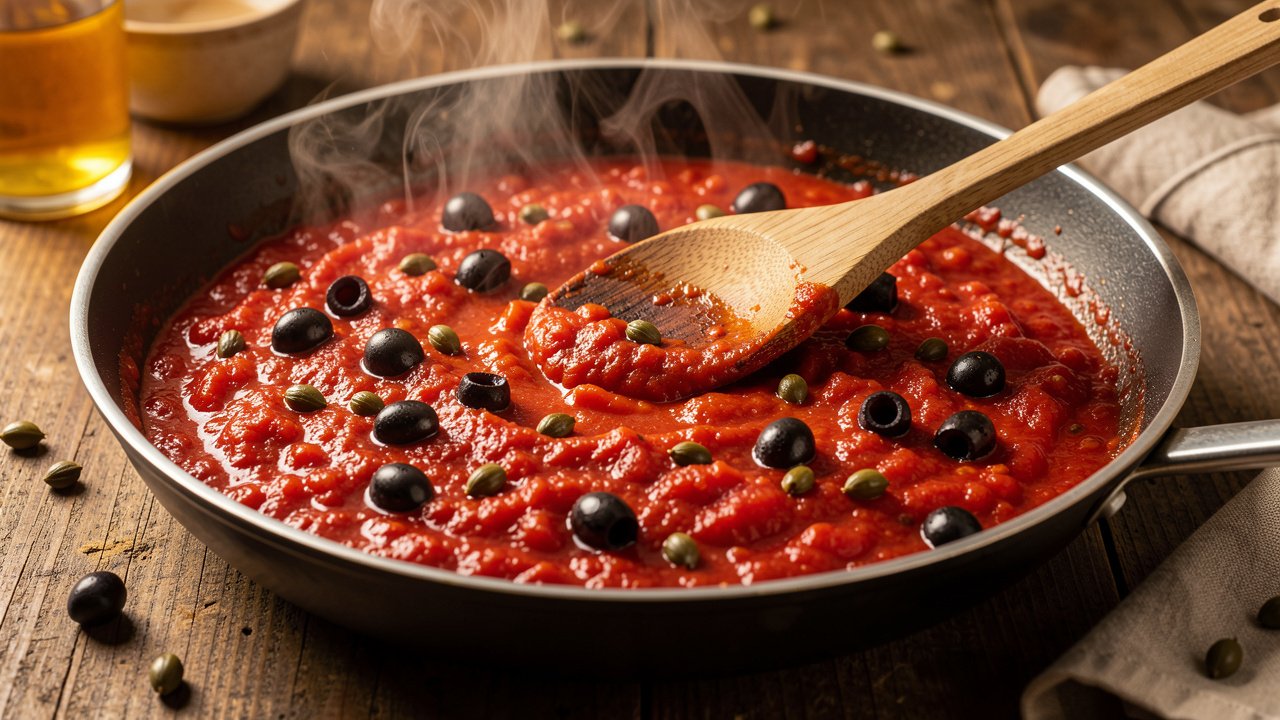
Stir the halved olives and drained capers into the fragrant oil and cook for 1 minute so they warm through and release their brine into the base. This quick step lets their salty, briny flavor spread through the whole sauce rather than sitting on top.
Simmer the Puttanesca Tomato Sauce
Add the canned tomatoes, crushing them with your spoon as they go in. Bring to a simmer and cook 10 to 12 minutes, stirring now and then, until the sauce thickens and the raw tomato edge is gone. Taste now, and only add salt if it truly needs it, since the olives and anchovies already carry a lot.
Cook the Spaghetti for the Puttanesca
Drop the spaghetti into the boiling water and cook until just al dente, usually a minute less than the package says. Before you drain, scoop out a cup of the starchy pasta water and set it aside. That water is what will make the sauce cling to every strand.
Toss and Finish the Puttanesca
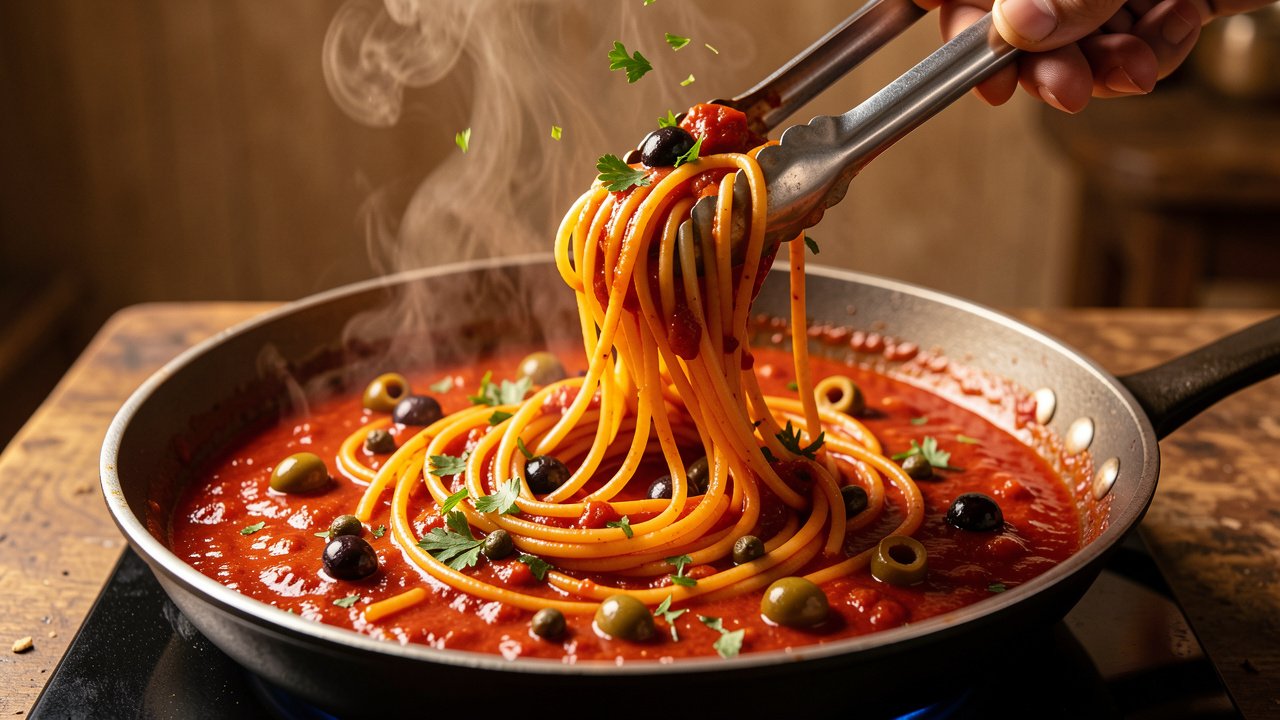
Add the drained spaghetti straight into the sauce along with a splash of the reserved pasta water. Toss over medium heat for about a minute until the sauce coats the pasta glossily, adding more pasta water if it looks dry. Stir in most of the parsley, then serve right away with the rest scattered on top.
Chef’s Tips for Better Puttanesca
Taste before adding any salt. The anchovies, olives, and capers are salty on their own, so season the sauce last and let those ingredients do most of the work.
Keep the heat low while the anchovies melt. Rushing it can scorch the garlic, and burnt garlic turns the whole puttanesca bitter.
Save the pasta water and finish the spaghetti in the pan. That starchy splash emulsifies the oil and tomato into a glossy sauce that grips the noodles.
Puttanesca Recipe Variations
Puttanesca Serving Suggestions
- Crusty bread to mop up the sauce
- A simple green salad with lemon
- A grating of Pecorino or Parmesan
- Extra parsley and a drizzle of olive oil
Puttanesca Nutrition Facts
Values are estimates per serving and vary with the olives, anchovies, and amount of oil you use.
Make-Ahead Puttanesca Tips
The puttanesca sauce is a great make-ahead component, because its flavors deepen as it rests. Cook the sauce through step 4, cool it, and refrigerate for up to three days. When you are ready to eat, reheat the sauce, boil fresh spaghetti, and toss the two together with a little pasta water so the pasta never sits and turns gummy.
Storing and Reheating Puttanesca
Common Puttanesca Mistakes to Avoid
Troubleshooting Your Puttanesca
Sauce too salty? Stir in a splash of plain water or a little extra crushed tomato to dilute it, and add unsalted pasta on the next batch.
Sauce too thin? Simmer it a couple of minutes longer before you add the spaghetti, or toss with less pasta water.
Tastes flat? A pinch of red pepper flakes, a few more capers, or a squeeze of lemon will wake the puttanesca back up.
A Note on Puttanesca and Neapolitan Cooking
Puttanesca comes from Naples and the surrounding coast, where cooks turned humble, long-keeping pantry staples into something loud and delicious. The salt-cured anchovies, capers, and olives are classic southern Italian flavors, which is why the dish tastes so at home there. Some stories tie the name to the busy port kitchens and late-night cooks who needed a fast, cheap meal, though the exact origin is happily debated.
What matters is that puttanesca proves you do not need fresh, expensive ingredients to eat well. A well-stocked pantry and a can of good tomatoes are enough for a genuinely memorable bowl of pasta. If you enjoy bold tomato bowls, our creamy Indian tomato soup and hearty tomato lentil soup share the same comforting, tomato-forward spirit.
Puttanesca Frequently Asked Questions
More Tomato Recipes to Try After Puttanesca
Last updated: July 23, 2026