Spanish Recipes
Cold Tomato Soup
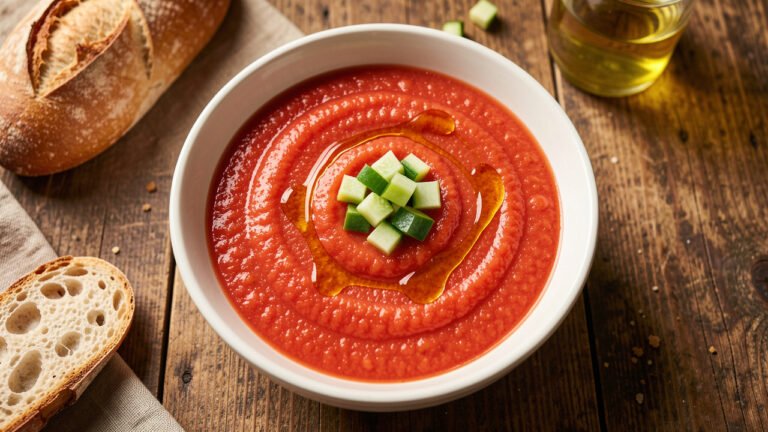
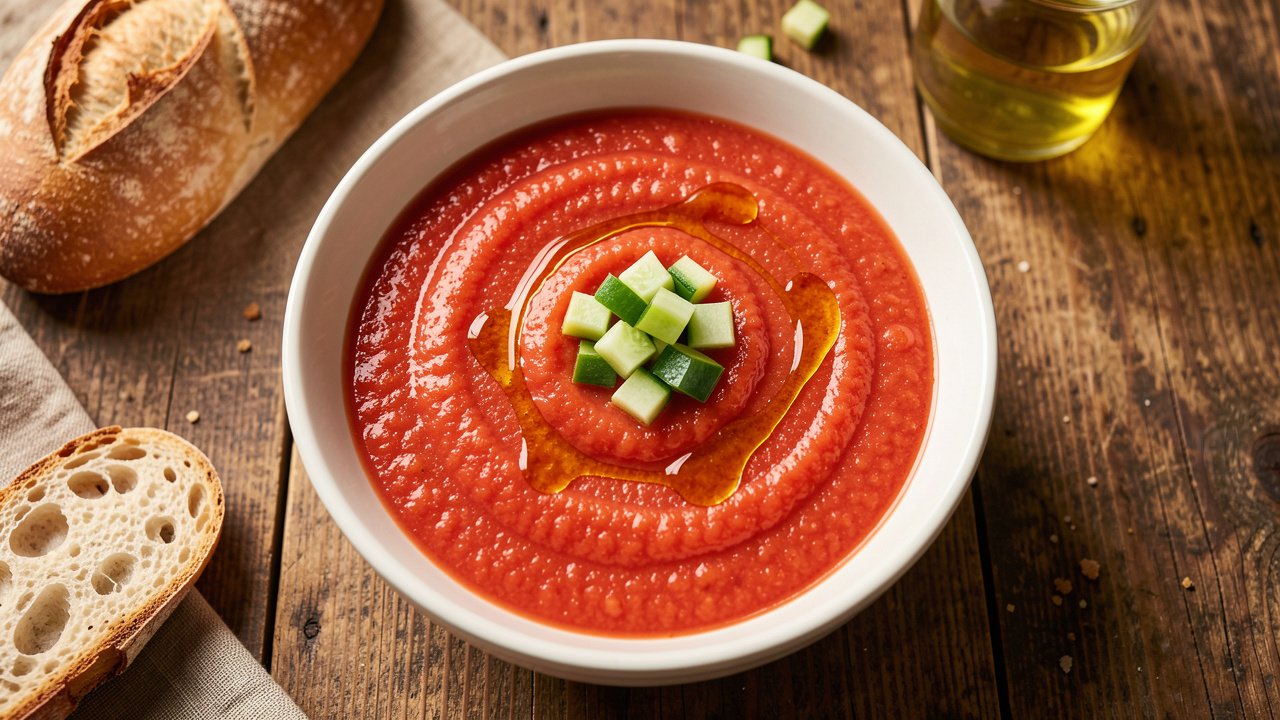
On a hot day, few things are as reviving as a cold bowl of classic Spanish gazpacho. There is no cooking at all. You simply blend ripe tomatoes with a little bread, olive oil, and sherry vinegar, then chill it until it is properly cold. The result is bright, savory, and refreshing.
Why This Classic Spanish Gazpacho Works
Great gazpacho is really about great tomatoes. Because nothing is cooked, every flavor in the bowl comes straight from the raw ingredients, so ripe, in-season tomatoes are what make this cold soup taste sweet and full instead of thin and watery. When tomatoes are at their peak, you barely need anything else.
The second secret is the bread. A small amount of day-old bread, soaked and blended in, does not make the soup taste of bread at all. Instead it thickens the gazpacho and helps the olive oil emulsify into the tomato juice, giving you that creamy, velvety body without any dairy or cooking.
Sherry vinegar is the third pillar. That splash of sharp, slightly nutty acid is what lifts the whole bowl and makes it taste unmistakably Spanish. Balanced against the sweetness of the tomatoes and the richness of the oil, it keeps every spoonful lively.
Finally, this recipe is forgiving and flexible. You can blend it silky smooth or leave it a little rustic, make it with or without bread, and dress it up with any garnish you like. Once you have the ratios down, gazpacho becomes a five-minute answer to a hot afternoon.
Pro observation: Season the blended gazpacho, then chill it, then taste again before serving. Cold dulls flavor, so a soup that tastes perfect while warm from the blender will often need a little more salt and vinegar once it is properly cold.
Gazpacho Ingredients
Gazpacho Measurement Converter
Quickly convert between common cooking measurements without leaving the gazpacho recipe. Pick a category, enter a value, and the result updates instantly.
Ingredient Notes and Substitutions for Gazpacho
Ripe Tomatoes
Peak-season, deeply red tomatoes are non-negotiable for good gazpacho. Roma or vine-ripened work well. If your tomatoes are pale or firm, a pinch of sugar and extra salt help, but nothing beats truly ripe fruit.
Sherry Vinegar
Sherry vinegar gives the authentic Spanish tang and a gentle nutty depth. If you cannot find it, red wine vinegar is the closest honest swap, or use a little less white wine vinegar. Avoid harsh distilled vinegar here.
Day-Old Bread
A crustless piece of stale white or country bread thickens the soup and makes it silky. It is traditional but optional. Soak it in a splash of water first so it blends smoothly into the tomatoes.
Extra Virgin Olive Oil
Use a fruity extra virgin olive oil, since its flavor really shows in a raw soup. Drizzle in slowly at the end so it emulsifies. Save a little extra to swirl over each bowl before serving.
Equipment for Making Gazpacho
- Blender or food processor
- Fine mesh sieve
- Sharp knife and board
- Large mixing bowl
- Ladle
- Airtight container for chilling
Before You Start Your Gazpacho
1. Use the ripest tomatoes you can find. Since the gazpacho is raw, the tomatoes carry the whole dish, so buy them at peak ripeness and let firm ones sit on the counter a day or two.
2. Soak the bread ahead. Tear the day-old bread and soak it in a little water so it blends into the soup smoothly rather than leaving lumps.
3. Plan for chilling time. Gazpacho must be served cold, so make it at least 2 hours before you want to eat, or even the day before.
Step-by-Step Gazpacho Instructions
Prep the Tomatoes and Vegetables
Core the ripe tomatoes and chop them roughly. Peel and chop the cucumber, seed and chop the green pepper, and peel the garlic. There is no need to be neat, since everything goes into the blender. Working with fully ripe tomatoes here is what sets a great gazpacho apart.
Soak the Bread and Blend the Gazpacho
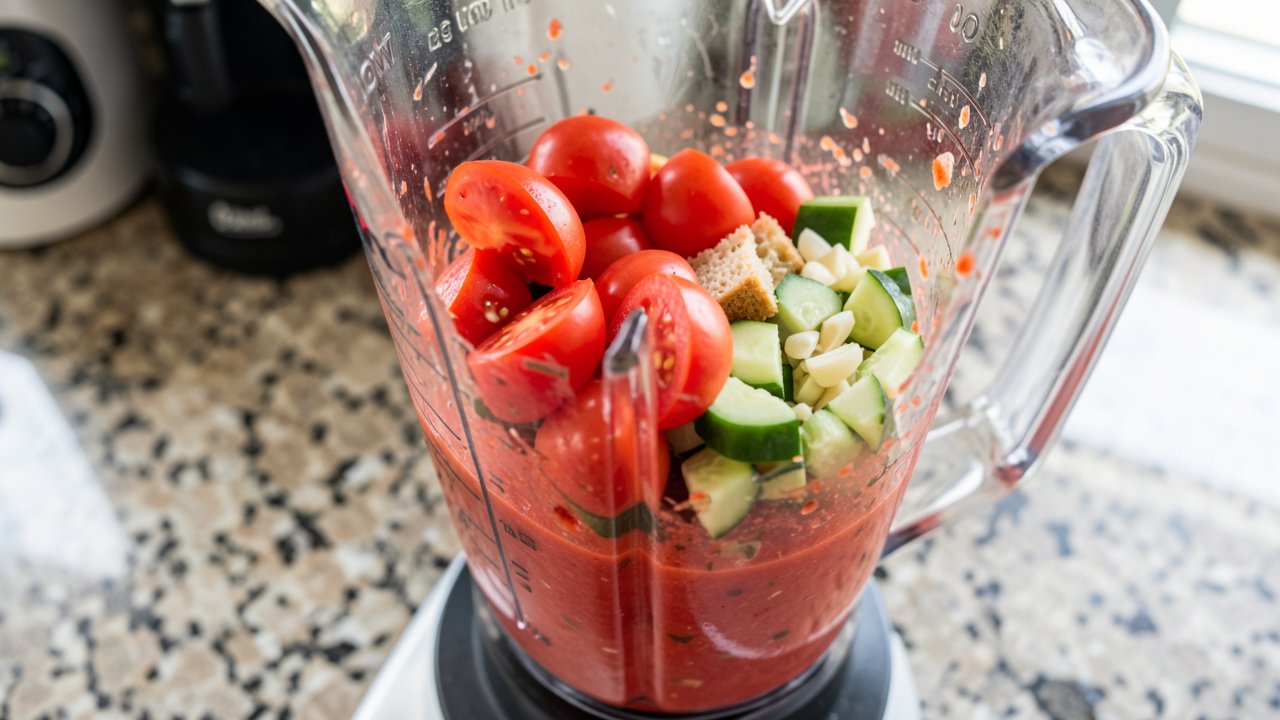
Tear the day-old bread into pieces and soak it in a splash of cold water for a few minutes, then squeeze out the excess. Add the tomatoes, cucumber, green pepper, garlic, soaked bread, sherry vinegar, and salt to the blender. Blend on high until the mixture is smooth and no chunks remain.
Emulsify Your Gazpacho with Olive Oil
With the blender running on low, drizzle in the extra virgin olive oil in a slow, steady stream. This helps the oil emulsify into the tomato base, which is what gives gazpacho its creamy, velvety texture. The color will lighten slightly and the soup will look glossy and smooth.
Strain the Gazpacho for a Silky Texture
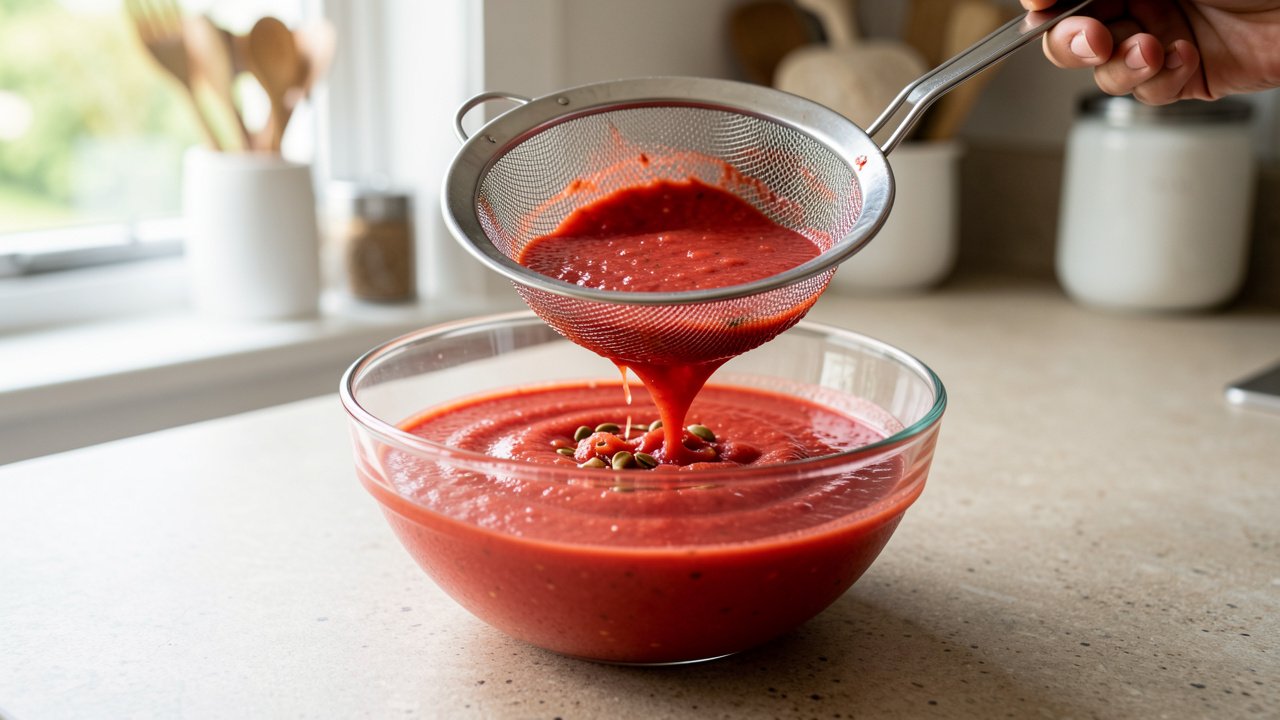
For the classic silky finish, pour the gazpacho through a fine mesh sieve into a large bowl, pressing with a ladle to push the liquid through and leaving the skins and seeds behind. If you prefer a rustic, thicker gazpacho, you can skip this step and serve it as is.
Season and Chill the Gazpacho
Taste the gazpacho and adjust with more salt or sherry vinegar until it is bright and balanced. If it is too thick, whisk in a little cold water. Cover and refrigerate for at least 2 hours, since gazpacho is meant to be served properly cold and the flavors settle as it chills.
Garnish and Serve the Gazpacho
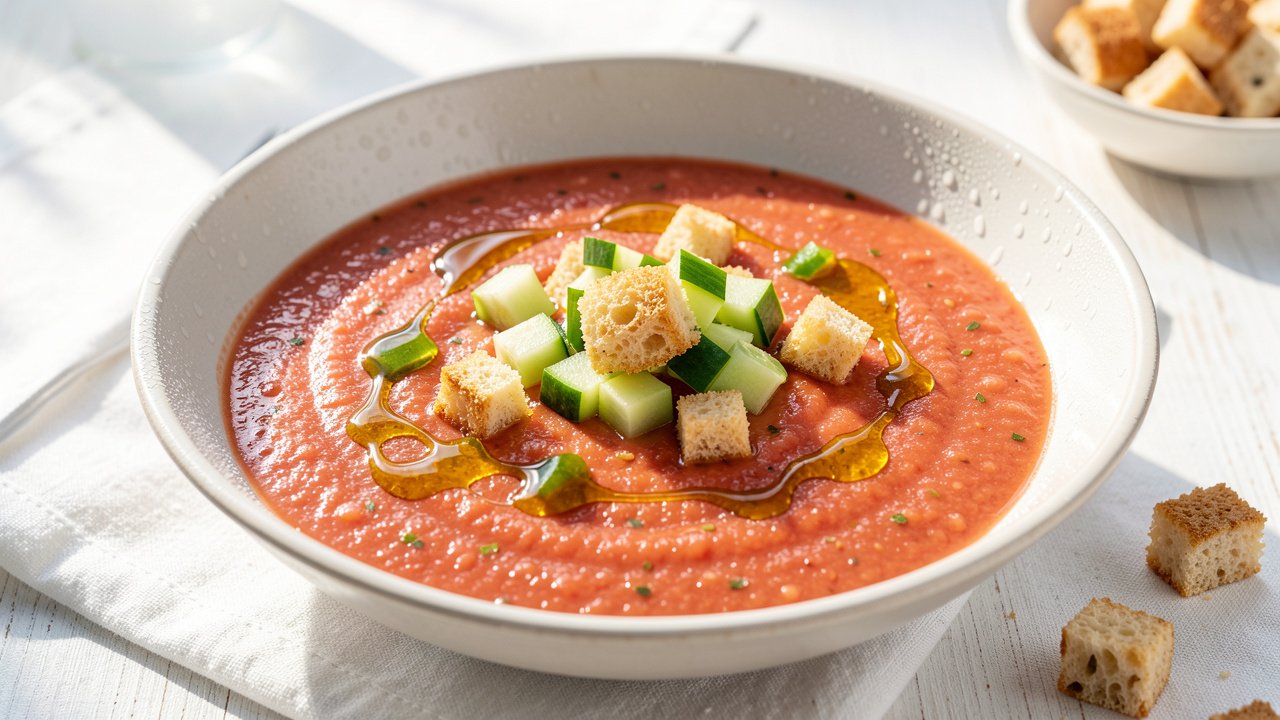
Taste the chilled gazpacho one last time and correct the seasoning, as cold food needs a bolder hand. Ladle it into bowls or glasses, drizzle with more olive oil, and top with finely diced cucumber, pepper, and a few croutons. Serve it cold and keep any leftovers refrigerated.
Chef’s Tips for Better Gazpacho
Chill your gazpacho hard. It should be genuinely cold, not just cool, so give it a couple of hours in the fridge or drop in an ice cube or two before serving.
Season after chilling. Cold mutes flavor, so a gazpacho that tasted balanced at room temperature usually needs a little more salt and vinegar once cold.
Go easy on the garlic. Raw garlic grows stronger as the soup sits, so start with one clove. You can always blend in more, but you cannot take it out.
Gazpacho Recipe Variations
Serving Suggestions for Gazpacho
- Crusty bread or garlic croutons on the side
- Diced cucumber, pepper, and hard-boiled egg toppings
- Served in glasses as a chilled starter or drink
- A drizzle of good olive oil over each bowl
Gazpacho Nutrition Facts
Values are estimates per serving of gazpacho and vary with the amount of bread and olive oil you use.
Make-Ahead Gazpacho Tips
Gazpacho is a perfect make-ahead dish, since it actually needs chilling time and the flavors deepen as it rests. Blend it a day before, cover tightly, and refrigerate. Prepare the diced garnishes separately and add them only when you serve, so they stay crisp. Taste and re-season the cold soup just before it goes to the table.
Storing and Keeping Gazpacho Fresh
Common Gazpacho Mistakes to Avoid
Gazpacho Troubleshooting
Gazpacho tastes flat? It almost always needs more salt and a little more sherry vinegar to wake up the tomatoes, especially after chilling.
Too thin or watery? Blend in a little more soaked bread, or use fewer watery cucumbers next time. The bread is what gives body.
Too sharp or acidic? Balance it with a drizzle more olive oil, a pinch of sugar, or an extra ripe tomato blended in.
Straining vs Rustic: The Gazpacho Texture Debate
There is no single correct texture for gazpacho, and cooks in Andalusia argue about it happily. The polished restaurant version is strained through a fine sieve until it is completely smooth and silky, almost like a savory tomato cream that you can sip from a glass.
The home-style version skips the sieve and stays a little thicker and more rustic, with the natural body of the blended vegetables. It is heartier and takes less work, and many people prefer it. Both are traditional, so blend, taste, and decide which gazpacho you like. There is no wrong answer here.
The Bread Question in Gazpacho
Traditional Andalusian gazpacho includes a little day-old bread, which thickens the soup and helps the olive oil emulsify into a creamy body. It is not there to taste of bread; it works quietly in the background to improve texture.
You can absolutely leave it out. To make gazpacho gluten-free, either skip the bread entirely for a lighter, more drinkable soup, or swap in a gluten-free bread. Without bread the gazpacho will be a touch thinner, so use very ripe tomatoes and blend well to keep it smooth.
A Note on Andalusian Gazpacho
Gazpacho comes from Andalusia in southern Spain, where cold soups are a practical answer to long, hot summers. Older versions were made with just bread, oil, vinegar, and water, and tomatoes only joined the bowl after they arrived from the Americas. Today the tomato version is the classic. If you love cold tomato dishes, our creamy tomato soup and tomato basil pasta put the same ripe fruit to good use.
Gazpacho Frequently Asked Questions
More Tomato Recipes to Try
Last updated: September 29, 2026