French Recipes
Provencal Vegetable Stew
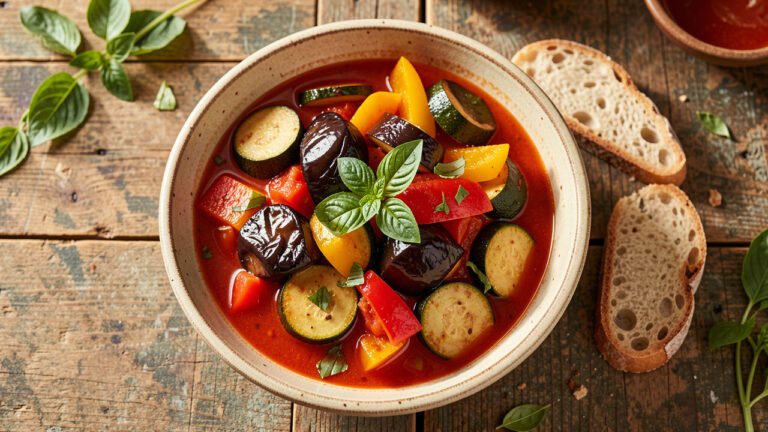
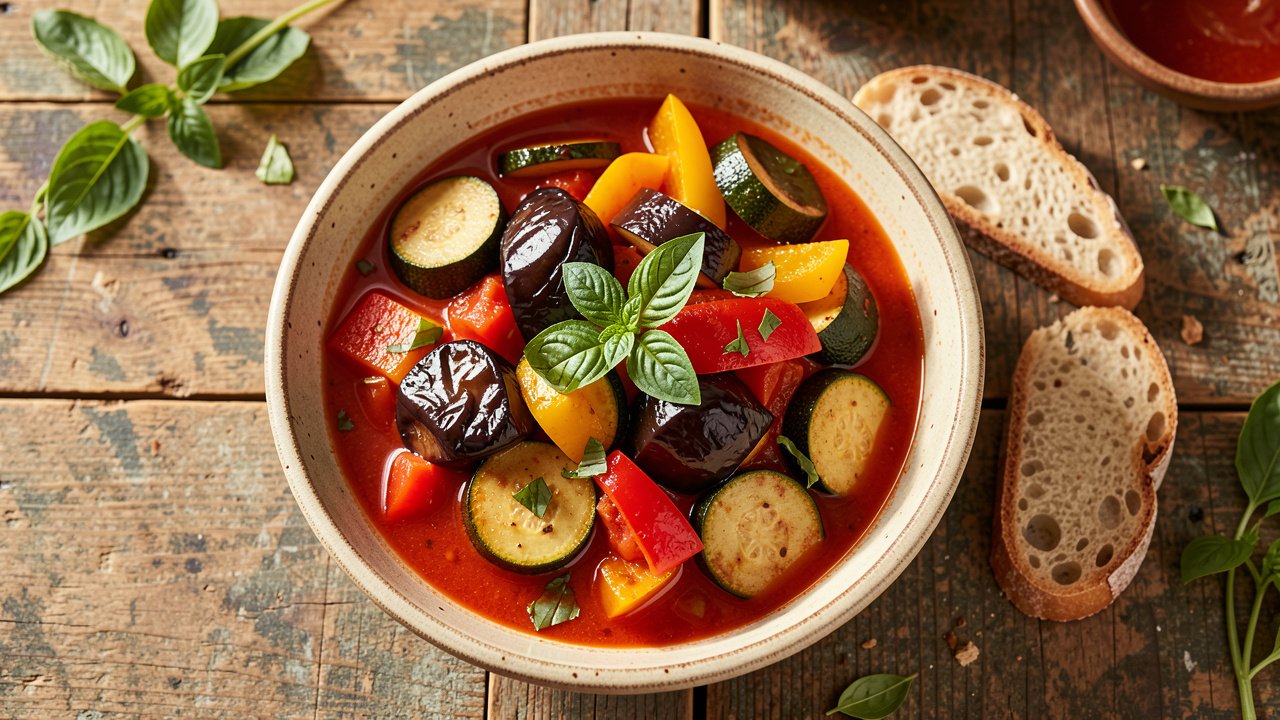
Ratatouille is proof that humble summer vegetables can become greater than the sum of their parts. When eggplant, zucchini, peppers, and tomatoes stew together with garlic and good olive oil, they trade flavors until the whole pot tastes deeply savory and sweet. This classic French ratatouille recipe keeps things rustic and honest, the way home cooks in Provence have made it for generations.
Why This Classic French Ratatouille Works
Ratatouille is a lesson in patience and good ingredients. Each vegetable brings something different: eggplant turns silky and rich, zucchini stays tender, peppers add sweetness, and tomatoes tie it all together into a bright, savory sauce. Cooked slowly, they meld into a stew that tastes far more complex than its short shopping list suggests.
Good olive oil and plenty of garlic form the backbone of the dish. The oil carries the flavor of the herbs and softens the vegetables gently, while garlic adds depth without ever taking over. This is Provencal cooking at its most honest, letting simple produce speak for itself.
Cooking the tomatoes down into a proper base is what separates a memorable ratatouille from a watery one. You want the tomatoes broken down and jammy so the sauce clings to every piece of vegetable. That concentrated base is where the deep, sun-ripened flavor lives.
It is also wonderfully forgiving and flexible. You can serve this classic French ratatouille warm, at room temperature, or cold, as a side or a main, and it only improves after a night in the fridge. Once you know the method, you can adjust the vegetables to whatever the season offers.
Pro observation: The ratatouille is ready when the vegetables are glossy and coated in sauce, and a spoon dragged across the pan leaves a brief trail before the liquid slowly fills back in. That tells you the base has reduced enough.
Ingredients
Kitchen Measurement Converter
Quickly convert between common cooking measurements without leaving the recipe. Pick a category, enter a value, and the result updates instantly.
Ratatouille Ingredient Notes & Substitutions
Eggplant
Choose firm, glossy eggplant that feels heavy for its size. Dicing it evenly helps it cook through. Salting the pieces first draws out moisture and any bitterness, so they brown instead of steaming.
Zucchini & Peppers
Use small to medium zucchini, which have fewer seeds and firmer flesh. A mix of red and yellow bell peppers adds color and natural sweetness. Cut both into pieces close to the eggplant size for even cooking.
Tomatoes
Ripe summer tomatoes give the best fresh, sweet base. When they are pale or out of season, one 28-ounce can of good whole or crushed tomatoes is more reliable and still tastes wonderful.
Herbes de Provence & Basil
Herbes de Provence brings the classic aroma, while fresh basil stirred in at the end keeps the dish lively. If you only have dried basil and thyme, a pinch of each works in a pinch.
Equipment for Making Ratatouille
- Large Dutch oven or heavy pot
- Wooden spoon
- Sharp knife and board
- Colander for salting
- Measuring spoons
- Large skillet (optional)
Before You Start
1. Salt the eggplant early. Toss the diced eggplant with a little salt and let it sit in a colander for 20 minutes, then pat dry. This draws out moisture so it browns rather than turning mushy.
2. Cut everything a similar size. Aim for pieces around three quarters of an inch. Even cuts mean the vegetables finish cooking together instead of some turning to mush while others stay firm.
3. Warm your olive oil gently. Ratatouille rewards a patient, medium heat. Rushing with high heat scorches the garlic and herbs before the vegetables soften.
Step-by-Step Ratatouille Instructions
Prep and Salt the Vegetables
Dice the eggplant, toss it with a teaspoon of salt, and set it in a colander for 20 minutes. Meanwhile, dice the zucchini, bell peppers, and onion, mince the garlic, and chop the tomatoes. Pat the eggplant dry before cooking so the pieces brown well.
Brown the Eggplant
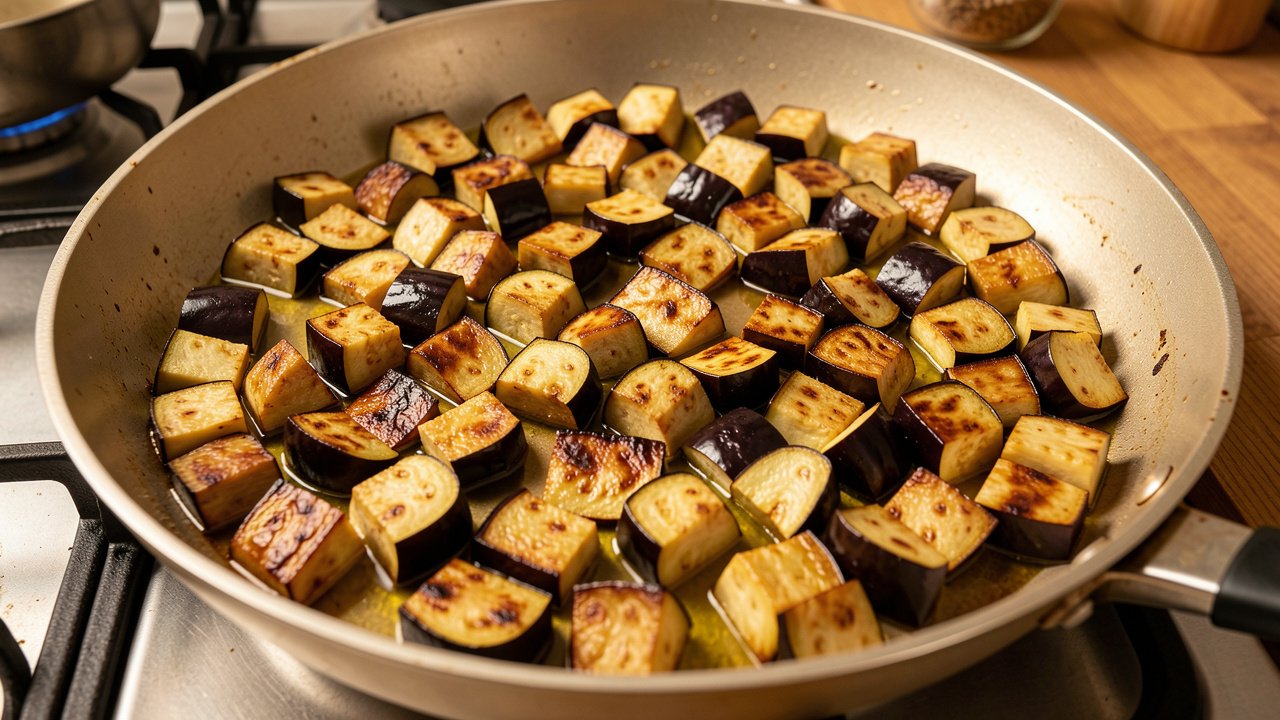
Heat 2 tablespoons of olive oil in a large pan over medium-high heat. Add the eggplant in a single layer and cook 6 to 8 minutes, turning, until golden and tender. Browning it first gives the whole ratatouille a richer, deeper flavor. Remove the eggplant and set it aside.
Soften the Peppers, Zucchini, and Onion
Add another 2 tablespoons of olive oil to the pan and cook the onion for 4 minutes until soft. Add the bell peppers and zucchini and cook 6 to 8 minutes more, stirring now and then, until they soften and pick up a little color. Stir in the garlic for the last minute, just until fragrant.
Build the Fresh Tomato Base
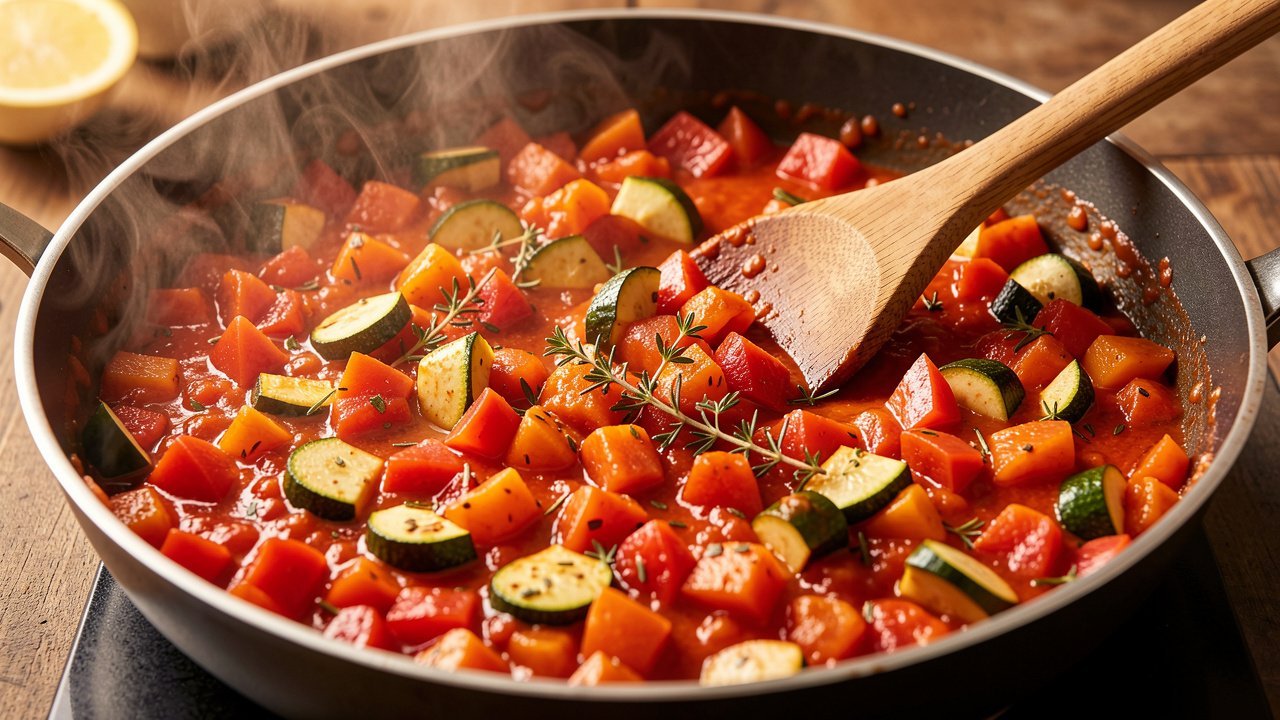
Stir in the tomato paste and cook 1 minute, then add the chopped tomatoes, herbes de Provence, bay leaf, salt, and pepper. Cook 10 minutes, stirring, until the tomatoes break down into a thick, glossy sauce. This concentrated base is the heart of a classic French ratatouille.
Combine and Simmer Slowly
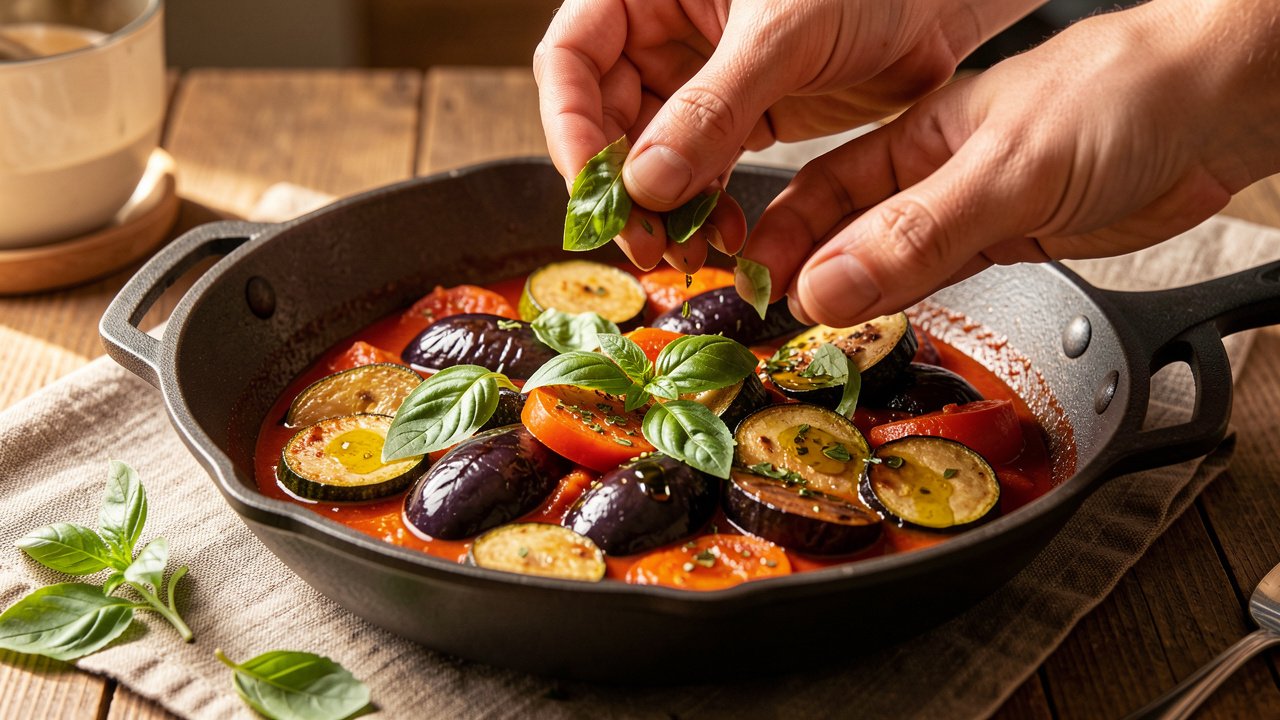
Return the browned eggplant to the pan and gently fold everything together. Lower the heat, cover partly, and simmer 15 to 20 minutes, stirring occasionally, until the vegetables are tender and glossy and the sauce has thickened. Taste and adjust the salt as it cooks down.
Finish with Basil and Rest
Remove the bay leaf, then stir in the torn fresh basil and a final drizzle of olive oil. Let the ratatouille rest off the heat for at least 10 minutes so the flavors settle. Serve it warm, at room temperature, or chilled the next day.
Chef’s Tips From Real Kitchen Testing
Do not crowd the pan when browning the eggplant. Give the pieces room so they sear and color instead of steaming and turning soft and gray.
Season in layers. A little salt with each vegetable draws out its flavor far better than one big pinch added at the very end.
Let it rest before serving. Ratatouille tastes flat when piping hot straight off the stove and rounds out beautifully after 10 to 15 minutes.
Classic French Ratatouille Variations
Stew Together or Cook Each Vegetable Separately?
This is the classic ratatouille debate, and both sides have a point. Traditional country cooks often stew everything together in one pot, which is faster, uses fewer dishes, and gives a comforting, melded flavor where the vegetables share one identity. It is the version most families actually make on a weeknight.
Cooking each vegetable separately, then combining them at the end, is the technique many chefs prefer. Browning the eggplant, zucchini, and peppers on their own lets each one keep its shape and develop its own flavor before they join the tomato base. The reward is better texture and a cleaner, brighter taste, since nothing turns to mush.
The honest trade-off is time and effort. The separate method dirties more pans and takes longer, but delivers the most refined result. The one-pot method is quicker and still delicious, just softer and more uniform. This recipe splits the difference by browning the eggplant on its own, then finishing everything together.
There is no wrong answer, so let your evening decide. If you have time and want restaurant-quality texture, cook the components separately. If you want a cozy pot of classic French ratatouille with minimal fuss, stew it together and enjoy.
How to Use Herbes de Provence in Ratatouille
Herbes de Provence is a dried blend that usually includes thyme, rosemary, savory, oregano, and marjoram, and sometimes a little lavender. That mix is what gives ratatouille its unmistakable Provencal aroma. Add it with the tomatoes so it has time to soften and infuse the sauce.
Start with about 2 teaspoons for this batch and adjust to taste. Dried herbs need heat and moisture to bloom, so stirring them into the simmering base works better than sprinkling them on at the end. If yours contains lavender, use a lighter hand, since too much can taste soapy.
No blend on hand? Combine roughly equal parts dried thyme and oregano with a pinch of rosemary for a close stand-in. Then save the fresh basil for the finish, where its bright, peppery note lifts the whole dish just before serving.
How to Serve Ratatouille
- As a side dish next to grilled fish, chicken, or lamb
- Spooned over creamy polenta or soft mashed potatoes
- With a fried or poached egg on top for brunch
- As a main with crusty bread to mop up the sauce
Nutrition Facts
Values are estimates per serving of ratatouille and vary with how much olive oil you use.
Make-Ahead Ratatouille Tips
Ratatouille is a rare dish that genuinely tastes better the next day, which makes it perfect for making ahead. As it rests in the fridge overnight, the vegetables keep absorbing the tomato and herb flavors, and the sauce mellows and deepens. Sharp edges soften into something rounder and more savory.
Cook it a day or two ahead, cool it, and refrigerate in an airtight container. Reheat gently on the stove, or serve it at room temperature, which many people prefer. Stir in a little extra fresh basil and a drizzle of olive oil just before serving to wake it back up.
Storage, Freezing & Reheating
Common Ratatouille Mistakes to Avoid
Troubleshooting Your Ratatouille
Ratatouille too watery? Simmer it uncovered for a few more minutes so the excess liquid cooks off and the sauce thickens.
Vegetables turned to mush? They cooked too long or too hot. Next time keep the heat gentle and pull the pan off the moment they are tender.
Tastes flat? It usually needs salt, and a splash of red wine vinegar or a squeeze of lemon at the end brightens the whole pot.
A Note on Provencal Cooking
Ratatouille comes from Provence and Nice in the sunny south of France, where summer gardens overflow with eggplant, zucchini, peppers, and tomatoes. The name traces back to the French word for a coarse stew, and the dish was born as a thrifty way to use a glut of ripe vegetables. If you love a bowl of stewed tomatoes and vegetables, our creamy Indian tomato soup and hearty tomato lentil soup share the same comforting spirit.
Frequently Asked Questions
More Tomato Recipes to Try
Last updated: July 23, 2026