Summer Recipes
Chilled Tomato Soup with Parmesan Ice Cream Savory Hot-Cold Summer Course
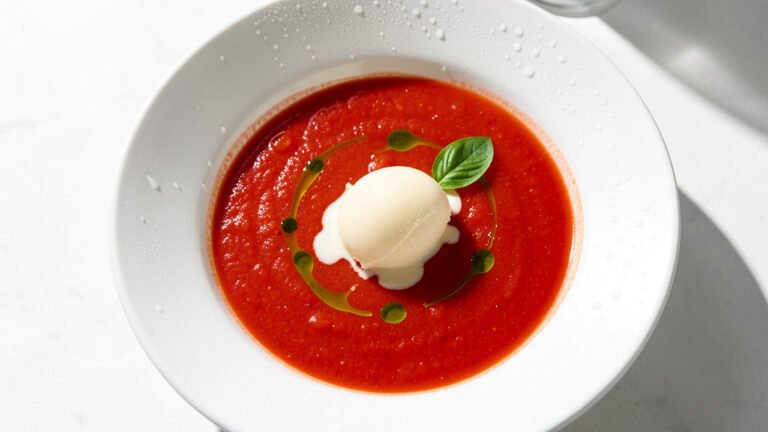
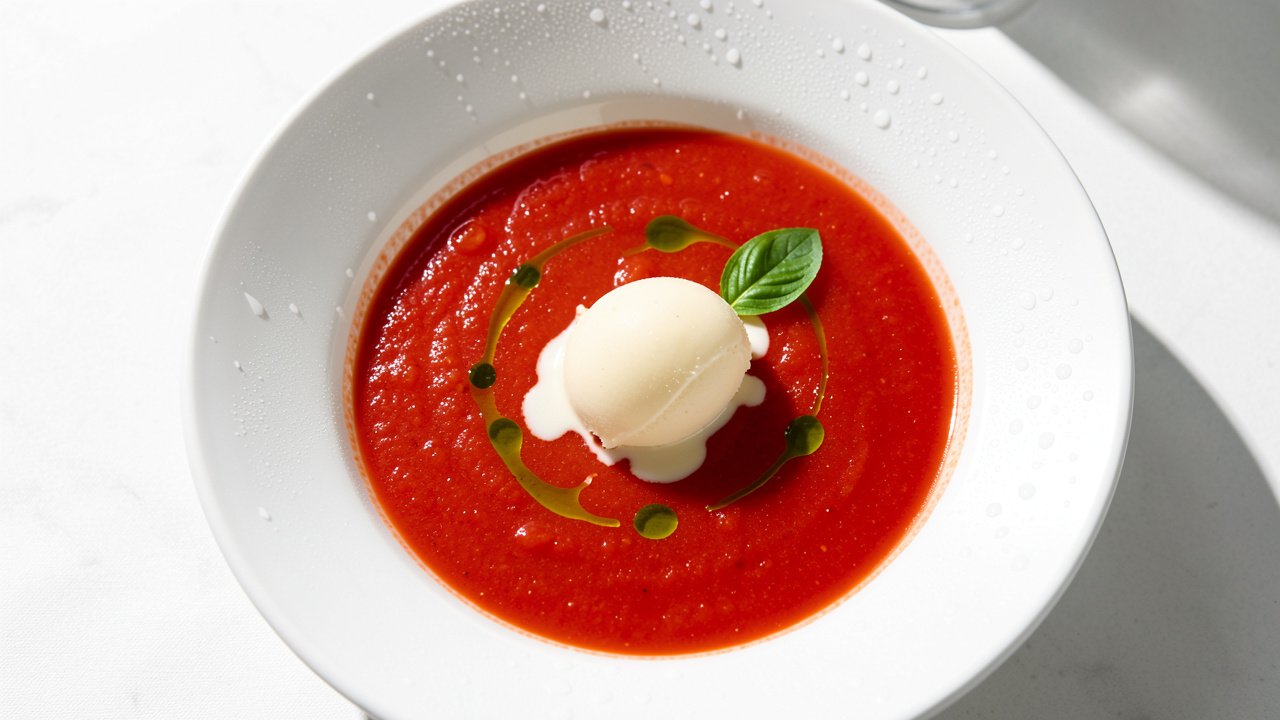
This is a restaurant dish that works at home because neither half is difficult, only ordered. The soup is raw tomatoes and salt. The ice cream is a plain custard steeped with a parmesan rind. The trick is that the two meet only in the bowl, in the last five seconds, and the whole pleasure of the dish is watching a savory scoop collapse into cold tomato.
Why This Chilled Tomato Soup with Parmesan Ice Cream Works
The dish runs on contrast. Cold, sharp, acidic tomato against something fatty, salty, and colder still. Each spoonful changes as the scoop melts, so the last bite is a different soup from the first. That is the point, and it is why the ice cream never gets stirred in ahead of time.
The soup is raw, which sounds lazy but is a decision. Cooking tomatoes makes them sweet and round; leaving them raw keeps the bright, almost green acidity that stands up to a spoonful of cheese custard. Salting them first and letting them weep pulls out a concentrated juice instead of watery pulp.
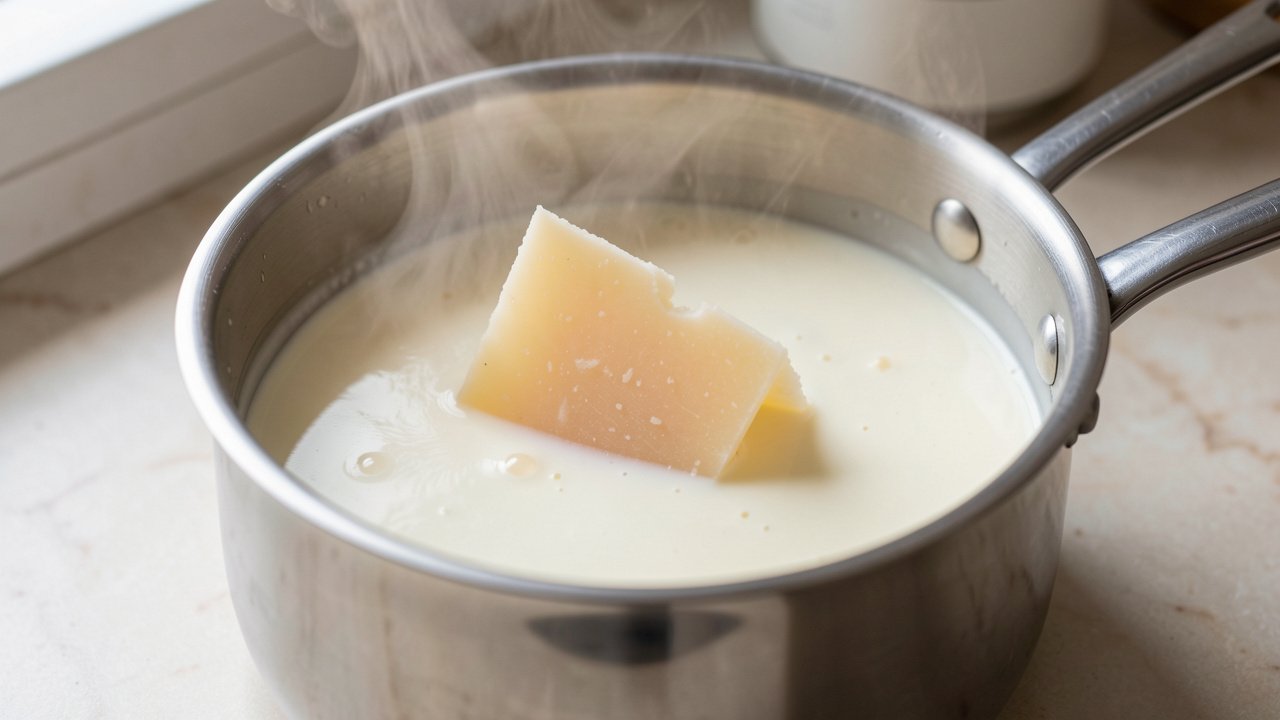
The ice cream side is a standard custard with one change: a parmesan rind steeps in the dairy. The rind is the cheap part of the wheel and it carries more of the savory, brothy depth than the grated cheese does. You keep the rind for the base and the grated cheese for the finish.
Pro observation: Cold flattens your perception of both salt and acid by a noticeable margin. Season the soup at room temperature until it tastes slightly too sharp and slightly too salty. After four hours in the fridge it will land exactly right. Season it to taste warm and you will serve something that tastes like nothing.
Ingredients
Kitchen Measurement Converter
Quickly convert between common cooking measurements without leaving the recipe. Pick a category, enter a value, and the result updates instantly.
Ingredient Notes & Substitutions
Tomatoes
This recipe has nowhere to hide, so it needs tomatoes at their peak: heavy for their size, fragrant at the stem, never refrigerated. Mixed heirlooms give the best flavor. Out of season, skip the dish rather than make it with pale winter tomatoes.
Parmesan Rind
Ask the cheese counter for rinds; they often sell them for very little or hand them over free. One piece of about 2 ounces flavors the whole base. If you cannot get a rind, double the grated parmesan in the custard instead.
Sugar in the Ice Cream
Two tablespoons is not for sweetness. Sugar lowers the freezing point and keeps the texture scoopable. A sugar-free version sets like a brick and shatters instead of melting, so do not cut it out.
Vinegar
Sherry vinegar has the nutty edge that suits parmesan. Red wine vinegar works. Balsamic does not; it is too sweet and it muddies the color of the soup into something brownish.
Equipment
- Blender
- Fine-mesh sieve
- Ice cream maker
- Heavy saucepan
- Instant-read thermometer
- Colander and bowl
Before You Start
1. Freeze the churn bowl. Most home machines need the insert frozen solid for 24 hours. Put it in the freezer the day before or the whole plan collapses.
2. Work backwards from dinner. The custard needs 4 hours cold before it churns, and the soup needs 4 hours cold before it is served. Both are happiest made the day before.
3. Chill the bowls. Put the serving bowls in the freezer for 20 minutes before service. A room-temperature bowl melts the scoop before it reaches the table.
Step-by-Step Instructions
Salt the Tomatoes and Let Them Weep
Core the tomatoes and cut them into rough chunks. Toss with 2 teaspoons of salt in a colander set over a bowl and leave them at room temperature for 30 minutes. Liquid will drip out and the flesh will slacken and look glassy. Keep every drop of that juice; it is the most concentrated tomato flavor in the dish.
Steep the Parmesan Rind in the Dairy
Warm the milk, cream, and parmesan rind in a saucepan over low heat until steam rises and small bubbles appear at the edge. Do not boil. Kill the heat, cover, and leave it 20 minutes. The rind slowly gives up its glutamates into the fat, which is why a scrap of cheese costs you almost nothing and buys you most of the savory depth.
Temper the Yolks into a Custard
Whisk the yolks with the sugar until pale. Now temper: pour about a cup of the hot dairy into the yolks in a thin stream while whisking hard. This raises the yolks gently so the proteins never seize into curds. Pour the mix back into the pan and stir constantly over low heat until it reaches 175F and coats the back of a spoon. Draw a finger through it; if the line holds, it is done. Strain through a fine sieve, whisk in the grated parmesan and salt, and chill at least 4 hours.
Blend and Strain the Soup
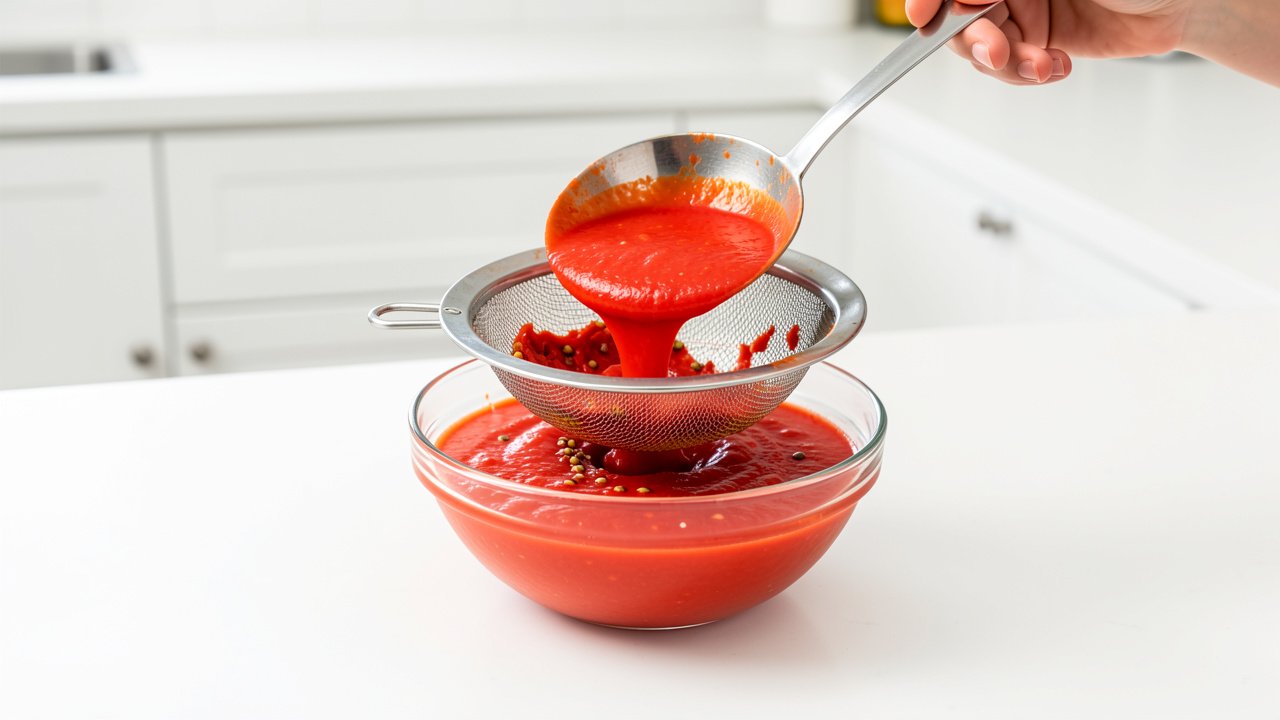
Blend the drained tomatoes and all their collected juice with the shallot, garlic, vinegar, olive oil, and pepper until completely smooth, about 60 seconds. For a clean, almost translucent soup, push it through a fine sieve and discard the skins and seeds. Taste and push the seasoning past comfortable. Chill 4 hours.
Churn the Parmesan Ice Cream
Pour the cold custard into the frozen bowl and churn 20 to 25 minutes, until it thickens to the texture of soft-serve and climbs the paddle. It will never look as stiff as a dessert ice cream, and it should not. Scrape it into a chilled container, press parchment directly on the surface, and freeze 2 hours to firm up.
Assemble at the Last Second
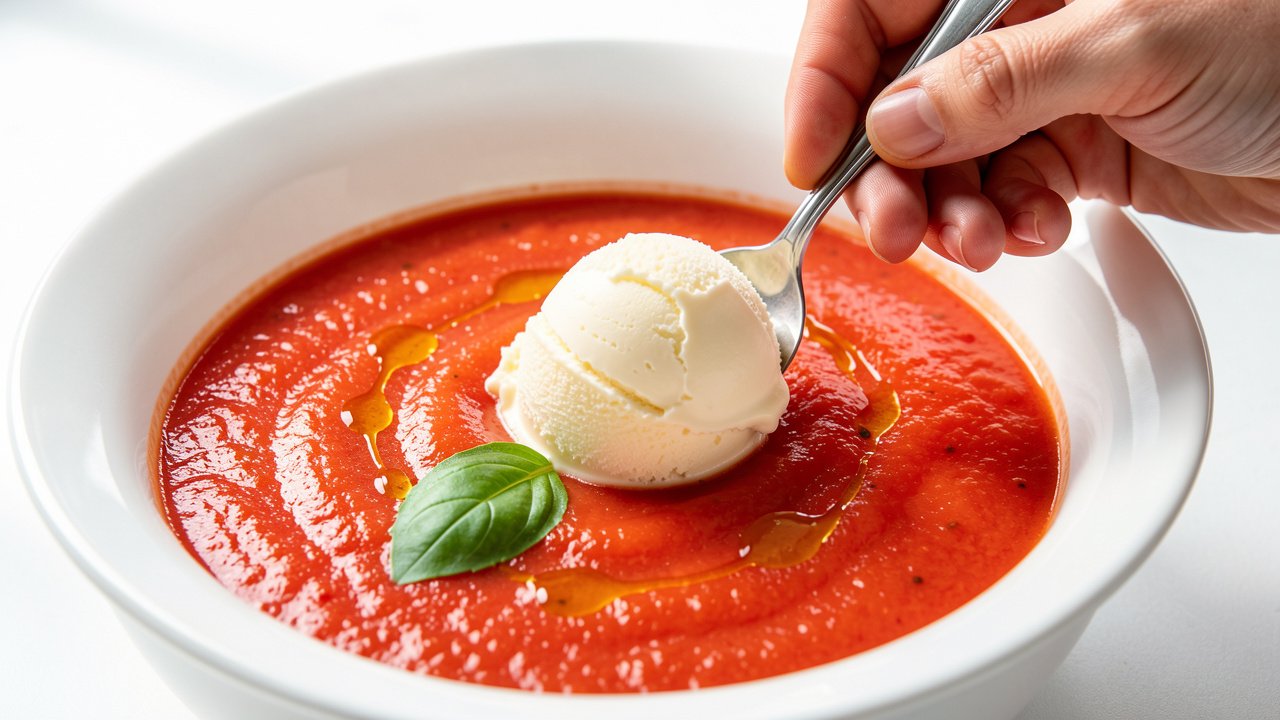
Ladle the cold soup into chilled bowls. Dip a spoon in hot water, pull one quenelle of parmesan ice cream per bowl, and set it in the center. Drizzle olive oil, add a basil leaf, and carry it out immediately. Do not plate the scoop and then finish the garnish; it will be a puddle before it reaches the table.
Chef’s Tips From Real Kitchen Testing
Taste the soup twice: once warm, once straight from the fridge. The gap between those two tastes is the whole lesson. Adjust after the cold taste, not before.
Use the youngest garlic you can find and only one small clove. Raw garlic keeps growing louder in a cold liquid overnight and can take over the bowl by day two.
Grate the parmesan into the custard off the heat, once it is strained. Boiling grated cheese in the base makes it stringy and leaves gritty specks the sieve has already gone past.
Warm your quenelle spoon in a mug of hot water between every scoop. A cold spoon tears the surface and you end up serving a lump instead of a smooth oval.
Recipe Variations
Serving Suggestions
- Serve in shallow, wide, freezer-chilled bowls
- Thin, crisp olive oil crostini on the side
- A dry sherry or a cold Vermentino
- Serve as a first course, never as a main
Nutrition Facts
Values are estimates per serving of soup plus one scoop, and vary with your tomatoes and how much salt survives the draining step.
Make-Ahead Tips
Both halves want to be made the day before, which makes this an unusually calm dinner-party course. Churn the ice cream the night before and let it firm overnight. The soup can be blended, sieved, and chilled a day ahead too, though it will separate slightly in the fridge; whisk it back together before serving. Hold the garlic until the day of if you are working more than 24 hours ahead.
Storage, Freezing & Reheating
Common Mistakes to Avoid
Troubleshooting
Custard has lumps? The yolks caught. Blitz it with a stick blender and strain hard through the fine sieve. If it smells of cooked egg, start over.
Ice cream rock hard? Not enough sugar, or it was churned before it was fully cold. Let it sit 10 minutes and scoop with a warmed spoon.
Soup tastes thin and dull? Salt, then vinegar, in that order, one small addition at a time, tasting cold each time.
Soup looks pink instead of red? The blender ran too long and whipped air into it. Let it settle in the fridge; the foam rises and you can skim it off.
Where This Dish Comes From
Savory ice cream is not a modern stunt. Cheese and vegetable ices show up in eighteenth-century European ice books, long before ice cream settled into a dessert-only role. The tomato-and-parmesan pairing is simpler than the pedigree suggests: both are heavy in glutamates, which is why they taste so complete together in everything from a bowl of pasta to this bowl of cold soup. If you like tomatoes served raw and barely handled, our tomato mozzarella salad works on the same principle, and tomato basil pasta shows the warm version of the same partnership.
Frequently Asked Questions
More Tomato Recipes to Try
Culinary Reviewer: Ghazala Shakeel
Last updated: [mc_modified_date]

Urooj Mukhtar is a classically trained chef and food blogger at TomatoAnswers.com, creating healthy, seasonal, plant-based recipes that put tomatoes at the center of the plate. She focuses on making nutritious, flavour-forward home cooking both accessible and delicious.