Indian Recipes
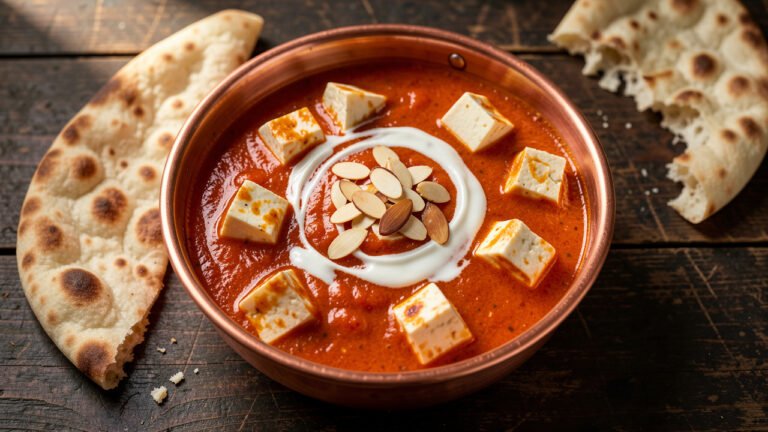
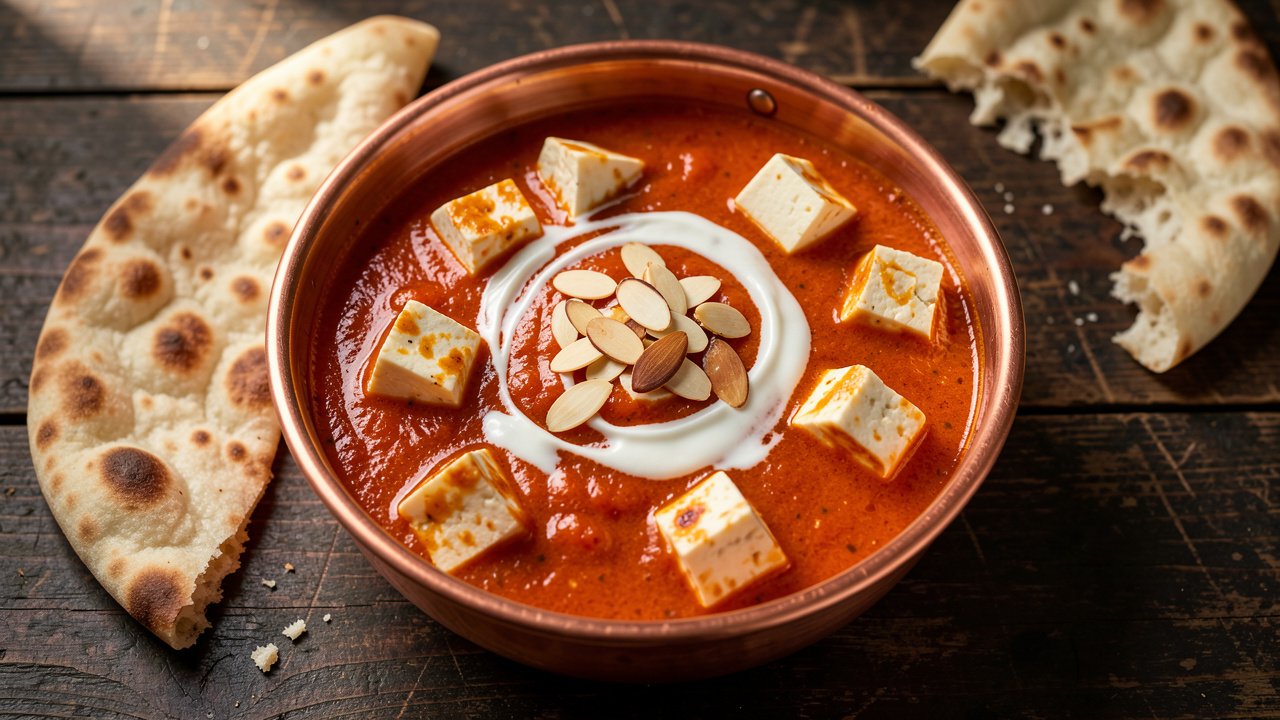
Shaahi Paneer Paneer in a Spicy Tomato Sauce
Last updated: September 29, 2026
Shaahi paneer fails in two predictable ways: squeaky, rubbery cheese, and a gravy that tastes sharp instead of round. Both are fixable in under a minute each, and neither has anything to do with how long you simmer. Once I started warming the paneer in salted water and blending cashews into the base, this stopped being a restaurant-only dish in my kitchen.
Why This Shaahi Paneer Works
The word shaahi means royal, and the royal part is the texture: a gravy thick enough to coat a spoon without a speck of flour or cornstarch in it. That body comes from cashews. Soaked and blended, they emulsify into the tomato-onion base and hold the fat and water together, which is why the sauce stays glossy instead of breaking into an oily ring.
The whole spices are the other half. Cardamom, cloves, and cinnamon are fat-soluble, so their aroma only comes out properly when they hit hot ghee at the start. Thirty seconds in the pan does more for this dish than a tablespoon of ground spice stirred in at the end.
Tomatoes bring the acid, and acid is what keeps a cream-heavy dish from feeling heavy. But raw tomato acid tastes sour and metallic, so you cook it down until the oil separates, then blunt what remains with cream and a teaspoon of sugar. The sugar is not there to sweeten; it is there to round off the sharp edge so the spice reads as warm rather than aggressive.
Kashmiri chili powder does the last job. It carries a deep red color with almost no burn, so you get that restaurant crimson without making the dish too hot for the table. Any heat you want on top of that comes from a separate green chili, which you control. Splitting color and heat across two ingredients is what lets one pan feed both a child and someone who wants their forehead to sweat.
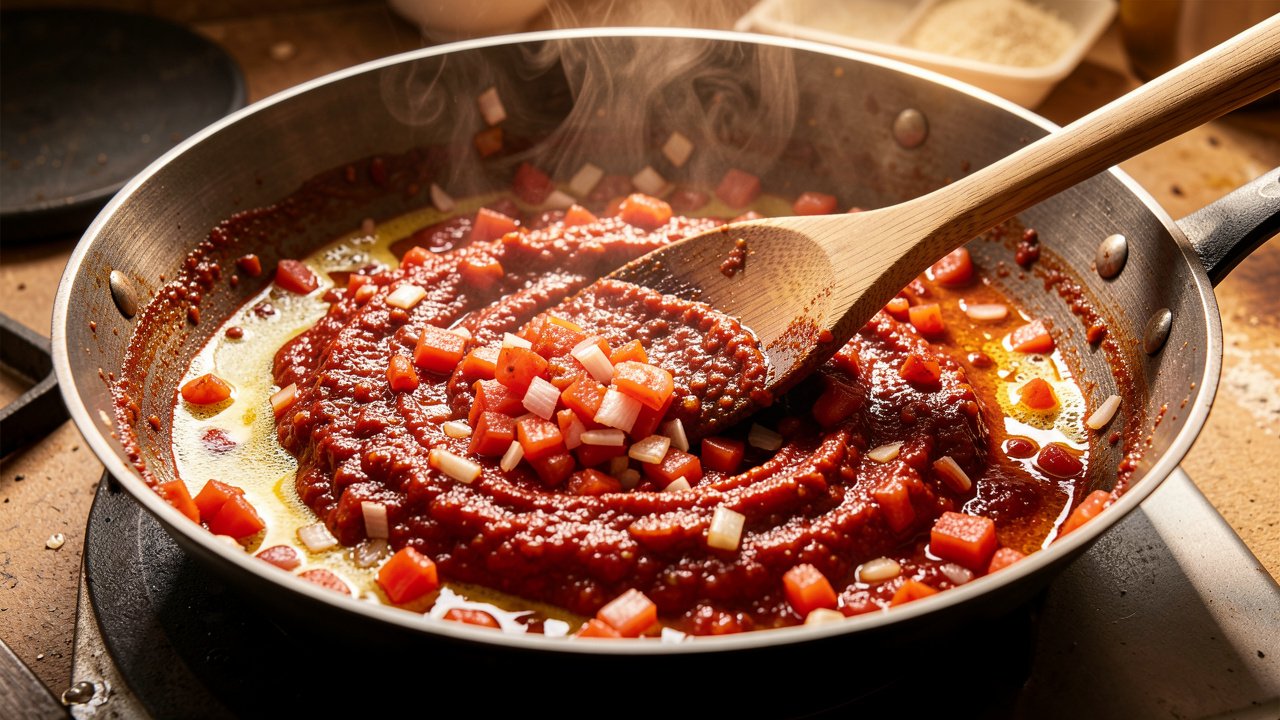
Pro observation: The base is ready for the cashew paste when you drag a spoon through it and the trail holds for a second before filling in, with a rim of ghee at the edge of the pan. That is the raw tomato taste gone.
Ingredients
Kitchen Measurement Converter
Quickly convert between common cooking measurements without leaving the recipe. Pick a category, enter a value, and the result updates instantly.
Ingredient Notes & Substitutions
Paneer
Fresh paneer from an Indian grocer is softest. Vacuum-packed blocks are firmer and benefit most from the warm-water soak. Firm tofu works for a dairy-free version but will not have the same milky bite.
Tomatoes
Use ripe red tomatoes for sweetness and color. In winter, one 14-ounce can of whole peeled tomatoes beats pale fresh ones. Avoid pre-seasoned canned tomatoes; the herbs clash with the garam masala.
Cashews
Raw, unsalted cashews only. Roasted ones turn the gravy beige and taste faintly burnt. Soak them in hot water 15 minutes so they blend perfectly smooth. Blanched almonds or 3 tablespoons of melon seeds substitute well.
Kashmiri Chili
This is a color spice, not a heat spice. If you only have regular chili powder, use half the amount plus a pinch of sweet paprika, or the dish will be much hotter than intended.
Equipment
- Wide, heavy pan or kadai
- Blender or food processor
- Fine sieve or strainer
- Sharp knife and board
- Measuring spoons
- Small bowl for spices
Before You Start
1. Soak the cashews first. Cover them with just-boiled water and leave them while you chop. Fifteen minutes is the minimum for a paste with no grit in it.
2. Warm the paneer, do not skip it. Cut the block into three-quarter-inch cubes and sit them in hot salted water. Cold, dry paneer tightens in a hot gravy and squeaks against your teeth; warm, hydrated paneer stays soft and drinks up sauce.
3. Line up the whole spices. Cardamom, cloves, cinnamon, bay leaf, and cumin all go in within a few seconds of each other, so have them in one small bowl by the stove.
Step-by-Step Instructions
Soak the Cashews and Paneer
Cover the cashews with hot water and set them aside for 15 minutes. Cube the paneer and drop it into a bowl of hot water with a good pinch of salt; leave it there until the very last step. Slice the onions and roughly chop the tomatoes while you wait.
Bloom the Whole Spices in Ghee
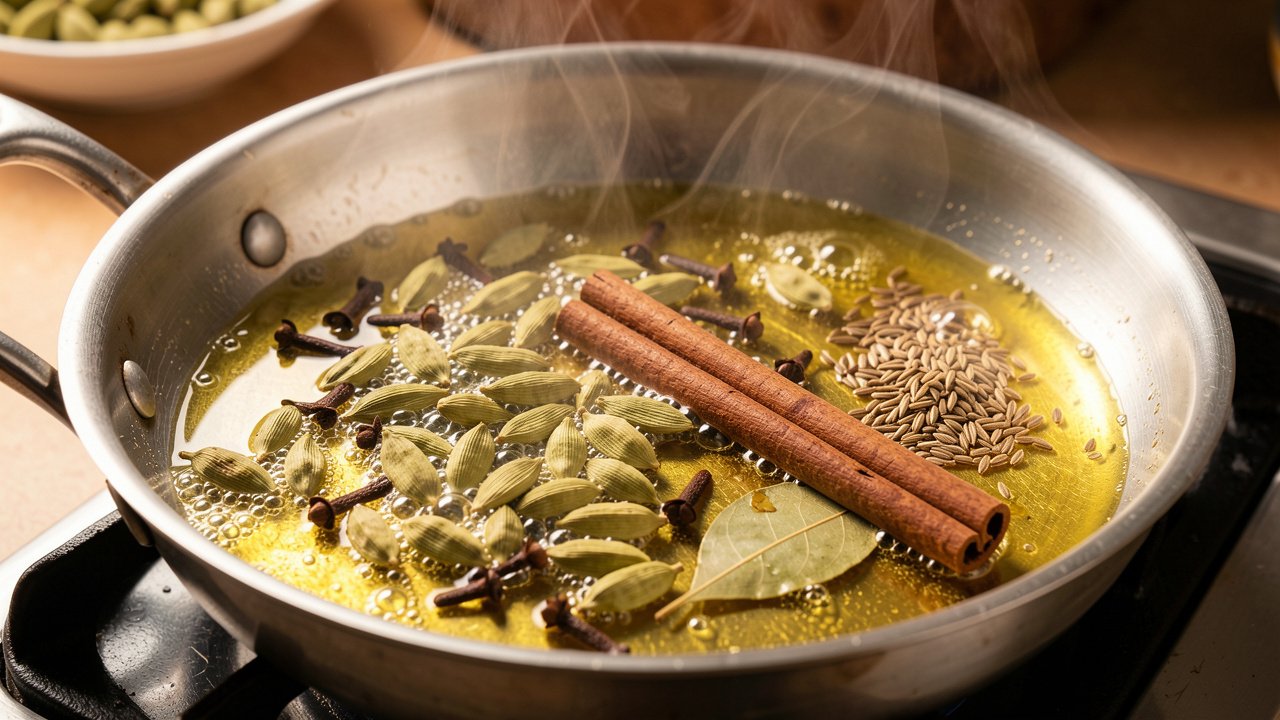
Melt the ghee in a wide pan over medium heat. Add the cumin seeds, cardamom pods, cloves, cinnamon stick, and bay leaf. Within about 30 seconds the cumin will sizzle steadily and the cardamom will smell sweet and floral. That perfume is your cue; if anything darkens past golden brown, the ghee was too hot and you should start again.
Soften the Onions
Add the sliced onions and cook 7 to 8 minutes until they are limp and pale gold at the edges. You want them soft, not browned; deep browning pushes the gravy toward a darker, sweeter dhaba flavor rather than the pale, delicate one shaahi paneer is known for. If they are coloring faster than they are softening, drop the heat and add a tablespoon of water to slow them down. Stir in the ginger-garlic paste and cook 1 minute until the raw, sinus-clearing smell is gone and it smells nutty instead.
Cook Down the Tomatoes
Stir in the Kashmiri chili powder, ground coriander, and turmeric for 30 seconds, then add the tomatoes and the salt. Cook 10 to 12 minutes, mashing with the back of your spoon, until they collapse into a thick paste and a rim of ghee separates at the edge of the pan. Rushing this is the single most common reason shaahi paneer tastes sour.
Blend and Strain the Gravy
Fish out the cinnamon stick and bay leaf. Scrape everything else into a blender with the drained cashews and a splash of water, and blend until completely smooth, at least a full minute. Push it through a sieve back into the pan; you will leave behind tomato skins and cardamom husks, and this one extra minute is the difference between a homemade gravy and a silky restaurant one. Add the water and bring it to a bare simmer.
Add the Paneer, Cream, and Finish
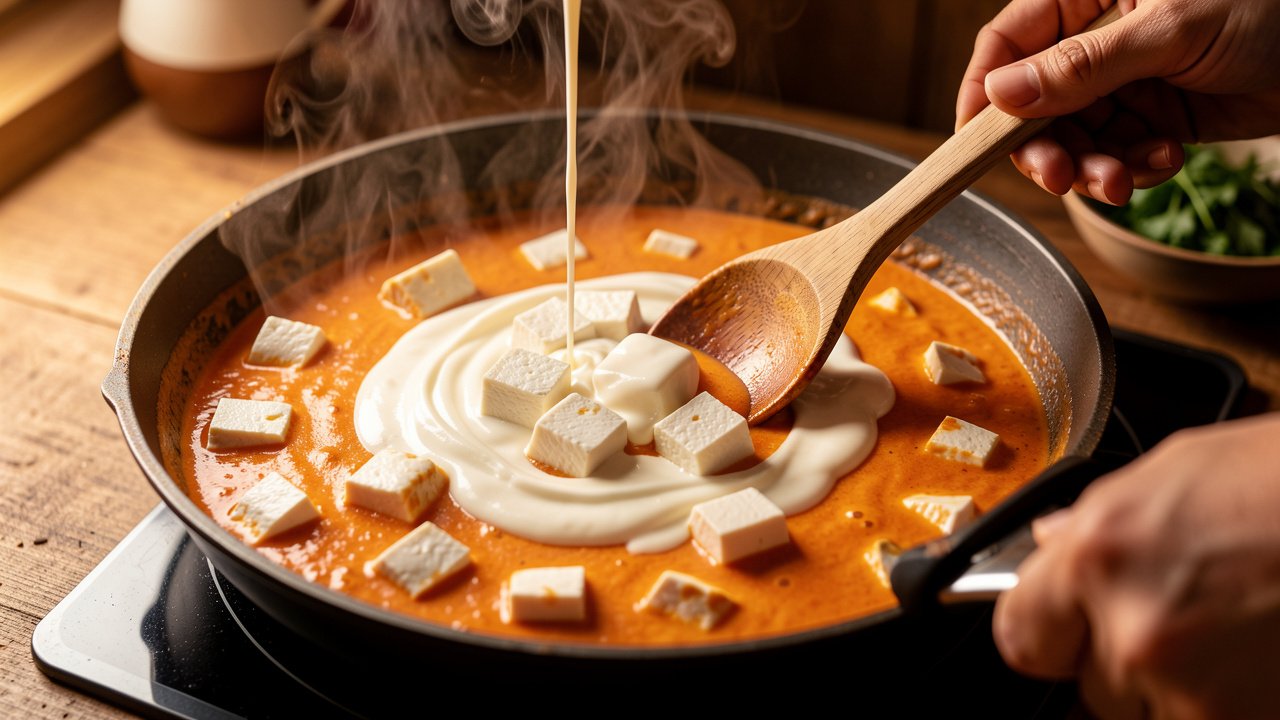
Lower the heat. Stir in the cream, the sugar, and the garam masala, then crush the kasuri methi between your palms over the pan to wake up its aroma. Drain the paneer and slide it in. Simmer 3 to 4 minutes only, just long enough to warm through; any longer and the cubes tighten. Taste for salt, scatter with cilantro, and serve.
Chef’s Tips From Real Kitchen Testing
Blend the gravy longer than feels necessary. A full 60 seconds emulsifies the cashew fat properly; 20 seconds leaves a faintly grainy sauce that no amount of simmering will smooth out.
Take the pan off direct heat before the cream goes in, then return it to low. Cream added to a boiling acidic gravy can curdle into visible specks.
Add garam masala at the end, never with the other ground spices. It is already roasted, and a second long cook flattens it into something dusty and generic.
Recipe Variations
Serving Suggestions
- Butter naan or plain roti for scooping
- Jeera rice or steamed basmati
- Sliced red onion with lemon and chaat masala
- A cool boondi raita to offset the richness
Nutrition Facts
Values are estimates per serving of curry, without bread or rice, and vary with your paneer and cream.
Make-Ahead Tips
The gravy is the make-ahead component; the paneer is not. Cook and strain the sauce up to three days early and refrigerate it without the cream or paneer. On the night, warm it gently, stir in the cream and garam masala, and add freshly soaked paneer. This gets a weeknight serving on the table in about eight minutes, and the paneer stays as soft as it would on day one.
Storage, Freezing & Reheating
Common Mistakes to Avoid
Troubleshooting
Gravy tastes sour? The tomatoes were undercooked. Simmer 5 more minutes, then add a little more cream and a pinch of sugar to round it out.
Sauce split or oily? It boiled after the cream went in. Pull it off the heat and whisk in 2 tablespoons of warm milk to bring it back together.
Paneer gone rubbery? It simmered too long. Nothing fully undoes it, but 10 minutes resting off the heat in the warm gravy softens it noticeably.
Gravy too thin? Simmer it uncovered before the paneer goes in, not after. Once the cheese is in the pan you cannot reduce without overcooking it.
Color looks orange, not red? Your chili powder is doing color work it cannot do. Add another half teaspoon of Kashmiri chili bloomed in a teaspoon of hot ghee, then stir that in at the end.
A Note on Shaahi Cooking
Shaahi dishes trace back to Mughal court kitchens, where nuts, cream, and whole aromatics signaled wealth. That is why the technique leans on cashews and ghee rather than chili heat, and why the color aims for a soft crimson rather than a fiery red. If you like spiced tomato bowls of this kind, our creamy Indian tomato soup uses the same blend-and-strain trick, and the full tomato recipes collection has more.