Heirloom American Pies
Old-Fashioned Spiced Harvest Pie
Last updated: September 29, 2026
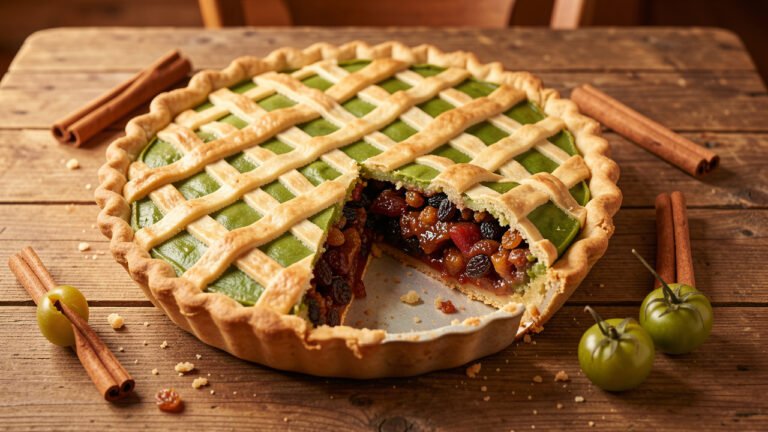
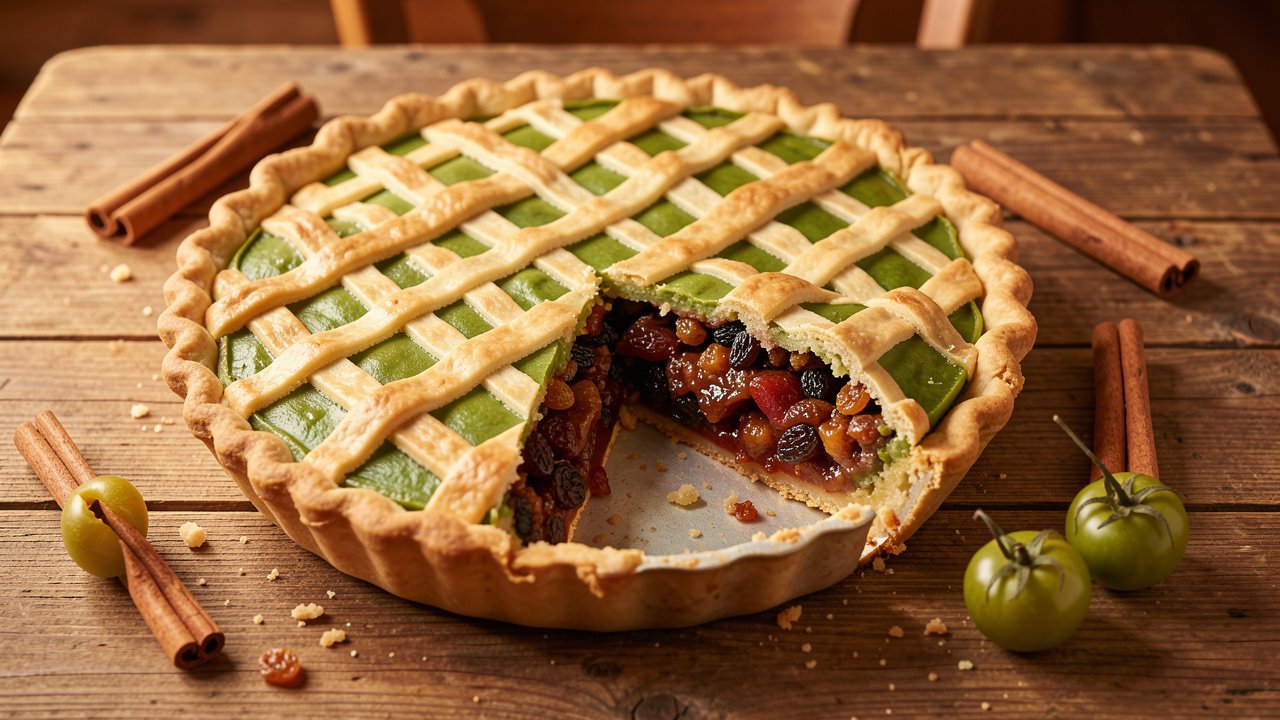
The first time I made this I expected a novelty, something to talk about rather than eat. What came out of the oven tasted like a proper mincemeat pie: dark, chewy, sweet-tart, heavy on clove and cinnamon. Nobody at the table guessed tomatoes, and I have stopped telling people beforehand.
Why Green Tomatoes Work in Mock Mincemeat
Old mincemeat was meat, suet, dried fruit, and warm spice, packed tight and left to cure. Cooks who had no suet and no special add-ins, but did have a frost coming and a vine full of hard green tomatoes, worked out that the tomato could carry the whole idea. It was thrift, and it turned out to be good cooking.
A green tomato is firm, sharply acidic, low in sugar, and high in pectin. Those four things matter. The firmness means the pieces hold their shape through a long simmer instead of melting into sauce, which gives the filling the chewy, chopped texture real mincemeat has. The acid does the job that vinegar and citrus do in a traditional recipe, keeping all that sugar from tasting cloying.
The pectin is why this filling sets without much help. As the tomatoes break down they release pectin that thickens the syrup around them, so you get a glossy, spoon-coating filling rather than a puddle. And because a green tomato has almost no sweetness or ripe tomato aroma of its own, it takes on cinnamon, clove, allspice, and molasses completely. It is a blank, tart canvas.
Ripe tomatoes fail at every one of these points. They are soft, sweet, watery, and they smell like tomato. If your tomatoes have started to blush pink, save them for something else and pick harder ones.
Pro observation: Test a tomato with your thumb. If it dents, it is too far along. You want fruit that feels like an unripe apple and squeaks slightly under the knife.
Ingredients
Kitchen Measurement Converter
Quickly convert between common cooking measurements without leaving the recipe. Pick a category, enter a value, and the result updates instantly.
Ingredient Notes & Substitutions
Green Tomatoes
Use fully hard, solid-green fruit, cored and chopped fine. Weigh after chopping if you can; volume varies a lot with how small you cut. Do not peel them. The skins soften completely and add body.
Apples
A tart, firm apple such as Granny Smith or Braeburn holds up beside the tomato. Soft apples turn to sauce and blur the texture you worked to keep. Peel these; apple skin does not soften the way tomato skin does.
Molasses and Brown Sugar
Dark brown sugar plus a little unsulphured molasses gives the color and the faint bitterness that reads as mincemeat. Skip the molasses and the filling tastes like sweet stewed apple. Blackstrap works but use half as much.
Vinegar and Citrus
Cider vinegar and the zest and juice of an orange and a lemon sharpen the whole thing. Traditional recipes leaned on citrus here; two tablespoons of orange juice, added off the heat, is a fine addition if you want it.
Equipment
- 9-inch pie plate
- Large heavy pot
- Colander
- Sharp knife and board
- Microplane or zester
- Rimmed baking sheet
Before You Start
1. Plan for two days. The filling should be made the day before. Spices need hours in contact with sugar and fruit to stop tasting like separate powders and start tasting like one thing.
2. Chop everything to the same size. Aim for pieces about a quarter inch. Uneven chunks cook unevenly, and large tomato pieces stay chalky in the center.
3. Chill your crust. Whether homemade or store-bought, the dough should go into the oven cold. Warm dough slumps and the lattice loses its edges.
Step-by-Step Instructions
Chop and Salt the Tomatoes
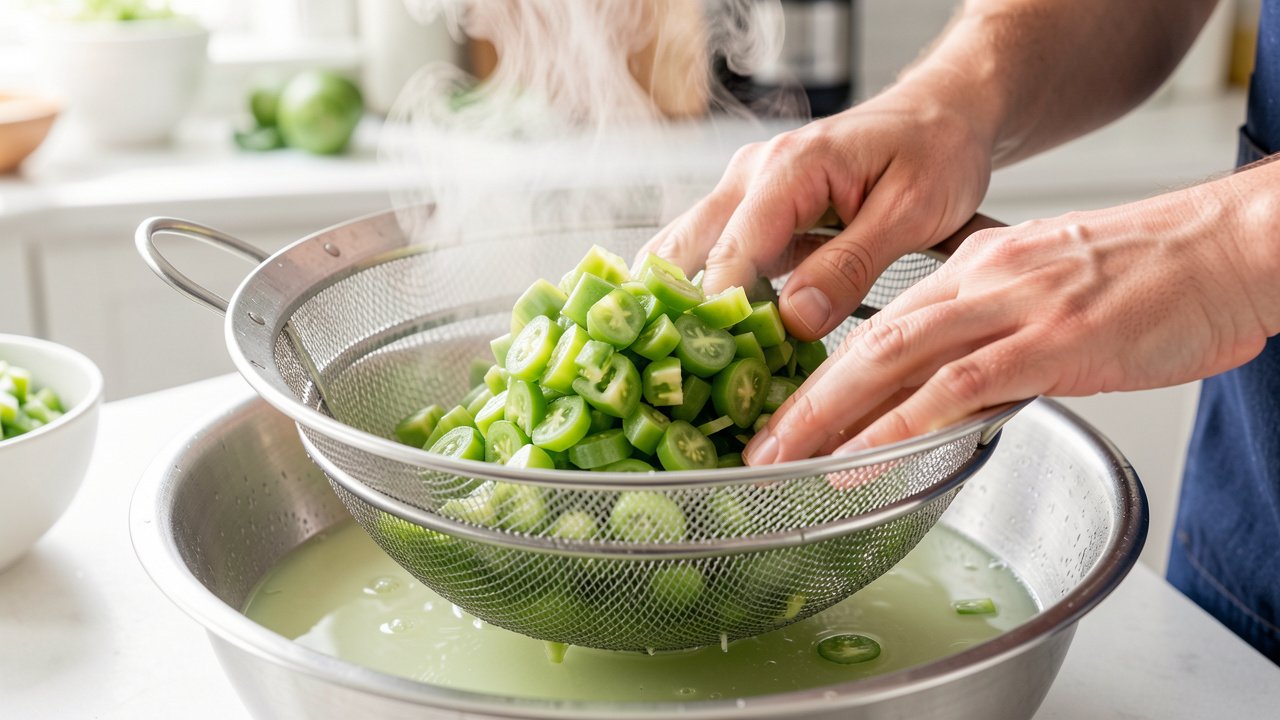
Core the green tomatoes and chop them into quarter-inch pieces. Toss them with the salt in a colander set over a bowl and leave them 30 minutes. You will see a surprising amount of pale green liquid come out. That water is the enemy of a set filling, and pulling it out now means less time boiling it off later.
Blanch and Drain
Press the tomatoes gently and discard the liquid. Cover them with boiling water, let them sit 5 minutes, then drain hard. Repeat once. This double scald pulls out the raw, grassy, faintly bitter note that raw green tomatoes have. Skip it and that green flavor stays in the finished pie, which is the single most common reason people say they can taste the tomato.
Combine the Mincemeat
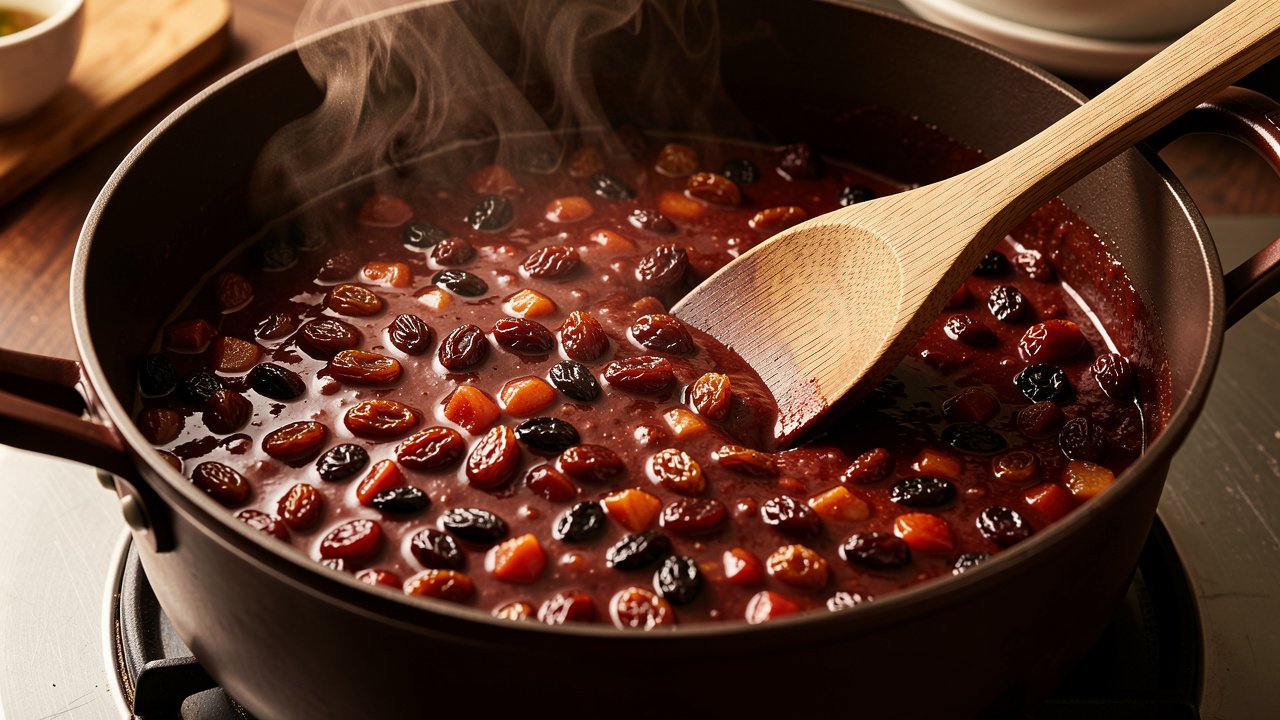
Put the drained tomatoes into a heavy pot with the chopped apples, brown sugar, raisins, currants, molasses, vinegar, butter, cinnamon, allspice, cloves, nutmeg, and the zest and juice of the orange and lemon. Stir until the sugar is wet and dark. It will look loose and unpromising at this stage. That is normal.
Cook It Down
Bring to a boil, then drop to a bare simmer and cook uncovered 45 to 60 minutes, stirring often as it thickens so the sugar on the bottom does not scorch. It is done when a spoon dragged across the base leaves a track that fills in slowly, the color has gone deep mahogany, and the raisins are plump. Stir the cornstarch into a tablespoon of cold water, add it, and boil one minute more.
Cool Completely and Rest
Cool the filling to room temperature, then refrigerate it overnight. Two things happen. The spices bloom into each other and lose their separate edges, and the filling firms up so you can mound it in the shell. Never put warm filling into raw pastry; the steam melts the butter in the dough before the oven can set it, and you get a pale, greasy bottom crust.
Fill, Lattice, and Bake
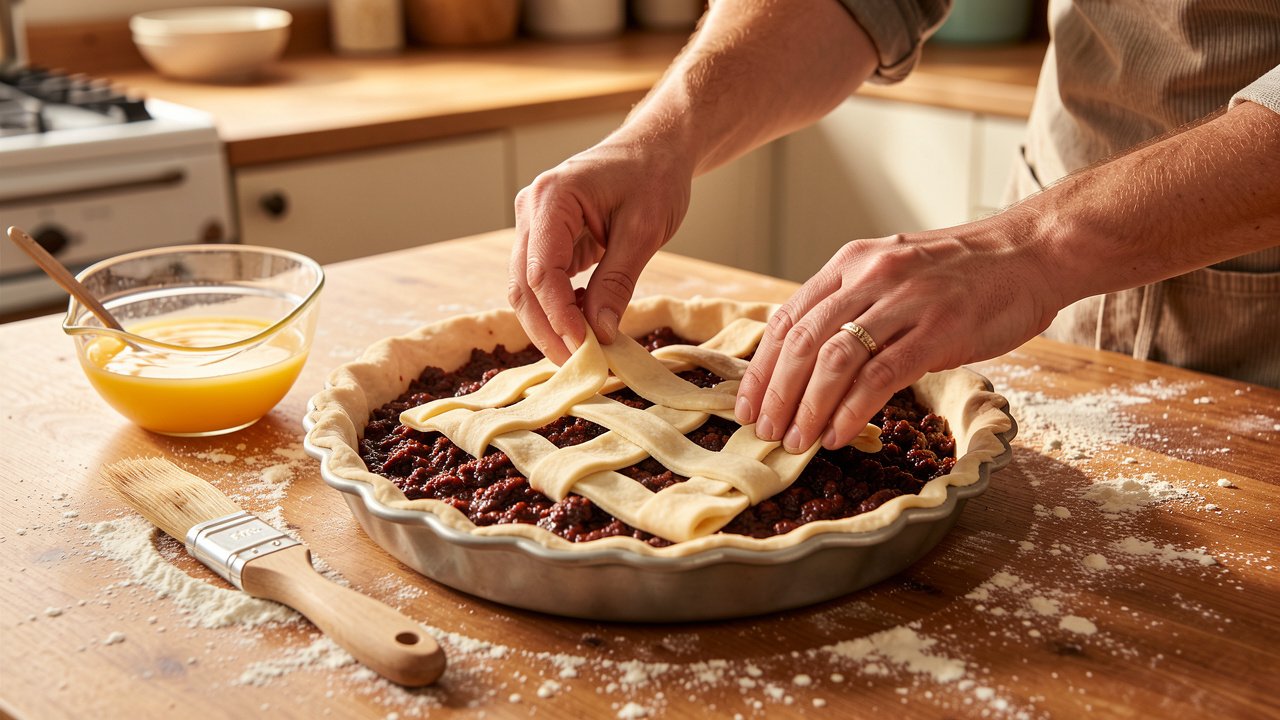
Heat the oven to 425F with a rack low. Line the plate with pastry, add the cold filling, and weave a lattice on top. Brush with beaten egg, set the pie on a hot rimmed sheet, and bake 20 minutes. Drop to 375F and bake 30 to 35 minutes more, until the lattice is deep gold and the filling bubbles thickly in the gaps. Cool at least 3 hours before cutting.
Chef’s Tips From Real Kitchen Testing
Do not blind-bake. The filling is already cooked and only needs to heat through, so a pre-baked shell will overbake and turn hard. A cold filling plus a hot sheet pan under the plate does the same job better.
Taste the filling the next morning, not the night you make it. Spice reads much stronger when hot. What seems overspiced in the pot is usually correct once chilled.
Cut the tomatoes by hand. A food processor shreds them and releases too much water, and the filling loses the chopped texture that makes it read as mincemeat.
Recipe Variations
Serving Suggestions
- Warm, with a scoop of vanilla ice cream
- Sharp cheddar on the side, the Northern English way
- Lightly whipped cream with a little orange zest
- Strong black coffee to cut the sweetness
Nutrition Facts
Values are estimates per slice of an 8-slice pie and vary with the crust you use.
Make-Ahead Tips
The filling is the make-ahead part, and it is better for it. One night in the fridge is the minimum; three days is better, and a week is fine. Old cookbooks treated mock mincemeat as a preserve, canning it in jars in September and baking pies from it through the winter, which tells you how well it keeps. Bring it to cool room temperature before you fill the shell so it spreads without tearing the pastry.
Storage, Freezing & Reheating
Common Mistakes to Avoid
Troubleshooting
Filling runny after baking? It was not reduced far enough. Next time cook it 15 minutes longer; for the pie in front of you, chilling it fully will firm the slices enough to serve.
Tastes flat and only sweet? It needs acid, not more spice. Stir in another tablespoon of vinegar or lemon juice while the filling is still warm.
Bottom crust pale and damp? The pie baked too high in the oven. Use a low rack and a preheated sheet pan so the base gets direct heat.
A Note on Mock Mincemeat
Mock mincemeat shows up in American community cookbooks and farm almanacs through the nineteenth and early twentieth centuries, alongside mock apple pie made from crackers and mock turtle soup made from calf’s head. The word mock meant a substitution born of what the pantry lacked, and green tomatoes were the version that stuck, because every gardener ends the season with fruit that will never ripen. If you have a glut to work through, our tomato recipe collection and guide to canning crushed tomatoes cover the savory side of the same problem.