
Soup Recipes
Pressure Cooker Cream of Tomato Soup Recipe Instant Pot Method
Last updated: September 29, 2026
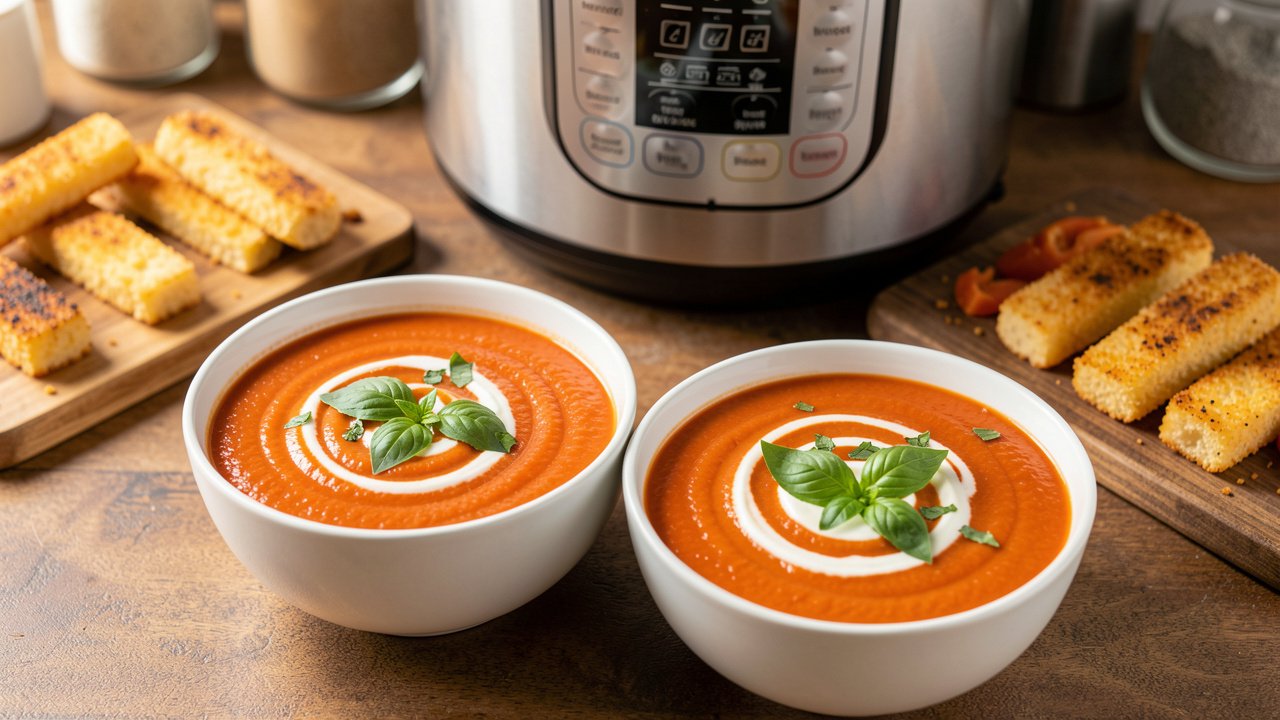
Stovetop tomato soup wants an hour of stirring before the flavor stops tasting sharp. The pressure cooker does that work in five minutes of actual cook time, because the sealed pot drives the tomatoes past the raw stage fast. The catch is that thick tomato and an electric pressure cooker are a bad combination if you rush the setup, and this recipe is built around that fact.
Why This Pressure Cooker Cream of Tomato Soup Works
Canned tomatoes taste tinny and sharp until heat breaks them down. On the stove that takes 45 minutes of low simmering. Under pressure the pot holds the soup above the normal boiling point, so the same softening happens in 5 minutes and the finished soup tastes like it cooked all afternoon. Sauteing the onion and garlic first builds a sweet, savory base, and the sealed pot traps aroma that would otherwise steam off into the kitchen.
The reason this recipe is written the way it is comes down to one machine quirk. An electric pressure cooker senses heat through the metal base. Anything thick sitting on that base scorches, the sensor reads the hot spot, and the display throws a BURN notice before the pot ever seals. Stock goes in first, tomatoes go on top, and nobody stirs.
Cream comes last for the same kind of reason. Dairy under pressure has nowhere to go but the bottom of the pot, where the milk proteins tighten, curdle, and stick. Off pressure, stirred into soup that is hot but no longer roaring, it stays smooth.
Pro observation: Before you lock the lid, drag a wooden spoon across the base of the insert. If it moves without catching and the metal looks clean, you are safe. If you feel any drag, there is still fond down there and the pot will find it.
Ingredients
Kitchen Measurement Converter
Quickly convert between common cooking measurements without leaving the recipe. Pick a category, enter a value, and the result updates instantly.
Ingredient Notes & Substitutions
Canned Tomatoes
Whole peeled San Marzano style tomatoes give the sweetest result. Crushed tomatoes work. Skip puree and passata, which scorch even when layered.
Vegetable Stock
This is the thin liquid the pot needs to build steam, and two cups is the minimum for a 6-quart cooker. Cut it back and the pot may never reach pressure.
Heavy Cream
Heavy cream is the most forgiving because its fat protects the proteins from splitting. Half-and-half works if you keep the pot on Keep Warm. Full-fat coconut milk makes the soup vegan and adds a faint sweetness.
Tomato Paste
Two tablespoons deepen the color and add savory backbone. Keep it moving in the oil so it does not weld itself to the metal.
Equipment
- 6-quart electric pressure cooker
- Immersion blender
- Wooden spoon or spatula
- Sharp knife and board
- Can opener
- Measuring cups
Before You Start
1. Check the sealing ring. Make sure it is seated in the lid and the valve is set to Sealing, not Venting. A pot that will not seal is almost always one of those two things.
2. Have the stock poured and ready. Deglazing works only if the liquid hits the pan while the fond is still hot and loose, so measure it before you turn on Saute.
3. Plan for the natural release. The 5 minute cook time is honest, but the pot needs roughly 8 minutes to come to pressure and 10 more to release. Start bread or a sandwich during that window.
Step-by-Step Instructions
Saute the Onion and Garlic
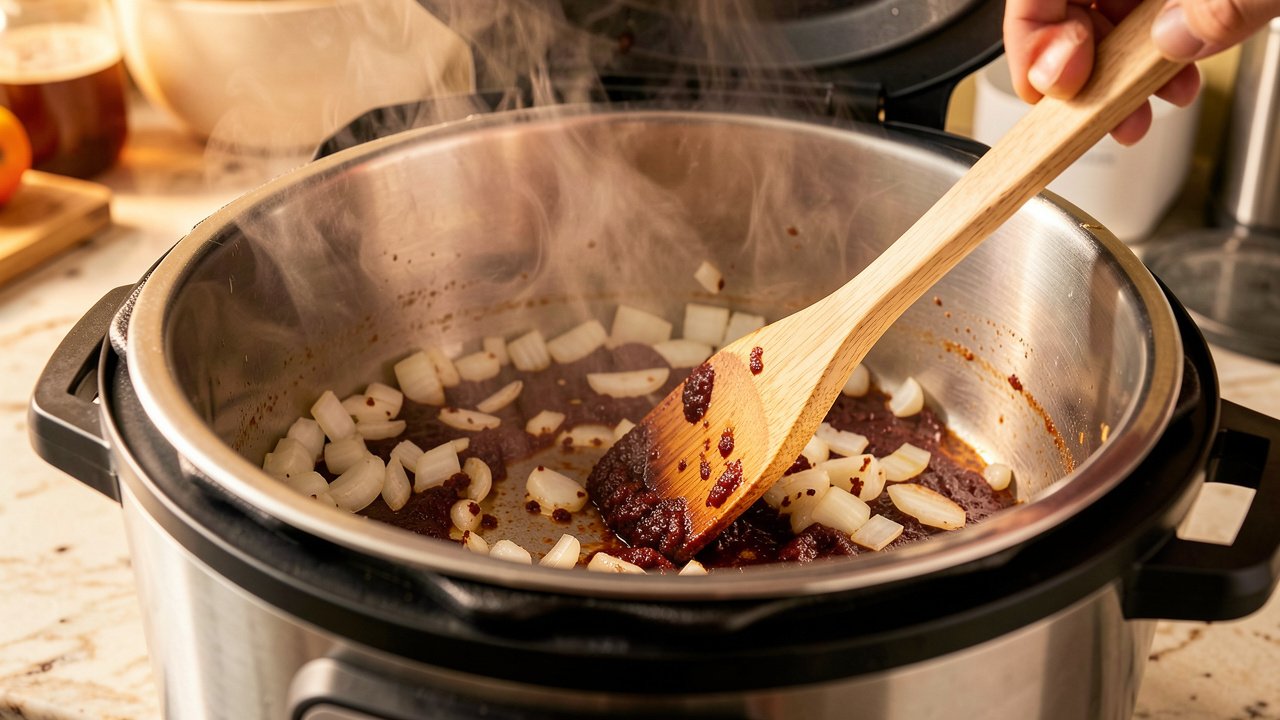
Press Saute and set it to normal heat. Add the butter and olive oil, and once the butter foams, add the chopped onion with a pinch of salt. Cook 4 to 5 minutes, stirring often, until the onion turns translucent and smells sweet. Add the garlic and tomato paste and stir constantly for 1 minute; the paste will darken from bright red to brick and start clinging to the metal. That clinging is the point, and it is also the danger.
Deglaze Until the Base Is Clean
Pour in the vegetable stock while the pot is still on Saute. It will hiss and steam. Scrape the base hard with a wooden spoon, working the whole surface including under the edges, until every brown speck lifts and floats. Give it 30 to 60 seconds. This is the step that prevents a BURN notice, and it is the step people skip. When the base looks like clean metal, press Cancel.
Layer the Tomatoes on Top
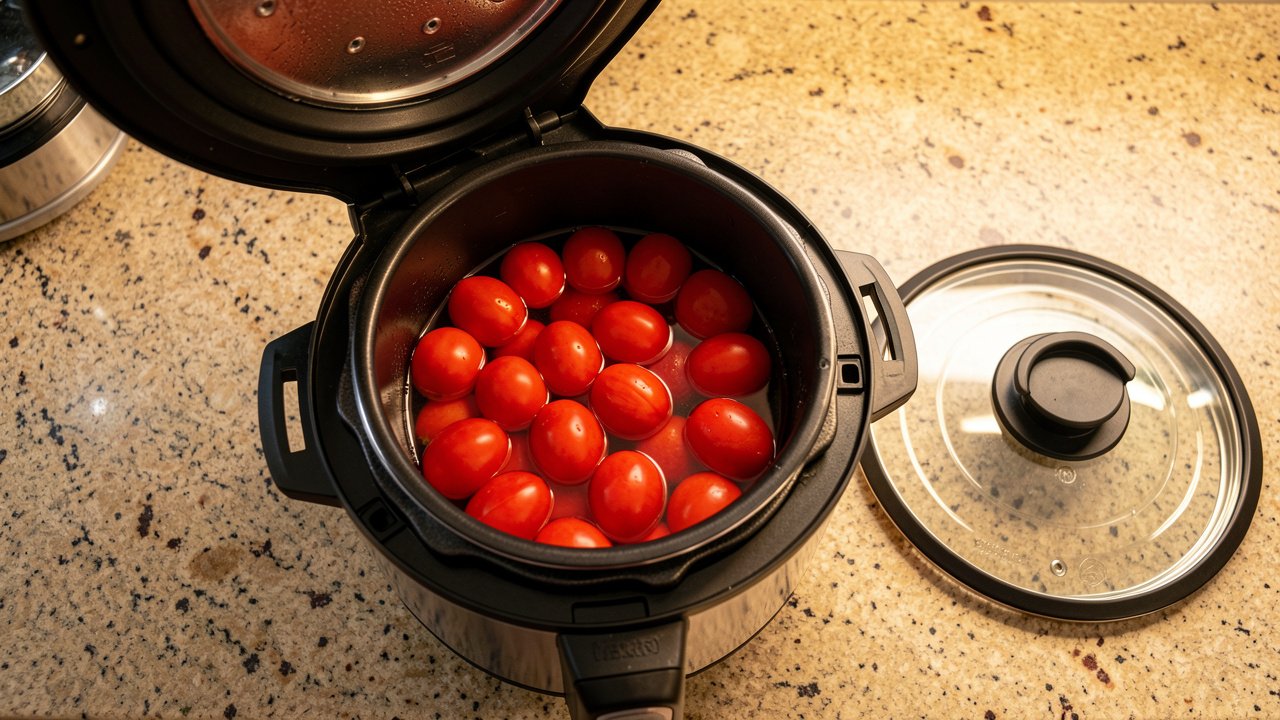
Add the sugar, dried basil, salt, and pepper to the stock and stir them in. Now pour the canned tomatoes over the surface and leave them there. Do not stir. You want that thick layer floating above the thin liquid so it never touches the hot base. It will look wrong, like two separate ingredients refusing to mix. That is exactly right.
Cook 5 Minutes at High Pressure
Lock the lid, set the valve to Sealing, and select High Pressure for 5 minutes. The pot takes about 8 minutes to build pressure before that timer even starts, which is normal. You will hear a faint hiss as the float valve rises, then quiet. If the display reads BURN instead, cancel immediately, release the pressure, and see the troubleshooting section below.
Natural Release for 10 Minutes
When the timer beeps, walk away and let the pressure drop on its own for at least 10 minutes. Do not flip the valve. A quick release on a thick, hot liquid sends soup up through the vent in a spitting spray, and it burns. After 10 minutes the float valve usually drops by itself; if any pressure is left, release the rest slowly with a towel over the valve and your hand well clear.
Blend, Then Stir in the Cream
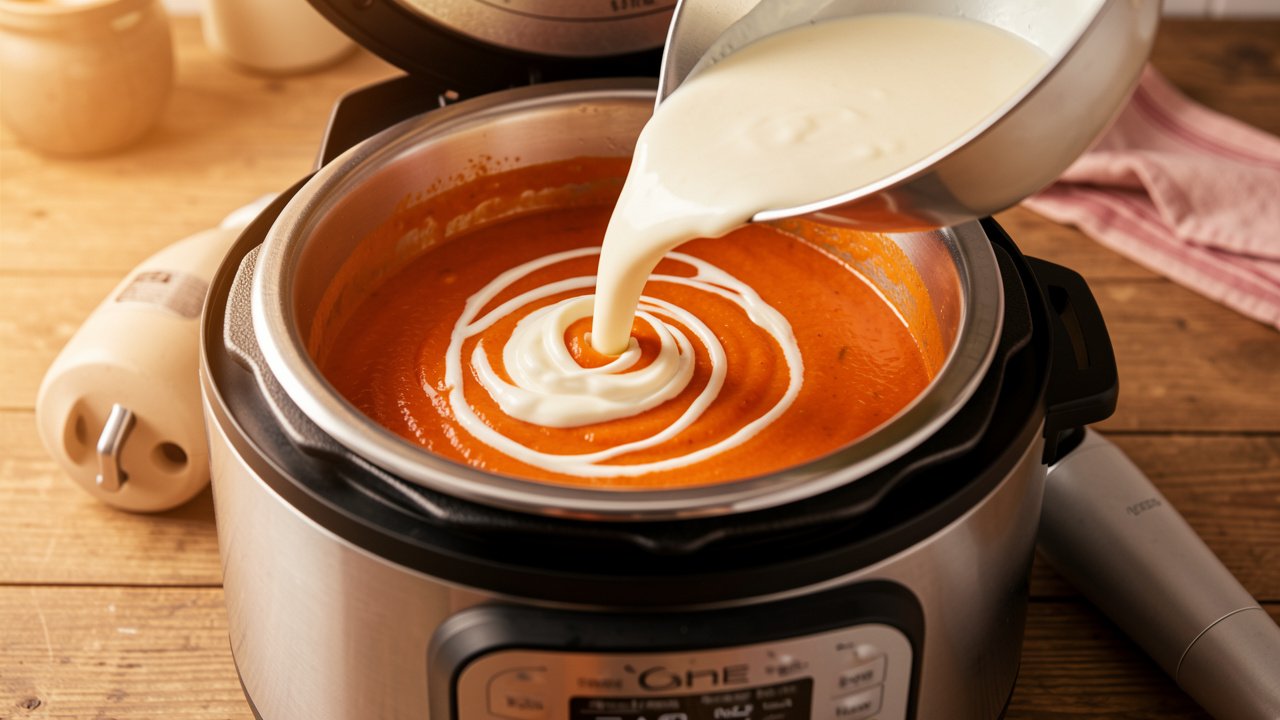
Open the lid away from your face. Blend the soup smooth with an immersion blender, 45 to 60 seconds, until the color turns from patchy red to an even orange-red and the texture looks glossy. Press Keep Warm, pour in the cream, and stir it through. The soup should not be bubbling at this point. Taste, adjust the salt, and finish with torn basil.
Chef’s Tips From Real Kitchen Testing
Warm the cream in the microwave for 20 seconds before it goes in. Cold cream hitting hot soup is what makes the surface look speckled, and warm cream blends in invisibly.
Never fill past the halfway line on the insert. Soup foams under pressure, and a pot filled to the max line can push liquid into the vent during the release.
If your tomatoes taste sour rather than sweet, add a second teaspoon of sugar rather than baking soda. Soda kills the acid but leaves the soup tasting oddly dull.
Recipe Variations
Serving Suggestions
- Grilled cheese cut into dipping soldiers
- Buttered garlic toast or crusty sourdough
- A handful of homemade croutons and cracked pepper
- Torn basil with a drizzle of good olive oil
Nutrition Facts
Values are estimates per serving and vary with your stock, cream, and canned tomato brand.
Make-Ahead Tips
Cook the soup through the blending step and stop there, before the cream. The tomato base holds better without dairy and reheats without any risk of splitting. Cool it, refrigerate up to 4 days, then warm a portion and stir the cream in fresh when you serve it. Chopping the onion and garlic a day ahead cuts the active prep to about three minutes.
Storage, Freezing & Reheating
Common Mistakes to Avoid
Troubleshooting
Display reads BURN? Cancel, release pressure, and open the lid. Pour the contents into a bowl, scrape the base clean, return everything to the pot with an extra half cup of stock, and reseal without stirring. It usually works on the second try.
Pot never reached pressure? Check the sealing ring is seated and the valve is on Sealing. If both are right, you are short on thin liquid; add another half cup of stock.
Soup split after the cream? The pot was still boiling. Blend it again for 20 seconds off the heat and it will usually come back together.
Soup too thin or tasting flat? Simmer it uncovered on Saute for a few minutes before the cream goes in, never after, then add salt and a teaspoon of red wine vinegar.
A Note on Speed and Flavor
Pressure cooking does not cost you flavor here, because tomato soup is mostly a question of breaking down fruit and letting it concentrate. Long simmering does that with time; the pressure cooker does it with heat. For a spiced route, try our creamy Indian tomato soup, or our hearty tomato lentil soup for a heavier meal. There is also tomato chicken noodle soup, and our tomato sauce recipes for a tomato glut.