Italian Recipes
Green Tomato Pasta Toss Recipe Quick Vegetarian Skillet Pasta
Last updated: September 29, 2026
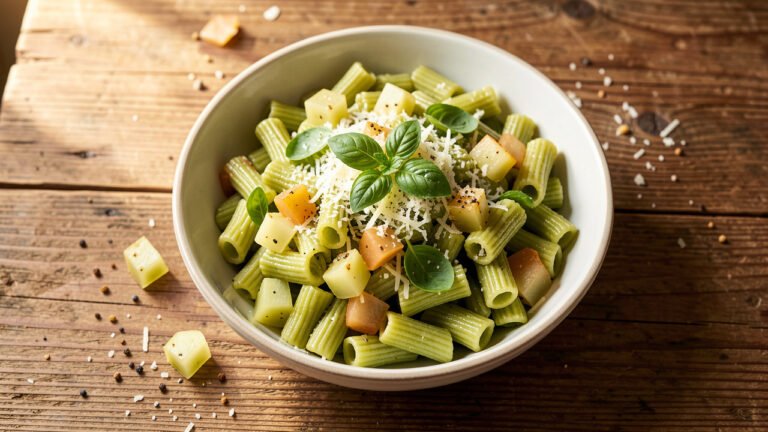
The first time I cooked green tomatoes like red ones, I stood over the pan for twenty-five minutes waiting for them to collapse. They never did. That was the day I stopped fighting them and started treating them as a vegetable, which is exactly what this pasta is.
Why This Green Tomato Pasta Toss Works
Green tomatoes are not unfinished red tomatoes with a color problem. They are a different ingredient. The cell walls are still firm, the flesh is dense and almost apple-like, and the pectin has not started to break down. That is why they hold their shape through heat that would turn a ripe tomato into puddle.
Ripe red tomatoes are mostly water and sugar, so heat makes them slump and reduce into sauce. Green tomatoes have very little sugar and a lot of malic and citric acid, so they cook up sharp and firm. You can hold them in a hot pan for half an hour and they will still be pieces.
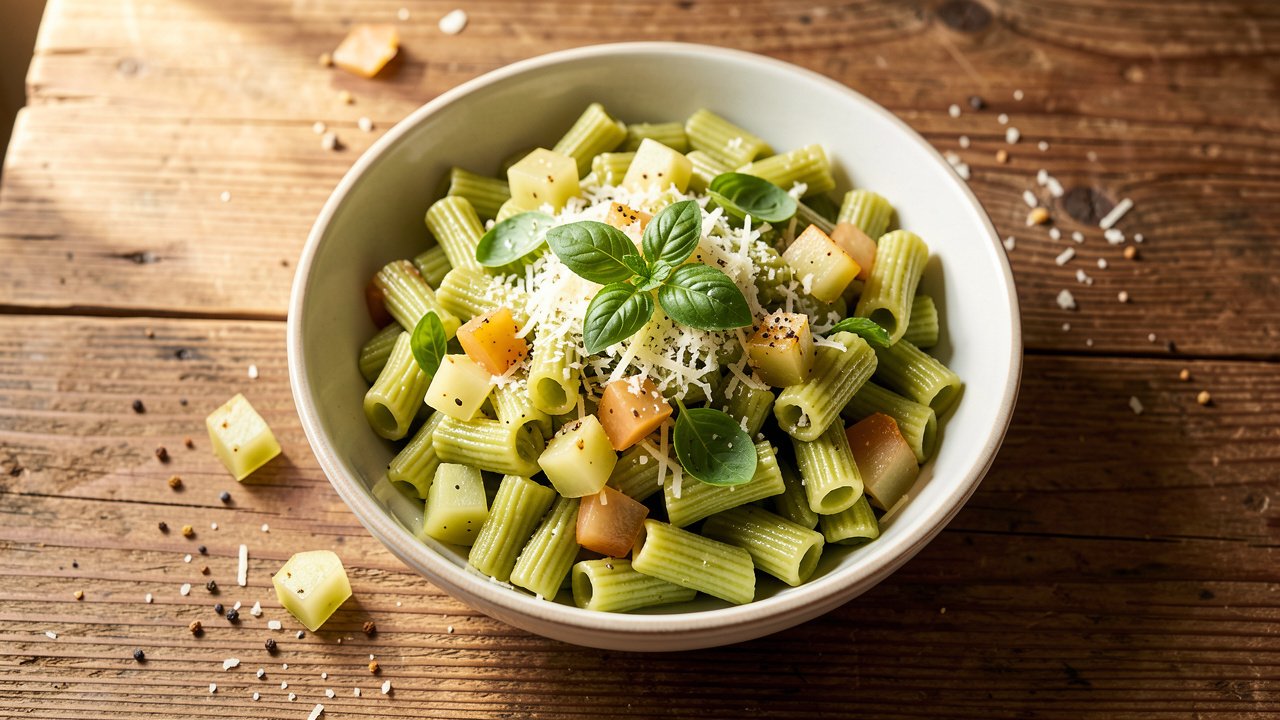
So this recipe stops asking for a sauce. Dice the tomatoes small, sear them hard, and let them stay in distinct tender-crisp bites. Butter, Parmesan, and starchy cooking water coat the pasta instead. That is why the word here is toss, not marinara.
The acid needs a counterweight or the plate tastes like it is squinting at you. Fat does most of that job, which is why there is real butter and a splash of cream. A pinch of sugar softens the sharp edge, and salty aged Parmesan rounds off the rest. Skip those and the dish is thin and sour.
Pro observation: Listen to the pan. Ripe tomatoes go quiet and wet within a minute of hitting the heat. Green tomatoes keep sizzling like diced potato, because there is far less water to boil off. That sound means you are on track.
Ingredients
Kitchen Measurement Converter
Quickly convert between common cooking measurements without leaving the recipe. Pick a category, enter a value, and the result updates instantly.
Ingredient Notes & Substitutions
Green Tomatoes
You want fully unripe fruit, hard to the squeeze with a pale seed cavity, not a green heirloom variety like Green Zebra. Heirlooms that are green when ripe are soft and sweet and will behave like red ones, which defeats the whole recipe.
Pasta Shape
Short ridged shapes win here. Penne rigate, casarecce, or fusilli catch the little cubes so every forkful gets tomato. Long strands let the pieces slide to the bottom of the bowl, which is a sad way to eat this.
Butter and Cream
The butter is doing structural work against the acid, so use real butter rather than more olive oil. The cream is optional but takes the sharpness down noticeably.
Parmesan
Grate it yourself from a wedge of Parmigiano Reggiano or a good pecorino. Pre-shredded cheese is coated in starch and refuses to melt smoothly into the pasta water, leaving you with a gritty coating instead of a glossy one.
Equipment
- Large pot for pasta
- Wide heavy skillet
- Sharp knife and board
- Box grater
- Heatproof mug or cup
- Tongs or a spider
Before You Start
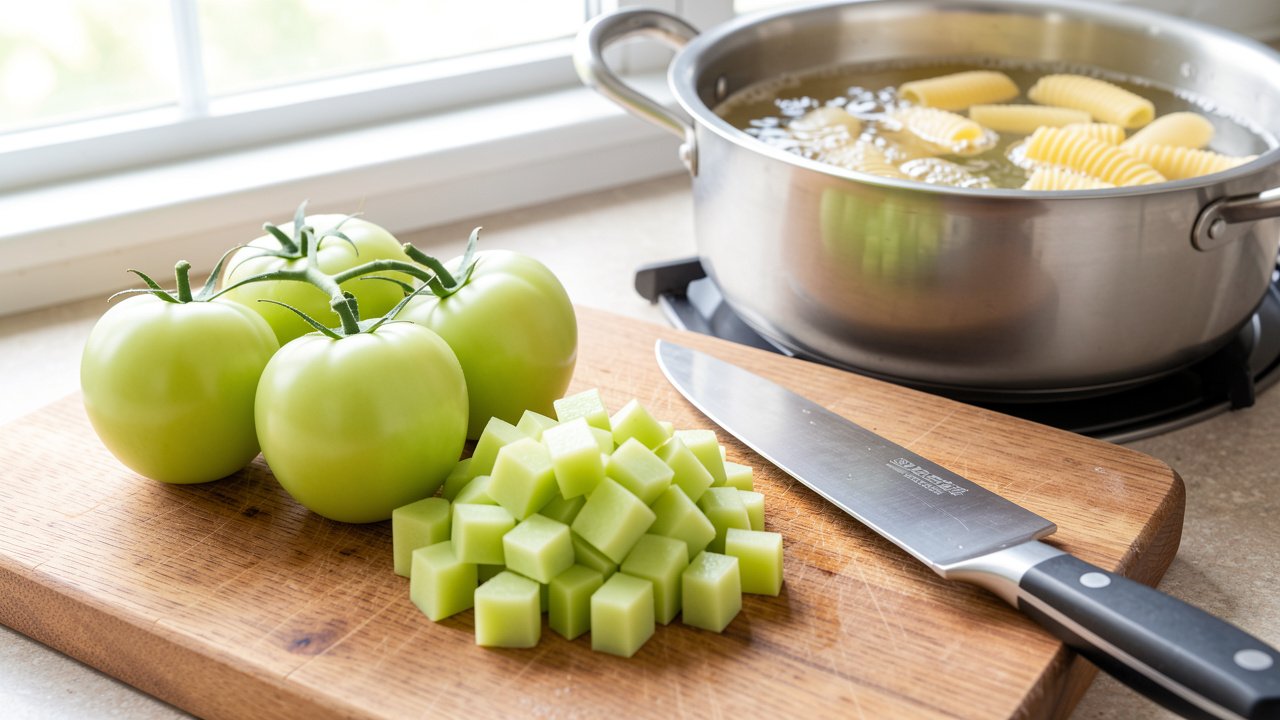
1. Dice before the water boils. Cutting hard tomatoes into even quarter-inch cubes takes longer than you think, and this dish moves fast once the pan is hot. Get the whole pile cut and waiting.
2. Salt the pasta water properly. A tablespoon of salt per four quarts. That water becomes part of the sauce, so bland water means bland pasta.
3. Put a mug by the stove. Everyone forgets to save pasta water. Set the cup next to the pot now so you cannot drain it all away by reflex.
Step-by-Step Instructions
Dice the Green Tomatoes Small
Core the tomatoes and cut them into cubes no bigger than a quarter inch. Size matters more here than in any red tomato recipe: big chunks of green tomato stay stubbornly raw in the middle and eat like unripe apple. Small cubes cook through and read as part of the dish rather than an intruder. Do not seed them; the gel is where much of the tang lives.
Get the Pasta Water Going
Bring a large pot of well-salted water to a rolling boil and add the pasta. Set a timer for two minutes less than the box says, because the pasta will finish in the skillet. Stir it in the first minute so it does not clump.
Bloom the Garlic in Oil
Heat the olive oil in a wide skillet over medium heat and add the sliced garlic and red pepper flakes. Cook about 60 to 90 seconds, only until the garlic turns pale gold at the edges and smells sweet. Pull it back from the heat if it starts browning fast, because burnt garlic turns bitter and there is no acid-and-fat balance that can hide it.
Saute the Tomatoes Until the Edges Turn Golden
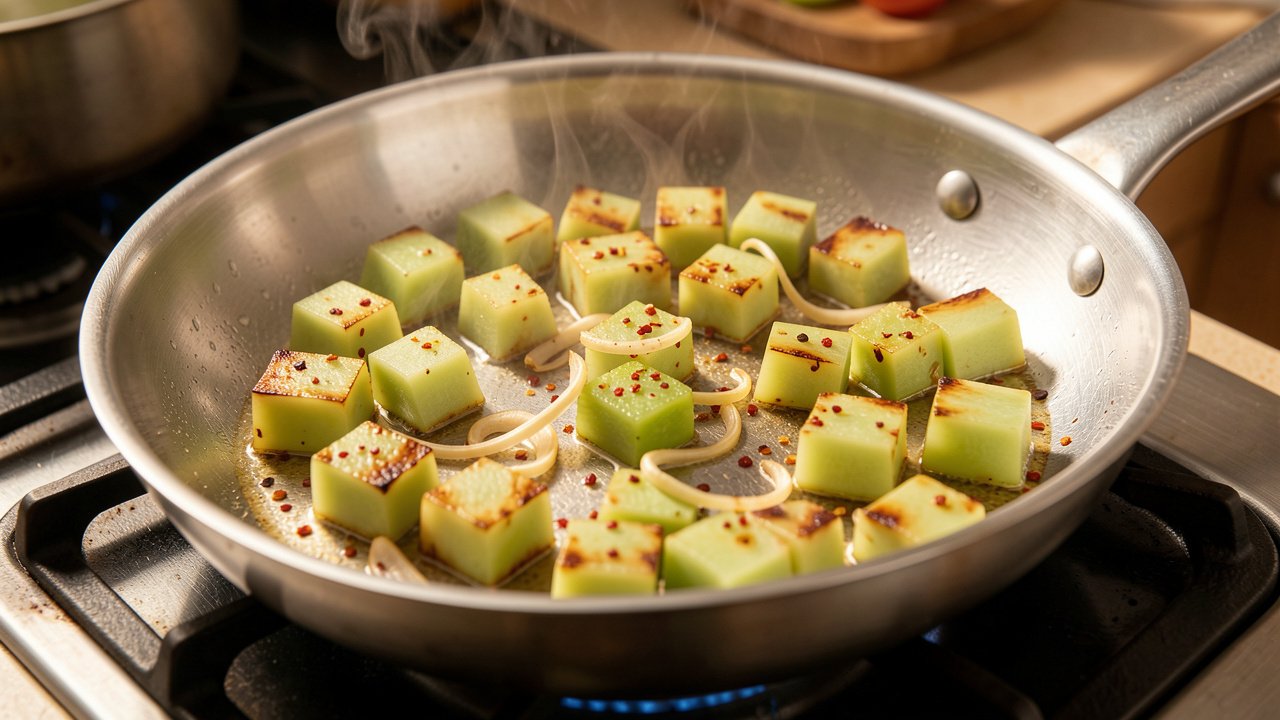
Raise the heat to medium-high and add the diced green tomatoes in one layer, with the salt, pepper, and the pinch of sugar. Let them sit undisturbed for two minutes to catch color, then stir every minute or so. You are looking for 6 to 8 minutes total, until the edges are golden and the cubes just soften but still push back when you press one with a spoon.
Do not wait for them to collapse. They will not, and more time only gives you dry, leathery pieces. Taste one at seven minutes: it should be tender-crisp, like a barely cooked green bean.
Build the Coating with Butter and Pasta Water
Scoop out a full cup of pasta water before you drain, then drain the pasta. Drop the butter into the skillet with the tomatoes and let it melt, then add the pasta and about half a cup of the hot water. Toss hard over medium heat for a minute; the starch and butter will emulsify into a light glossy coating that clings to the noodles. Stir in the cream.
Finish with Parmesan, Basil, and a Taste Check
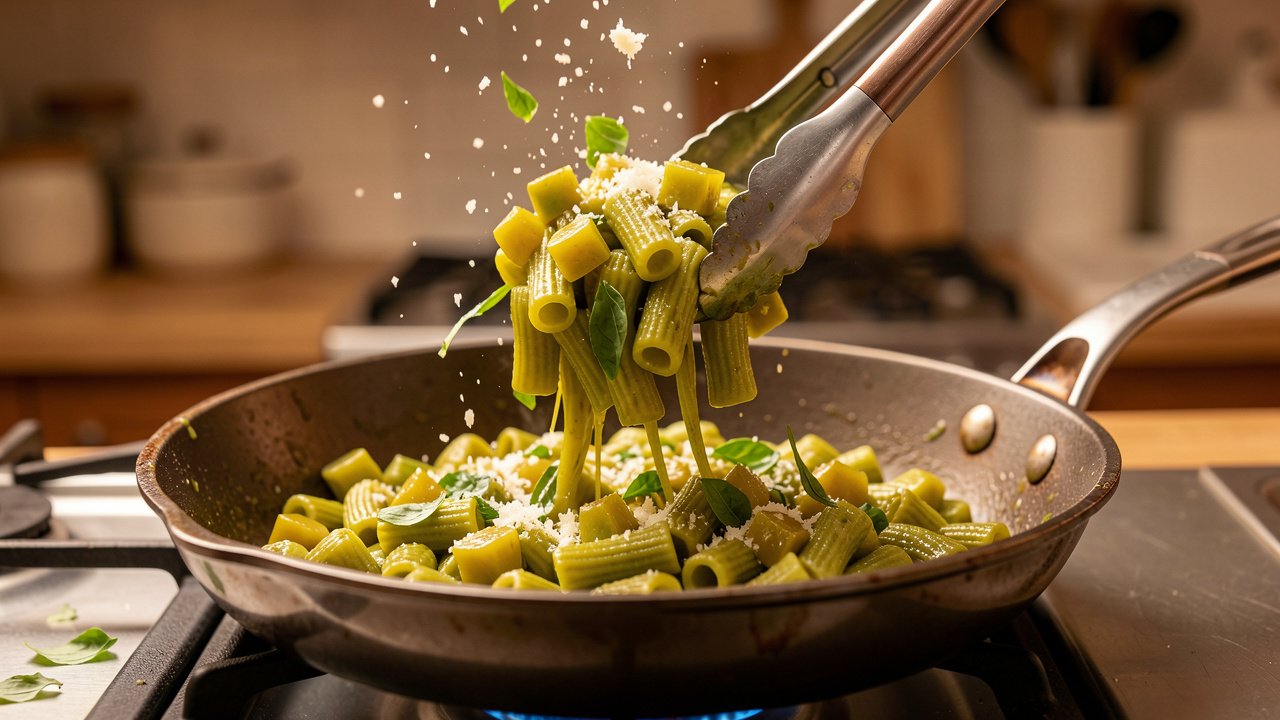
Take the pan off the heat before the cheese goes in, or it will seize into strings. Add the Parmesan and toss until it disappears into the coating, loosening with a splash more pasta water if it tightens. Tear in the basil, add the lemon zest, and taste. Too sharp still? Another knob of butter. Flat? More salt and cheese. Serve straight from the pan while it is glossy.
Chef’s Tips From Real Kitchen Testing
Crowding the skillet is the one mistake that ruins the texture. Green tomatoes need contact with hot metal to color; pile them up and they steam pale and squeaky instead. Use a 12-inch pan or cook in two batches.
Save more pasta water than you think you need. Green tomatoes contribute almost no liquid to the pan, so unlike a red tomato pasta this one has no built-in moisture to fall back on.
Salt the tomatoes in the pan, not on the board. Sitting salted, they weep and go limp before they ever hit heat, and you lose the tender-crisp bite that makes this worth cooking.
Recipe Variations
Serving Suggestions
- A crisp sparkling water with lemon
- Garlic bread to mop the buttery coating
- A plain green salad with a soft, low-acid dressing
- Extra Parmesan and cracked pepper at the table
Nutrition Facts
Values are estimates per serving and vary with the pasta, the amount of cheese, and whether you add the cream.
Make-Ahead Tips
The tomato and garlic base is the make-ahead component. Cook it through step four, cool it, and refrigerate up to two days; the cubes hold their texture far better than cooked red tomatoes would. On the night, boil the pasta, reheat the base for a minute, and carry on from step five. Grate the Parmesan ahead too. What you cannot do in advance is the toss itself, because the emulsion of butter, cheese, and starchy water only exists while it is hot.
Storage, Freezing & Reheating
Common Mistakes to Avoid
Troubleshooting
Too sour to enjoy? Off the heat, stir in another tablespoon of butter and a handful of Parmesan. Fat and salt read as roundness, and they fix sharpness faster than sugar does.
Tomatoes still crunchy? They were cut too large. Add a few tablespoons of pasta water, cover the pan, and steam two minutes to soften the centers without drying the edges.
Pasta looks dry and dull? The emulsion broke or never formed. Add a splash of hot pasta water and toss vigorously over low heat until it turns glossy again.
A Note on Cooking Unripe Tomatoes
Green tomatoes are what end-of-season gardeners are left holding when the first frost threatens, and cooks across Italy and the American South both worked out the same answer: stop treating them as fruit and treat them as a vegetable. Fried, pickled, or tossed through pasta, they get heat, fat, and salt rather than long simmering.
If you want to see the contrast for yourself, cook our tomato basil pasta the following night with ripe fruit and watch how quickly it slumps into sauce. For the deep-simmer approach that only ripe tomatoes allow, our tomato sauce recipes cover it, and spicy tomato shrimp pasta shows the same skillet logic with a protein. There is also good background on why acidity matters in tomatoes in the Mediterranean diet.