Preserves & Canning
Traditional British Preserve
Last updated: September 29, 2026
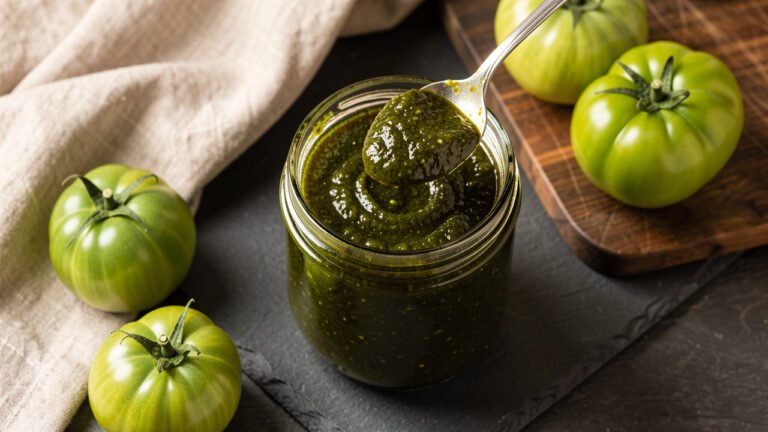
Every year the first frost catches out a few green tomatoes that never had a chance to ripen. This chutney is what a generation of cooks did with that glut, and it is still the best answer. Firm, tart green tomatoes hold their shape through a long, slow simmer and drink up sugar and spice beautifully.
Why This Green Tomato Chutney Works
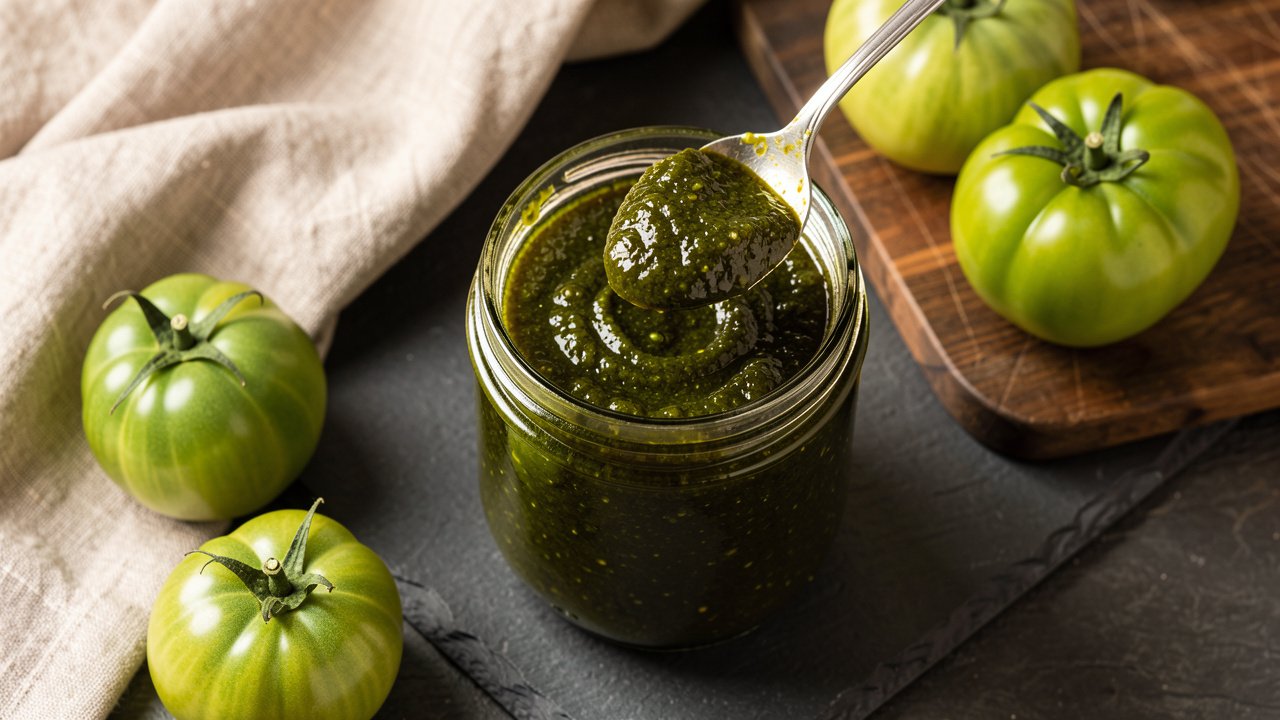
Green tomatoes are firm, tart, and low in sugar, which is exactly why they were never meant to be eaten raw and are perfect for chutney. Their dense flesh survives a long simmer without turning to mush, so the finished preserve has real texture instead of collapsing into a smooth sauce.
The recipe works on the same principle that has preserved food for centuries: acid and sugar together. The vinegar lowers the pH so the chutney keeps safely for months, while the sugar thickens it and softens the sharpness. Onions and apple add natural body and a little pectin, so the mixture sets to a spoonable, jammy consistency on its own.
The warm spices do the heavy lifting on flavor. Mustard seeds bring a gentle bite, ground ginger adds warmth, and the raisins melt down into pockets of dark sweetness. None of it is fussy, but the balance is what turns a pan of unripe tomatoes into something you actually crave on cheese and cold meat.
Most of all, this is a forgiving recipe. There is no thermometer, no pectin to fuss over, and no exact set point to hit. You cook it down until it looks right, and the visual cues are easy to read once you know what you are watching for.
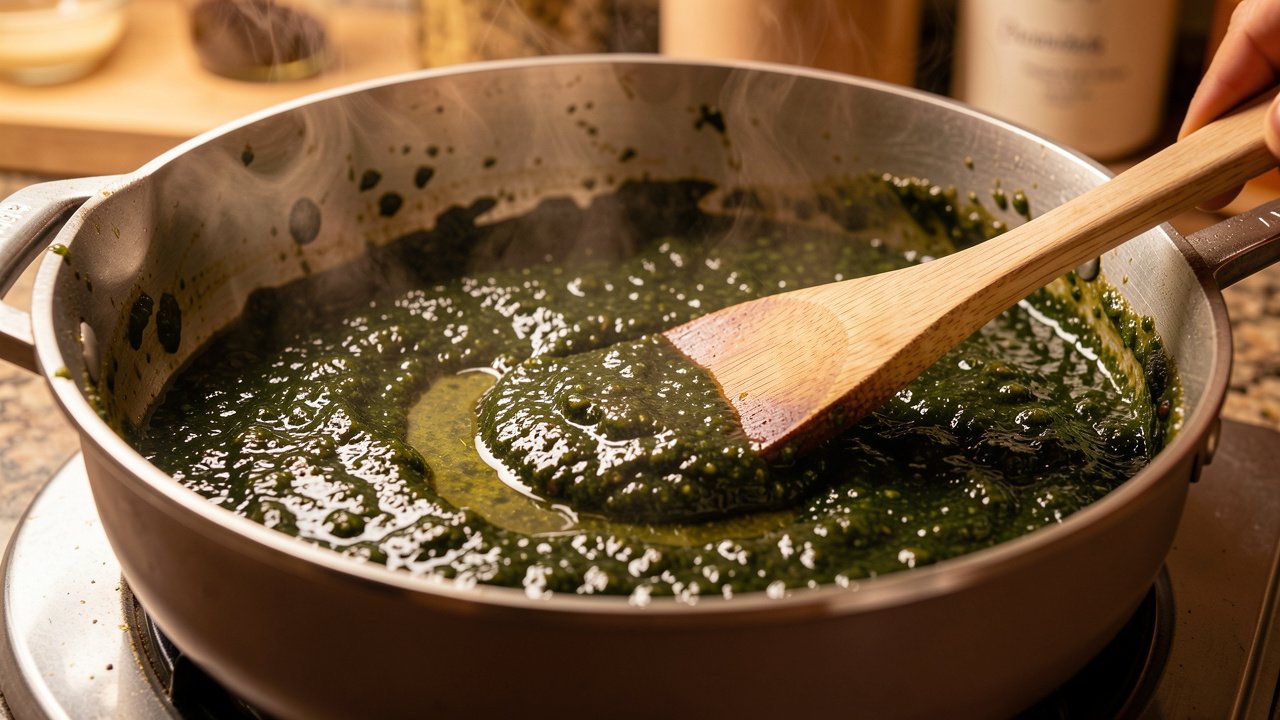
Pro observation: The chutney is done when you drag a spoon across the base of the pan and it leaves a clear channel that does not immediately flood with runny liquid. That channel test beats any clock, because pan size and heat change the timing every time.
Ingredients
Kitchen Measurement Converter
Quickly convert between common cooking measurements without leaving the recipe. Pick a category, enter a value, and the result updates instantly.
Ingredient Notes & Substitutions
Green Tomatoes
Use firm, fully unripe tomatoes with no red blush. Any variety works. Chop them small and evenly so they cook at the same rate; large chunks stay crunchy in the finished jar.
Vinegar
Malt vinegar gives the classic British flavor, but it contains gluten. For a gluten-free chutney, use cider vinegar or distilled white vinegar. Whatever you pick, keep it at 5 percent acidity for safe keeping.
Sugar and Dried Fruit
Light or dark brown sugar both work; dark gives a deeper, more molasses-like color. Raisins or sultanas add body and sweetness. Chopped dates or currants swap in one for one.
Apple and Spices
A tart cooking apple like Bramley breaks down and helps the set. Mustard seeds and ground ginger are the backbone; a pinch of chili flakes or a stick of cinnamon adds warmth if you like.
Equipment
- Large stainless preserving pan
- Long wooden spoon
- Sharp knife and board
- 4 to 5 glass jars with vinegar-proof lids
- Jam funnel and ladle
- Kitchen scale
Before You Start
1. Use the right pan. Vinegar reacts with bare aluminum and copper and can taste metallic. Reach for stainless steel or an enamel-lined preserving pan with a wide base for faster evaporation.
2. Chop everything to a similar size. Even, small pieces of tomato, onion, and apple soften at the same time, so nothing stays raw while the rest turns to jam.
3. Get your jars ready. You need them clean, hot, and sterilized when the chutney is done. Cold jars can crack when you ladle in hot preserve, so time the sterilizing to finish alongside the cooking.
Step-by-Step Instructions
Prep the Produce
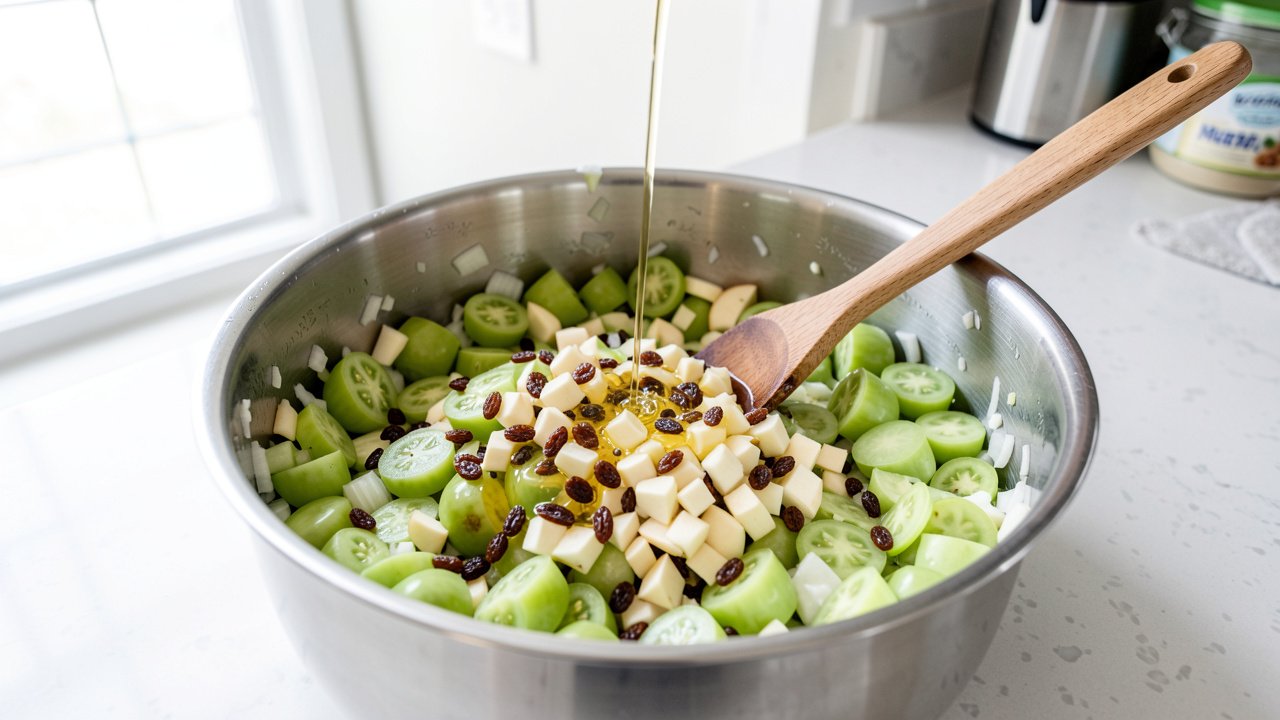
Core and chop the green tomatoes into small, even dice, about half an inch. Peel and finely chop the onions. Peel, core, and dice the apple. Give the raisins a quick rinse. Smaller pieces mean a smoother, quicker chutney, so take a few extra minutes here.
Combine in the Pan (No Sugar Yet)
Tip the tomatoes, onions, apple, and raisins into your preserving pan. Add the mustard seeds, ground ginger, salt, optional chili flakes, and all of the vinegar. Stir well. Hold the sugar back for now; adding it too early toughens the tomato and onion skins so they never fully soften.
Simmer Until Softened
Bring the pan to a gentle boil, then lower the heat to a steady simmer. Cook uncovered for 45 to 60 minutes, stirring now and then, until the tomatoes and onions are completely soft and the onion looks translucent. The mixture will still be watery and pale at this stage, and that is exactly right.
Add the Sugar and Reduce
Stir in the brown sugar until it fully dissolves. Keep the chutney at a gentle simmer and stir more often as it thickens, for another 45 to 60 minutes, until it turns dark, glossy, and jammy. Watch the bottom of the pan as it reduces, because sugar can catch and scorch once the liquid drops.
Sterilize the Jars
While the chutney finishes, sterilize your jars. Wash them in hot soapy water, rinse, then dry in a 275F (140C) oven for 15 minutes, or run them through a hot dishwasher cycle. Simmer the lids and any rubber seals in boiling water. Keep everything hot until you fill it.
Ladle, Seal, and Mature
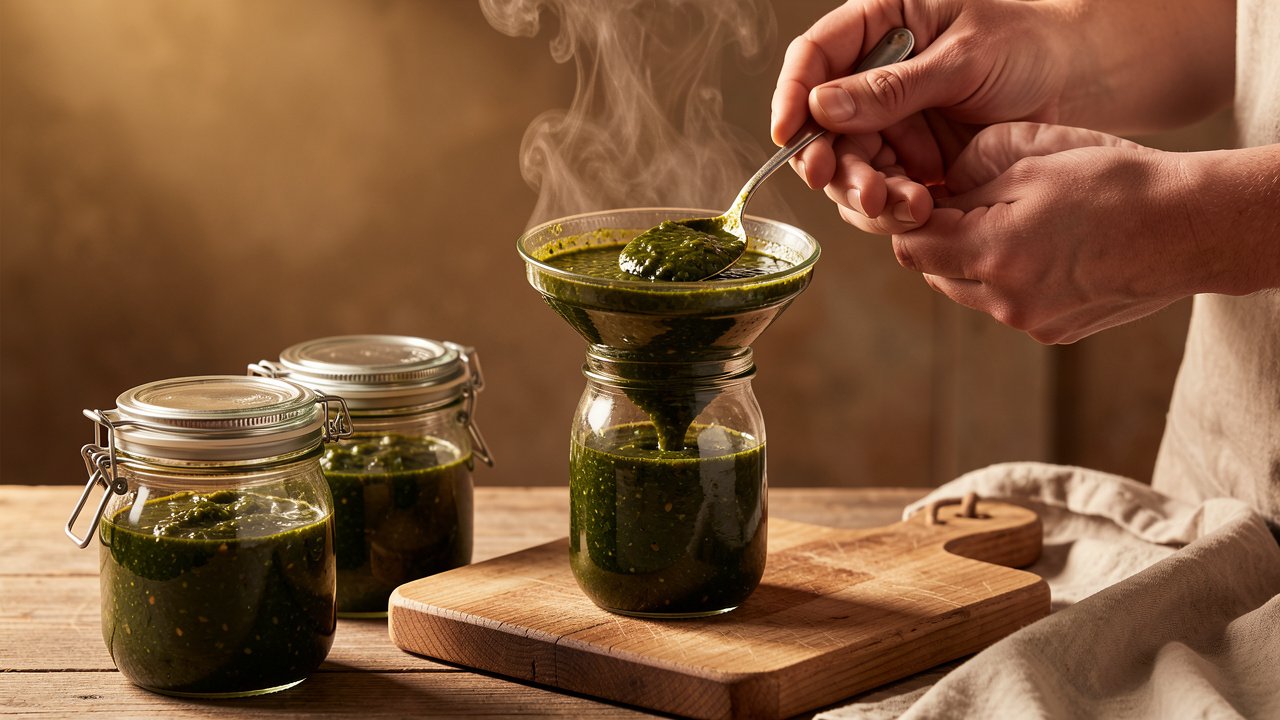
Ladle the hot chutney into the hot jars through a funnel, leaving a quarter inch of headspace, and seal at once with vinegar-proof lids. For long pantry storage, process the sealed jars in a boiling water bath for 10 minutes. Label them, then wait at least two to four weeks before opening so the flavor can mellow and deepen.
Chef’s Tips From Real Kitchen Testing
Stir constantly near the end. Once the liquid drops the sugar sits against the hot pan base, and a scorched batch turns bitter fast. A flat-ended wooden spoon that reaches the corners is worth having.
Cook it a shade thicker than you want. Chutney firms up as it cools and sits, so a mixture that looks just right in the pan can end up stiff after a week in the jar.
Open a window. The simmering vinegar throws off sharp fumes for the first stretch of cooking. It mellows as the chutney reduces, but early on the kitchen gets pungent.
Recipe Variations
Serving Suggestions
- Sharp cheddar and crackers on a cheese board
- Cold roast meats and hearty sandwiches
- Stirred into a ploughman’s lunch or sandwich
- Alongside curries, samosas, or a fried egg
Nutrition Facts
Values are estimates per tablespoon of chutney and vary with the sugar and vinegar you use.
Make-Ahead Tips
Green tomato chutney is a make-ahead recipe by nature; it is not meant to be eaten fresh from the pan. The raw vinegar edge needs time to soften, and the spices need to spread through the mixture. Jar it, tuck it away, and forget about it for a while.
Two to four weeks is the minimum, but a couple of months in a cool cupboard is even better. The color darkens, the tang rounds out, and the texture settles. Batches made in autumn are at their best by the holidays, which is why so many people make it as a gift.
Storage, Sealing & Shelf Life
Common Mistakes to Avoid
Troubleshooting
Chutney too runny in the jar? It was jarred before it passed the channel test. Tip it back into the pan and simmer until thick again, then re-jar in clean hot jars.
Tastes harshly of vinegar? It simply needs maturing. The sharpness fades over two to four weeks; do not add sugar to mask it right after cooking.
Skins still tough? The sugar likely went in too soon or the simmer was too short. Next time, soften the vegetables fully in vinegar before the sugar joins the pan.
A Note on British Chutney
Chutney came to Britain through trade with India and was adapted to local produce, which is how the tail end of the tomato harvest ended up in the preserving pan. The method is close cousin to other tomato preserving traditions, from a jar of home-canned crushed tomatoes to a fresh tomato salsa, each one a way to capture a glut before it spoils.
If you enjoy cooking tomatoes down slowly, the same patience rewards a good tomato sauce, and tomatoes earn their place in everyday healthy eating too, as our guide to tomatoes in the Mediterranean diet explains.