Turkish Recipes
Fried Eggplant in a Garlicky Tomato-Pepper Sauce
Last updated: November 12, 2026
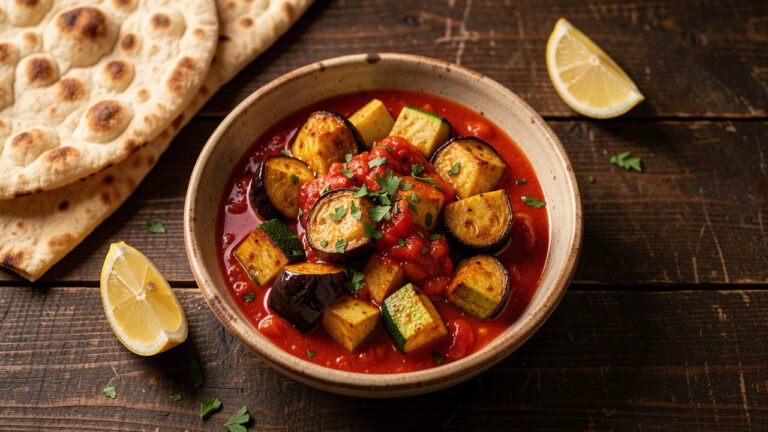
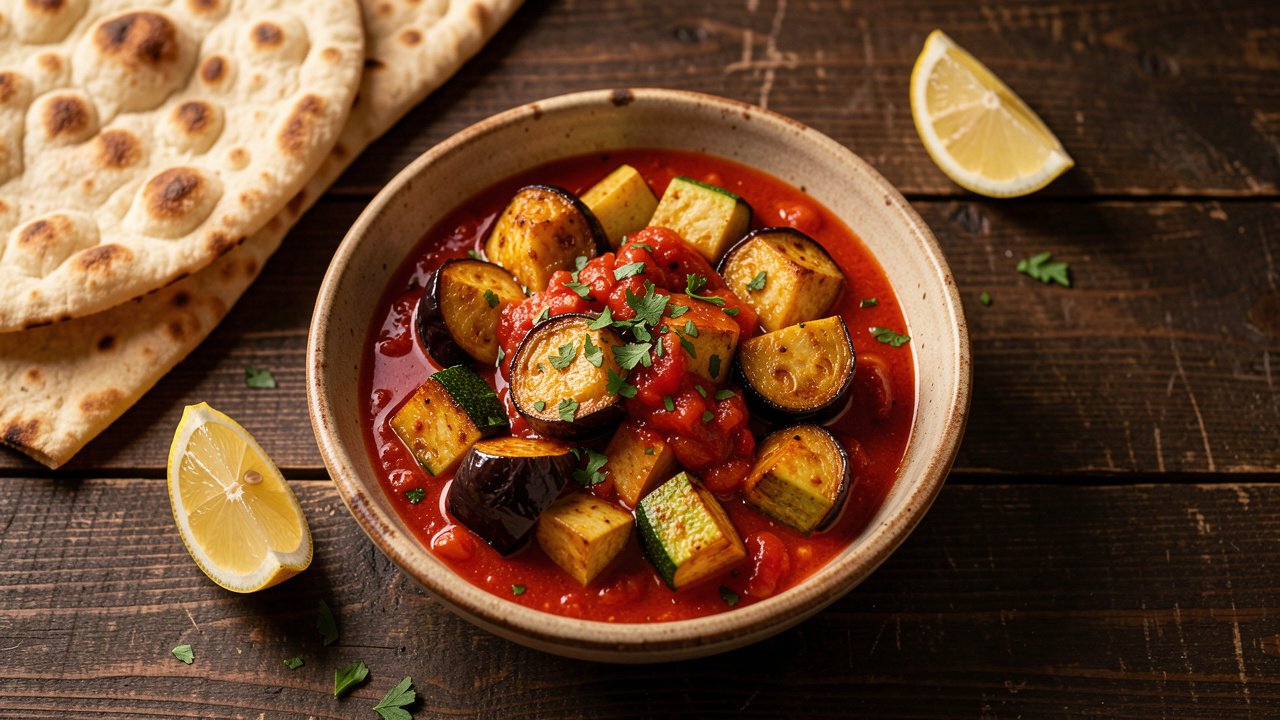
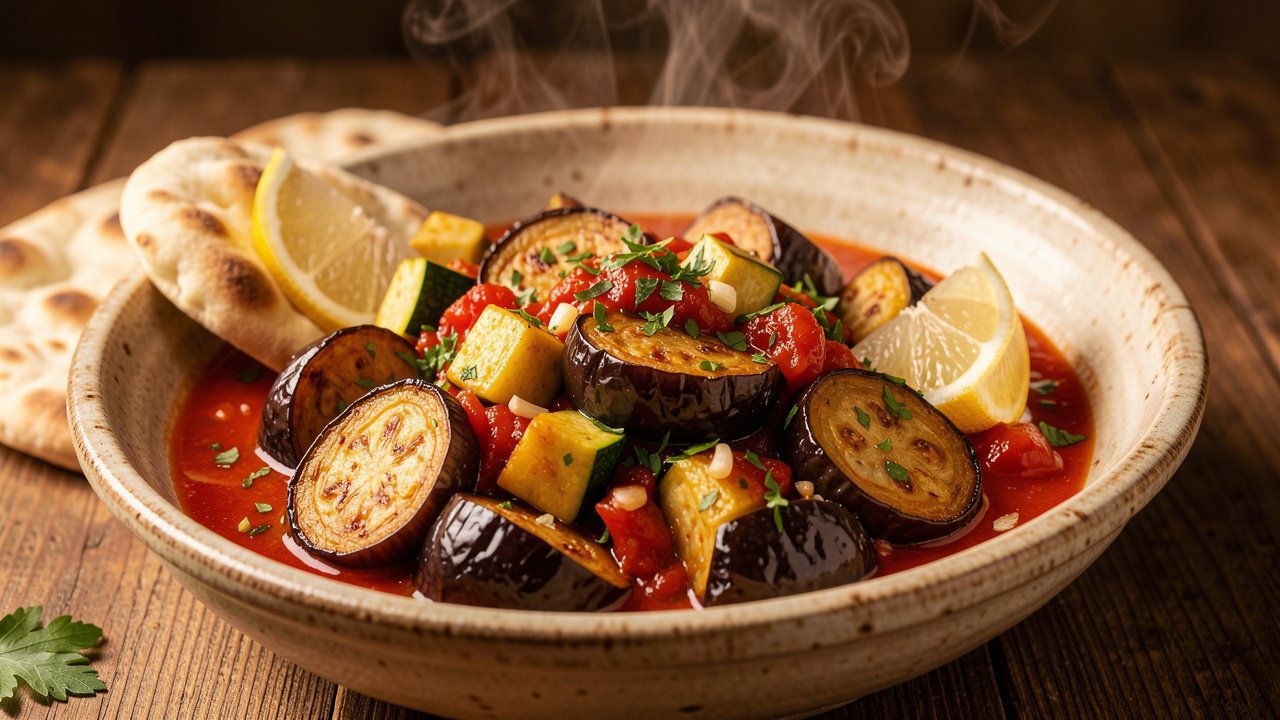
Saksuka is one of those Turkish dishes that quietly steals the meze table. Golden cubes of fried eggplant and zucchini are folded into a glossy tomato-pepper sauce, heavy with garlic, and left to sit until the vegetables drink up every bit of flavor. It tastes of a Mediterranean summer, yet it is humble, meatless, and made from pantry staples.
The method is simple but worth doing properly: you fry the eggplant until it is soft and caramel-edged, build a quick garlicky tomato sauce in the same pan, then bring the two together and let them rest. Serve it warm or, as many Turkish cooks prefer, at room temperature, scooped up with warm flatbread.
Why This Saksuka Works
Great saksuka is really two things done well: eggplant fried to a soft, golden tenderness, and a tomato-pepper sauce bright and garlicky enough to carry it. Get those two right and the dish almost makes itself. The recipe here treats the frying and the sauce as separate steps, then marries them and lets the whole thing rest so the flavors settle in.
The frying is where the magic lives. Eggplant cooked slowly in olive oil turns silky and sweet, with caramelized edges that give the dish its backbone. Salting and draining the cubes first draws out excess moisture, so they brown instead of steam and absorb less oil, which keeps the finished meze rich rather than greasy.
The sauce is a classic Turkish base: onion and plenty of garlic softened in oil, then tomato paste and red pepper paste stirred in and toasted to deepen their color, followed by grated fresh tomatoes that cook down into a glossy, savory-sweet sauce. A pinch of sugar rounds out any sharpness from the tomatoes.
What truly sets saksuka apart is the rest. Once the fried vegetables are folded into the sauce, it is best left to cool so everything soaks together, which is why it shines served warm or at room temperature. Keep the garlic generous and the eggplant properly fried, and you will get a meze that tastes like it came from an Aegean kitchen every time.
Pro observation: Saksuka is naturally vegan and fully halal as written, with no forbidden ingredients. All of its depth comes from fried eggplant, toasted tomato and pepper pastes, garlic, and sweet ripe tomatoes, so you never miss a thing.
Ingredients
Kitchen Measurement Converter
Need to convert an amount while you measure? Pick a category, enter a value, and the result updates instantly.
Ingredient Notes & Substitutions
Eggplant
Choose firm, glossy eggplants that feel heavy for their size, a sign they are fresh and not spongy. Globe or Italian eggplants both work; cut them into even one-inch cubes so they fry at the same rate. There is no need to peel them, as the skin helps the cubes hold their shape.
Zucchini
Zucchini adds a softer, sweeter note alongside the eggplant and is traditional in many home versions of saksuka. If you prefer a pure eggplant meze, leave it out and add one more eggplant. Keep the cubes the same size so everything cooks evenly.
Tomatoes & Pastes
Grated ripe tomatoes give the smoothest, freshest sauce; out of season, a cup of canned crushed tomatoes works well. Red pepper paste, known as biber salcasi, brings a mild, fruity depth; if you cannot find it, use an extra spoon of tomato paste and a little smoked paprika.
Garlic & Oil
Garlic is central here, so do not be shy with it. Use a good amount of olive oil for frying, since the eggplant needs fat to turn silky; you can drain the excess afterward. A squeeze of lemon at the end brightens the whole dish.
Equipment
- Large deep skillet or saute pan
- Slotted spoon
- Colander and paper towels
- Box grater for the tomatoes
- Sharp knife and board
- Mixing bowl
Before You Start
1. Salt the eggplant cubes and rest them 20 minutes, then pat bone-dry. Wet eggplant dropped into hot oil spits and steams instead of browning, and soaks up twice as much oil, leaving the finished meze heavy and greasy.
2. Heat the frying oil until a test cube sizzles on contact. If the oil is too cool the eggplant sits in it and drinks it up, turning soggy instead of forming the golden crust that gives saksuka its sweet, caramelized flavor.
3. Grate the tomatoes and measure the two pastes before you start frying. Once the eggplant is draining you want the sauce pan moving fast, so the fried cubes can go in while still hot and hold their shape instead of sitting and softening.
Step-by-Step Instructions
Saksuka comes together in two quick stages, so set up before you cook. Cube the eggplant and zucchini, salt the eggplant to drain, grate the tomatoes, and chop the onion, garlic, and pepper so the sauce can be built the moment the frying is done.
Salt and Drain the Eggplant
Cut the eggplants and zucchini into even one-inch cubes. Put the eggplant in a colander, toss with a generous pinch of salt, and let it sit for 20 minutes to draw out bitterness and moisture. Rinse briefly, then press and pat the cubes bone-dry with paper towels so they fry rather than steam.
Fry the Eggplant and Zucchini
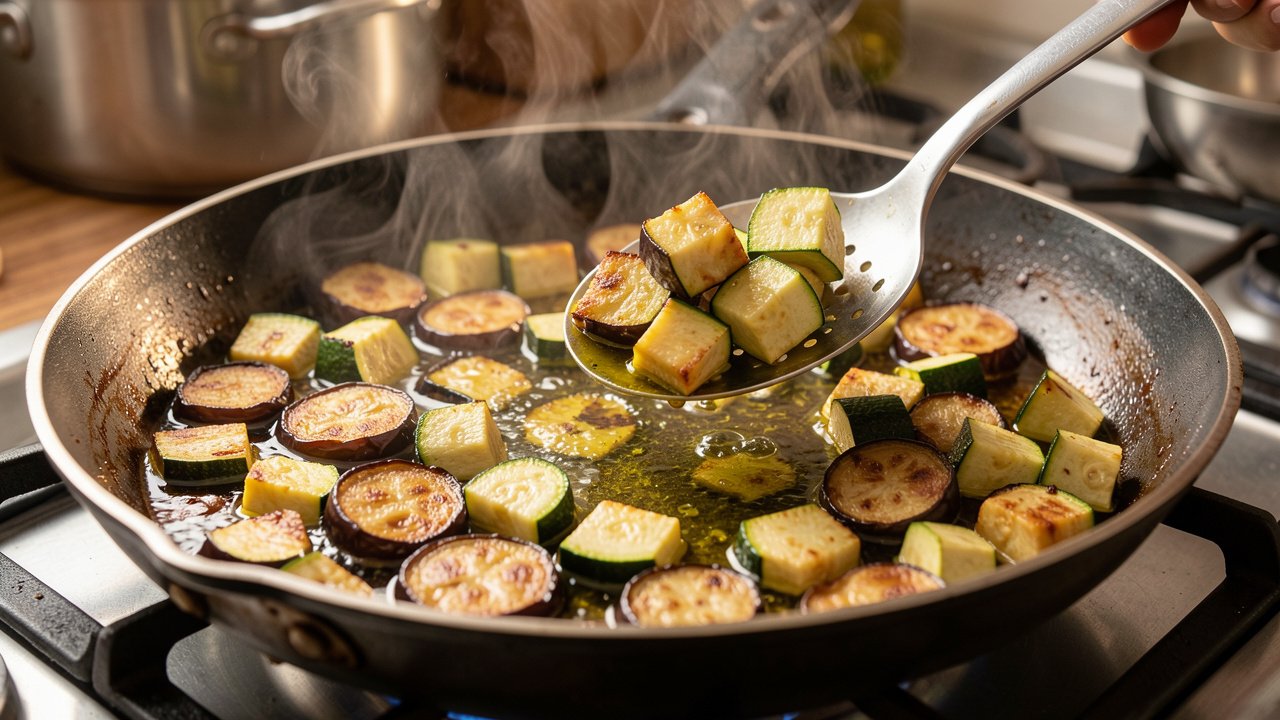
Heat the olive oil in a large deep skillet over medium-high heat until a test cube sizzles on contact. Fry the eggplant in batches, in a single layer, turning until golden and soft, about 6 to 8 minutes a batch. Lift out with a slotted spoon onto paper towels, then fry the zucchini the same way until lightly golden.
Soften the Aromatics
Pour off all but a few tablespoons of oil from the pan. Add the chopped onion with a pinch of salt and cook over medium heat for 4 to 5 minutes until soft, then stir in the chopped green bell pepper and cook 3 minutes more. Add the garlic and cook for 1 minute until fragrant, keeping the heat gentle so it does not scorch.
Build the Tomato-Pepper Sauce
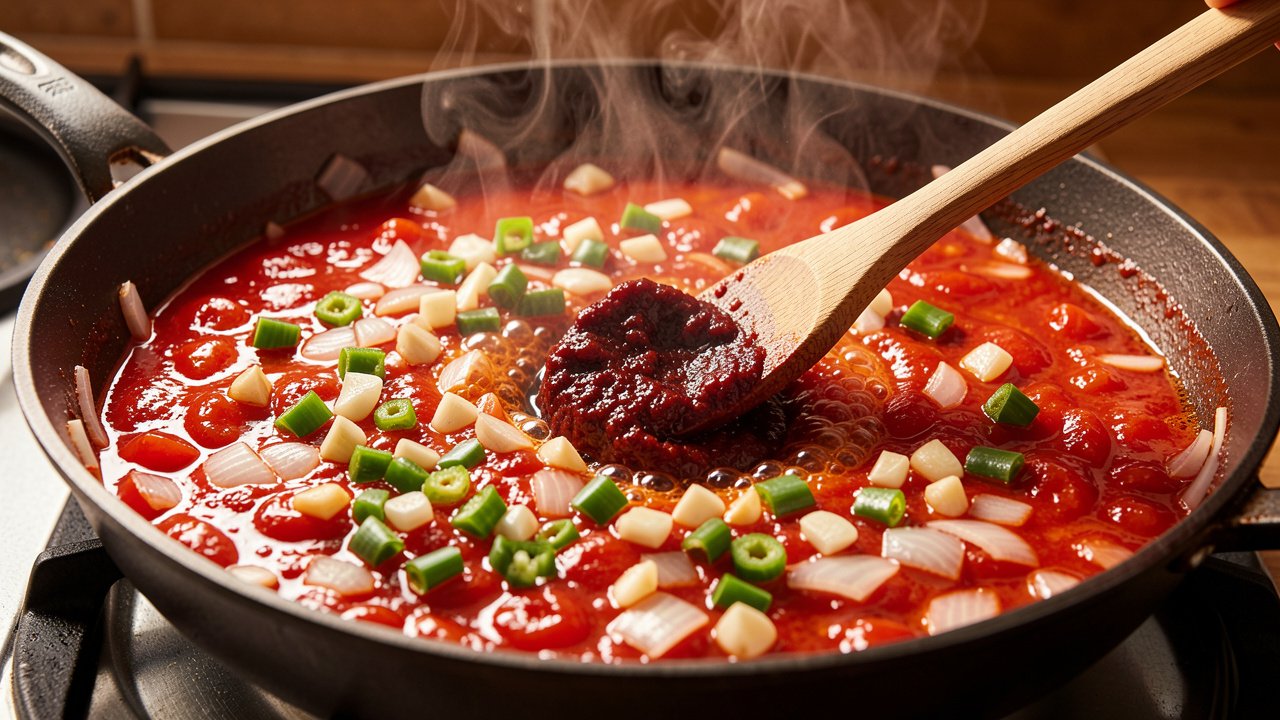
Stir in the tomato paste and red pepper paste and cook for a minute so they darken and lose their raw edge. Add the grated tomatoes, ground cumin, sugar, and a good pinch of salt and pepper. Bring to a simmer and let it bubble, stirring now and then, as the sauce turns glossy and begins to thicken.
Simmer the Sauce
Let the sauce simmer gently, uncovered, for about 10 minutes, until it thickens to a spoonable, jammy consistency and the raw tomato taste is gone. Taste and adjust the salt, pepper, and sugar now, before the fried vegetables go in, so the sauce is exactly where you want it.
Fold In and Rest
Gently fold the fried eggplant and zucchini into the sauce, taking care not to crush the soft cubes. Warm everything together for 2 to 3 minutes so the vegetables soak up the sauce, then take the pan off the heat. Stir in most of the parsley, finish with a squeeze of lemon, and let it rest. Serve warm or at room temperature.
Chef’s Tips From Real Kitchen Testing
Never skip the salt-and-drain step. Twenty minutes in salt pulls out moisture so the eggplant browns and absorbs far less oil, which is the single biggest difference between silky saksuka and a greasy one.
Fry in batches in a single layer. Crowding the pan drops the oil temperature and the cubes steam instead of caramelizing, so give them room and let each batch turn properly golden.
Let it rest before serving. Saksuka deepens as it sits, which is why Turkish cooks often serve it at room temperature; the eggplant soaks up the sauce and the garlic mellows into the tomato.
Recipe Variations
Serving Suggestions
- Warm flatbread or pide for scooping up the sauce
- As part of a wider meze spread with dips and olives
- Spooned over plain rice or bulgur pilaf
- Extra lemon wedges for squeezing over each portion
Nutrition Facts
| Nutrient | Amount per serving |
|---|---|
| Calories | 220 |
| Protein | 4 g |
| Carbohydrates | 20 g |
| Fat | 15 g |
| Saturated Fat | 2 g |
| Fiber | 7 g |
| Sugar | 11 g |
| Sodium | 480 mg |
Values are estimates per serving and vary with the exact vegetables and how much frying oil is absorbed.
Make-Ahead Tips
Saksuka is a dish that actually improves with time, so it is ideal to make ahead. Cook it fully, let it cool, and refrigerate; the flavors deepen overnight as the eggplant keeps soaking up the garlicky sauce. Bring it back to room temperature, or warm it gently, before serving.
Storage, Freezing & Reheating
Common Mistakes to Avoid
Troubleshooting
Dish too greasy? The eggplant went in wet or the oil was too cool. Next time salt and dry the cubes well and get the oil properly hot; for now, drain the fried cubes longer on paper towels before folding them in.
Sauce too watery? Simmer it a few minutes longer before adding the vegetables, or stir in an extra spoonful of tomato paste to thicken and deepen it.
Eggplant still bitter or spongy? It was not fried long enough, or the salting step was skipped. Cook the cubes until fully golden and soft, and always salt-drain older, larger eggplants.
A Note on Turkish Cooking
Saksuka, sometimes written sarsuka, belongs to the great Turkish tradition of eggplant meze, the small cold and warm dishes served at the start of a meal. Its roots lie in the Aegean and the wider Ottoman kitchen, where eggplant is treated almost reverently and cooks built a whole family of dishes around frying it soft and pairing it with tomato, pepper, and garlic. Like much of Turkish home cooking, it turns a handful of humble summer vegetables into something generous and full of flavor.
The dish is most often confused with shakshuka, and understandably so, given the near-identical name. But they are quite different: shakshuka is a North African and Levantine dish of eggs poached in a spiced tomato sauce, while saksuka has no eggs at all and is built around fried eggplant. One is a brunch of eggs in tomato; the other is a cold-or-warm eggplant meze. It also sits near Turkish classics like karniyarik, stuffed eggplant in tomato sauce, sharing the same love of eggplant cooked until meltingly soft.
What has kept saksuka on Turkish tables for generations is its easy generosity. It is meatless, make-ahead, and better the next day, equally at home as a meze, a side, or a light meal with bread. Fry the eggplant properly, keep the garlic and tomato bright, and let it rest, and you have a dish that tastes of an Aegean summer.