Italian Recipes
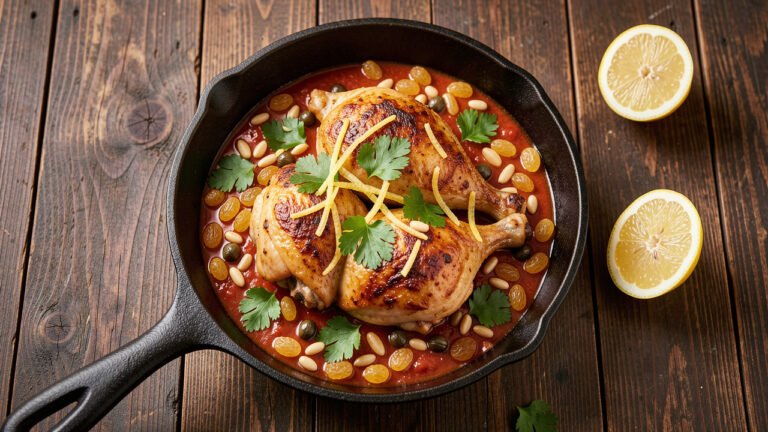
Agrodolce Braised Thighs
Last updated: September 29, 2026
Agrodolce means sour-sweet, and Sicily has been cooking that way since Arab traders brought sugarcane, citrus, and dried fruit to the island. This dish is what that history tastes like on a Tuesday: raisins and lemon arguing politely, with tomato standing between them keeping the peace. The first time I made it I dumped the raisins in dry and wondered why the sauce tasted thin and the fruit chewed like erasers.
Why This Sicilian Lemon Chicken Works
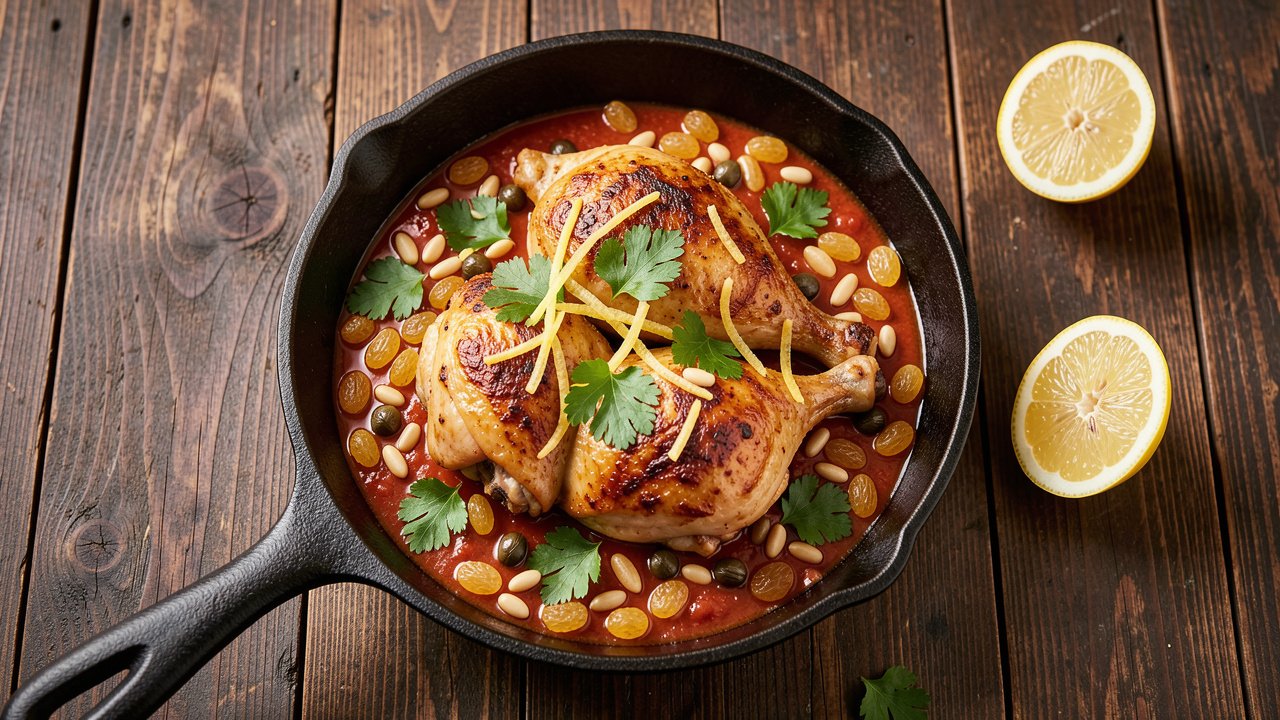
Agrodolce is not a flavor you add at the end. It is a tug-of-war you set up early and then referee. The sweet side comes from golden raisins and a single teaspoon of sugar; the sour side comes from lemon juice and a splash of white wine vinegar. Tomato sits in the middle because it is naturally both, which is why it makes the two ends taste like one sauce instead of two.
The rule I cook by: taste for the balance, not the recipe. If the sauce reads sweet and flat, it needs acid, not less sugar. If it reads sharp and thin, it needs a pinch of sugar or a few more raisins, not more lemon. Correcting in the direction you are missing is faster than trying to cancel out what you overdid, and you can always add another quarter teaspoon.
Thighs make this work. A breast is done at 160F and then it is over, but a thigh is happiest after 25 minutes of lazy simmering, when the connective tissue has melted and the meat is loose on the bone. That long window is what lets the sauce reduce properly without you racing the meat.
Everything else is texture and perfume: pine nuts for crunch, capers for a salty spike, lemon zest thrown in off the heat so it stays floral rather than boiled out.
Pro observation: The sauce is balanced when you cannot immediately name what you are tasting. If your first word is “sweet” or your first word is “sour,” it is not there yet. If your first word is “chicken,” you have arrived.
Ingredients
Kitchen Measurement Converter
Quickly convert between common cooking measurements without leaving the recipe. Pick a category, enter a value, and the result updates instantly.
Ingredient Notes & Substitutions
Chicken Thighs
Bone-in, skin-on thighs are the point. The bone keeps the meat juicy through a long simmer, and the skin renders fat that becomes the cooking medium for the onion. Boneless works but loses both.
Golden Raisins
Golden raisins stay softer and taste less molasses-heavy than dark ones. Currants are the traditional Sicilian choice and are excellent. Whichever you use, plump them before they go near the pan.
Pine Nuts
Buy them fresh and smell them first; pine nuts go rancid quickly and one bad batch ruins the dish. Sliced almonds toast the same way and are a fair substitute at a third of the price.
Lemon
You need the whole fruit: zest for perfume, juice for acid. Buy unwaxed if you can, since you are eating the skin. One large lemon gives you roughly two teaspoons of zest and two tablespoons of juice.
Equipment
- Wide skillet with a lid
- Microplane or zester
- Tongs
- Small heatproof bowl
- Paper towels
- Instant-read thermometer
Before You Start
1. Plump the raisins first. This is the step people skip. Cover the raisins with warm water or warm broth and leave them for at least 15 minutes while you do everything else. A dry raisin dropped into a sauce behaves like a sponge: it pulls moisture out of the liquid around it, tightening the sauce in a grainy way while staying leathery in the middle. A plumped raisin arrives already full, so it releases sweetness instead of stealing water.
2. Dry the chicken skin properly. Pat the thighs with paper towels until the skin feels tacky rather than slick, then salt them and leave them out while you chop. Wet skin steams; dry skin browns.
3. Zest before you juice. Zesting a squeezed lemon half is miserable. Take the zest off the whole fruit first, using light pressure so you lift only the yellow and leave the white pith behind, and set it aside for the finish.
Step-by-Step Instructions
Plump the Raisins and Toast the Pine Nuts
Cover the raisins with warm water or warm broth and set them aside. Toast the pine nuts in a dry skillet over medium-low heat, shaking constantly, for 3 to 4 minutes. Watch them like they owe you money: they sit pale for ages, then go from golden to bitter and black in about twenty seconds. The moment you smell resin and see the first blond edges, tip them onto a cold plate. Left in the hot pan they keep cooking.
Brown the Chicken Skin-Side Down
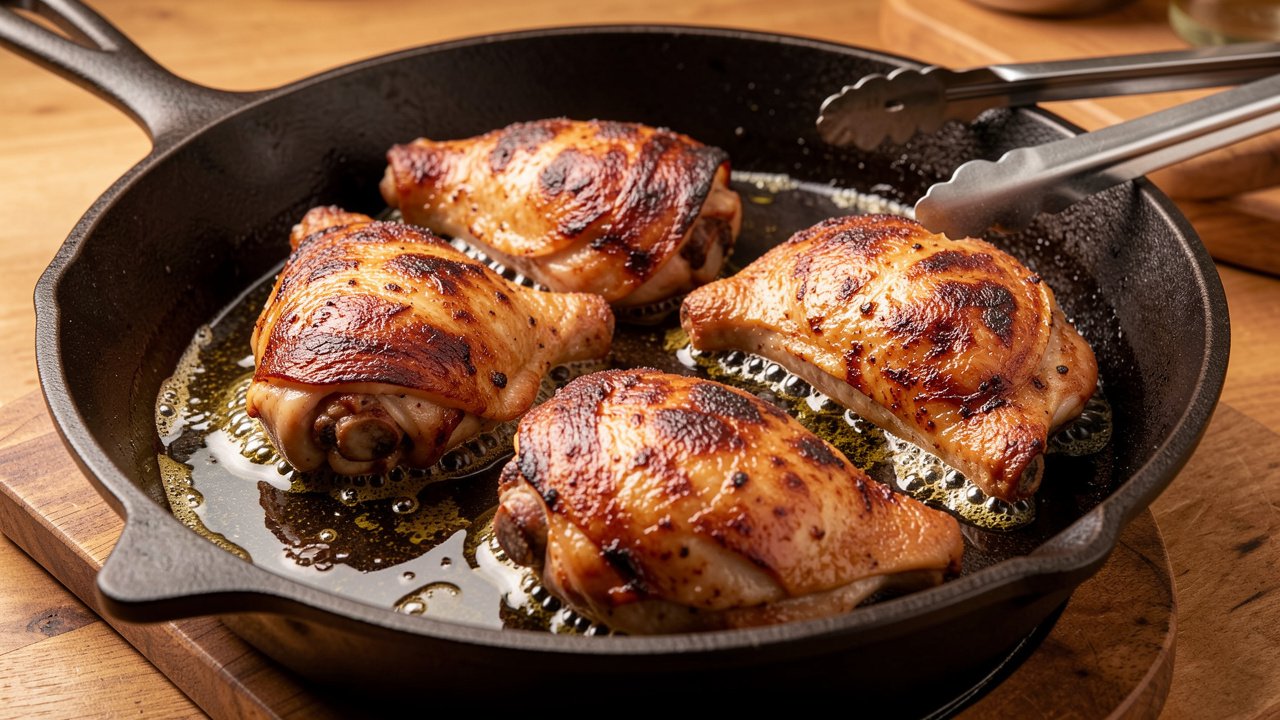
Heat the olive oil in a wide skillet over medium-high heat and lay the thighs in skin-side down. Do not crowd them and do not move them. You want 7 to 8 minutes of steady, loud sizzling until the skin is deep mahogany and releases from the pan on its own. If it sticks, it is not ready. Flip, give the second side 3 minutes, then move the chicken to a plate. The brown crust left behind in the pan is the fond, and it is most of the flavor of the finished sauce.
Soften the Onion in the Fond
Pour off all but about two tablespoons of the fat and drop the heat to medium. Add the onion with a pinch of salt and cook 6 to 7 minutes, scraping as you go. The onion releases water, and that water lifts the fond off the pan and into the onions, which is why the pan turns from brown to almost clean while the onions turn brown. Add the garlic and pepper flakes for the last minute, until fragrant but not colored.
Build the Agrodolce Tomato Sauce
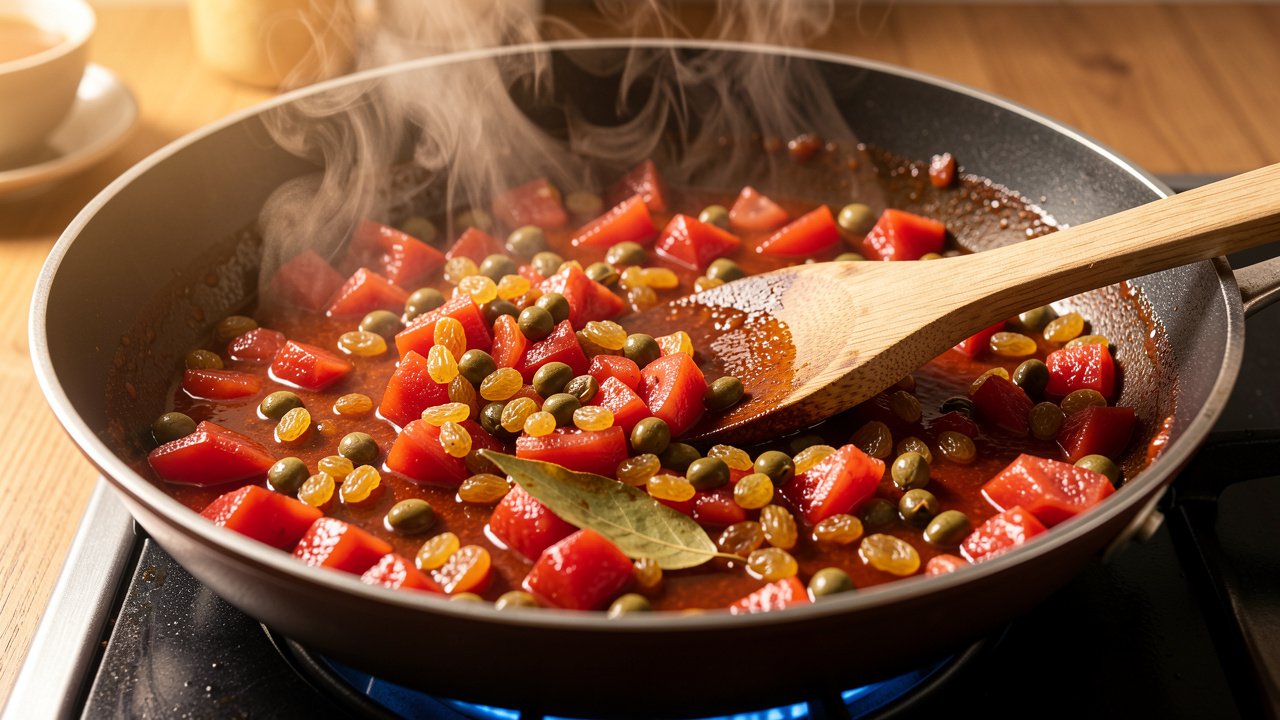
Drain the raisins, saving the soaking liquid. Pour the broth into the pan and let it bubble down by half, about 2 minutes. Add the tomatoes, stock, capers, bay leaf, sugar, and vinegar along with the drained raisins. Simmer 8 to 10 minutes until the tomatoes collapse and the sauce looks glossy rather than watery. Taste it now, before the chicken goes back. It should be assertively seasoned and slightly more sour than you want, because the raisins will keep sweetening it as they sit.
Braise the Thighs
Nestle the chicken back in skin-side up, keeping the skin above the sauce line so it stays crisp. Cover, drop to low, and simmer 25 minutes. The sauce should barely move, with a bubble surfacing every second or two. If the pan looks dry, add a splash of the reserved raisin water. The thighs are done at 175F, which sounds high for chicken and is exactly right for thighs.
Finish with Lemon Off the Heat
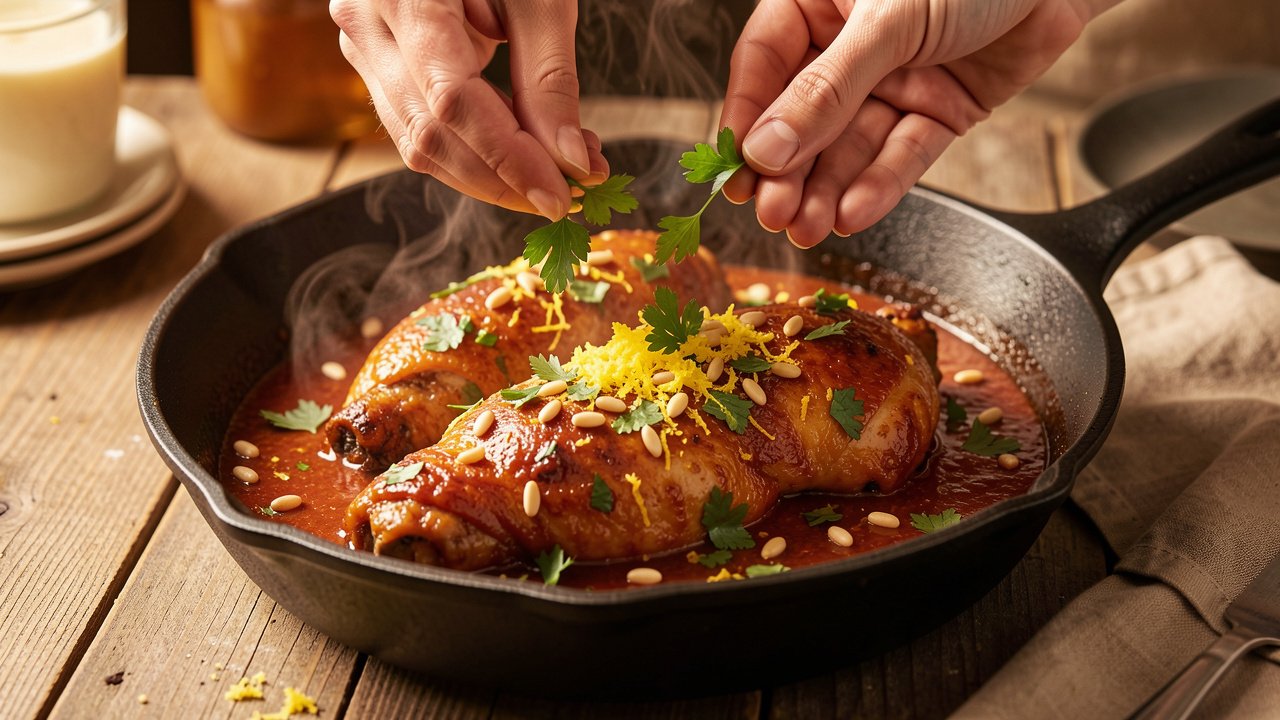
Pull the pan off the burner and fish out the bay leaf. Stir the lemon juice into the sauce now, not earlier: boiled lemon juice loses its brightness and can turn faintly bitter and metallic. Scatter the zest over the top, then the pine nuts and parsley. Taste one last time and correct in whichever direction it is missing. Serve straight from the pan.
Chef’s Tips From Real Kitchen Testing
Plump the raisins in the broth you are cooking with rather than water, then use the soaking liquid as your braising splash. Nothing sweet gets thrown away and the sauce gains a little more depth.
Rinse the capers and pat them dry. Brined capers carry a surprising amount of salt, and rinsing lets you season the sauce yourself instead of discovering at the end that it is already there.
Correct the balance in two passes with a two-minute gap between them. Sweetness and acid take a moment to register, and tasting twice in a row makes you overshoot in both directions.
Recipe Variations
Serving Suggestions
- Soft polenta to catch the sauce
- Crusty bread and nothing else
- Buttered orzo or plain couscous
- Bitter greens with a lemon dressing
Nutrition Facts
Values are estimates per serving of two thighs with sauce, without sides, and vary with the size of your chicken.
Make-Ahead Tips
The sauce improves overnight but the skin does not. If you are cooking ahead, make the sauce through step 4 and refrigerate it separately, then brown the chicken and braise it fresh the next day; you lose twenty minutes of work, not the texture. If you must cook the whole dish ahead, hold back the lemon juice, zest, pine nuts, and parsley and add them after reheating. They are the parts that fade fastest.
Storage, Freezing & Reheating
Common Mistakes to Avoid
Troubleshooting
Sauce tastes cloying? Add vinegar a half teaspoon at a time rather than more lemon. Vinegar cuts sweetness without adding fruit flavor on top of fruit flavor.
Sauce tastes sharp and hollow? A pinch of sugar or a spoonful of the raisin soaking liquid rounds it. Salt also reads as sweetness here, so try that first.
Bitter edge you cannot place? It is usually the lemon: either pith in the zest or juice that boiled. Neither is fixable, so add a little more sauce liquid and note it for next time.
Skin gone soft? Lift the thighs out and crisp them skin-down in a dry pan for two minutes while the sauce finishes.
A Note on Sicilian Agrodolce
Sicily spent roughly two centuries under Arab rule, and the kitchen never gave the influence back. Raisins, pine nuts, citrus, sugar, and saffron all arrived on that trade, and the island folded them into what it already had: olives, capers, anchovies, and later the tomato. That is why Sicilian food tastes different from anything on the mainland, and why the same sweet-sour logic shows up in caponata, in sarde a beccafico, and here. If you like tomato dishes with a tang built in, browse the rest of our tomato recipes.