Sunday Roasts
Bone-In Roast Lamb Over a Layered Provencal Vegetable Tian
Last updated: September 29, 2026
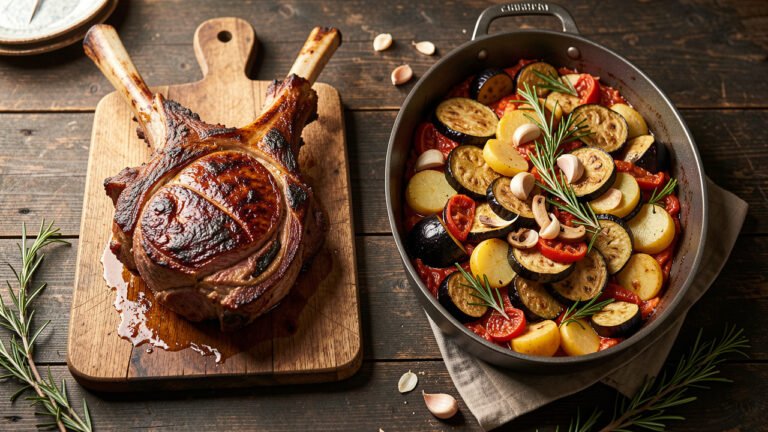
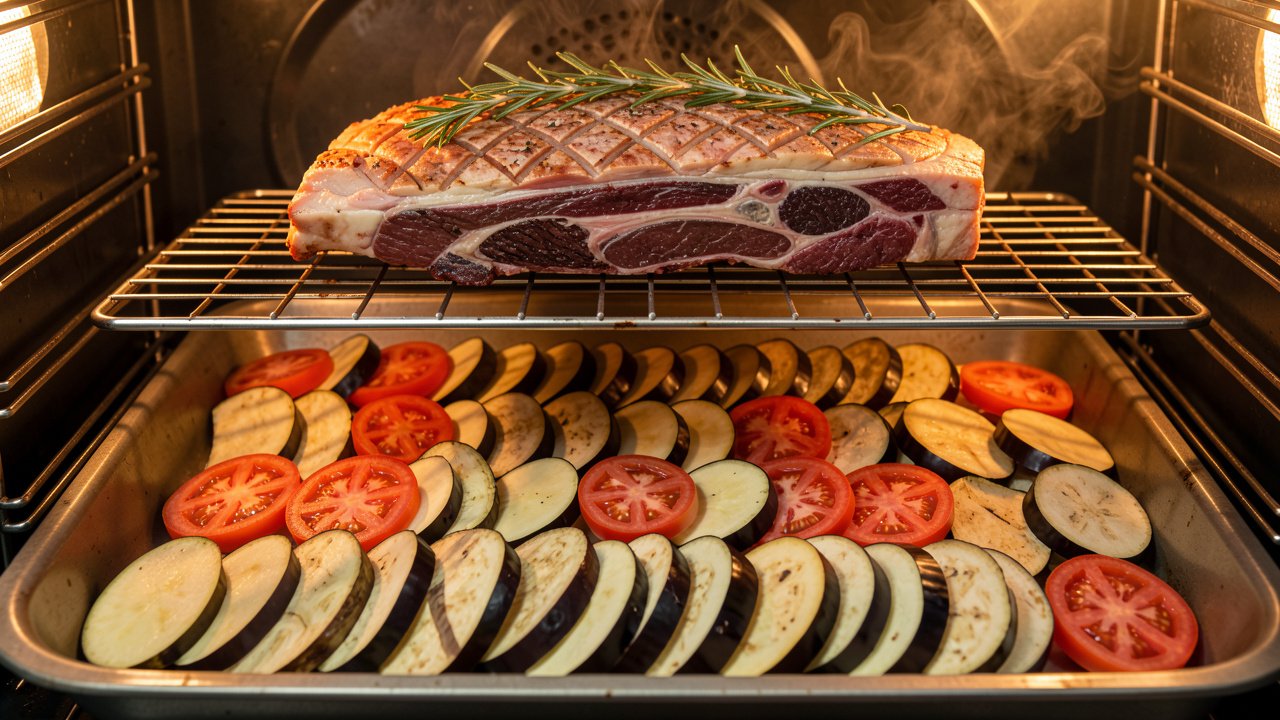
This is a one-oven dinner for a crowd, and the design rests on gravity. The lamb sits on a rack, the vegetables sit below, and everything the roast gives off lands on the tian instead of the drain.
I have cooked it both ways, and the difference is not subtle. The tian that cooks under the lamb tastes savory in a way olive oil alone never reaches.
Why Roasting Leg of Lamb Over a Tomato Tian Works
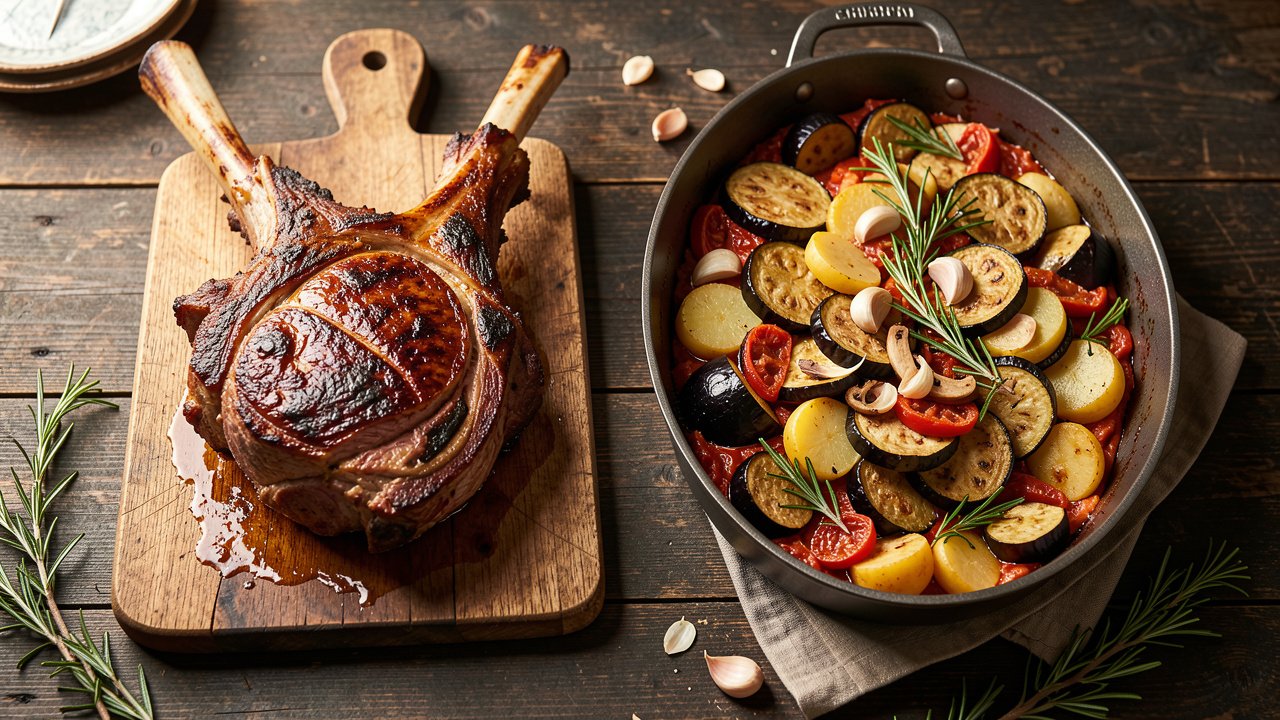
A tian is a shallow Provencal dish of thin vegetable slices stood in overlapping rows and baked slowly. On its own it is good; under a leg of lamb it becomes something else.
A bone-in leg carries a generous fat cap, and over an hour and a half that fat renders and falls. It seeps between the potato, eggplant and tomato slices and carries the garlic and rosemary from the roast down with it.
It works in the other direction too. Tomatoes and eggplant give off steam as they collapse, which keeps the underside of the lamb from drying out.
Pro observation: Put the pan on the middle rack, not the bottom. Too low and the tian scorches on the pan floor before the lamb is anywhere near temperature.
Ingredients
Kitchen Measurement Converter
Quickly convert between common cooking measurements without leaving the recipe. Pick a category, enter a value, and the result updates instantly.
Choosing the Lamb and Vegetables
The Leg
Ask for a whole bone-in leg around 6 pounds, shank attached. American lamb is milder and fattier; New Zealand legs run smaller and taste grassier, so buy two if that is what the counter has.
Potatoes
Yukon Gold holds its shape and still turns creamy inside. Russets fall apart into mush under all that fat, and waxy reds stay stubbornly firm.
Eggplant
Pick globe eggplants that feel heavy with tight, glossy skin. Spongy older ones hold more seed and turn bitter under long heat.
Tomatoes
Roma or plum tomatoes are the right call here because they carry less juice and more flesh. Beefsteak slices flood the pan and leave the potatoes swimming.
Anchovy, Optional
Two mashed fillets in the rub disappear completely and make the lamb taste more like itself. Swap in a teaspoon of fish sauce, or skip it.
Equipment
- Large roasting pan
- V-rack or flat rack
- Instant-read thermometer
- Mandoline or sharp knife
- Colander for draining
- Long carving knife
The thermometer is not optional. A leg is thick at one end and thin at the other, and no amount of timing math tells you what is happening inside it.
Before You Start Roasting
1. Pull the lamb out an hour ahead. A roast this heavy holds fridge cold deep in the center, so the outside overcooks badly before the middle catches up.
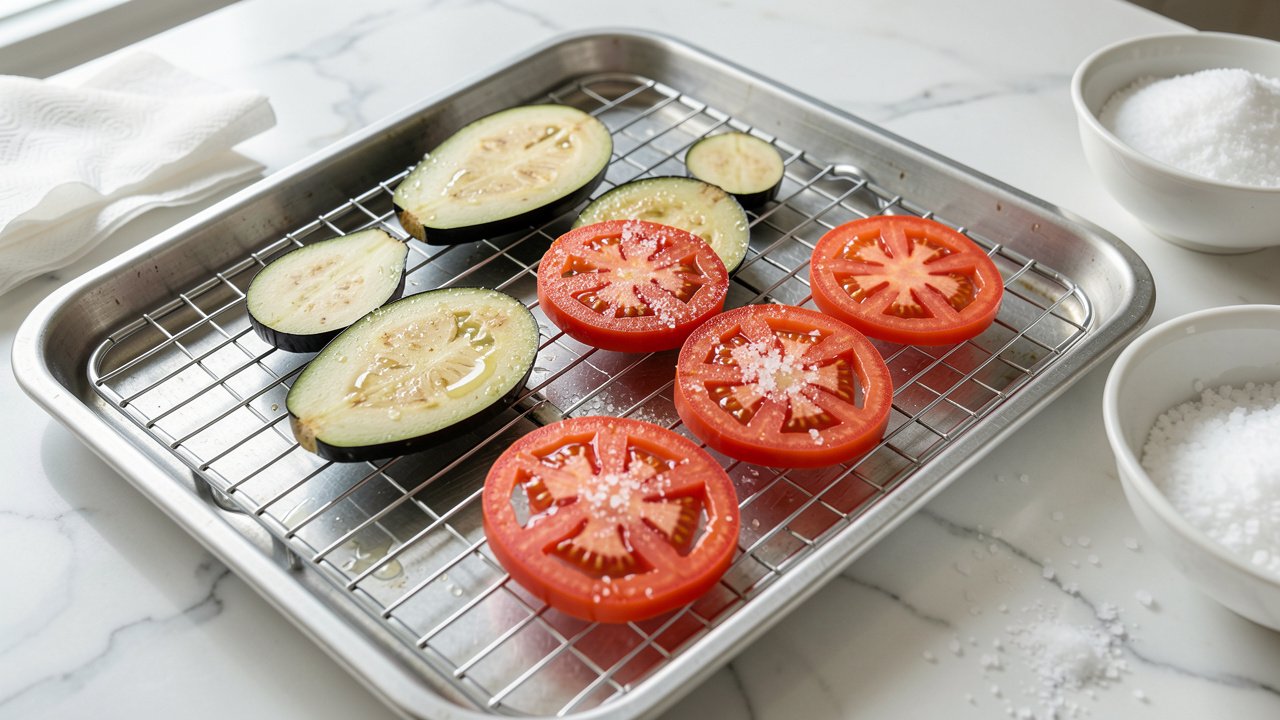
2. Salt and drain the eggplant and tomato slices. Both are mostly water. Skip this and the tian poaches in its own liquid instead of roasting.
3. Trim the fat cap to about a quarter inch. You want enough fat to baste the vegetables and not so much that the tian turns greasy. Cut away the thick pads near the wide end.
4. Slice everything to about an eighth of an inch. Thin, even slices finish in the window the lamb needs, and a mandoline is faster and steadier than a knife.
Step-by-Step Instructions
Score the Fat Cap and Stud the Lamb
Pat the leg dry. Cut a shallow diamond pattern across the fat cap, about a quarter inch deep, without cutting into the meat. Scoring opens the fat so it renders and browns instead of sitting flabby and pale on top.
Poke twenty or so slits into the meat and push a garlic sliver and a few fresh rosemary needles into each one. Dried rosemary burns to ash in there, so use the real thing. Rub the leg with olive oil, the mashed anchovy if you are using it, salt and pepper, then leave it out for one hour.
Salt and Drain the Eggplant and Tomatoes
Slice the eggplant and tomatoes about an eighth of an inch thick. Lay them in a colander or on a rack, salt both sides lightly, and leave them 30 minutes. You will see beads of liquid form and run off.
Blot every slice dry. Eggplant drinks oil like a sponge until heat collapses its cells, so drying it first means it needs far less to brown.
Give the Potatoes a Head Start
Heat the oven to 425F. Toss the potato slices and sliced onion with olive oil, thyme, salt and pepper, then spread them across the bottom of the roasting pan in an even layer.
Roast them alone for 20 minutes. Potatoes are dense and start much further behind the other two vegetables, so this head start is what stops you from serving crunchy potato under collapsed tomato.
Build the Tian and Set the Lamb Above It
Pull the pan out and tuck the eggplant and tomato slices in among the potatoes, standing them on edge in overlapping rows so every slice gets some heat. Tuck in the bay leaves and pour in the broth and white wine vinegar.
Set the rack over the pan and lay the lamb on it, fat cap facing up. The leg should sit directly above the vegetables, not off to one side, or half the tian gets nothing.
Roast Hot, Then Low
Roast at 425F for 20 minutes to set a crust on the fat cap. Then drop the oven to 325F and keep going, roughly 12 to 14 minutes per pound from that point.
Start checking at the 60-minute mark. Push the thermometer into the thickest part of the leg, well away from the bone, because bone conducts heat and reads several degrees high. If the tian is browning faster than the lamb, tent the roast with foil.
Rest 20 to 30 Minutes, Then Carve
Move the lamb to a board and tent it loosely with foil, and leave the tian in the turned-off oven to stay warm. A roast this size needs a full 20 to 30 minutes, and cutting early dumps the juices onto the board.
While it rests, tilt the pan and spoon off any pooled fat. Then carve, and pour whatever collected on the board back over the meat.
Lamb Doneness Temperatures and Carryover
Whole-muscle lamb like a leg is safe cooked to your preference, because bacteria live on the surface and the exterior gets far hotter than any pathogen survives. That is why steakhouse lamb comes out pink.
The USDA safety baseline for whole cuts of lamb is 145F plus a 3-minute rest. Most cooks aim lower, at medium-rare, for texture. Choose knowingly rather than by accident.
Pull Temperatures for a Whole Leg
Rare: pull at about 120F, finishing near 130F.
Medium-rare: pull at 125F to 130F, finishing at 130F to 135F. This is the sweet spot for a leg.
Medium: pull at about 135F, finishing near 145F to 150F.
USDA baseline: reach 145F and hold for 3 minutes.
Carryover is the part people get wrong. A lamb chop coasts up maybe 5F off the heat, but a six-pound leg stores far more energy and climbs 10F to 15F while it rests.
Ground lamb is a different rule entirely. Grinding mixes surface bacteria all the way through, so ground lamb must reach 160F. Never apply leg-of-lamb pull temperatures to burgers, koftas or meatballs.
Take two or three readings in different spots. The thick hip end and the thin shank end can differ by 15F, and the shank always finishes first.
Bone-In or Boneless Leg of Lamb?
Bone-in gives more flavor and a wider margin for error, because the bone and connective tissue slow the heat reaching the center. The trade-off comes at the table, where carving around a curved bone takes practice.
Boneless legs are butterflied or tied into a roll. They cook faster and more evenly, and slicing one is as simple as cutting a loaf, but they dry out quickly once you drift past your target.
Our recommendation: buy bone-in for this dish. You want the longer, gentler cook so the tian underneath has time to soften, and the extra rendering fat from a bone-in leg is exactly what the vegetables are there to catch.
Chef’s Tips From Real Kitchen Testing
Dry brine the leg the night before if you can. Salt it, leave it uncovered on a rack in the fridge, and the surface dries out enough to brown noticeably harder the next day.
Leave at least two inches of air between the roast and the vegetables. Sitting flush, the lamb traps steam against itself and the underside never browns.
Serve the shank end to guests who want their lamb cooked through. It sits thinner and finishes hotter, so one leg quietly covers both preferences.
Ways to Change Up the Lamb Roast
Serving Suggestions
- A sharp green salad with mustard vinaigrette
- Warm flatbread to mop the pan juices
- Mint sauce or a garlicky yogurt on the side
- Sparkling pomegranate juice or a tart cherry spritz
Nutrition Facts
Values are estimates for one eighth of the lamb plus vegetables, and shift with how much fat you trim.
Make-Ahead Tips
Stud and season the leg the day before and hold it uncovered in the fridge, which doubles as the dry brine. Eggplant and tomato slices can be salted, drained and refrigerated a few hours ahead.
Potatoes are the exception. Sliced early they turn gray, so cut those on the day.
Storage, Freezing & Reheating
Common Mistakes to Avoid
Troubleshooting the Roast
Lamb at temperature but the tian still firm? Rest the roast, push the oven to 425F, and give the vegetables 15 more minutes uncovered.
Tian sitting in liquid? Tip the pan, reduce that liquid in a saucepan, and broil the vegetables briefly to dry the surface.
Lamb tasting gamey? That flavor lives in the fat, so trim harder next time and finish with lemon zest and flaky salt.
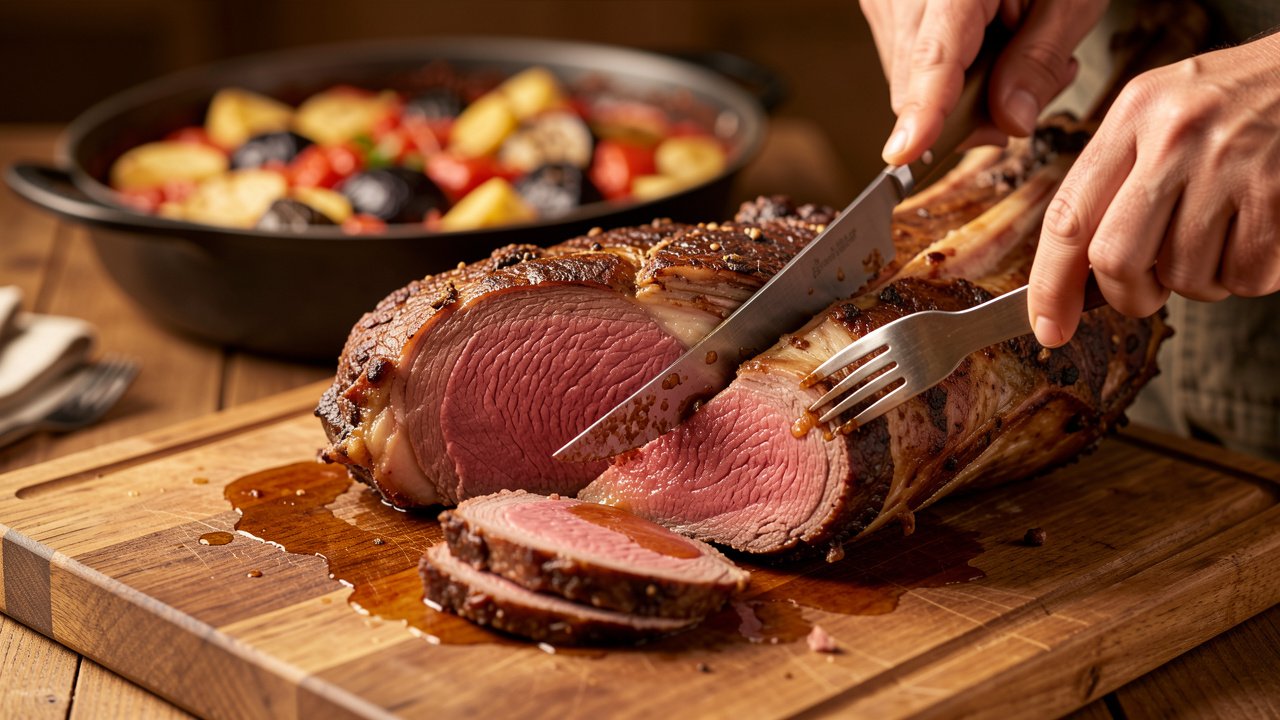
How to Carve a Leg of Lamb
Grip the shank bone with a towel and tilt the leg so the meatiest side faces up. Cut down to the bone in long strokes, then run the knife along the bone to release the slices in one go.
Carve against the grain, but watch as you work, because a leg is not one muscle. The fibers change direction two or three times between the shank and the hip, so stop and look at each new face before you keep slicing.
Turn the leg over and repeat. The meat closest to the bone is the best part of the roast, so scrape it clean.
Roast Leg of Lamb Questions, Answered
More Tomato Recipes to Try
Culinary Reviewer: Ghazala Shakeel