Pakistani Recipes
Fast, Glossy Chicken Curry in a Karahi
Last updated: September 30, 2026
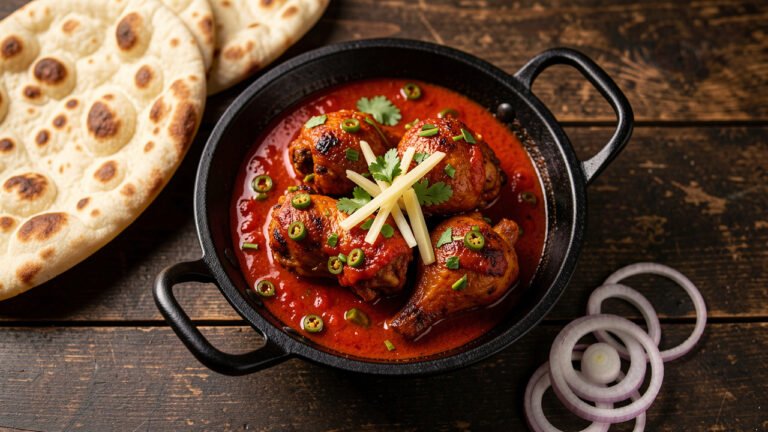
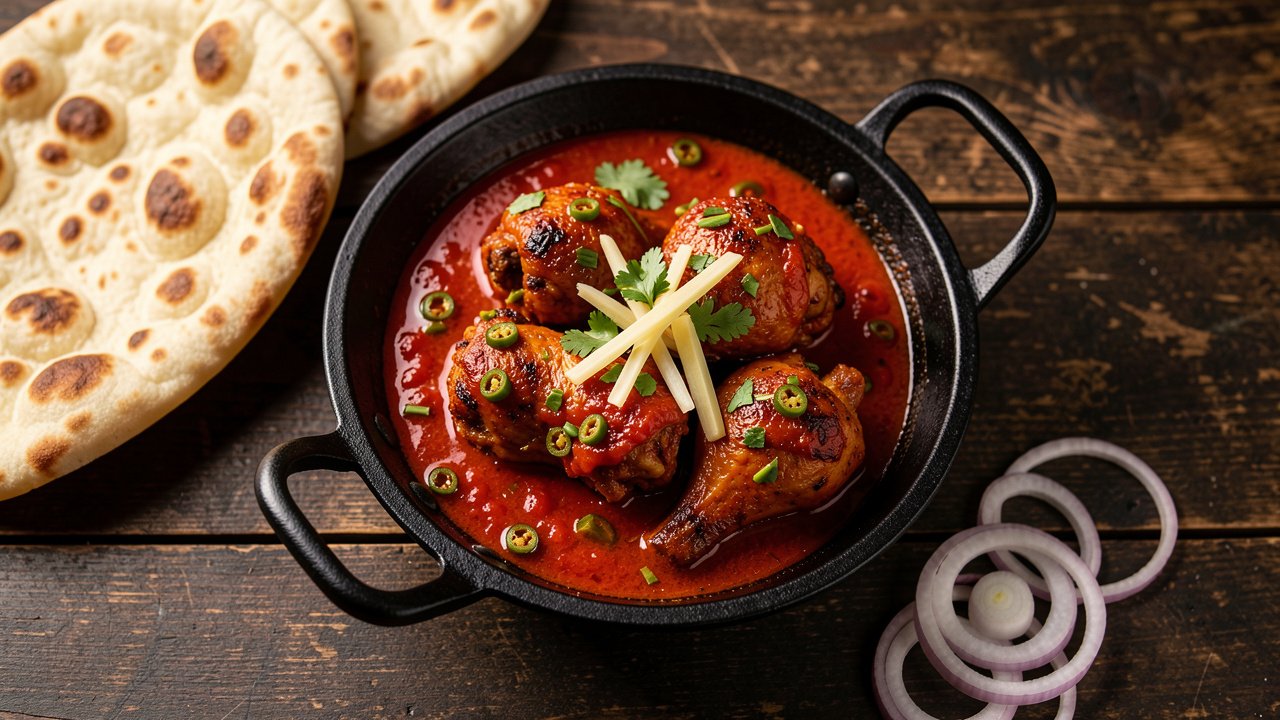
Chicken karahi is the dish Pakistani cooks reach for when they want something bold, fast, and full of flavor. Bone-in chicken is seared in hot oil, then tomatoes, ginger, garlic, and green chili are cooked down around it until the sauce clings to every piece and the oil rises glossy to the surface. There is no cream and no long list of ground spices to hide behind; the flavor comes from good searing, ripe tomatoes, and generous fresh ginger.
It takes its name from the karahi itself, the round, wok-like pan it is cooked and often served in, and it is a fixture of roadside dhabas and home kitchens alike. Where a curry like butter chicken leans creamy and mild, karahi stays bright, tomato-forward, and lively with chili, which is exactly why so many people love it.
Why This Chicken Karahi Works
Karahi is proof that a short ingredient list can taste deep and complex when the technique is right. Chicken, tomatoes, ginger, garlic, and green chili are nearly the whole show, and the magic is in searing the meat well and then cooking the tomatoes down hard until the sauce concentrates and the oil separates. Skip that step and you get pale, watery gravy; commit to it and you get the glossy, clinging sauce that defines a real karahi.
Searing the bone-in chicken first builds a savory foundation and browns the meat before any liquid goes in. Those browned bits, along with the bone, give the finished sauce a roundness that boneless chicken alone cannot match. The chicken then finishes cooking gently in the tomato base, staying juicy while it soaks up flavor.
The tomatoes do the heavy lifting. Cooked down over higher heat, they lose their raw water, turn jammy, and release the oil back to the surface, a stage Pakistani cooks call bhunai. This is the single most important move in the dish, and it is what turns a thin curry into a thick, glossy karahi that coats each piece.
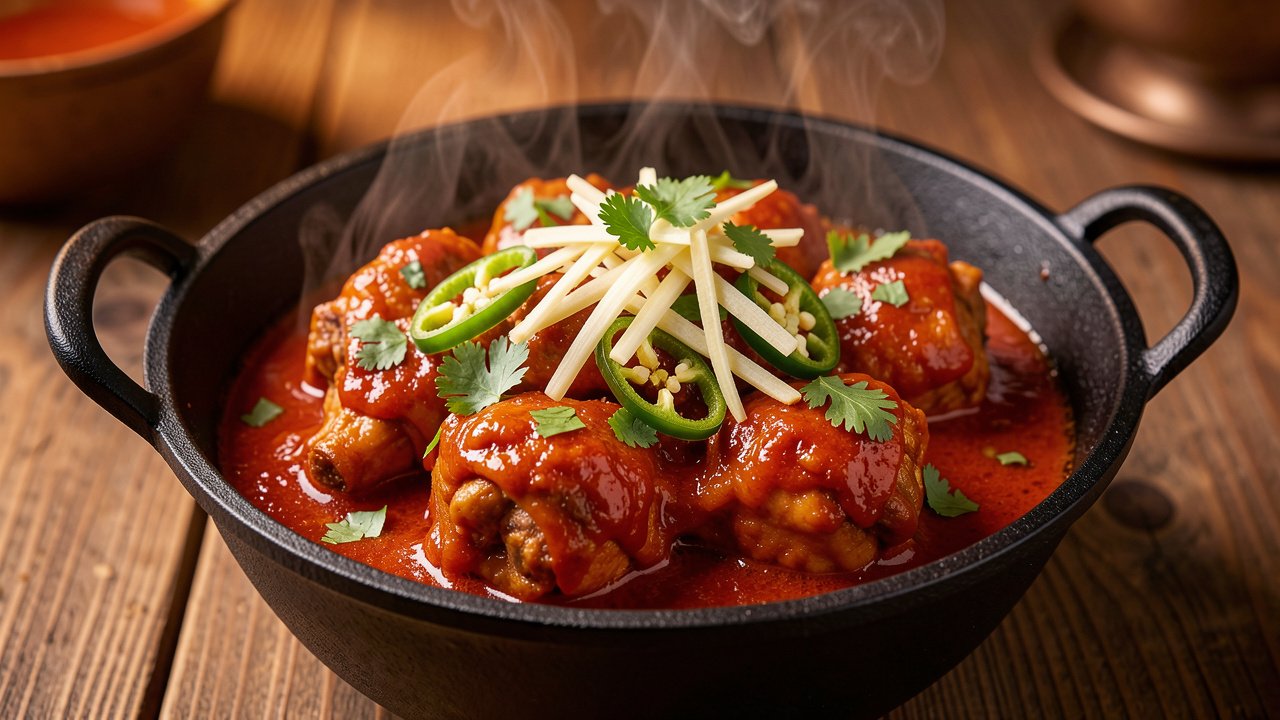
Finally, the dish is finished the karahi way: a scatter of fresh ginger julienne, slit green chilies, and cilantro stirred in at the very end. This raw, fragrant finish sits on top of the deep cooked base and gives karahi its signature lift, the reason it tastes so alive compared with a slow, gentle braise.
Pro observation: The sauce is ready when you can see oil glistening at the edges of the pan and the tomatoes have collapsed into a thick paste around the chicken. If the pan still looks soupy, keep cooking; that extra water is the number one cause of a dull, thin karahi.
Ingredients
Kitchen Measurement Converter
Need to convert an amount while you measure? Pick a category, enter a value, and the result updates instantly.
Ingredient Notes & Substitutions
Chicken
Bone-in, skinless chicken cut into curry pieces is traditional and gives the best flavor, since the bones enrich the sauce. A whole cut-up chicken or bone-in thighs and drumsticks work well. Boneless thighs are a fine shortcut but cook faster, so add them later.
Tomatoes
Ripe, red tomatoes are the body of the sauce, so use plenty and cook them down fully. If yours are pale or watery, add a spoon of tomato paste for color and depth, or use drained canned tomatoes out of season.
Ginger, Garlic & Chili
Fresh ginger is essential and used twice: minced into the base and julienned over the top at the end. Green chilies bring the heat; slitting them lets the flavor out while letting you control how much you eat. Adjust chili to taste.
Spices
Karahi keeps the spice list short: cumin, coriander, red chili, and a little garam masala to finish. Whole cumin seeds bloomed in the oil add aroma. This is a dish about fresh aromatics, not a heavy masala, so a light hand is authentic.
Equipment
- Karahi or heavy wok
- Tongs or spoon
- Sharp knife and board
- Mixing bowl
- Ladle
- Measuring spoons
Before You Start
1. Get the karahi properly hot before the chicken goes in. This is a high-heat dish from the first minute. If the oil is only warm, the chicken lets out its water and stews in it, and you lose the browned base the whole sauce is built on.
2. Split the ginger and chilies into two piles now. Half the ginger gets minced for the base, the rest cut into fine julienne, and a couple of slit chilies go aside. Once the bhunai starts you will not have a free hand, and that raw finish is what makes it karahi.
3. Budget a full 20 minutes for the tomatoes, and keep a thermometer handy. The tomatoes need two stages, covered and then uncovered, before the oil separates; there is no shortcut. Bone-in chicken is done only at 165 F (74 C) at the thickest part, right next to the bone.
Step-by-Step Instructions
Karahi cooks quickly and over fairly high heat, so chop and measure everything before you start. Keep the ginger julienne, a few slit chilies, and the cilantro aside for the finish, and warm your naan or start the rice while the chicken cooks.
Prep Everything
Cut the chicken into curry pieces and pat it dry. Chop the tomatoes, mince the garlic and half the ginger, and julienne the rest of the ginger for garnish. Slit the green chilies, saving a couple for the top. Dry chicken and everything within reach means a fast, confident sear.
Sear the Chicken
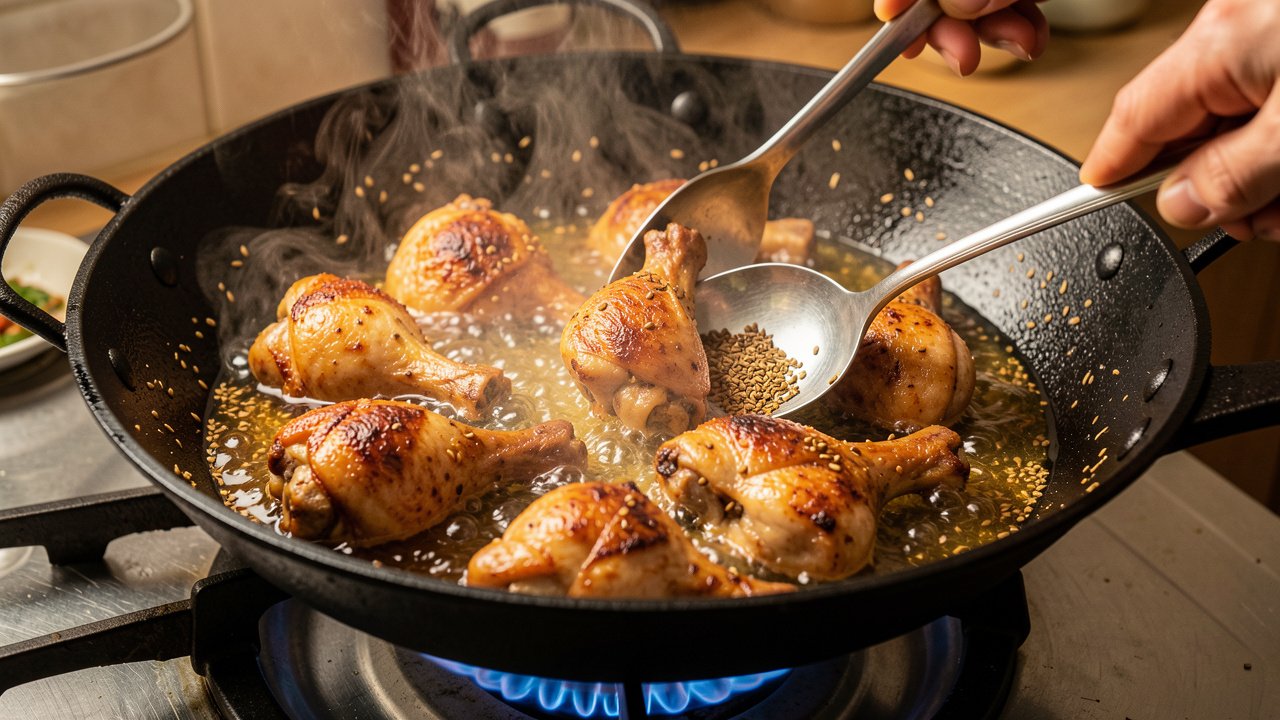
Heat the oil or ghee in the karahi over medium-high heat and add the cumin seeds. When they sizzle, add the chicken and sear 6 to 8 minutes, turning, until it is golden on all sides and no longer pink outside. This browning is where much of the flavor is built.
Add the Garlic, Ginger, and Spices
Stir in the minced garlic and minced ginger and cook about 1 minute, until fragrant. Add the red chili powder, coriander powder, and salt, and stir for another 30 seconds so the spices bloom in the oil and coat the chicken. Keep the heat moderate so nothing burns.
Cook the Tomatoes Down (Bhunai)
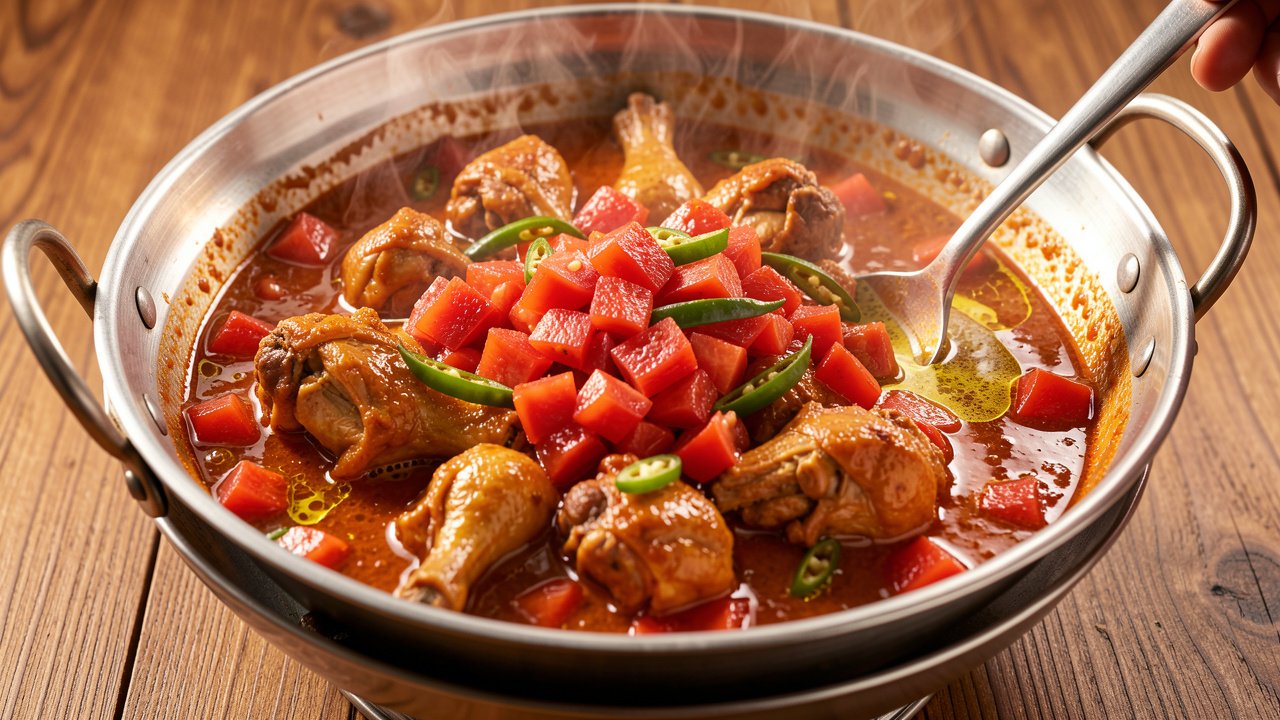
Add the chopped tomatoes and most of the slit green chilies. Cover and cook 8 to 10 minutes until the tomatoes soften, then uncover, raise the heat, and cook 8 to 10 minutes more, stirring, until the tomatoes collapse into a thick paste and the oil rises to the surface. Do not rush this stage.
Simmer Until Tender
Lower the heat, cover, and simmer 8 to 10 minutes, stirring now and then, until the chicken is fully cooked and tender and the sauce is thick and glossy. If it looks too dry, add a splash of hot water; if too thin, uncover and reduce it further. Taste and adjust the salt.
Finish and Serve
Stir in the garam masala, then scatter the reserved ginger julienne, the remaining slit green chilies, and most of the cilantro over the top. Cover and let it sit off the heat for a minute so the fresh aromatics perfume the sauce. Garnish with the last of the cilantro and serve hot with naan.
Chef’s Tips From Real Kitchen Testing
Do the bhunai properly. Cook the tomatoes down until the oil separates and rises to the surface; this glossy stage is the difference between a thick karahi and a thin, watery curry.
Use bone-in chicken and pat it dry before searing. The bones enrich the sauce, and a dry surface browns instead of steaming, which builds far more flavor.
Save half the ginger and some chili for the end. Stirred in raw at the finish, they give karahi its signature sharp, fragrant lift over the deep cooked base.
Recipe Variations
Serving Suggestions
- Warm naan or tandoori roti to scoop the sauce
- Plain basmati rice for a heartier plate
- Kachumber salad of onion, tomato, and cucumber
- Mint-yogurt raita and sliced lemon on the side
Nutrition Facts
| Nutrient | Amount per serving |
|---|---|
| Calories | 420 |
| Protein | 34 g |
| Carbohydrates | 9 g |
| Fat | 28 g |
| Saturated Fat | 6 g |
| Fiber | 2 g |
| Sugar | 5 g |
| Sodium | 720 mg |
Values are estimates per serving and vary with the exact ingredients and brands you use.
Make-Ahead Tips
Karahi tastes even better the next day as the flavors settle. Cook it fully, cool it, and refrigerate; reheat gently before serving and add the fresh ginger julienne and cilantro just before it goes to the table.
Storage, Freezing & Reheating
Common Mistakes to Avoid
Troubleshooting
Watery or thin? The tomatoes were not cooked down enough. Uncover and reduce over higher heat until the oil separates and the sauce clings to the chicken.
Chicken tough or dry? It likely cooked too fast on high heat. Simmer covered on lower heat so the meat turns tender while the sauce thickens.
Tastes flat? It needs salt or a lift. Adjust the salt, add fresh ginger julienne and a squeeze of lemon, and finish with more cilantro.
A Note on Pakistani Cooking
Karahi belongs to the everyday, hearty side of Pakistani cooking, the food of dhabas, family kitchens, and weekend gatherings rather than banquet halls. It is cooked fast and eaten fresh, usually torn into with naan or tandoori roti, alongside a sharp kachumber salad and cooling raita. The same style stretches across meats, so the tomato, ginger, and chili base that carries chicken here also carries lamb and mutton in dishes like muscat gosht.
The name comes straight from the pan. A karahi is the round, wok-like cooking pot, and the dish is simply named for the vessel it is made and served in, much as a paella or a tagine takes the name of its pan. Cooking in the karahi over high heat is central to the method, encouraging fast searing and the quick reduction that makes the sauce glossy.
It is worth clearing up one common mix-up. Chicken karahi is often confused with butter chicken, but they sit at opposite ends of the curry spectrum: butter chicken is creamy, mild, and built on a smooth tomato-cream sauce, while karahi is tomato-and-green-chili forward, drier, sharper, and made with no cream at all. If you love the tomato base but want something with coconut richness instead, a dish like spicy chicken in tomato-coconut sauce is a natural next cook, while aloo tamatar shows the same tomato base in a simple vegetarian form.