Seafood Recipes
Tuna Cooked Low and Slow in Olive Oil
Last updated: September 29, 2026
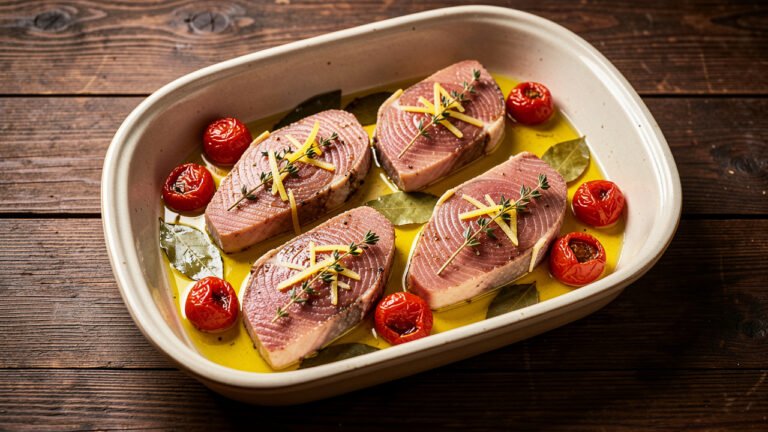
This method does the exact opposite of everything you have been told about tuna. There is no screaming hot pan and no thirty second sear, just a low oven and a bath of warm olive oil.
The first time I tried it I was sure I had ruined four expensive steaks. Then I cut one open and found flesh that was pale, tender, and dripping instead of the dry gray wedge I expected.
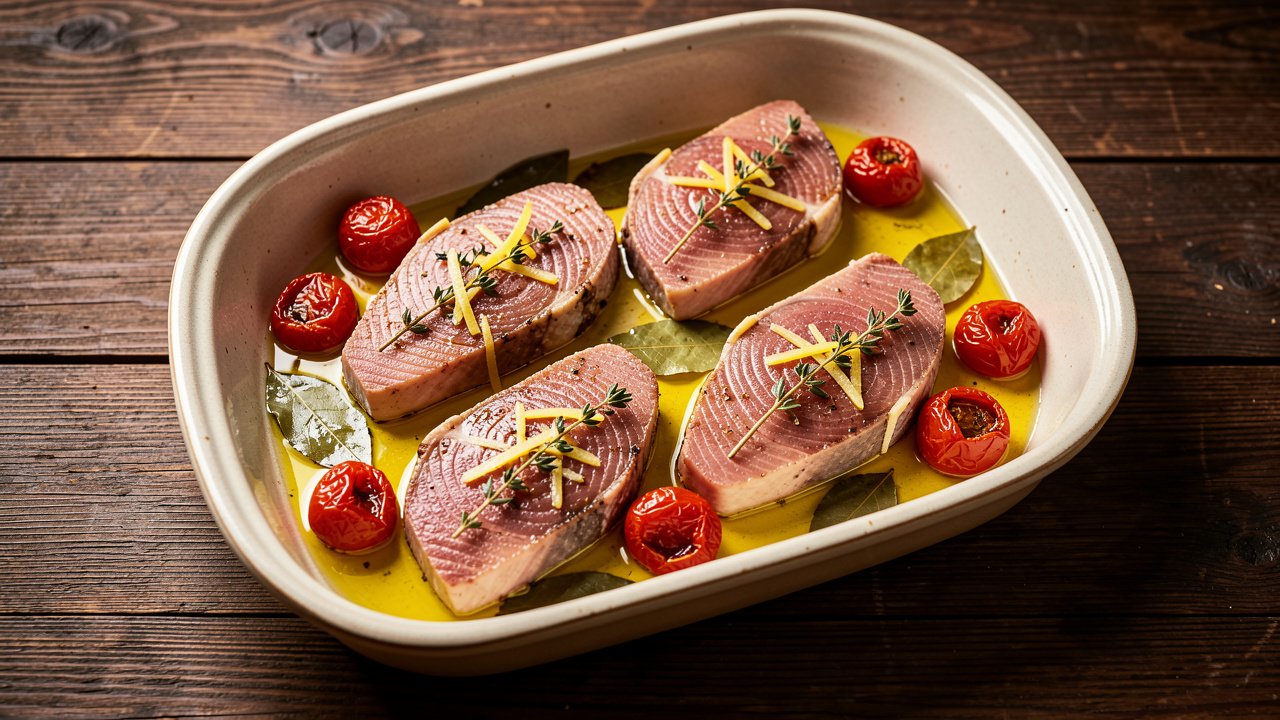
Why Slow-Roasting Beats Searing Tuna
Searing tuna is a race you usually lose. High heat makes the muscle proteins in the fish contract hard and fast, and as they tighten they squeeze moisture straight out of the flesh.
That is why a hard-seared steak goes from juicy to dry and chalky the second it passes rare. There is almost no margin between the two.
A low oven flips the problem around. At roughly 250F to 275F the proteins set gradually and hold on to their water, so the flesh stays silky and moist even after it is cooked through.
This is the whole point of the method. You can cook tuna past rare without it turning into dry, crumbly cat food, which is something a hot pan simply cannot promise.
Pro observation: Watch the surface of the oil while the dish is in the oven. It should look barely alive, with a few lazy bubbles rising near the tomatoes and nothing more.
Ingredients
Kitchen Measurement Converter
Quickly convert between common cooking measurements without leaving the recipe. Pick a category, enter a value, and the result updates instantly.
Choosing Tuna, Oil, and Tomatoes
Tuna Cut and Thickness
Buy steaks at least 1 inch thick, and 1.5 inches is better. Thin steaks overcook before the slow heat gets a chance to help them, which wastes the whole method.
Fresh or Frozen
Much of the tuna sold is frozen at sea within hours of the catch, and it is excellent. Thaw it fully overnight in the fridge, then pat it very dry so it is not sitting in water.
Olive Oil as the Cooking Medium
The oil here is not a dressing, it is how the heat reaches the fish. Because you need a lot of it, a mid-price everyday olive oil is the sensible choice and works just as well.
Tomatoes That Hold Their Shape
Cherry, grape, or other small tomatoes are best because their skins keep them intact until they slump. Large slicing tomatoes release too much water and dilute the oil.
Herbs for the Oil
Thyme, rosemary, and bay are sturdy enough to give up their flavor slowly. Save soft herbs like parsley or basil for scattering at the end, since gentle heat still dulls them.
Garlic and Lemon Zest
Use whole smashed cloves rather than minced garlic, which can turn bitter. Wide strips of lemon zest add perfume without the acidity that would firm up the fish.
Save the oil: After cooking, the oil is infused with tuna, tomato, garlic, and herbs. Strain it, keep it in a jar in the fridge, and use it for vinaigrettes, roasted vegetables, or brushing on toast.
Equipment
- Snug baking dish
- Instant-read thermometer
- Fish spatula or slotted spoon
- Paper towels
- Vegetable peeler
- Fine strainer
Before You Start
1. Pick the right dish. Choose a baking dish that holds the steaks in a single layer with only a little room around them. A dish that is too big will need far more oil to reach the fish.
2. Salt the tuna early. Season the steaks and let them sit for 15 minutes while the oven heats. This seasons the flesh rather than just the surface.
3. Have a thermometer ready. There are no reliable visual cues inside a piece of tuna, so an instant-read thermometer is the only honest way to know when to pull it.
Step-by-Step Instructions
Heat the Oven and Dry the Fish
Set the oven to 275F and let it come fully up to temperature. Pat the tuna steaks dry on all sides with paper towels, then season them with salt and pepper and leave them on a plate.
Surface water is the enemy here. Wet fish makes the oil spit and cools it unevenly around each steak.
Build the Aromatic Oil
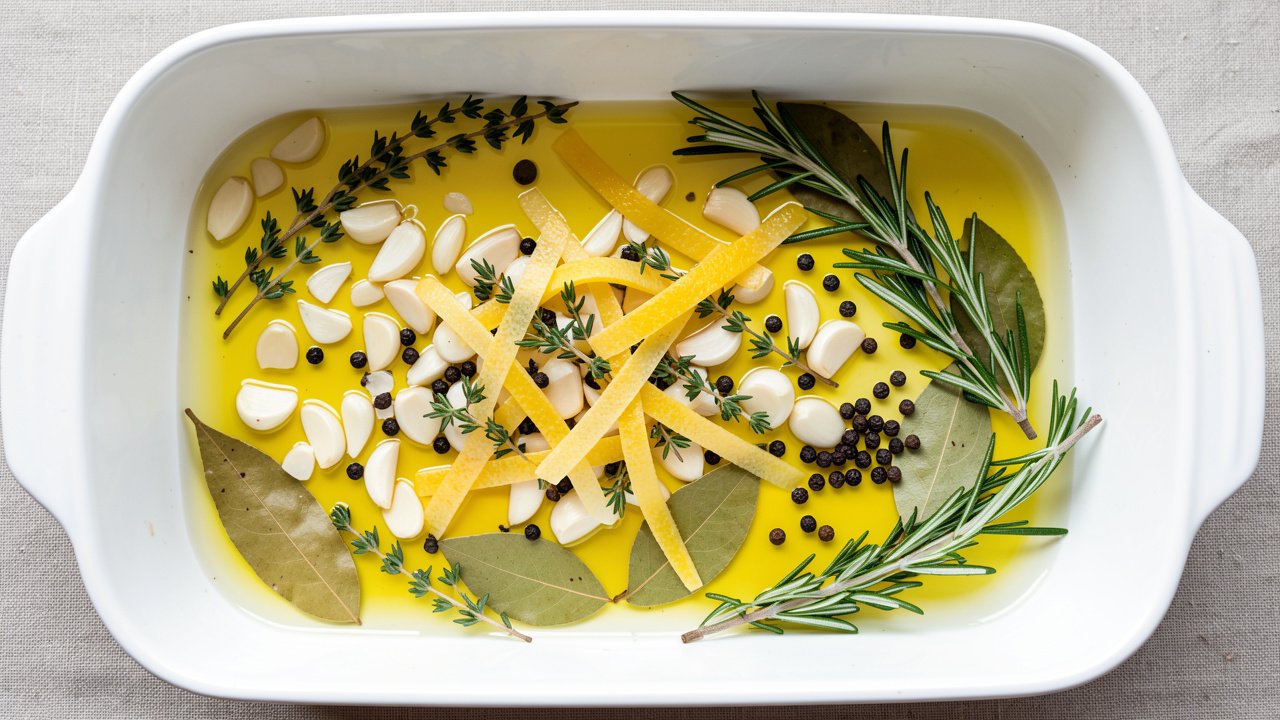
Scatter the smashed garlic, thyme, rosemary, bay leaves, lemon zest strips, peppercorns, and red pepper flakes across the bottom of the baking dish. Pour the olive oil over them.
Putting the herbs in the oil rather than on top of the fish matters. In a hot roast these would scorch, but in warm oil they infuse slowly and stay green and fragrant.
Add the Tomatoes and Tuna
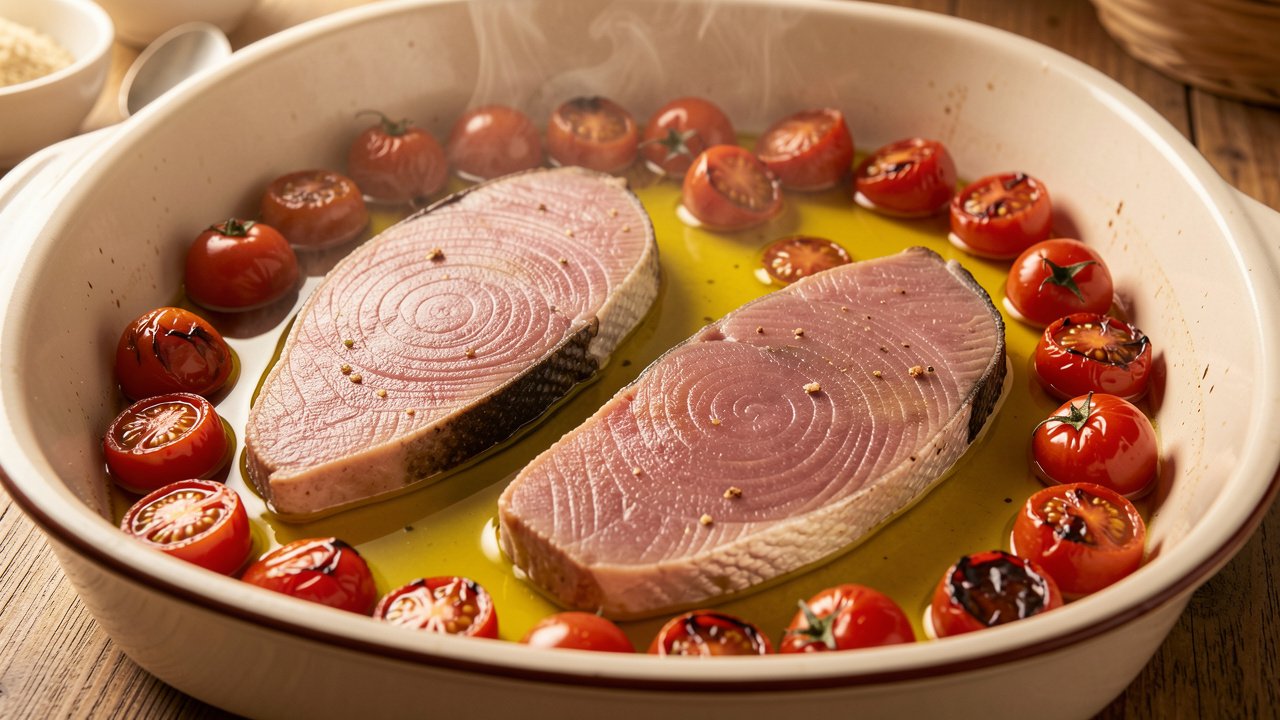
Scatter the cherry tomatoes around the dish, then nestle the tuna steaks among them in a single layer. Add more oil if needed so the fish is at least halfway submerged and the tops are well coated.
Partial submersion is enough. The oil that surrounds the sides carries heat evenly, and spooning oil over the tops once during cooking covers the rest.
Roast Low and Check the Oil
Slide the dish into the oven and set a timer for 25 minutes. After about 10 minutes, look at the oil: it should be still and steaming faintly, not sizzling.
Hard bubbling means the oven is too hot and you are frying rather than poaching. Drop the temperature to 250F and the fish will recover.
Check the Temperature
At 25 minutes, slide an instant-read thermometer into the thickest part of one steak from the side. For the gentle medium this method is built around, look for 130F to 135F.
If it is still below that, spoon some oil over the tops and give it another 5 to 10 minutes. Thickness matters far more than the clock.
Rest, Finish, and Serve
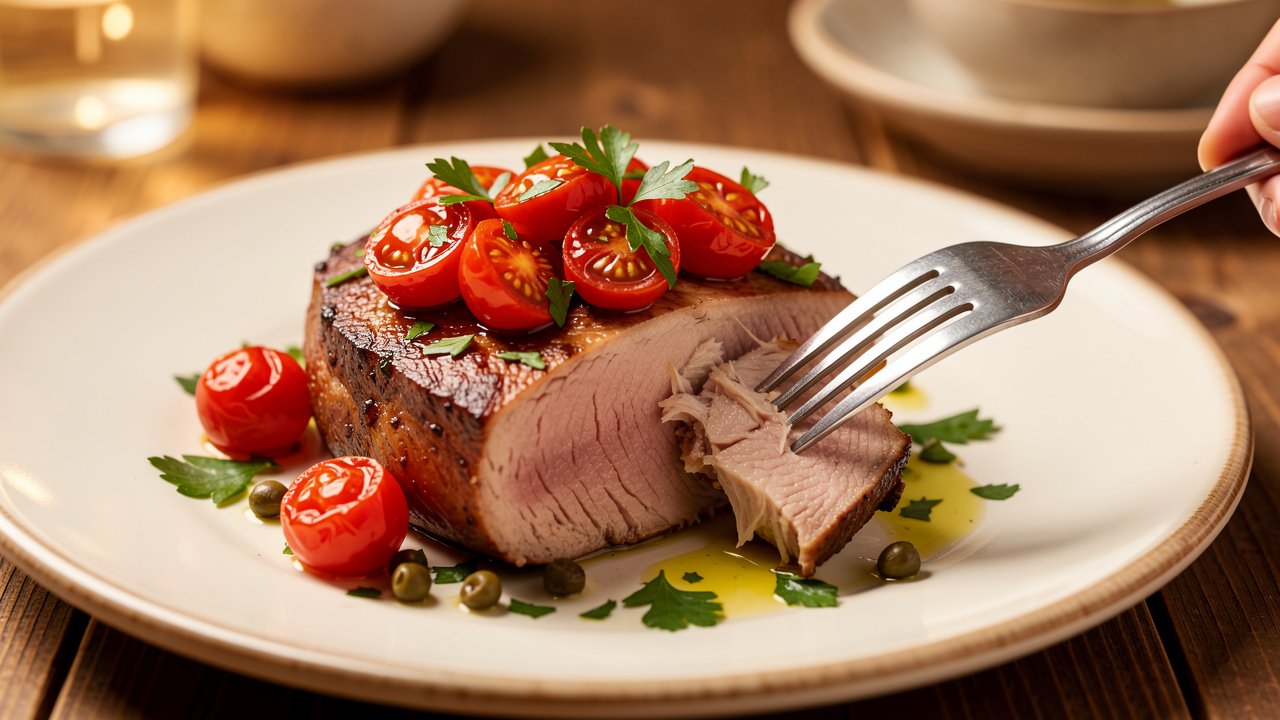
Lift the steaks out with a fish spatula and let them rest for 5 minutes. Crush a few of the tomatoes into the oil with the back of a spoon to make a loose, jammy sauce.
Spoon the tomatoes and some of their oil over each steak, then scatter chopped parsley and capers on top. Serve warm, or let everything cool to room temperature.
Tuna Doneness Temperatures, Honestly
The USDA recommends cooking finfish to an internal temperature of 145F. That is the food safety baseline, and it is the number to follow if you are cooking for young children, older adults, pregnant people, or anyone with a weakened immune system.
In practice, tuna is very commonly served rare or medium-rare, around 115F to 125F, the same way it is eaten raw as sashimi. That is a culinary preference that sits below the safety guidance, not an official recommendation.
This recipe aims at about 130F to 135F, a gentle medium. It is the sweet spot where the slow-roasting method does its best work and the flesh is fully opaque but still moist.
Now you know where each number comes from, so you can choose knowingly. Whichever target you pick, use an instant-read thermometer rather than guessing, because tuna gives you almost no visual warning before it is overdone.
Chef’s Tips From Real Kitchen Testing
Keep the good bottle of olive oil for the table. Finish each plate with a spoonful of the expensive stuff, where its peppery flavor actually registers, and let the everyday oil do the cooking.
Bring the steaks to room temperature for 20 minutes before they go in. Fridge-cold fish drops the oil temperature and makes the cooking time much harder to predict.
Trust your oven less than your thermometer. Many home ovens run 25 degrees off, and at this low a setting that difference is the gap between poaching and frying.
Take the steaks out one at a time if they differ in thickness. There is no rule that everything has to leave the oven together.
Ways to Vary Olive Oil Poached Tuna
Serving Suggestions
- Thick toast rubbed with raw garlic
- White beans dressed in the cooking oil
- Boiled new potatoes and green beans
- Peppery arugula with lemon
- Flaked over cold pasta the next day
- Sparkling water with a squeeze of lemon
Nutrition Facts
Values are estimates per serving and assume the fish carries roughly a quarter cup of the cooking oil. Draining the steaks more thoroughly lowers the fat and calorie numbers considerably.
Make-Ahead Tips
This is one of the rare fish dishes that is genuinely better made in advance. Cook it in the morning, leave it to cool in its own oil, and serve it at room temperature that evening.
The oil keeps working while it sits, carrying the garlic and herb flavor deeper into the flesh. Just take the dish out of the fridge an hour before serving so the oil turns clear again.
Storage, Chilling, and Reheating
Common Mistakes to Avoid
Troubleshooting
The oil is bubbling hard? Your oven is running hot. Turn it down 25 degrees and open the door for a few seconds to bring the dish back to a poach.
Tuna came out dry anyway? It went past 140F. Flake it into the tomato oil and serve it as a spread; the fat brings a lot of it back.
Tomatoes still firm? They were large or underripe. Give the dish another 10 minutes after the fish is out, or press them with a spoon.
Everything tastes flat? Oil-poached food needs more salt and acid than you expect. Add flaky salt and a squeeze of lemon at the plate.
Where This Method Comes From
Cooking fish slowly in fat is an old Mediterranean preservation trick, closely related to the confit technique used for duck in southwest France. Along the coasts of Italy, Spain, and Portugal, tuna was packed in oil so it would last well beyond the day it was caught.
Good canned tuna in olive oil is the industrial descendant of exactly this idea. Making it at home simply gives you control over the doneness and the seasoning.
If you like the way slow heat draws tomatoes into a sauce, the same instinct shows up in our fresh tomato sauce without sugar.