Iraqi Recipes
Baked Eggplant and Kofta Casserole
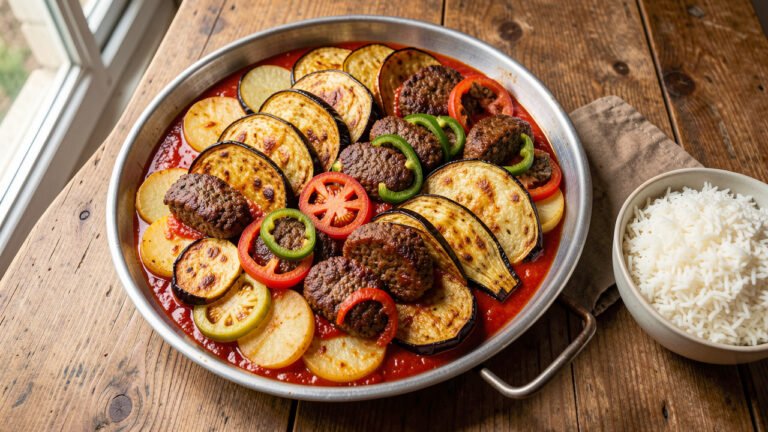
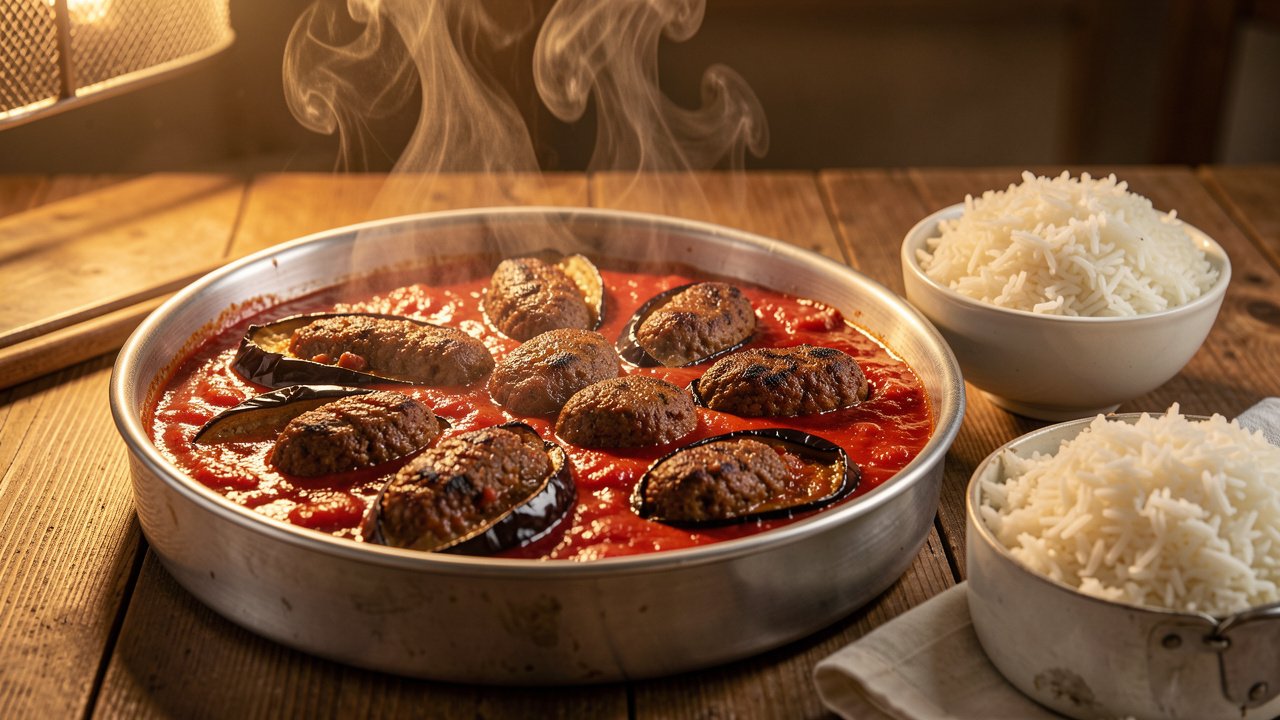
Tepsi baytinijan is the dish an Iraqi kitchen makes when it wants to feed a table without fuss. The name simply means the eggplant tray, and that is exactly what it is: a wide baking pan holding layers of golden fried eggplant, savory kofta, and sweet cooked vegetables, all bound together by a thin, bright tomato sauce that soaks into everything as it bakes.
I learned the hard way that this is a dish of small, patient steps rather than one hard technique. The first time I made it, I rushed the eggplant and skipped salting it, and the finished tray tasted oily and heavy. Done properly, each layer is seasoned on its own, so the casserole comes out balanced instead of greasy.
Why This Tepsi Baytinijan Works
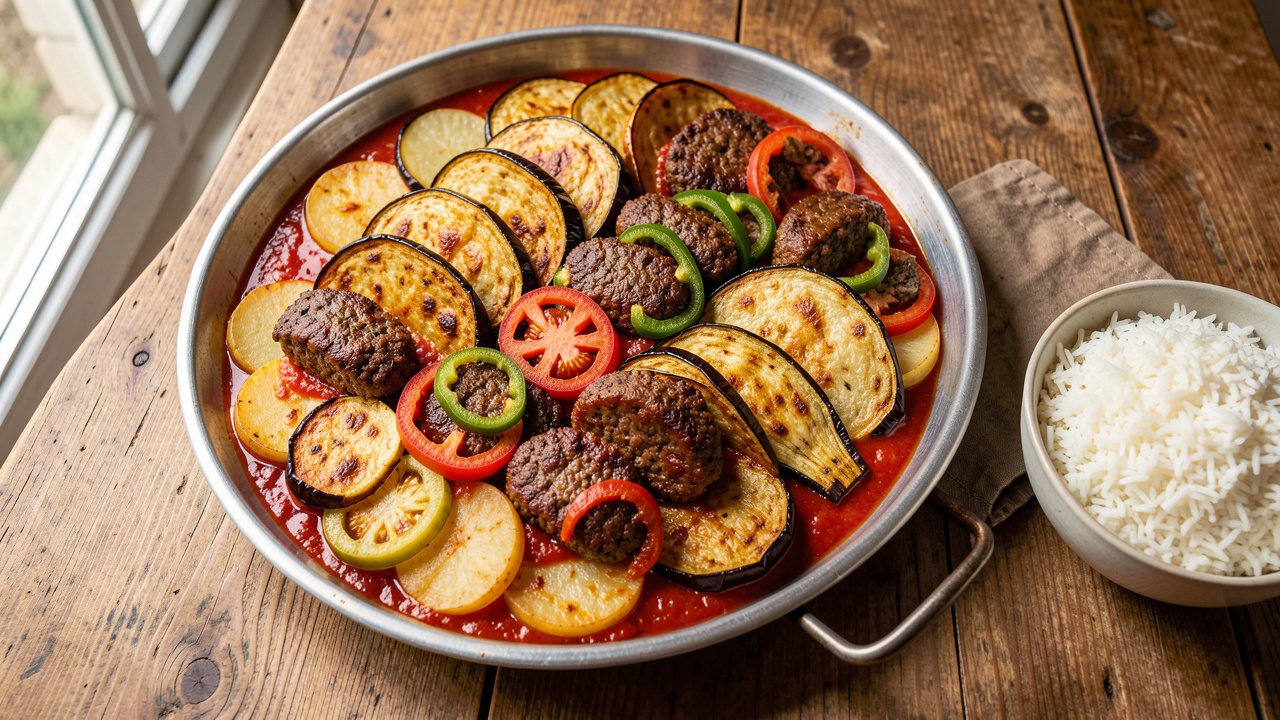
Tepsi baytinijan looks impressive on the table, but it is really just a smart way of stacking a full meal into one pan. The eggplant brings a silky, almost creamy base, the kofta brings deep savory flavor, and the tomato sauce ties every layer together while it bakes. You get meat, vegetables, and sauce in a single tray, which is exactly why Iraqi families lean on it for guests and gatherings.
The single most important habit here is treating the eggplant with respect. Salting the slices first draws out excess moisture and bitterness, so they fry up golden and firm instead of turning into oil-logged sponges. That one step is the difference between a light, appetizing tray and a heavy one.
The kofta matters just as much. When the ground beef or lamb is kneaded with grated onion, garlic, parsley, and warm spices until it turns slightly sticky, the meat holds together in neat patties that stay tender through the bake. Skip that kneading and the kofta crumbles into the sauce.
Finally, the sauce is deliberately thin. This is not a thick stew poured over the top; it is a light, seasoned tomato broth that seeps down between the layers and gently steams everything to tenderness in the oven. As it reduces, it concentrates into a glossy glaze that clings to each slice.
Pro observation: The tray is ready to come out when the sauce has reduced to a thick, shiny film around the edges and a knife slides through a potato slice without resistance. That is your signal both the vegetables and the kofta are fully cooked through.
Ingredients
Kitchen Measurement Converter
Quickly convert between common cooking measurements without leaving the recipe. Pick a category, enter a value, and the result updates instantly.
Ingredient Notes & Substitutions
Eggplant
Choose firm, glossy eggplants that feel heavy for their size, which means fewer seeds and less bitterness. Slice them into even rounds so they fry and bake at the same rate. Salting is non-negotiable for a light result.
Beef or Lamb
Use halal ground beef or lamb with some fat, around 80/20, so the kofta stays juicy. Lamb gives a richer, more traditional flavor, while beef is milder and a little leaner. Either works beautifully.
Baharat
Baharat, the Iraqi seven-spice blend, is the signature warmth here. If you cannot find it, mix cumin, coriander, black pepper, cinnamon, and a pinch of clove and allspice as a quick stand-in.
Tomatoes and Sauce
Ripe fresh tomatoes give the best sweet-tart layers, while tomato paste thinned with water or stock makes the light baking sauce. A can of chopped tomatoes works fine when good fresh ones are out of season.
Equipment
- Wide baking tray or dish
- Large frying pan
- Mixing bowl for kofta
- Colander for salting
- Sharp knife and board
- Paper towels or rack
Before You Start
1. Salt the eggplant early. Slice and salt the eggplant first, then let it drain in a colander for at least 20 minutes while you prep everything else. This is the step that saves the whole dish from being greasy.
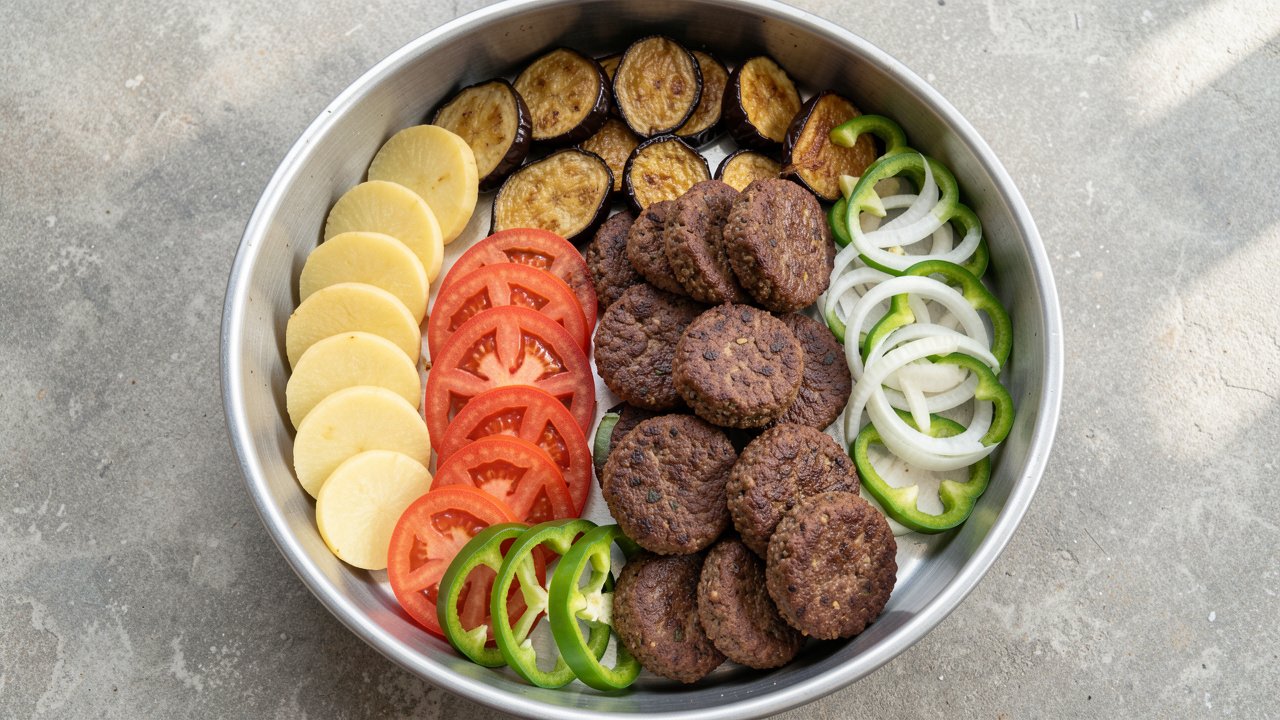
2. Slice the vegetables evenly. Cut the tomatoes, potatoes, onion, and bell pepper into similar thicknesses so they cook at the same speed and layer neatly in the tray.
3. Start your rice. Tepsi baytinijan is always served with rice, so get a pot of plain white or lightly spiced rice going while the tray bakes.
Step-by-Step Instructions
Salt and Fry the Eggplant
Slice the eggplants into rounds about half an inch thick, sprinkle them with salt, and leave them in a colander for 20 to 30 minutes to release their moisture. Pat the slices completely dry, then fry them in hot oil in batches until golden on both sides. Drain them on paper towels so they shed excess oil before layering.
Mix and Shape the Kofta
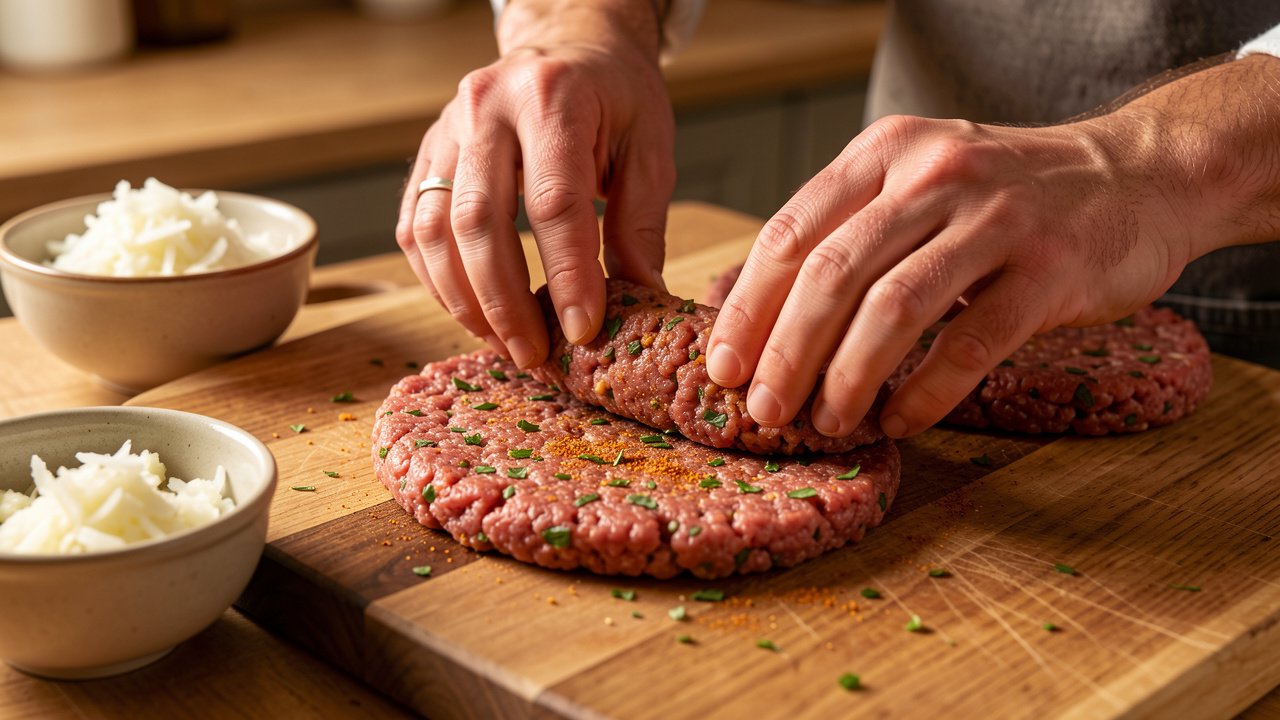
In a bowl, combine the ground beef or lamb with the grated onion, minced garlic, chopped parsley, baharat, cumin, salt, and black pepper. Knead the mixture with your hands for a couple of minutes until it feels smooth and slightly sticky, which helps it hold together. Shape it into flat, palm-sized patties, roughly the same size as your eggplant rounds.
Brown the Kofta and Vegetables
In the same pan, brown the kofta patties for a minute or two per side just to build color; they will finish cooking in the oven. Set them aside, then give the potato slices a quick sear so they start to soften. This browning step adds a savory depth you cannot get from baking alone.
Food-safety note: The kofta only needs light browning now, but the finished tray must reach a safe internal temperature. Cook the beef or lamb kofta to 160 degrees F (71 degrees C), checked with an instant-read thermometer in the thickest patty, before serving.
Layer the Tray
Lightly oil a wide baking tray. Arrange a base layer of fried eggplant, then tuck the kofta patties among them. Layer the tomato slices, sliced onion, potato, and bell pepper rings over and around the meat so the whole surface is covered in an overlapping, colorful pattern. Season each layer lightly with a pinch of salt as you go.
Make the Sauce and Pour
Whisk the tomato paste into the warm water or stock with a little salt and black pepper until it forms a thin, smooth sauce. Pour it evenly over the layered tray so it reaches about halfway up the ingredients. The sauce should be loose, not thick; it will reduce and concentrate as it bakes.
Bake and Serve
Cover the tray with foil and bake at 400 degrees F (200 degrees C) for about 35 minutes, then uncover and bake 15 to 20 minutes more until the potatoes are tender, the kofta is cooked through, and the sauce has reduced to a glossy glaze. Rest it for 10 minutes, then serve hot over rice.
Chef’s Tips From Real Kitchen Testing
Always salt and dry the eggplant before frying. Wet slices splatter, soak up oil, and turn the finished tray heavy instead of silky.
Keep the baking sauce thin. A watery-looking sauce is correct; it reduces in the oven and glazes the layers, whereas a thick sauce leaves the middle undercooked.
Do not skip the foil for the first bake. Covering the tray traps steam so the potatoes soften fully before you uncover it to reduce the sauce and brown the top.
Recipe Variations
Serving Suggestions
- Fluffy white rice or vermicelli rice
- Warm flatbread to scoop up the sauce
- A simple cucumber and tomato salad
- Pickles and a wedge of lemon on the side
Nutrition Facts
| Nutrient | Amount per serving |
|---|---|
| Calories | 420 |
| Protein | 22 g |
| Carbohydrates | 26 g |
| Fat | 26 g |
| Saturated Fat | 8 g |
| Fiber | 6 g |
| Sugar | 9 g |
| Sodium | 640 mg |
Values are estimates per serving and vary with the exact ingredients and brands you use.
Make-Ahead Tips
Tepsi baytinijan is friendly to a busy schedule. You can fry the eggplant and shape the kofta a day ahead, keeping both covered in the fridge, then assemble and bake fresh the next day. You can also fully assemble the unbaked tray, cover it tightly, and refrigerate it for several hours before baking. If baking straight from cold, add about 10 minutes to the covered stage so the center heats through.
Storage, Freezing & Reheating
Common Mistakes to Avoid
Troubleshooting
Potatoes still hard? They were sliced too thick or the tray was uncovered too early. Re-cover with foil and bake until a knife slides through easily.
Sauce too thin at the end? Uncover and bake a few extra minutes so the liquid reduces and glazes the layers instead of pooling.
Dish tastes flat? It usually needs more salt and a fuller hand with the baharat. Season each layer as you build the tray rather than only the sauce.
A Note on Iraqi Cooking
Iraqi home cooking is built on generosity and layered, slow-cooked flavor, and tepsi baytinijan sits right at its heart. Dishes like this are made in a wide tray so the whole family can gather around one pan, and eggplant, tomato, and warm spice blends such as baharat show up again and again across the cuisine. The gentle bake, rather than a hard fry or fast stir, is what gives the dish its soft, comforting character. If you enjoy this kind of spiced tomato cooking, browse more ideas in our tomato recipes collection.
Frequently Asked Questions
More Tomato Recipes to Try
Last updated: September 29, 2026