Italian Recipes
Roman Tomato Pasta
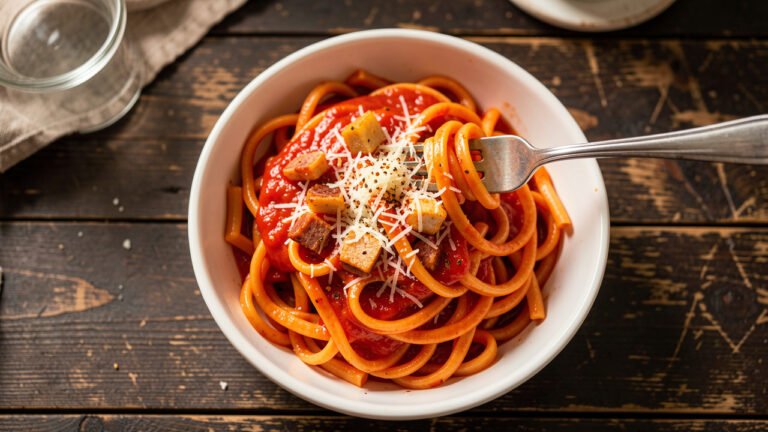
This is one of those recipes where the short ingredient list is the whole point. There is no onion, no garlic, and no cream in the strict Roman version, so every part has to pull its weight. The guanciale gives the sauce its deep, porky backbone, the tomatoes bring the tang, and the Pecorino Romano ties it all together with a salty, funky edge.
The first time I made amatriciana I rushed the guanciale over high heat and dumped all the cheese into a screaming-hot pan. The fat scorched and the cheese seized into rubbery clumps. Once I learned to render the fat low and slow and to toss the cheese off the heat, the sauce turned glossy and smooth every single time.
Why This Bucatini all’Amatriciana Recipe Works
Amatriciana works because each ingredient does one clear job and nothing fights for attention. The guanciale renders into a pool of savory fat that becomes the cooking base, so the tomato sauce tastes of pork from the very first spoonful. That is a depth you cannot fake with a splash of oil.
The single most important step is rendering the guanciale low and slow. Cooking it gently coaxes out the fat and turns the meat golden and crisp instead of tough and leathery. Rush it over high heat and you scorch the fat, which turns the whole sauce bitter.
Bucatini is the traditional shape for a reason. Its long strands have a hollow center, like a thick straw, so the sauce coats the outside and works its way into the middle as you toss. That gives you a satisfying, slurpable bite that spaghetti cannot quite match.
Finishing off the heat is the last quiet secret. Pecorino Romano is sharp and salty, but it seizes into clumps if it hits a boiling pan. Toss it in with a little starchy pasta water once the pan has cooled for a few seconds and it melts into a smooth, glossy coat that clings to every strand.
Pro observation: The guanciale is ready to build on when the fat in the pan has turned clear and the pieces are deep golden with crisp edges. If the fat still looks white and the meat is soft, keep rendering; patience here is what makes the sauce taste rich.
Amatriciana Ingredients
Kitchen Measurement Converter
Quickly convert between common cooking measurements without leaving the recipe. Pick a category, enter a value, and the result updates instantly.
Amatriciana Ingredient Notes & Substitutions
Guanciale
Guanciale is cured pork cheek and the traditional heart of amatriciana. Look for it at Italian delis or a good butcher. If you cannot find it, pancetta is the best swap; skip bacon unless you want a smoky twist.
Pecorino Romano
Use real Pecorino Romano, a hard sheep’s milk cheese with a sharp, salty bite. Grate it fresh and fine so it melts smoothly. Parmesan is milder and less traditional, but it will do if that is all you have.
Whole Peeled Tomatoes
San Marzano or good whole peeled tomatoes give the sweetest, cleanest sauce. Crush them by hand for a rustic texture. Avoid heavily seasoned canned sauces, which fight the simple flavors of the dish.
Wine and Peperoncino
A splash of dry white wine lifts the sauce and cuts the richness of the fat. Peperoncino, or red pepper flakes, brings a gentle warmth rather than fiery heat. Add it a little at a time and taste as you go.
Equipment for Bucatini all’Amatriciana
- Wide, heavy skillet
- Large pasta pot
- Slotted spoon
- Sharp knife and board
- Fine grater
- Tongs or a ladle
Before You Start the Amatriciana
1. Get the pasta water going first. The sauce comes together fast, so bring a large pot of water to a boil before you start rendering the guanciale, and salt it well once it boils.
2. Cut the guanciale evenly. Slice it into short batons or small cubes about 1/4 inch thick so it renders and crisps at the same rate.
3. Grate the cheese fine and reserve pasta water. Fine Pecorino Romano melts smoothly, and a cup of the starchy cooking water is what turns the cheese into a glossy sauce, so do not pour it all down the drain.
Step-by-Step Amatriciana Instructions
Prep for the Amatriciana
Bring a large pot of water to a boil for the bucatini. Cut the guanciale into short batons or small cubes, then crush the whole peeled tomatoes by hand in a bowl. Grate the Pecorino Romano fine and measure out the wine and red pepper flakes so everything is ready by the stove.
Render the Guanciale
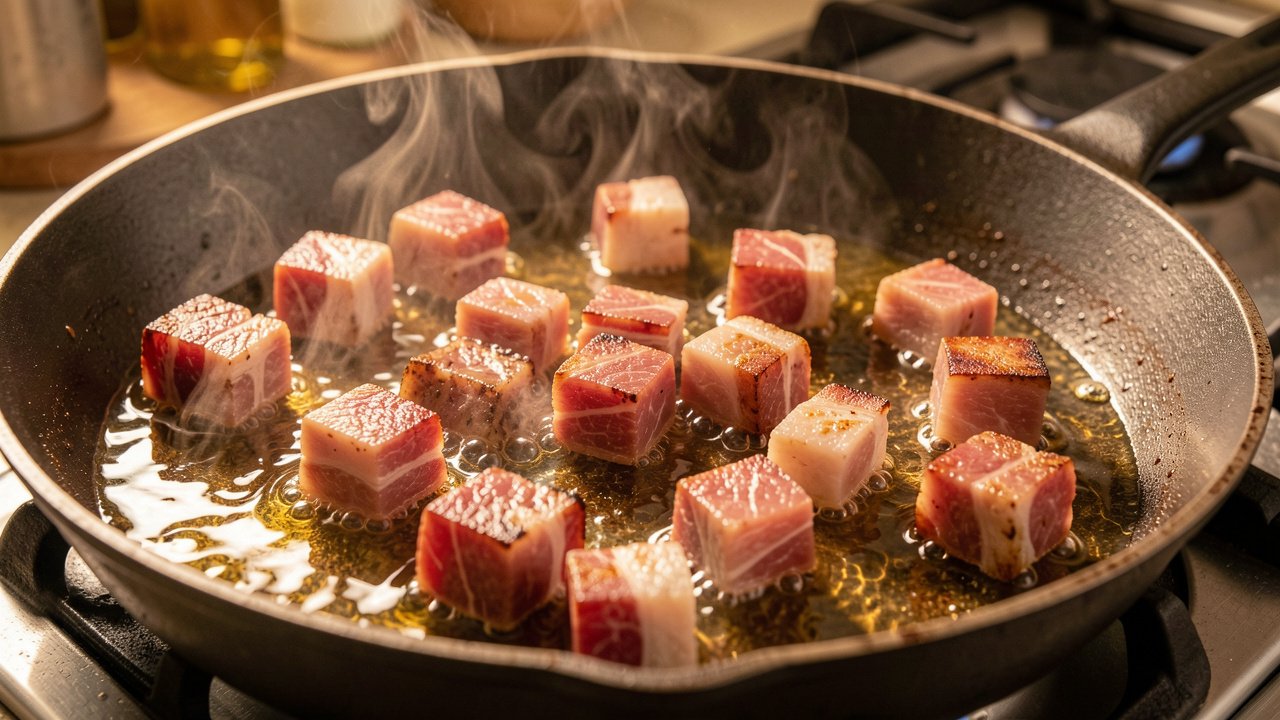
Put the guanciale in a cold, wide skillet with a small drizzle of olive oil, then set it over medium-low heat. Let the fat render slowly for 6 to 8 minutes, stirring now and then, until the pieces are golden and the fat has turned clear. Low and slow is the goal, since rushing it makes the guanciale tough instead of crisp.
Crisp and Reserve the Guanciale
Once the guanciale is golden and crisp at the edges, scoop out about half the pieces with a slotted spoon and set them aside. Leaving some in the pan flavors the sauce, while the reserved crisp bits go back on top at the end for texture. Keep all of that rendered fat in the pan.
Build the Amatriciana Sauce
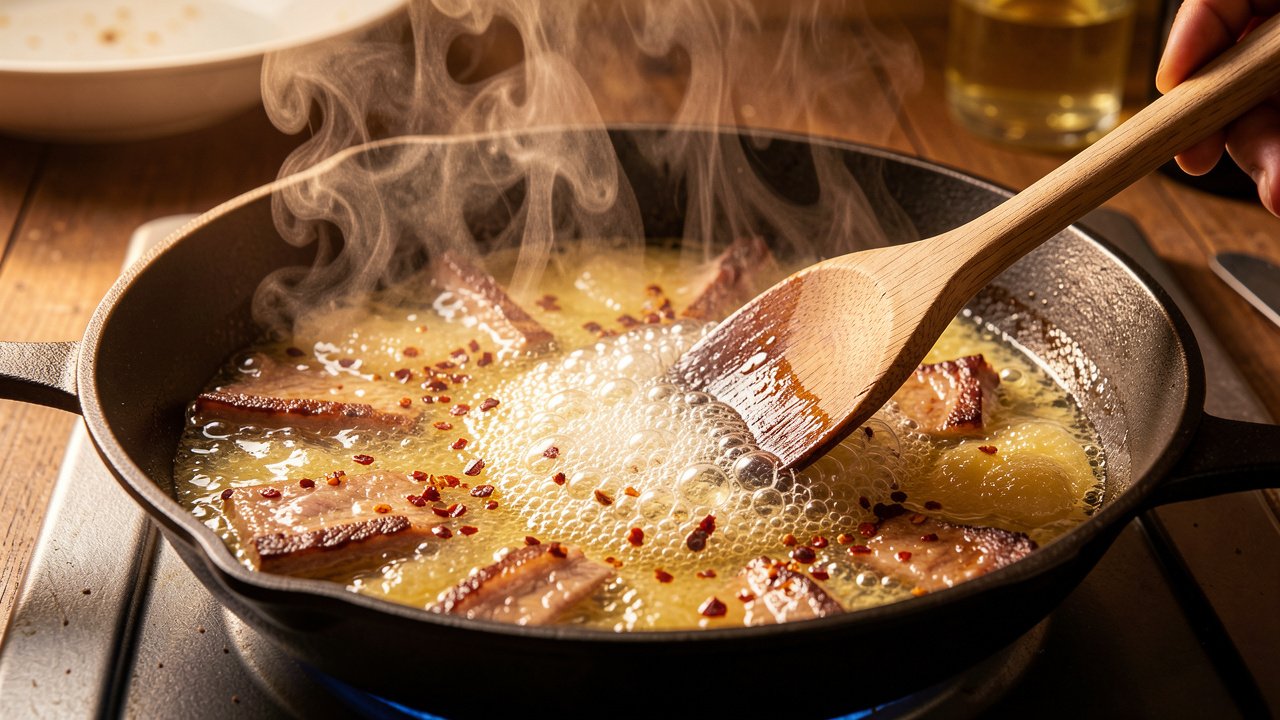
Add the red pepper flakes to the hot fat and let them sizzle for a few seconds. Pour in the white wine, scrape up any browned bits from the bottom of the pan, and let it bubble for about a minute until the sharp smell of alcohol cooks off. This quick step gives the sauce its bright backbone.
Simmer the Tomato Sauce
Add the crushed tomatoes and a small pinch of salt, remembering the guanciale and cheese are already salty. Simmer over medium-low heat for 12 to 15 minutes, stirring now and then, until the sauce thickens and turns a deeper red. While it simmers, salt the boiling water and cook the bucatini until just shy of al dente.
Toss the Bucatini and Finish
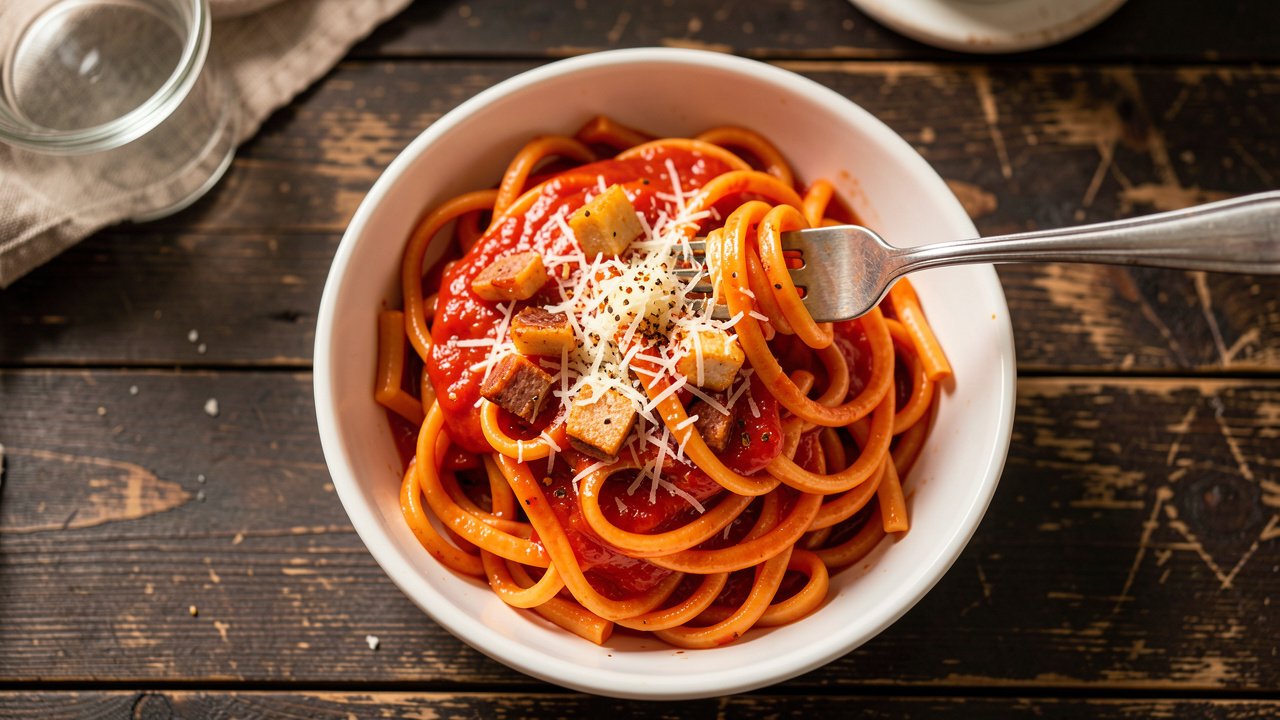
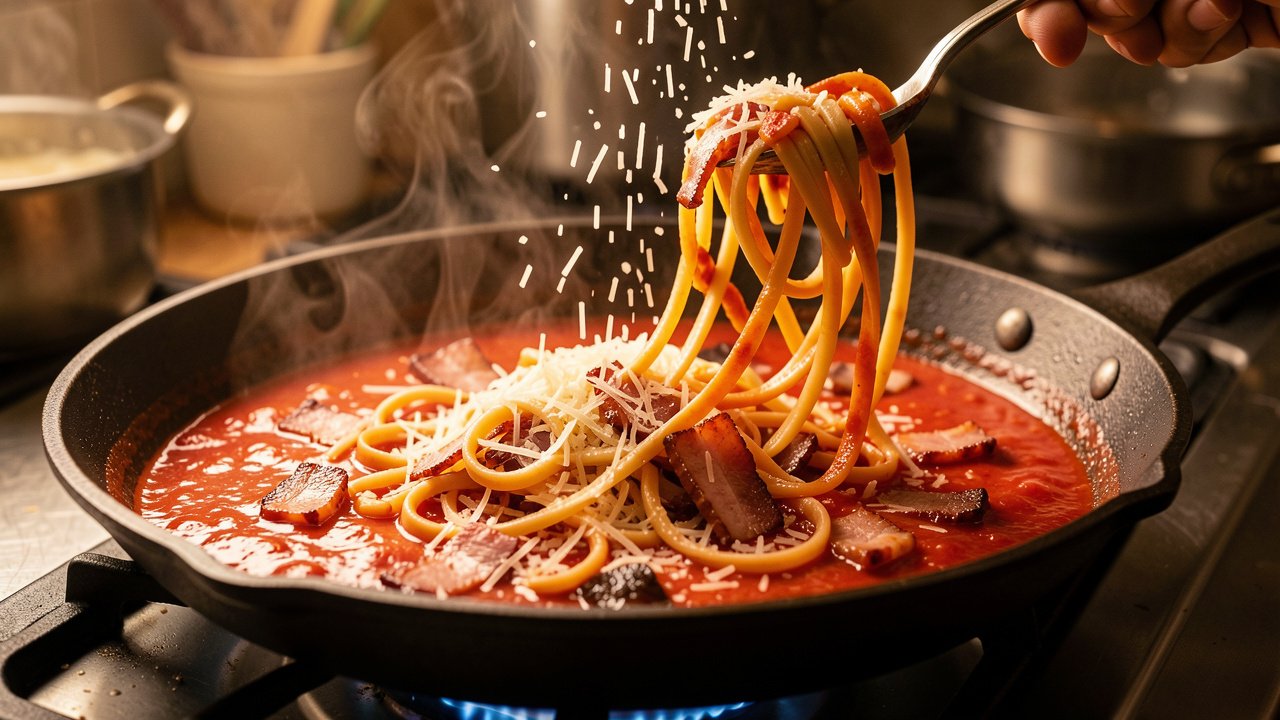
Reserve a cup of pasta water, then drain the bucatini and add it to the sauce with a splash of that water. Toss over low heat for a minute so the hollow strands drink up the sauce. Pull the pan off the heat, let it cool for a few seconds, then add most of the Pecorino Romano and toss hard, adding pasta water until the cheese melts into a glossy coat. Top with the reserved guanciale and the rest of the cheese.
Chef’s Tips for Bucatini all’Amatriciana
Render the guanciale from a cold pan over medium-low heat. Starting cold gives the fat time to melt out slowly, so the meat crisps evenly instead of scorching.
Always add the Pecorino Romano off the heat with a splash of starchy pasta water. That is the fix for grainy, clumpy cheese and the trick to a silky, glossy sauce.
Cook the bucatini a touch under al dente and toss it hard in the sauce. Its hollow center keeps cooking as it soaks up sauce, so a vigorous toss fills every strand with flavor.
Bucatini all’Amatriciana Variations
Serving Bucatini all’Amatriciana
- A simple green salad with lemon dressing
- Crusty bread to catch the last of the sauce
- A glass of dry Italian white or light red
- Extra grated Pecorino Romano at the table
Bucatini all’Amatriciana Nutrition Facts
Values are estimates per serving and vary with the guanciale and cheese you use.
Make-Ahead Amatriciana Tips
The tomato sauce is the part you can make ahead, and it only improves as the flavors settle. Render the guanciale, build the sauce through the simmer, then cool and refrigerate it for up to three days. When you are ready to eat, cook fresh bucatini, reheat the sauce gently, and toss the two together with pasta water and cheese at the last minute. Do not toss the pasta in the sauce until serving, or it turns soft and loses its bite.
Storing and Reheating Amatriciana
Common Amatriciana Mistakes to Avoid
Amatriciana Troubleshooting
Cheese clumped up? The pan was too hot. Pull it off the heat, add a splash of starchy pasta water, and toss hard to melt the Pecorino Romano smooth again.
Sauce feels greasy? There was too much rendered fat. Next time spoon off a little before adding the tomatoes, and toss in more pasta water to emulsify what is left.
Sauce too sharp or acidic? Simmer it a couple of minutes longer to mellow the tomatoes, or add a small splash of pasta water. A tiny pinch of salt can round it out too.
Guanciale vs Pancetta vs Bacon in Amatriciana
Guanciale is the traditional choice, and it is worth seeking out. It is cured pork cheek, so it is fattier and more tender than other cured pork, and it renders into a soft, silky fat with a deep, almost sweet pork flavor that defines a real amatriciana.
Pancetta is the best substitute. It is also cured, unsmoked pork, just from the belly instead of the cheek, so it is a little leaner and less rich. The dish will still taste like amatriciana, just slightly lighter in the fat and flavor department.
Bacon is the honest last resort. It is smoked, and that smoke changes the character of the dish into something that is tasty but no longer really amatriciana. If bacon is all you have, use a thick, meaty cut and go easy, but know you are making a smoky cousin of the original. If you enjoy this Roman classic, our tomato basil pasta and fresh tomato sauce share the same simple, tomato-forward spirit.
Bucatini all’Amatriciana FAQ
More Roman and Tomato Pasta Recipes to Try
Last updated: July 23, 2026