Grain Bowls
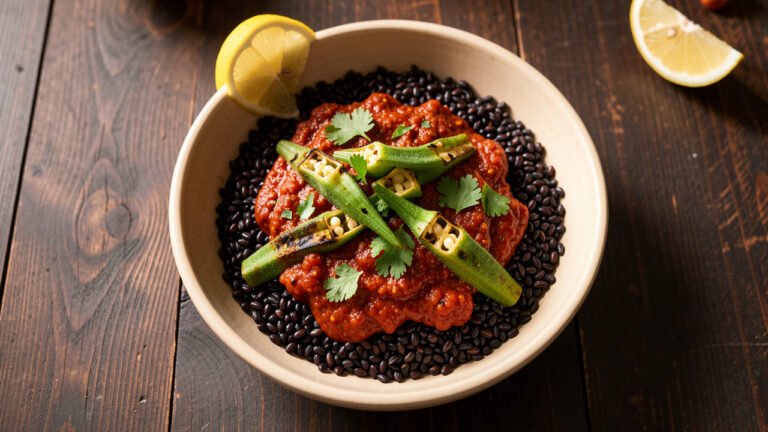
Chewy Black Barley, Berbere, and Seared Okra
Last updated: July 23, 2026
This is a modern grain bowl, not a traditional dish from any one country. It borrows a spice vocabulary from North and East Africa and pairs it with okra and tomatoes, two ingredients genuinely eaten across much of the continent.
Two things decide whether it works. The barley has to stay chewy, and the okra has to stay firm. Both are easy once you know what the grain and the pod are actually doing.
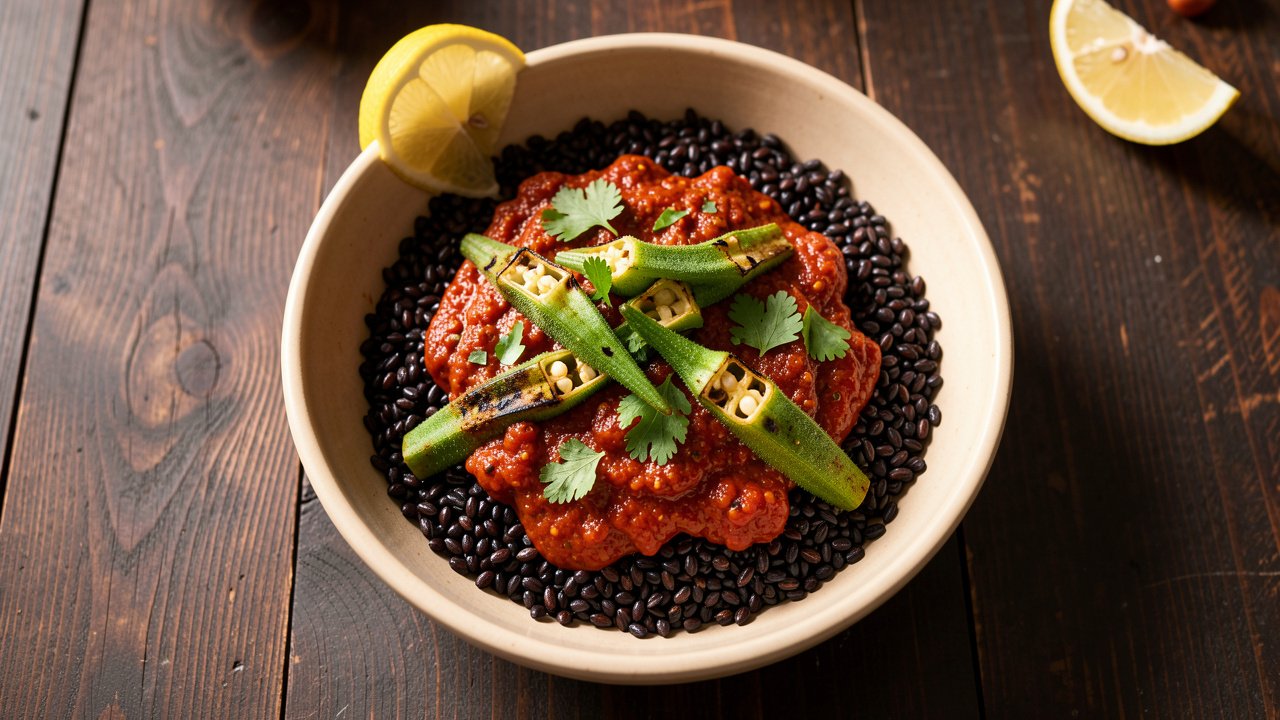
Why This Spiced Barley Bowl Works
Barley has a bite that rice and couscous cannot match. Each grain stays separate and springy, so it holds up under a thick sauce instead of turning to mush.
The tomatoes do the heavy lifting for body. Cooked down until they lose their raw edge, they coat the grains and carry the spice without any cream or butter.
Okra is the reason most people avoid this combination, and also the reason the bowl is good. Cooked hot and fast in its own pan, it turns nutty and slightly charred, closer to a green bean than to the slippery stew version.
The last piece is acid. A squeeze of lemon cuts through a dense grain dish that would otherwise sit heavy, and it brightens the spice at the same time.
Pro observation: The tomato base is ready for the barley when a spoon dragged through it leaves a track that fills in slowly. If liquid rushes back instantly, keep cooking.
Ingredients
Kitchen Measurement Converter
Quickly convert between common cooking measurements without leaving the recipe. Pick a category, enter a value, and the result updates instantly.
Black Barley Is Not Rice, and the Type You Buy Changes Everything
This is where most people go wrong before they even turn on the stove. Barley is sold in two very different forms, and the bags often sit side by side on the same shelf.
Hulled and black barley
These keep their bran layer, which is why black barley looks so dark and why it stays chewy no matter how long it sits in sauce. Plan on 45 to 60 minutes of simmering, and start tasting at 45.
Pearl barley
Pearl barley has been polished, so the bran is gone. It cooks in about 25 to 30 minutes and goes softer and starchier, which thickens the bowl into something closer to a risotto. If that is what you have, cut the simmer time and expect a creamier result.
Cook it like pasta, not like rice
Rinse the grains in a sieve until the water runs clear, then boil them in a large pot of well salted water. Barley needs far more water than rice, and chasing an exact absorption ratio is how you end up with a scorched bottom and a raw center.
Drain the excess through a colander when the grains are tender with a slight resistance in the middle. That single change is the most reliable route to chewy barley.
Season the water. Use about a tablespoon of salt for the pot. Grains that are seasoned only at the end taste flat, because salt added later sits on the outside instead of inside the grain.
How to Keep Okra From Turning Slimy
The slippery texture people complain about is mucilage, a soluble fiber stored inside the pod. It is released by moisture, by cutting, and by slow moist heat, which is exactly what a long stew provides.
So do the opposite. Sear or roast the okra hot and fast in a separate pan, moving it only enough to color the sides.
Dry the pods thoroughly before cutting, and cut them into large pieces or leave small ones whole. Every cut surface is another place for mucilage to escape.
Acid also helps, which is why the tomato matters beyond flavor. It is no coincidence that okra dishes across Africa, India, and the American South so often arrive with tomato, tamarind, or lemon in the pot.
What to look for: Properly seared okra has brown blistered patches and still snaps when you bend a piece. If it bends without breaking, it has gone too far.
Ingredient Notes & Substitutions
Berbere
Berbere is the chili and spice blend of Ethiopian and Eritrean cooking, usually built on dried chili, fenugreek, ginger, and warm spices. Ras el hanout, from across the Maghreb, is the mildest swap and gives a more floral bowl.
Okra
Choose pods under about four inches that snap cleanly at the tip. Big woody pods stay tough. Frozen cut okra works if you sear it straight from the freezer without thawing.
Tomatoes
Ripe fresh tomatoes give the sweetest base. In winter, one 28-ounce can of whole peeled tomatoes crushed by hand beats pale fresh ones every time.
Stock
Vegetable stock adds savory depth, but water plus a pinch of salt is fine. Keep a little extra warm for loosening the bowl later.
Equipment
- Large pot for the barley
- Colander or sieve
- Wide skillet, cast iron ideal
- Sharp knife and board
- Clean kitchen towel
- Wooden spoon
Before You Start
1. Check which barley you bought. The bag will say hulled, black, or pearl. That word sets your timing for the whole recipe.
2. Dry the okra early. Wash the pods, then spread them on a towel while you chop everything else so the surfaces are properly dry before cutting.
3. Get the barley boiling first. It is the longest step, and the sauce comes together in the time the grains need.
Step-by-Step Instructions
Rinse and Boil the Barley
Rinse the barley under cold water until the water runs clear. Drop it into a large pot of boiling salted water and cook uncovered at a steady simmer for 45 to 60 minutes for hulled or black barley.
Start tasting at 45 minutes. You want tender grains with a small firm core, not softness all the way through.
Sear the Okra Separately
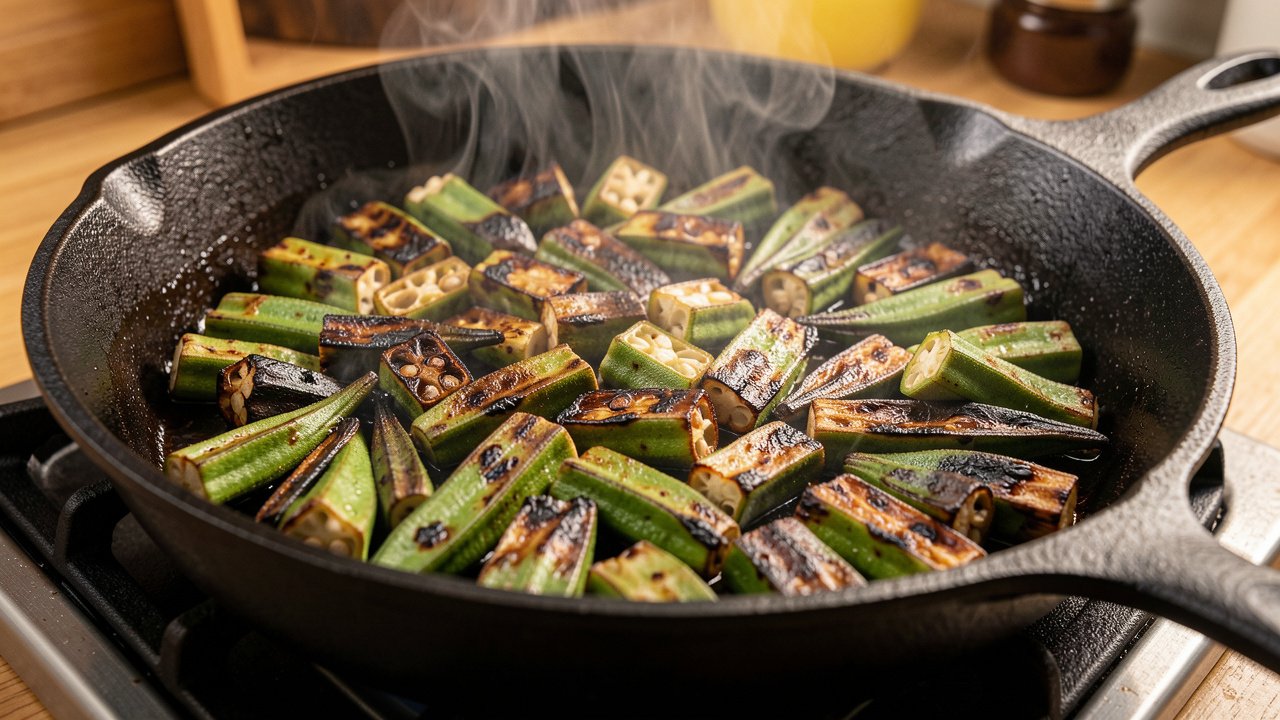
Trim the stem caps and cut the pods into pieces about an inch long, leaving very small pods whole. Heat 2 tablespoons of oil in a wide skillet over medium-high until it shimmers.
Add the okra in one layer and leave it alone for 2 minutes before stirring. Cook 6 to 8 minutes total, until the pieces are blistered and browned in patches, then tip them onto a plate.
Soften the Onion, Garlic, and Ginger
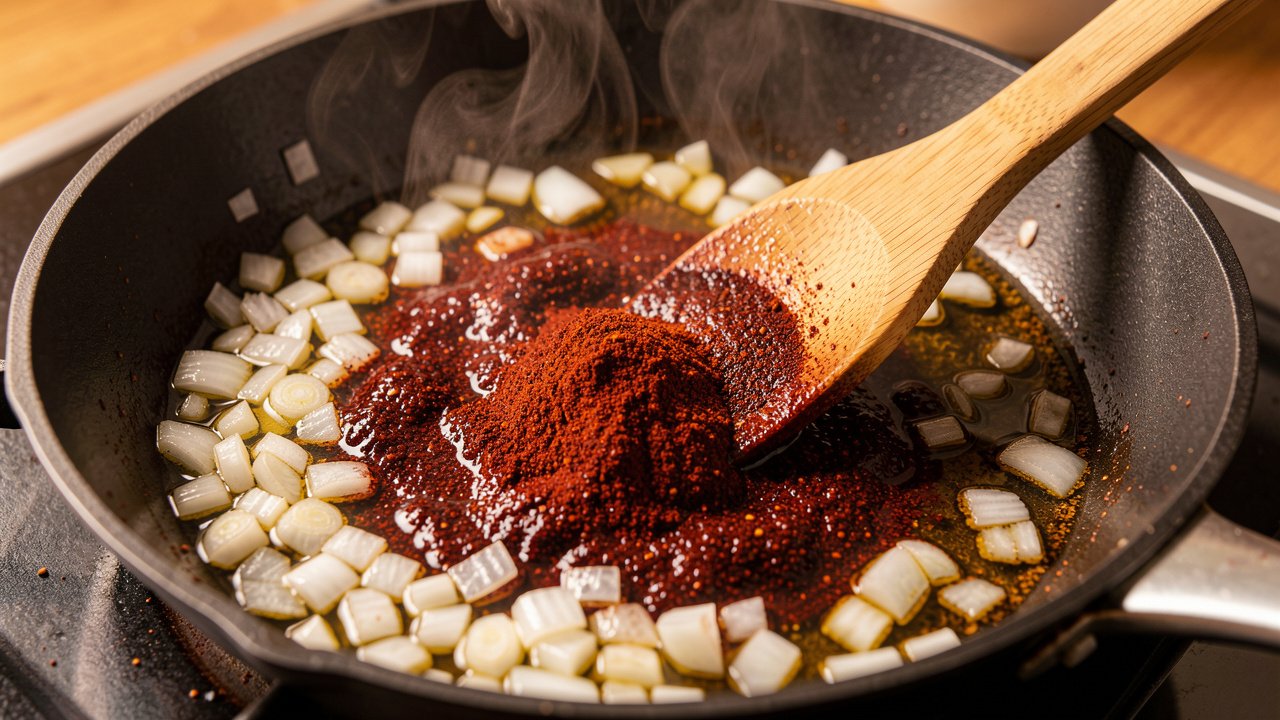
Lower the heat to medium and add the last tablespoon of oil to the same skillet. Cook the chopped onion 6 to 7 minutes until soft and translucent at the edges.
Stir in the garlic and grated ginger and cook one more minute, just until the sharp raw smell turns sweet.
Bloom the Berbere
Add the berbere and cumin to the pan and stir constantly for 30 seconds. The flavor compounds in these spices are fat soluble, so this half minute in oil is what turns dusty powder into something round and fragrant.
Keep the heat moderate. Berbere carries a lot of ground chili and scorches faster than most blends, and burnt chili turns bitter in a way you cannot fix.
Cook Down the Tomatoes
Stir in the tomato paste and let it darken for a minute, then add the chopped tomatoes, the stock, and the salt. Simmer 15 to 18 minutes, stirring now and then, until the tomatoes collapse and the sauce is thick enough to hold a track behind the spoon.
This is where the body comes from. A thin, watery base will slide off the grains instead of coating them.
Fold Everything Together and Finish with Lemon
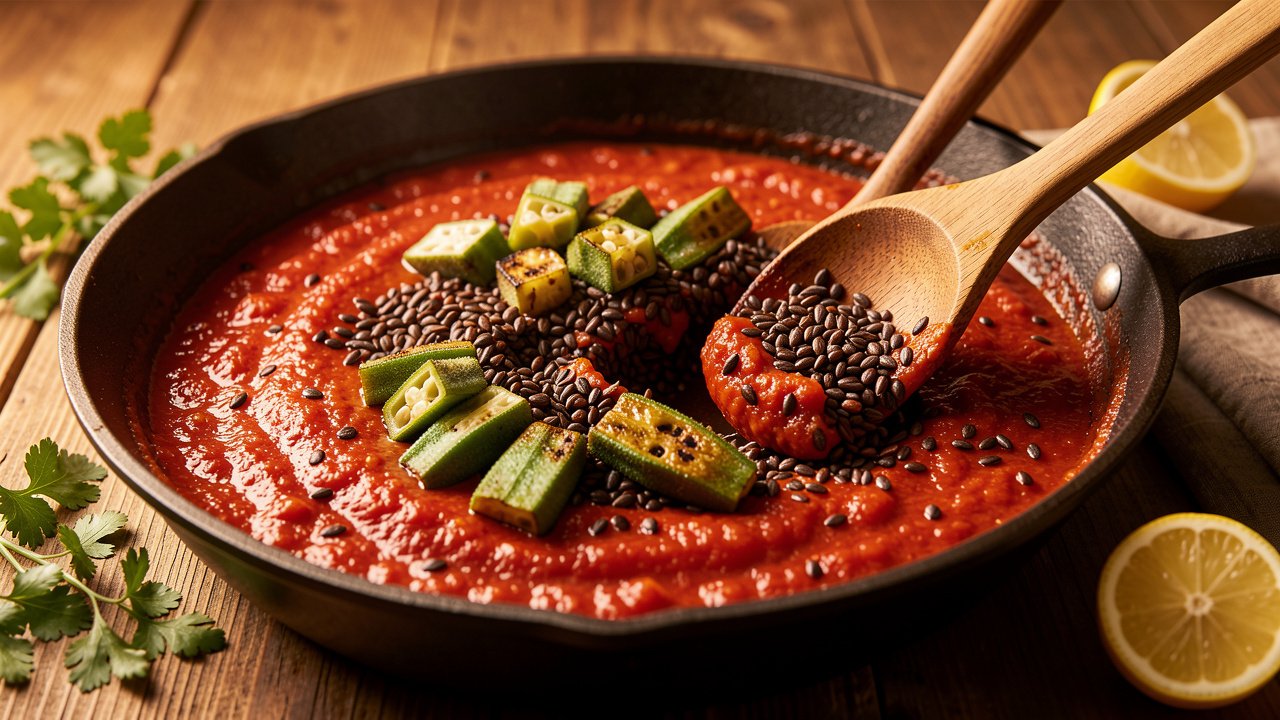
Drain the barley well and fold it into the tomato base while both are hot, so the grains drink up the sauce and the seasoning. Add the seared okra last and fold gently two or three times, just enough to distribute it.
Take the pan off the heat, squeeze in the lemon juice, and scatter the chopped cilantro over the top. Taste for salt one final time.
Chef’s Tips for Spiced Barley with Okra
Dress the grains while they are still warm. Barley keeps absorbing liquid as it cools, so a bowl that looks perfectly saucy in the pan will read dry an hour later.
Hold back a splash of stock and stir it through right before it goes to the table. This one habit rescues more grain bowls than any other.
Serve it warm or at room temperature. The spice reads clearer once the dish stops steaming, which makes it a strong choice for a potluck table.
Recipe Variations
Serving Suggestions
- Warm flatbread for scooping
- Thick yogurt or a dairy-free alternative
- A soft-boiled egg on top for lunch
- Extra lemon wedges and fresh herbs
Nutrition Facts
Values are estimates for one of six servings and shift with your spice blend, stock, and how much salt stays in the drained barley.
Make-Ahead Tips
Boil and drain the barley up to three days ahead, toss it with a spoonful of oil, and keep it covered in the fridge. The oil stops the cooled grains from clumping into a solid block.
The tomato base holds just as long. Sear the okra fresh on the day you serve, because that texture does not survive storage.
Storage, Freezing & Reheating
Common Mistakes to Avoid
Troubleshooting the Barley and Tomato Bowl
Grains still hard after an hour? Older barley takes longer. Add more boiling water and keep going in 10 minute stretches until the bite is right.
Bowl tastes bitter? The berbere caught too much heat. A spoonful of tomato paste and a pinch of sugar will round the edge.
Everything tastes muted? Salt first, lemon second. Dense grain dishes need more of both than you expect.
Where This Spice Vocabulary Actually Comes From
Africa is a continent of more than fifty countries, so there is no such thing as one African cuisine. This bowl is not a traditional dish from anywhere, and calling it one would be dishonest.
What is real is the pantry it borrows from. Berbere belongs to Ethiopian and Eritrean kitchens, ras el hanout to the Maghreb across North Africa, and harissa to Tunisia.
Okra and tomatoes are the genuinely shared thread. Okra has been grown across the continent for centuries, and tomatoes turn up in cooking from Senegal to Somalia.
If you like tomatoes doing this kind of structural work, our hearty tomato lentil soup uses the same reduce-until-thick logic.
Frequently Asked Questions
More Tomato Recipes to Try
Culinary Reviewer: Ghazala Shakeel