Thai Recipes
Thai Weeknight Curry
Last updated: September 29, 2026
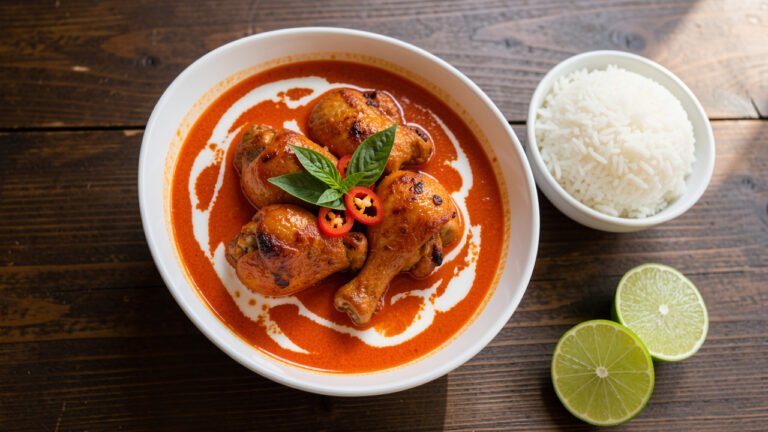
This is the curry I make when I want something with real heat and depth but do not have an hour to give it. Three moves carry the whole dish: brown the chicken, fry the curry paste until it darkens, and never let the coconut milk boil. Everything else is seasoning.
Why This Spicy Chicken in Tomato Coconut Sauce Works
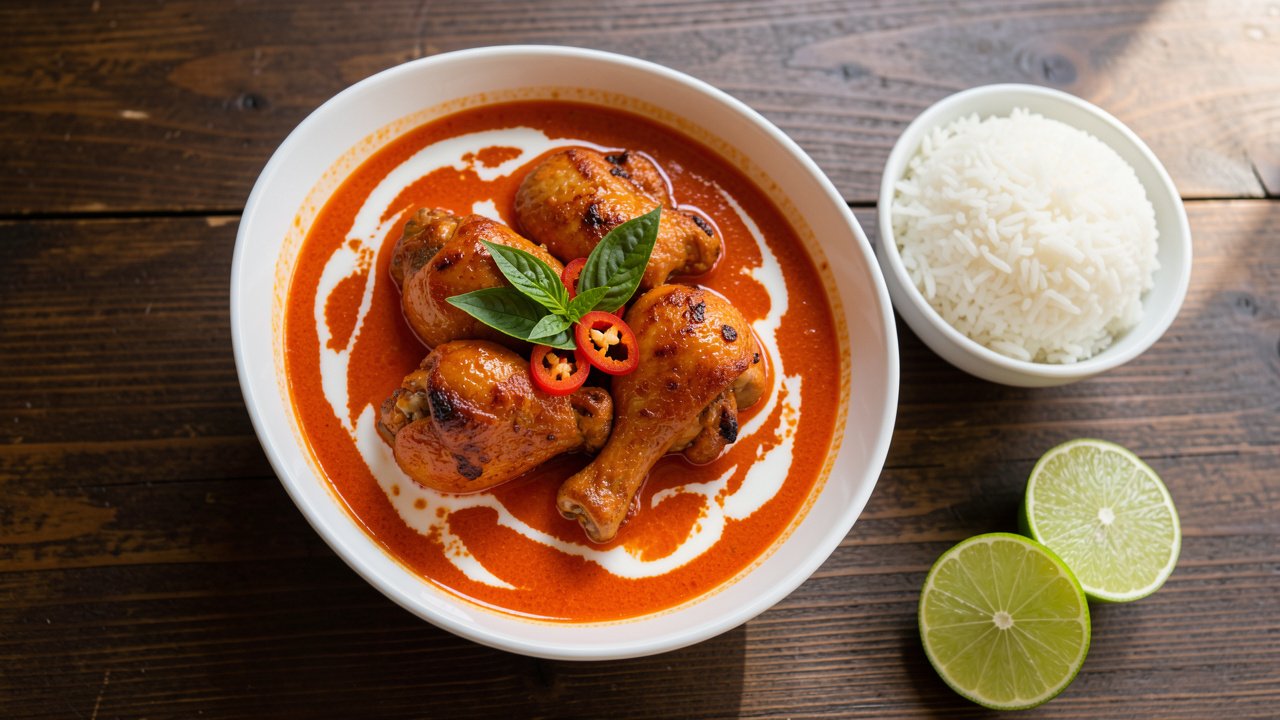
Most weeknight curries taste stirred together. This one tastes built, and the difference is two minutes of work at the start. Browning the chicken leaves stuck-on fond in the pan, and frying the curry paste in fat pulls the flavor out of the dried chilies, lemongrass, and galangal inside it. Both go into the sauce later and give it a backbone no amount of simmering can fake.
Tomatoes are the piece most Thai curries leave out, and they earn their place here. They add acidity and savory sweetness that keeps the coconut milk from going flat and heavy. Cooked down properly, they also thicken the sauce into a clingy coating instead of a thin soup. Chicken thighs are the right cut for the same practical reason: breast meat turns stringy in a 12-minute simmer, while thighs stay juicy and brown more willingly.
The last piece is the seasoning triangle: fish sauce for salt and funk, lime for brightness, sugar for balance. Miss one and the curry tastes almost right but dull, and you will keep adding salt trying to fix something that needs acid.
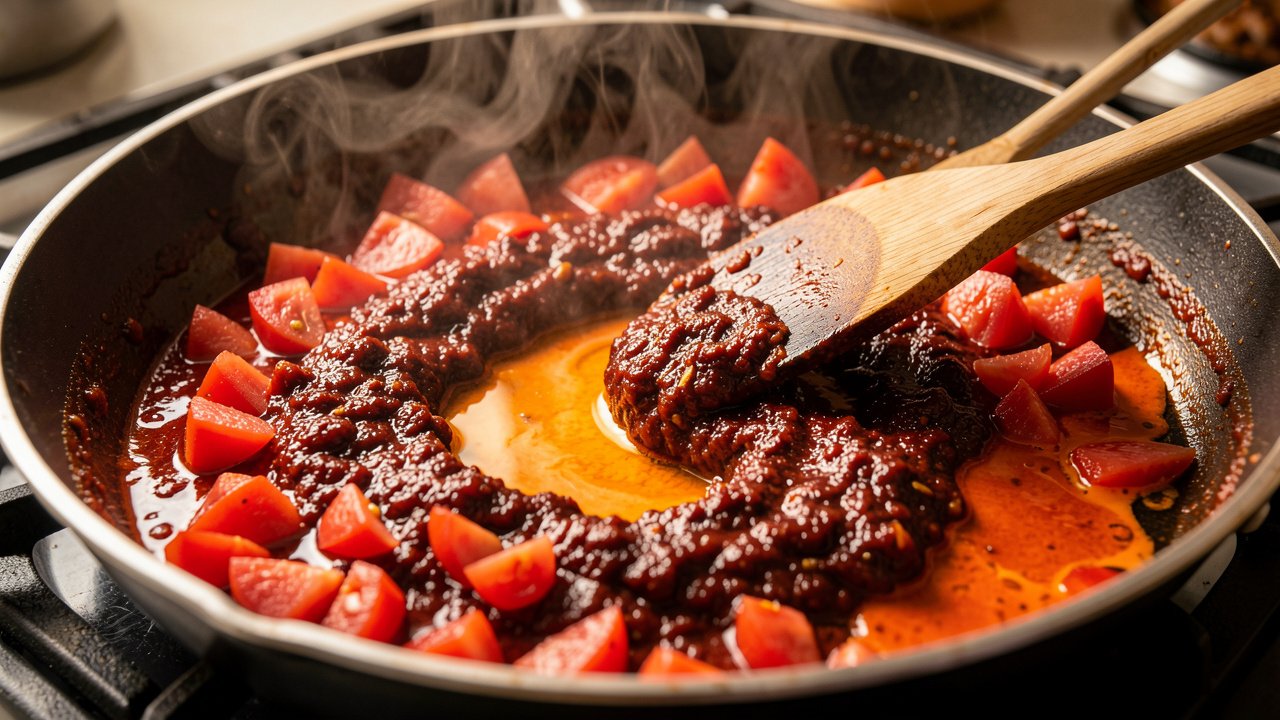
Pro observation: The curry paste is ready for the tomatoes when it has darkened by a shade or two and the oil around it turns orange-red. That color change is the flavor moving from the paste into the fat, which then carries it through the whole sauce.
Ingredients
Kitchen Measurement Converter
Quickly convert between common cooking measurements without leaving the recipe. Pick a category, enter a value, and the result updates instantly.
Ingredient Notes & Substitutions
Chicken Thighs
Boneless, skinless thighs cut into 1-inch pieces stay tender through the simmer. Breast works, but cut it larger, add it later, and pull it at 165 F. Pat the meat dry or it will steam instead of brown.
Red Curry Paste
Brands vary a lot in heat and salt. Start with 3 tablespoons and taste before adding fish sauce. No paste on hand? Use garlic, ginger, and fresh red chili instead.
Coconut Milk
Full-fat canned coconut milk gives the sauce body. Light versions thin out and split more easily. Shake the can hard before opening, and skip the carton kind, which is mostly water.
Fish Sauce and Lime
Fish sauce is the salt in this dish, so hold back on extra salt until it is in. Soy sauce plus a pinch of salt is a workable swap if you avoid fish sauce.
Equipment
- Wide, heavy skillet or wok
- Tongs
- Sharp knife and board
- Can opener
- Instant-read thermometer
- Rice pot or cooker
Before You Start
1. Dry the chicken and salt it lightly. Wet meat will not brown. Pat the pieces with paper towel, then let them sit at room temperature while you chop, so the pan does not drop in temperature the moment they hit it.
2. Start the jasmine rice first. The curry moves fast once the paste hits the oil, and rice takes about 20 minutes including its rest.
3. Get everything within reach. Have the paste, tomatoes, coconut milk, fish sauce, lime, and sugar on the counter before the heat goes on. There is no time to open a can mid-fry.
Step-by-Step Instructions
Prep the Chicken and Aromatics
Cut the chicken thighs into 1-inch pieces and pat them very dry, then season with a small pinch of salt. Chop the tomatoes small, slice the shallot, and mince the garlic and ginger. Squeeze the lime and set the juice aside.
Brown the Chicken and Set It Aside
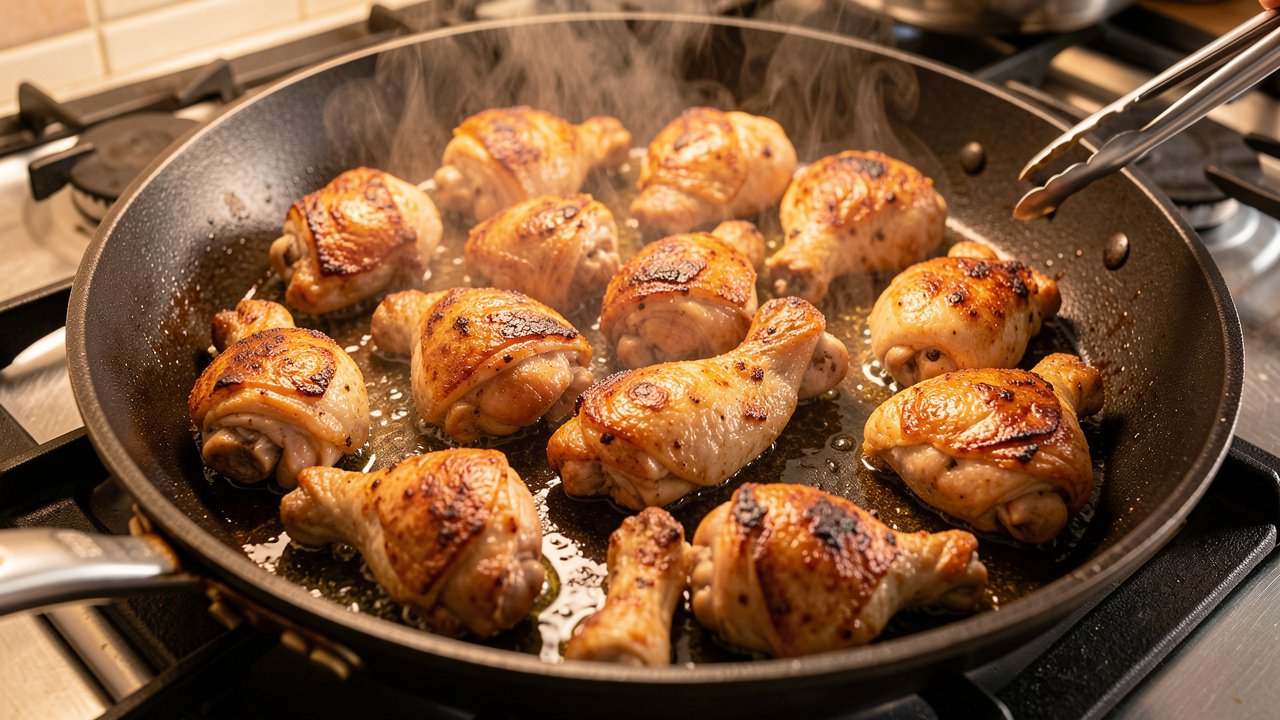
Heat 2 tablespoons of oil in a wide skillet over medium-high until it shimmers. Add the chicken in a single layer, leaving space between the pieces, and do not touch it for 3 minutes. You want a loud sizzle and deep golden edges, not a gentle bubble. Turn the pieces, give them 2 more minutes, then move them to a plate. They will still be raw inside, which is exactly right.
Bloom the Curry Paste
Lower the heat to medium. Add the shallot to the same pan and cook 2 minutes until soft, then push in the red curry paste along with the garlic and ginger. Fry it, stirring almost constantly, for 2 to 3 minutes. The paste will darken, the kitchen will smell sharply of chili and lemongrass, and the oil will turn orange around the edges. If it starts to catch, add a spoonful of the thick coconut cream from the top of the can rather than water.
Cook Down the Tomatoes
Add the chopped tomatoes and stir, scraping up every browned bit from the bottom of the pan. Cook 6 to 8 minutes until they collapse and the mixture goes thick and jammy rather than watery. Drag your spoon across the pan: if the trail holds for a second before filling in, the base is ready. Rushing this leaves a raw, sharp tomato edge that coconut milk cannot hide.
Add Coconut Milk and Season
Pour in the coconut milk and stir until the sauce is smooth and orange-red. Bring it to a bare simmer, with lazy bubbles breaking at the surface, then add the fish sauce, the sugar, and half the lime juice. Taste it now, before the chicken goes back in. It should be salty, faintly sweet, and bright. If it tastes muddy, it needs lime. If it tastes thin, it needs fish sauce.
Return the Chicken and Finish
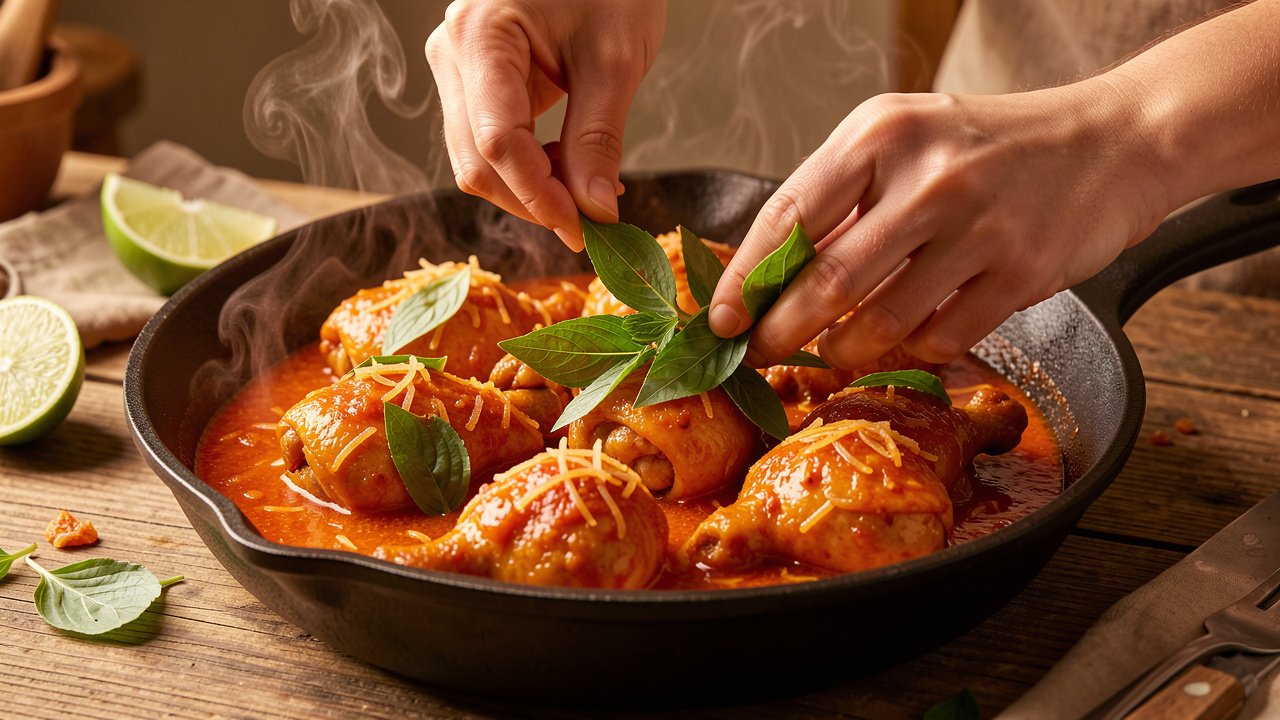
Slide the chicken and any juices from the plate back into the pan. Keep the heat low and simmer gently for 10 to 12 minutes, stirring now and then, until the pieces are cooked through and read 165 F at the center. Never let it reach a hard boil, or the coconut milk will break into grainy curds and oil. Off the heat, stir in the rest of the lime juice, tear in the Thai basil, and serve over jasmine rice.
Chef’s Tips From Real Kitchen Testing
Brown the chicken in two batches if your pan is not wide enough. Crowded meat releases water, the pan cools, and you end up boiling it gray.
Split the lime juice. Half cooks into the sauce, half goes in at the end for the sharp top note. All of it early and the brightness disappears.
Season the sauce before the chicken returns. Once the meat is in you cannot taste and adjust freely without overcooking it.
If your curry paste is very salty, start with 1 tablespoon of fish sauce. An over-salted coconut sauce is hard to rescue without diluting it.
Recipe Variations
Serving Suggestions
- Steamed jasmine rice to soak up the sauce
- A crunchy cucumber and red onion salad
- Lime wedges and extra Thai basil at the table
- Cold lemonade or iced mint tea to tame the chili
Nutrition Facts
Values are estimates per serving of curry, without rice, and vary with the curry paste and fish sauce brand you use.
Make-Ahead Tips
Build the sauce a day ahead through the coconut milk stage, then cool and refrigerate it. On the night, brown the chicken fresh, warm the sauce gently, and simmer the two together for 10 to 12 minutes. That splits the work and keeps the chicken from being cooked twice. Hold the lime and basil until serving, since both fade fast once they sit.
Storage, Freezing & Reheating
Common Mistakes to Avoid
Troubleshooting
Sauce split and grainy? It boiled too hard. Pull it off the heat and whisk in a few tablespoons of warm water; the emulsion usually comes back.
Tastes flat despite plenty of salt? It is short on acid. Add lime juice a teaspoon at a time and it will snap into focus.
Too spicy? Stir in extra coconut milk and a little more sugar. More rice does the rest.
Sauce too thin? Lift the chicken out with a slotted spoon and reduce the sauce over medium-low for a few minutes, then return the meat.
A Note on Thai Curry Cooking
Thai curries are built on balance rather than heat alone. A cook tastes constantly, nudging salt from fish sauce, sour from lime, sweet from palm sugar, and heat from chili until no single element wins. Tomatoes are not traditional in most Thai pastes, but they slot in naturally because they carry acid and sweetness at once.
Blooming the paste in fat is standard across the region, and it is the step home cooks most often skip. In Thailand the cracked coconut cream itself is often the frying medium, which is why the oil turns vivid orange. If you like this style, our creamy Indian tomato soup uses the same spice-blooming logic, while spicy tomato shrimp pasta and hearty tomato lentil soup lean on cooking tomatoes down first. Our guide to tomato sauce recipes covers the fundamentals.