Persian Recipes
Classic Persian Split Pea and Beef Stew
Last updated: September 30, 2026
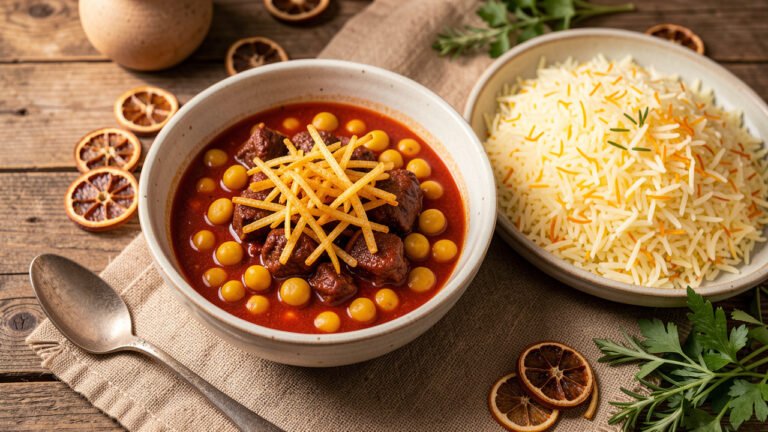
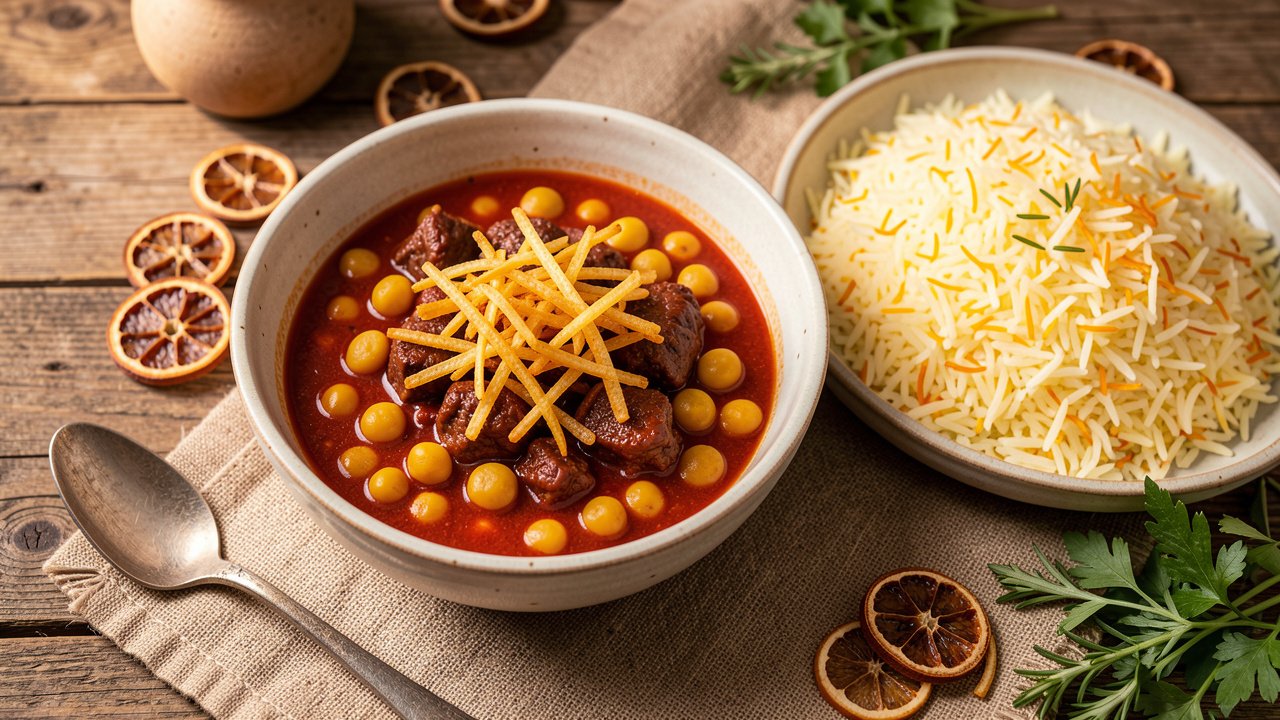
Khoresh gheimeh is Persian comfort food at its most beloved: tender cubes of beef and soft yellow split peas melting into a rich, tomato-red sauce that is made bright and tart by whole dried limes. A tangle of golden fried potato straws goes over the top just before serving, and the whole thing is spooned over a mound of steamed rice. It is the sort of dish cooked for family gatherings, religious holidays, and quiet weeknights alike.
Why This Gheimeh Works
Gheimeh lives or dies by its balance: rich and meaty from the beef and split peas, deep and savory from the tomato, and pulled bright by the sourness of dried lime. Get those three in tune and you have a stew that tastes far more complex than its short ingredient list suggests. The method here builds each layer in order so nothing gets muddy.
The split peas are the quiet backbone. Cooked gently in the sauce, they hold their shape but turn creamy inside, thickening the stew naturally without any flour. The trick is to add them once the meat is partway tender, so they soften alongside it rather than dissolving into mush or staying stubbornly hard.
Dried limes, called limu omani, are the signature. Pierced and dropped in whole, they release a fragrant, tart, faintly smoky flavor that no fresh citrus can copy. They steep as the stew simmers, seasoning the sauce from the inside. Because their sourness is what defines gheimeh, they are worth seeking out from any Persian or Middle Eastern grocer.
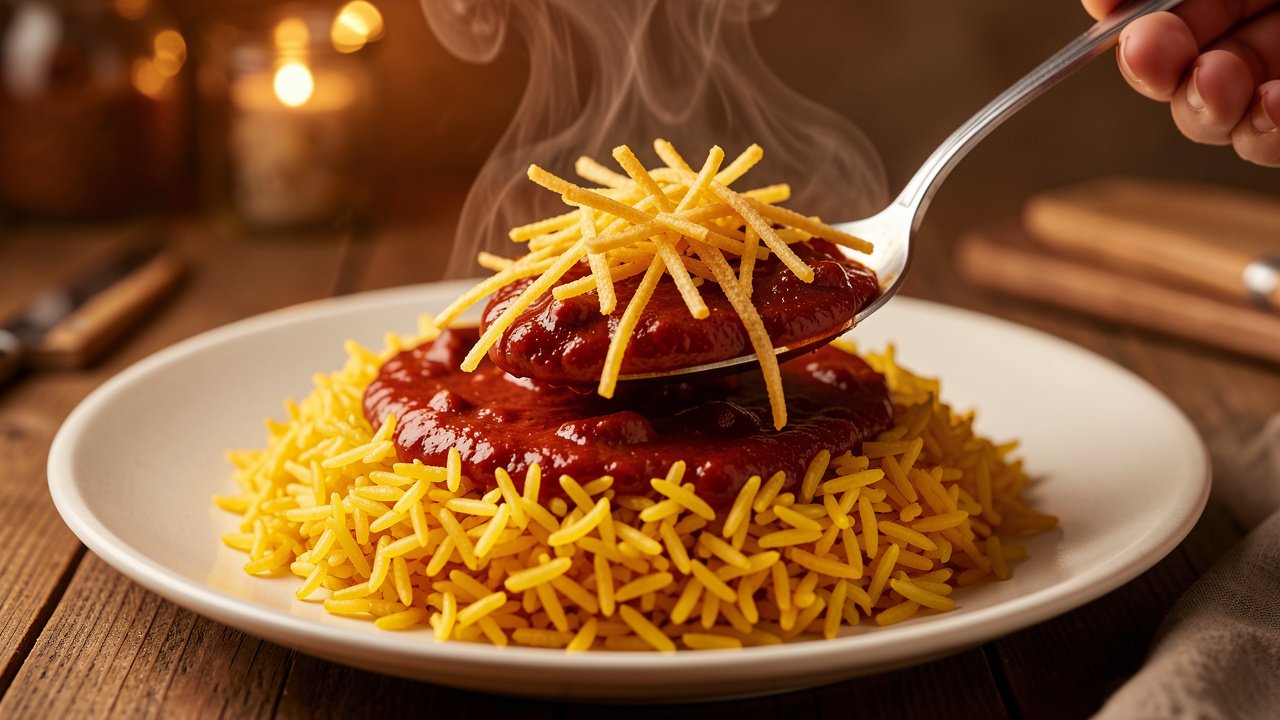
The crown of crispy fried potato straws is not a garnish you can skip. It gives the soft, saucy stew a contrasting crunch and a little sweetness, and it is how gheimeh is traditionally presented on the table. Fry them until golden and add them at the very end so they stay crisp.
Pro observation: Taste the sauce before serving and judge the sourness. If the dried lime has not made it tart enough, pierce and press a lime against the side of the pot to squeeze out more; if it is too sharp, a small pinch of sugar rounds it off.
Ingredients
Kitchen Measurement Converter
Need to convert an amount while you measure? Pick a category, enter a value, and the result updates instantly.
Ingredient Notes & Substitutions
Beef or Lamb
Stew meat from the shoulder or shank, cut into small even dice, is ideal because it turns meltingly tender over a long simmer. Lamb is just as traditional and gives a richer flavor. Trim excess fat, and keep the dice small so it matches the size of the split peas.
Yellow Split Peas
Use yellow split peas, not green, and rinse them well. If yours are older they may need a longer soak. Add them so they finish soft but still whole; overcooked split peas break down and make the stew pasty rather than saucy.
Dried Limes
Limu omani, whole dried limes, give gheimeh its trademark tang. Pierce each one a few times so the flavor seeps out as it simmers. No substitute is quite the same, but in a pinch use fresh lime juice plus a strip of zest, added toward the end and adjusted to taste.
Tomato & Spice
Tomato paste bloomed in oil builds the deep red color and savory base, while chopped fresh tomatoes add body. Turmeric and a whisper of cinnamon are the classic warm notes; a pinch of saffron steeped in hot water is a lovely optional addition.
Equipment
- Heavy pot or Dutch oven
- Frying pan for potatoes
- Sharp knife and board
- Fine sieve or colander
- Wooden spoon
- Slotted spoon
Before You Start
1. Get the split peas soaking first. Rinse them until the water runs clear and cover with fresh water before the onion hits the pot. Soaking the whole time the onion and meat brown is what lets them turn creamy inside yet stay whole, instead of finishing chalky beside tender beef.
2. Pierce every dried lime now. Stab each one three or four times with a fork or knife tip so the simmering liquid can get inside. An unpierced lime bobs on the surface like a cork and barely flavors the sauce. If one cracks open, shake out the seeds, which are where the bitterness hides.
3. Leave the potatoes for the last 20 minutes. Do not cut or fry them now. Straws fried early go limp long before the stew is ready. Start peeling when the stew has about 20 minutes left, and pat the matchsticks dry so the hot oil does not spit.
Step-by-Step Instructions
Gheimeh is a slow simmer, not a rush, so give yourself time. Start the split peas and the meat early, and fry the potato straws near the end so they land on the table crisp and hot.
Rinse and Soften the Split Peas
Rinse the yellow split peas under cold water until it runs clear, then cover them with fresh water and let them soak while you start the meat. Pierce each dried lime a few times with a fork or knife so it can release its flavor later. Slice the onion and dice the beef small and even.
Brown the Onion and Meat
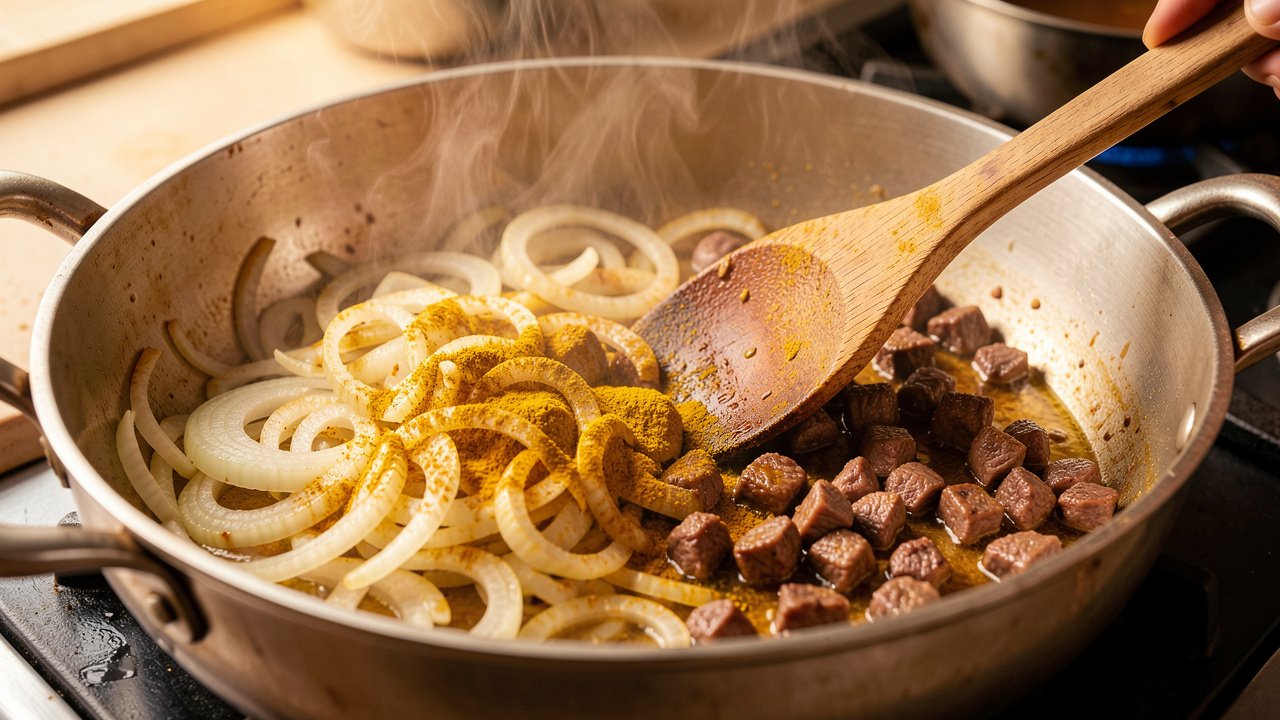
Heat the oil in a heavy pot over medium heat. Add the sliced onion and cook 6 to 8 minutes until soft and golden. Stir in the turmeric, then add the diced beef and cook, turning, until it loses its raw color on all sides. This is where the base flavor of the stew is built.
Bloom the Tomato Paste
Push the meat to one side and add the tomato paste to the empty part of the pot. Let it fry in the oil for about a minute, stirring, until it darkens slightly and smells rich rather than raw. Add the ground cinnamon, black pepper, and salt, then stir everything together.
Simmer With Split Peas and Dried Lime
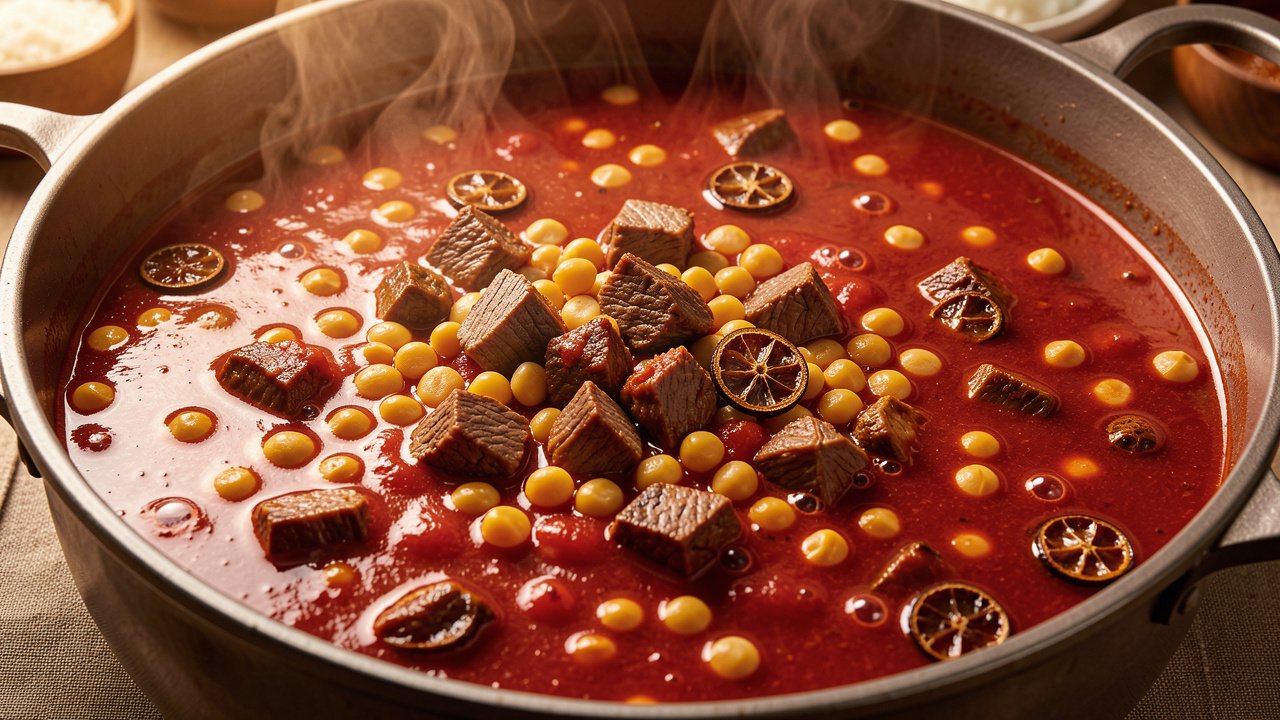
Add the chopped tomatoes, drained split peas, and pierced dried limes. Pour in enough hot water to cover by an inch, bring to a gentle boil, then lower the heat, cover, and simmer 60 to 80 minutes. Stir now and then until the meat is fork-tender and the split peas are soft but still whole, and the sauce has thickened.
Fry the Potato Straws
While the stew finishes, peel the potato and cut it into thin matchstick fries. Pat them dry, then fry in hot oil in a separate pan until golden and crisp, working in batches so they do not clump. Lift them onto paper towels and sprinkle lightly with salt. These go on top just before serving.
Adjust and Serve
Taste the stew and balance it: it should be savory and pleasantly tart from the dried lime. Adjust salt, and if it is too sharp add a small pinch of sugar. The sauce should coat a spoon, not run like soup. Ladle the gheimeh over steamed or saffron rice, pile the crispy potato straws over the top, and serve at once.
Chef’s Tips From Real Kitchen Testing
Pierce the dried limes before adding them and taste as the stew simmers. They can turn a sauce bitter if pressed too hard, so let them steep gently and squeeze only if you want more tartness.
Add the split peas after the meat has started to soften. Put them in too early and they dissolve; too late and they stay firm while the meat overcooks.
Fry the potato straws in a separate pan right before serving and season them the moment they come out of the oil, so they stay crisp on top of the warm stew.
Recipe Variations
Serving Suggestions
- Fluffy steamed or saffron basmati rice
- A spoonful of the crispy rice crust (tahdig)
- Fresh herbs and radishes on the side (sabzi khordan)
- A dollop of plain yogurt and pickled vegetables
Nutrition Facts
| Nutrient | Amount per serving |
|---|---|
| Calories | 390 |
| Protein | 26 g |
| Carbohydrates | 30 g |
| Fat | 18 g |
| Saturated Fat | 5 g |
| Fiber | 7 g |
| Sugar | 5 g |
| Sodium | 620 mg |
Values are estimates per serving and vary with the exact ingredients and brands you use. They do not include rice served alongside.
Make-Ahead Tips
Gheimeh actually improves overnight as the flavors meld, which makes it an ideal make-ahead dish. Cook the stew fully, cool it, and refrigerate. Fry the potato straws fresh just before serving so they stay crisp.
Storage, Freezing & Reheating
Common Mistakes to Avoid
Troubleshooting
Too sour or bitter? The dried limes over-steeped. Remove them, stir in a small pinch of sugar, and let the stew simmer a few more minutes to mellow.
Split peas still hard? They needed longer or an older batch needed soaking. Add a splash of hot water and simmer, covered, until soft.
Sauce too thin? Uncover and simmer to reduce, or mash a few of the split peas against the side of the pot to thicken it naturally.
A Note on Persian Cooking
A khoresh is a Persian stew built to be ladled over rice, and gheimeh is one of the most cherished of them all. The name itself is descriptive: “gheimeh” refers to the small dice the meat is cut into, while “khoresh” simply means a stew served over rice. Together the words tell you exactly what to expect, a stew of finely diced meat spooned over a mound of steaming grains.
Persian home cooking is a family of these slow, aromatic khoresh stews, each defined by its own signature note. Gheimeh is the tomato-and-split-pea one, sharpened with dried lime. It is easy to confuse with ghormeh sabzi, the deep-green khoresh built on a huge quantity of fresh herbs and beans, but the two taste worlds apart: ghormeh sabzi is herbal and earthy, while gheimeh is tomato-red and tart. If you enjoy this stew, the smoky eggplant of mirza ghasemi and the spiced gravy of muscat gosht travel the same comforting road.
What keeps gheimeh on the table for celebrations and everyday meals alike is its generosity. It stretches a modest amount of meat with humble split peas, feeds a crowd, and only gets better the next day, which is the heart of Persian hospitality. Serve it over fragrant saffron rice to make an ordinary evening feel like an occasion.