Italian Recipes
Rustic Hunter’s-Style Chicken Braise
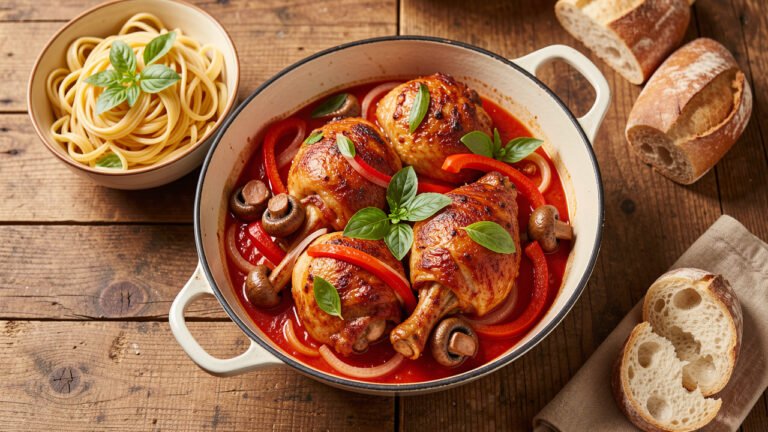
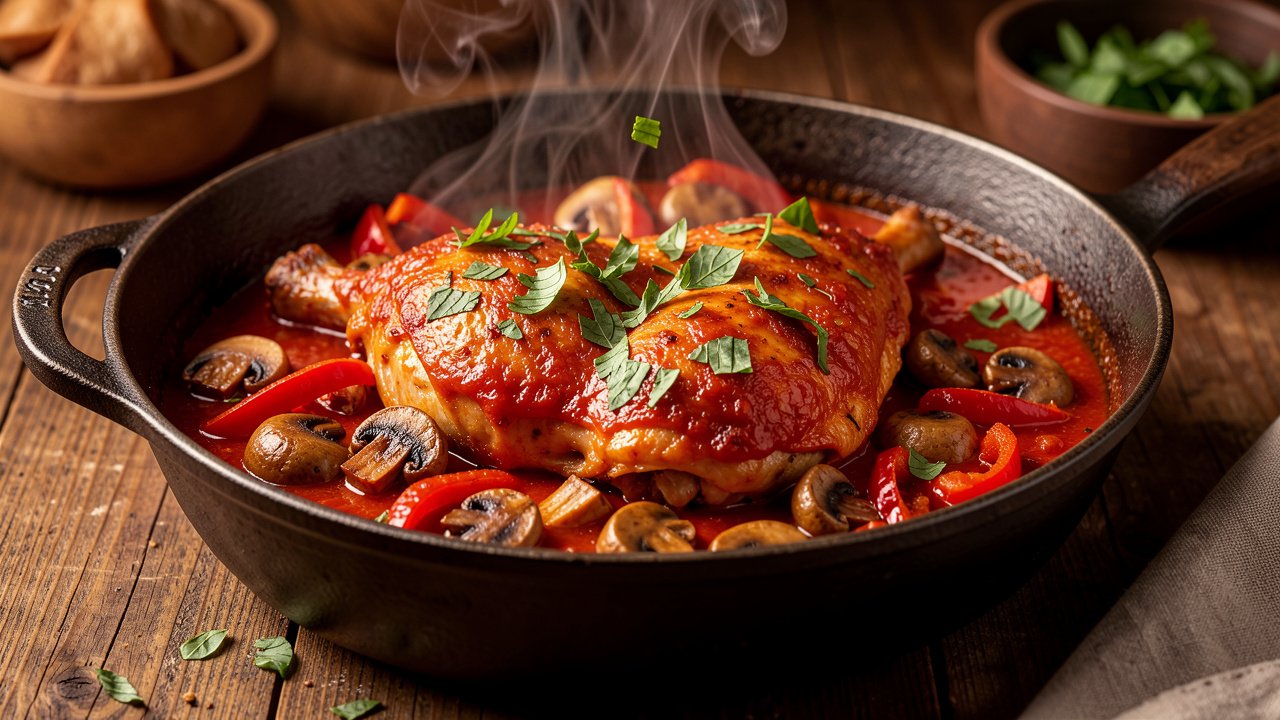
Chicken cacciatore is Italian comfort food at its most honest: a single pot of browned chicken and vegetables left to bubble in tomato until the kitchen smells like a Sunday afternoon. The name means hunter’s style, and the dish carries that spirit of using what is on hand, onion, sweet peppers, mushrooms, garlic, and a good pour of tomatoes, and coaxing them into something deeply savory.
The secret is not a long ingredient list but two habits: brown the chicken well so the skin builds flavor, and then let the braise go low and slow so the sauce thickens and the meat turns tender. Do that and you get a glossy, rich cacciatore that tastes far more involved than the handful of steps it takes.
Why This Chicken Cacciatore Works
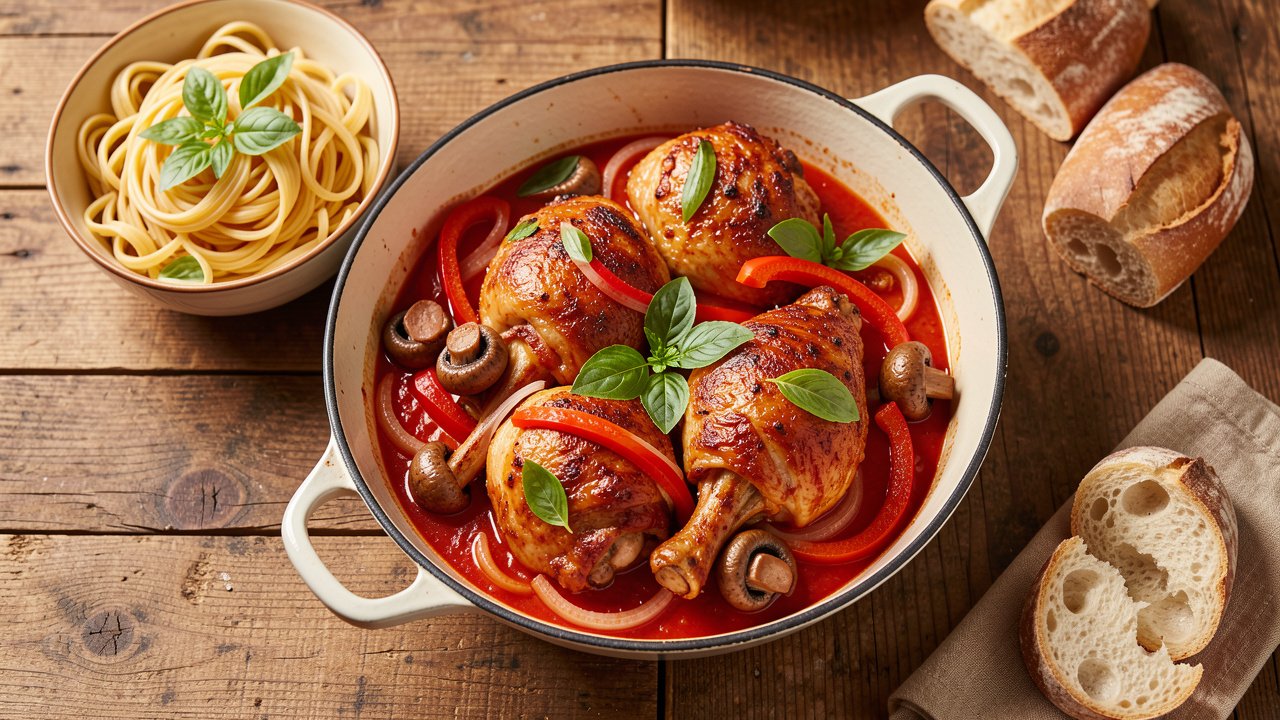
Cacciatore lives or dies on the browning. Searing the chicken skin-side down in a hot pan builds a deep, roasted flavor and leaves behind golden browned bits that dissolve into the sauce. Skip that step and you get pale, boiled-tasting chicken; take the extra ten minutes and the whole braise tastes richer.
The vegetables are cooked in stages, not dumped in at once. Onion and pepper soften first to sweeten, mushrooms follow to brown and give up their water, and only then do the garlic and tomatoes go in. Building the base this way means every layer contributes flavor instead of stewing into one flat note.
Bone-in, skin-on thighs are the cut of choice because they stay juicy through a long braise and their bones enrich the sauce. As they simmer half-submerged in tomato, the meat loosens from the bone and the sauce reduces to a glossy, spoon-coating consistency. A splash of broth in place of the classic splash of the omitted ingredient keeps everything savory and moist.
Finally, cacciatore is forgiving and improves with time. It can simmer gently while you set the table, holds beautifully on the stove, and tastes even better the next day once the flavors settle. That make-ahead friendliness is part of why it has stayed a weeknight and Sunday-supper staple across Italy.
Pro observation: The braise is ready when the sauce coats the back of a spoon and a swipe through the pan leaves a clear trail for a second. If it still looks thin, lift the lid and simmer a few more minutes to concentrate it.
Ingredients
Ingredient Notes & Substitutions
Chicken
Bone-in, skin-on thighs give the juiciest result and richest sauce. Drumsticks work too, or a cut-up whole chicken. Boneless thighs are fine and faster, but reduce the simmer time so they do not dry out. Pat the pieces dry before searing for the best browning.
Tomatoes
A can of crushed tomatoes gives a smooth, saucy braise. Whole peeled tomatoes crushed by hand give a chunkier, more rustic texture. In peak summer, about two pounds of very ripe fresh tomatoes, chopped, can stand in; just simmer a little longer to thicken.
Peppers & Mushrooms
Red bell pepper adds sweetness and color, though green or yellow work fine. Cremini mushrooms bring an earthy depth; white button mushrooms are a lighter swap. Both should brown properly before the tomatoes go in so they do not turn watery.
Broth & Herbs
A splash of chicken broth deglazes the pan and keeps the braise moist without any forbidden ingredients. Dried oregano and a bay leaf are the backbone; fresh basil or parsley stirred in at the end lifts the whole dish. A pinch of chili flakes is a classic optional kick.
Equipment
- Large deep skillet or Dutch oven
- Tongs
- Sharp knife and board
- Wooden spoon
- Lid or foil
- Measuring spoons and cup
Kitchen Measurement Converter
Need to convert an amount while you measure? Pick a category, enter a value, and the result updates instantly.
Step-by-Step Instructions
Cacciatore is a build-and-braise dish, so have everything sliced before you start. Warm your pasta water or bread while the sauce simmers so the whole meal lands together.
Prep and Season the Chicken
Pat the chicken thighs thoroughly dry and season them all over with about half the salt and the black pepper. Slice the onion and bell pepper, slice the mushrooms, and mince the garlic. Dry chicken and ready vegetables mean the searing and building go quickly without stalls.
Brown the Chicken
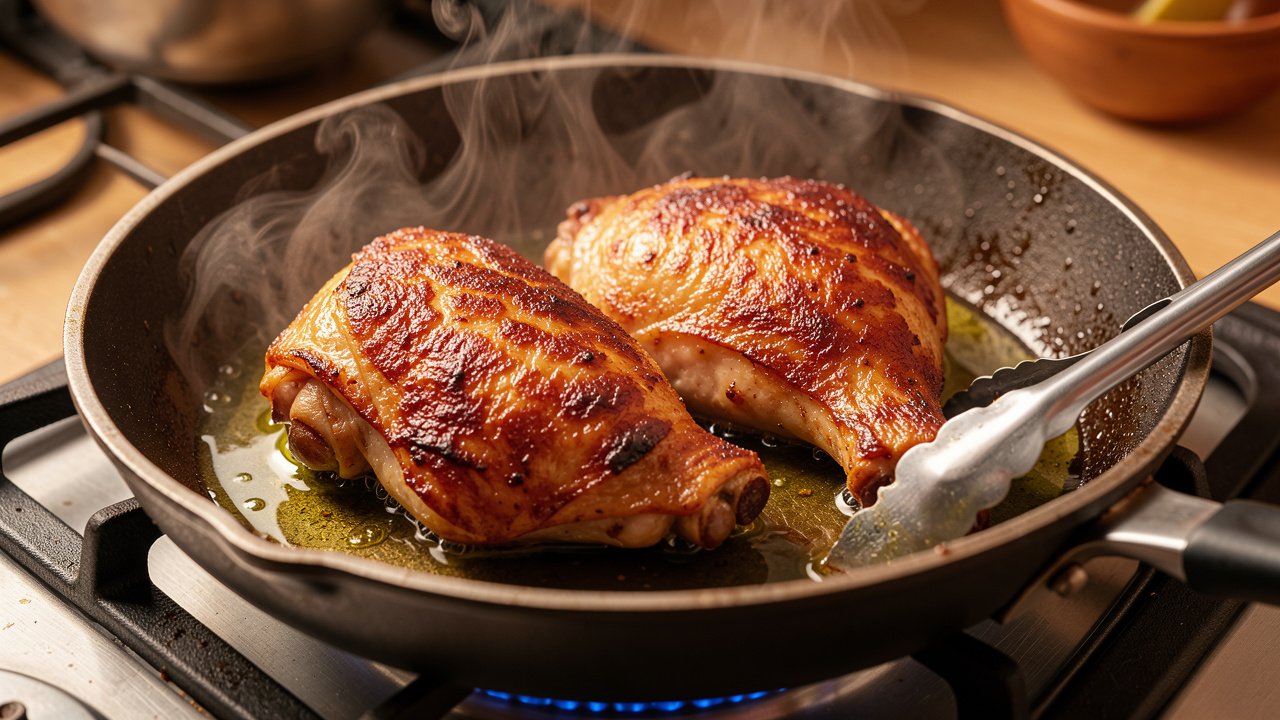
Heat the olive oil in a large deep skillet or Dutch oven over medium-high heat. Lay the chicken in skin-side down and sear undisturbed for 5 to 6 minutes, until deep golden, then flip and brown the other side for 2 to 3 minutes. Work in batches if needed, then set the chicken aside.
Soften the Vegetables
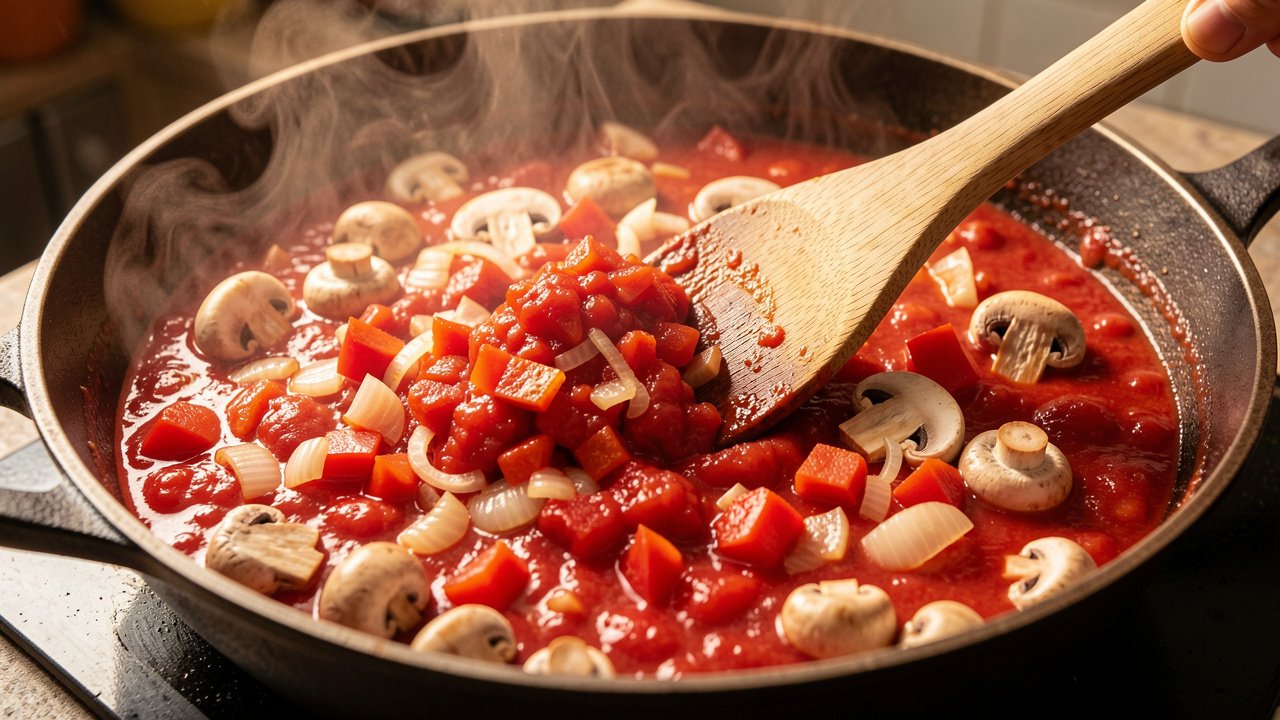
Lower the heat to medium and add the sliced onion and bell pepper to the same pan, cooking 4 to 5 minutes until they soften. Add the mushrooms and cook another 4 to 5 minutes, letting them brown and release their moisture. Stir in the garlic and oregano and cook for one minute until fragrant.
Build the Tomato Sauce
Pour in the chicken broth and scrape up any browned bits from the bottom of the pan. Add the crushed tomatoes, bay leaf, and the remaining salt, and stir to combine. Bring the sauce to a gentle simmer, tasting and adjusting the seasoning before the chicken goes back in.
Braise the Chicken
Nestle the browned chicken back into the sauce, skin-side up, along with any resting juices. The pieces should be about half-submerged. Cover partially and simmer gently over low heat for 30 to 35 minutes, spooning sauce over the chicken now and then, until the meat is tender and pulls easily from the bone.
Finish and Serve
Uncover for the last few minutes if the sauce needs to thicken, letting it reduce to a glossy coat. Remove the bay leaf, taste, and adjust the salt. Scatter torn fresh basil or chopped parsley over the top and serve hot over pasta or polenta, or with crusty bread to mop up the sauce.
Chef’s Tips & Troubleshooting
Dry the chicken and give it room in the pan. Crowding steams the pieces instead of searing them, and a proper golden crust is where cacciatore gets its depth.
Brown the mushrooms before the tomatoes go in. Adding them to an already-wet sauce leaves them pale and spongy rather than earthy and savory.
Keep the braise at a lazy simmer, not a hard boil. Low and slow keeps the chicken tender; a rolling boil can toughen the meat and split the sauce.
If it did not turn out right
Sauce too thin? Uncover and simmer a few extra minutes to reduce, or lift the chicken out and boil the sauce down before returning it.
Chicken tough? It needed more time, not less. Bone-in thighs turn tender only after the connective tissue breaks down, so keep simmering gently until it pulls from the bone.
Tastes flat? It usually wants salt and acid. Season the sauce, and a squeeze of lemon or a splash of broth at the end brightens everything.
Recipe Variations
Serving Suggestions
- Over pasta such as pappardelle or rigatoni
- Spooned over soft, creamy polenta
- With crusty bread to soak up the sauce
- A simple green salad to balance the plate
Nutrition Facts
| Nutrient | Amount per serving |
|---|---|
| Calories | 430 |
| Protein | 34 g |
| Carbohydrates | 16 g |
| Fat | 26 g |
| Saturated Fat | 6 g |
| Fiber | 4 g |
| Sugar | 8 g |
| Sodium | 720 mg |
Values are estimates per serving and vary with the exact ingredients and brands you use.
A Note on Chicken Safety
Chicken should always be cooked through. Braised thighs are done when the meat is tender and pulls easily from the bone, which corresponds to an internal temperature of at least 165 F (74 C) at the thickest part, away from the bone. A long, gentle simmer takes bone-in pieces well past that point, so they are both safe and meltingly tender. Refrigerate any leftovers within two hours, and reheat them until steaming hot all the way through before serving again.
Make-Ahead, Storage & Reheating
A Note on Italian Cooking
Chicken cacciatore belongs to Italy’s tradition of cucina povera, the resourceful home cooking that turns a few humble ingredients into something generous. Every region has its own version: some lean on peppers, some on mushrooms, some finish with olives, but all share the same rustic soul of meat slowly braised in tomato. It is the kind of dish that fills a pot, feeds a table, and only improves as it sits.
The name is the clue to its character. “Alla cacciatora” means “hunter’s style,” a nod to the rough-and-ready meals a hunter might throw together from what the day provided. That is why cacciatore is so adaptable and why it pairs so naturally with pasta, as in this Italian chicken and tomato pasta toss, or with a vegetable side like Sicilian caponata. One dish it is often confused with is chicken parmigiana, which is breaded and baked under melted cheese; cacciatore is instead a braise, with the chicken simmered in tomato sauce rather than crumbed.
What keeps cacciatore on tables everywhere is its forgiving nature. It scales up for a crowd, waits patiently on the stove, and welcomes whatever peppers, mushrooms, or herbs you have on hand, which is exactly the spirit of Italian home cooking.
Frequently Asked Questions
More Tomato Recipes to Try
Last updated: September 29, 2026