Trinidadian Recipes
Trini Saltfish Breakfast Salad
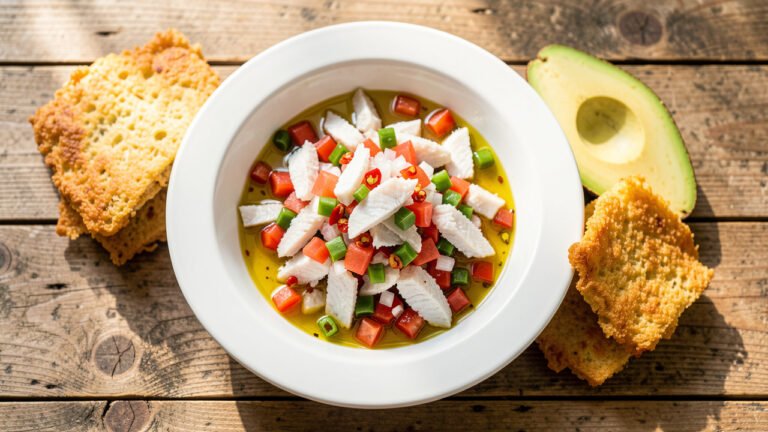
Buljol is the kind of dish that wakes you up. It is salty, sour, sweet, and a little fiery all at once, and because the vegetables go in raw, every bite has crunch and freshness. The name comes from words meaning burnt and mouth, a nod to the pepper, but a good buljol is really about balance rather than heat. The first time I made it I under-soaked the fish and it came out punishingly salty, so I learned to trust the taste test rather than the clock.
Why This Trinidadian Buljol Works
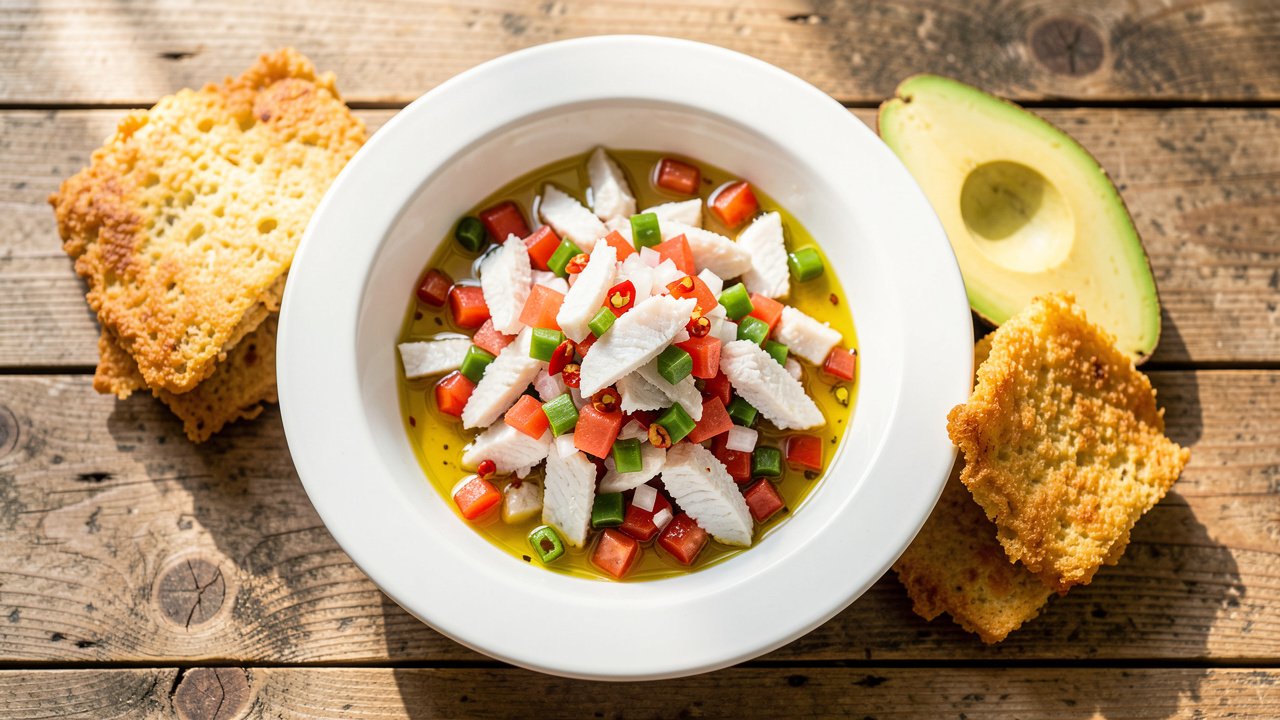
Buljol works because it leans on contrast rather than long cooking. The saltfish brings a deep, savory backbone, while the raw tomato, onion, and sweet pepper bring sweetness, moisture, and crunch. Olive oil coats everything so the salt does not feel harsh, and a squeeze of lime lifts the whole bowl. It is a salad built from opposites that end up in harmony.
The single most important step is de-salting the fish properly. Salt cod is preserved with a heavy cure, so it needs either an overnight soak with changes of water or a quick boil to draw the salt out. Get this right and the dish tastes seasoned; get it wrong and it tastes like the ocean. Everything else in the recipe is just chopping and tossing.
Keeping the vegetables raw is the other quiet secret. Trini cooks do not simmer buljol into a stew. The tomato stays juicy, the onion keeps its bite, and the pepper stays snappy, which is exactly why it feels so fresh at breakfast. If you cook it down, you lose the texture that makes it buljol.
It is also flexible and forgiving. You can dial the pepper up or down, add more lime for brightness, or fold in avocado for richness. Once you understand the balance of salt, acid, and crunch, you can adjust it to your own table every single time without a recipe in front of you.
Pro observation: Taste a small flake of the fish after de-salting before you build the salad. It should be pleasantly savory, not sharp. If it still bites, give it another rinse or a short second soak, because you cannot un-salt the bowl later.
Ingredients
Kitchen Measurement Converter
Quickly convert between common cooking measurements without leaving the recipe. Pick a category, enter a value, and the result updates instantly.
Ingredient Notes & Substitutions
Saltfish
Use boneless salt cod, sometimes labeled bacalao. It is a halal preserved fish, cured only with salt. If you can only find bone-in fillets, pick through carefully after de-salting and remove any bones and skin before flaking.
Tomatoes
Firm, ripe tomatoes hold their shape best in a raw salad. Dice them and, if they are very watery, scoop out some of the seeds so the buljol does not turn soupy as it sits.
Sweet Pepper
A crisp sweet pepper, sometimes called bell pepper, adds crunch and color. A mix of green and red looks and tastes great. Trini cooks often add a pimento pepper too for aroma without heat.
Chili and Lime
A minced hot pepper brings the signature kick, so add it in stages to suit your table. Fresh lime is the classic acid; if you are out, a splash of white vinegar works in a pinch.
Equipment
- Small saucepan or bowl
- Colander or sieve
- Sharp knife and board
- Large mixing bowl
- Fork for flaking
- Citrus juicer
Before You Start
1. De-salt the fish first. This is the one step you cannot rush. Either soak the saltfish overnight in cold water, changing the water two or three times, or boil it briefly and taste before you build the salad.
2. Dice everything the same size. Small, even pieces of tomato, onion, and pepper mean every forkful gets a balanced mix rather than one big chunk of onion.
3. Have the bake ready or planned. Buljol shines on warm fried or roasted bake, so time your bread so it is fresh when the salad is tossed.
Step-by-Step Instructions
De-Salt the Saltfish
If soaking, cover the saltfish with cold water and leave it overnight, changing the water two or three times. For the faster route, place the fish in a saucepan, cover with fresh water, bring to a boil, and simmer 12 to 15 minutes. Drain, cover with fresh water, and taste a flake. It should be savory, not sharp; if it still bites, repeat the boil once more.
Flake the Fish
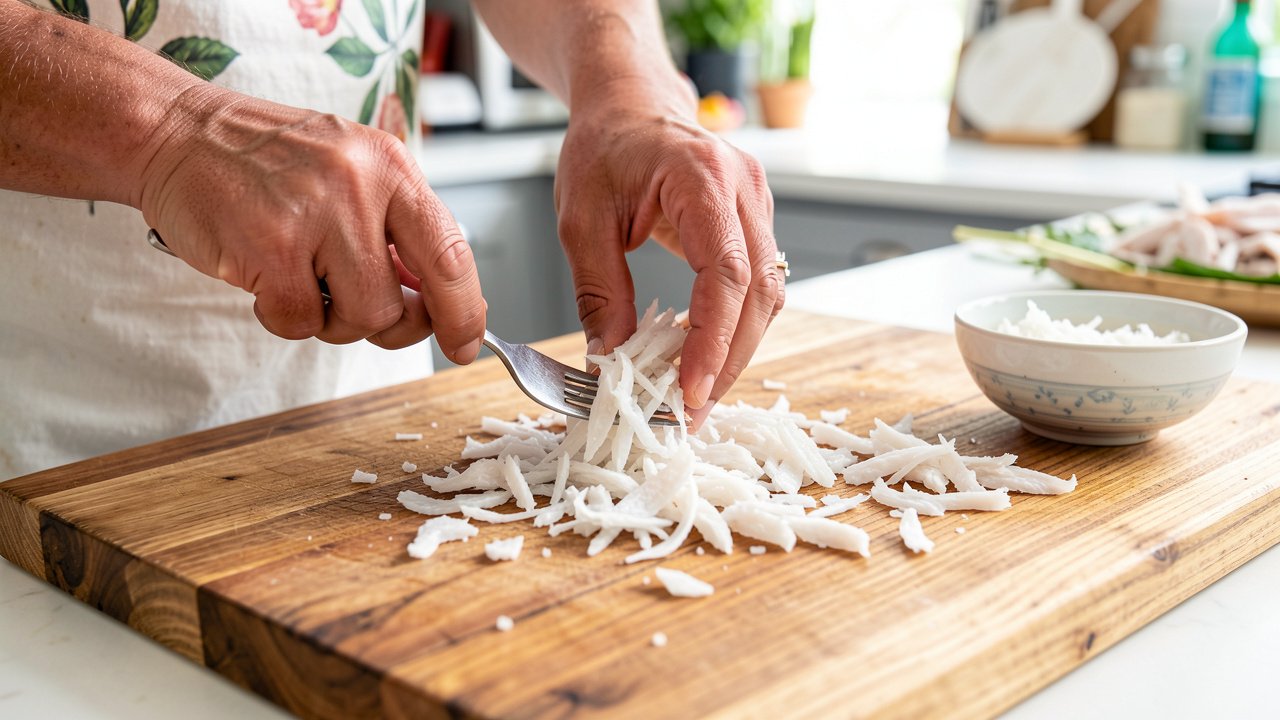
Let the de-salted fish cool enough to handle, then squeeze out the water. Using your fingers and a fork, pull it into small, thin flakes, removing any skin and stray bones as you go. You want fine shreds so the fish mixes evenly with the vegetables rather than sitting in clumps.
Dice the Vegetables
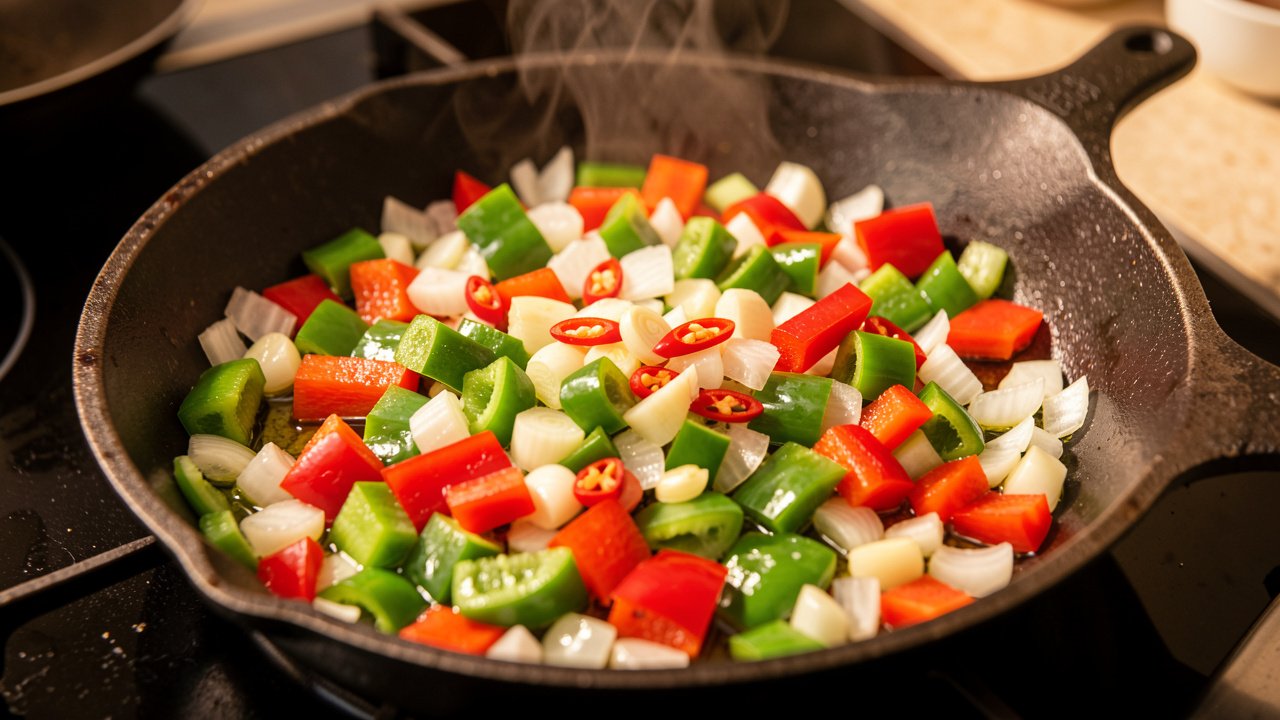
Finely dice the onion, tomatoes, and sweet pepper, keeping the pieces small and even. Mince the garlic and the hot chili, using as little or as much chili as you like. Chop the chadon beni or cilantro. Keep the tomato slightly separate for now so its juice does not soften the onion before you are ready.
Warm the Aromatics in Oil
Gently warm the olive oil in a small pan over low heat, then add the onion, garlic, sweet pepper, and chili. Let them soften for just 1 to 2 minutes so the raw onion edge mellows, then take the pan off the heat. This is a light warming, not a saute; the vegetables should stay crisp. For a fully raw, classic buljol you can skip the pan and simply drizzle the oil in cold.
Toss the Buljol
In a large bowl, combine the flaked fish with the diced tomato and the warm or cold aromatic oil. Add the lime juice, black pepper, and chopped chadon beni, then fold everything together gently so the fish keeps its texture. Taste and adjust, adding more lime for brightness or a little more chili for heat. It rarely needs salt.
Rest, Then Serve with Bake and Avocado
Let the buljol sit for 5 minutes so the flavors settle, then taste one more time. Serve it piled onto warm fried or roasted bake, with sliced avocado alongside. A final squeeze of lime and a scatter of fresh herbs right before serving keeps it looking and tasting bright.

Chef’s Tips From Real Kitchen Testing
Always taste the fish after de-salting, not after tossing. Buljol gets its seasoning almost entirely from the cure, so the fish sets the salt level for the whole bowl.
Dress it just before serving. If it sits too long, the tomato and onion weep and the salad turns watery, so build it close to the table.
Add the chili in stages. It is easy to overshoot the heat, and you can always add more, but you cannot pull it back out once it is in.
Recipe Variations
Serving Suggestions
- Warm fried bake or roasted bake
- Sliced ripe avocado on the side
- Coconut bake or sada roti
- Extra lime wedges and hot pepper sauce
Nutrition Facts
| Nutrient | Amount per serving |
|---|---|
| Calories | 250 |
| Protein | 22 g |
| Carbohydrates | 9 g |
| Fat | 15 g |
| Saturated Fat | 2.5 g |
| Fiber | 4 g |
| Sugar | 4 g |
| Sodium | 700 mg |
Values are estimates per serving and vary with how thoroughly the fish is de-salted and the brands you use.
Make-Ahead Tips
You can get most of buljol ready in advance without losing its fresh character. De-salt and flake the fish a day ahead and keep it covered in the fridge. Dice the pepper and onion and store them separately too. Then, when you are ready to eat, dice the tomato fresh and toss everything together with the oil and lime. Building it at the last minute keeps the vegetables crisp and the salad from turning watery.
Storage & Freshness
Common Mistakes to Avoid
Troubleshooting
Too salty? The fish was under-soaked. Rinse the flaked fish under cold water, or stretch the batch with extra tomato, pepper, and a little more oil to balance it.
Fish gone mushy? It was boiled too long or flaked while too hot. Next time simmer just until it separates easily and let it cool before shredding.
Salad too watery? The tomato was very juicy or it sat too long. Scoop out the tomato seeds next time and dress the buljol closer to serving.
A Note on Trinidadian Cooking
Trinidadian food is a true crossroads cuisine, blending African, Indian, Chinese, Indigenous, and European influences into something entirely its own. Buljol grew out of that history: preserved saltfish traveled well and stored without refrigeration, and Trini cooks brightened it with the island’s abundant tomatoes, peppers, and fresh herbs like chadon beni. The result is a breakfast that turns a humble pantry staple into something vivid. If you love bright, raw tomato dishes, you will find the same lively character in a good fresh tomato salsa, which shares buljol’s balance of acid, crunch, and gentle heat.
A Note on Saltfish and Food Safety
Salt cod is a fully cured fish, but because buljol is served with the fish raw after de-salting, a little care keeps it safe as well as tasty. De-salting is the key step: either soak the fish in cold water overnight, changing the water two or three times, or bring it to a boil for 12 to 15 minutes and taste before using. Boiling has the added benefit of a gentle heat treatment. Keep the de-salted fish chilled until you build the salad, work with clean hands and boards, and serve buljol within a couple of hours of tossing when it is at its brightest. Refrigerate any leftovers promptly and eat within two to three days.
Frequently Asked Questions
More Tomato Recipes to Try
Last updated: September 29, 2026