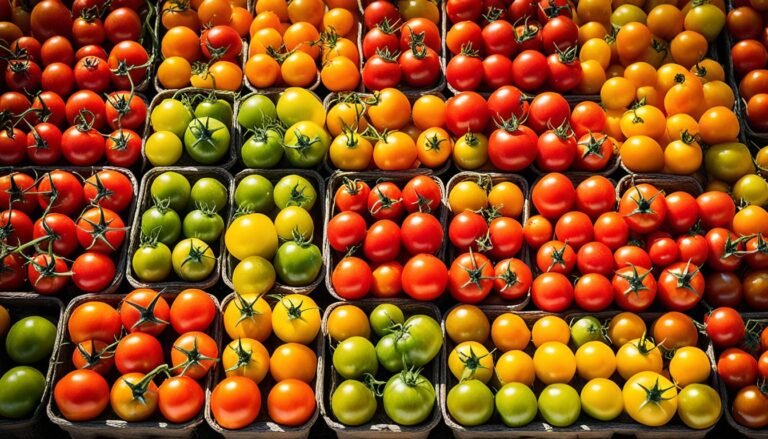
According to the CDC, only about 1 in 10 US adults eat the recommended amount of fruits and vegetables. Tomato supplements contain lycopene, an antioxidant pigment from tomatoes. They are one way to get lycopene, but they do not replace whole fruits and vegetables or deliver all of their health benefits.
Tomatoes and fruits like them get their bright red color from lycopene. It’s known for its antioxidant abilities. Research on lycopene is promising in some areas, but supplements have not been proven to prevent disease, and they cannot supply everything a varied diet does. This guide covers what the evidence shows, the safety points to know, and how to judge a product before you buy.
Key Takeaways
- Tomato supplements (lycopene extracts or tomato powders) are a convenient source of lycopene; whole tomatoes also provide vitamin C, potassium, and fiber.
- Lycopene is an antioxidant being studied for possible health benefits, including a role in cancer prevention, heart health, and sun protection; the evidence is mostly observational or from small trials and does not prove supplements prevent disease.
- Tomato supplements do not count toward the recommended daily intake of fruits and vegetables, which only about 1 in 10 US adults currently meet (CDC).
- In the US, the FDA does not approve dietary supplements before they are sold, so look for products with independent third-party testing (for example, a USP or NSF seal) and talk to your doctor or pharmacist before starting one.
- Cooked tomato products eaten with a little oil are a well-absorbed food source of lycopene; supplements are optional, not essential.
The Possible Benefits of Lycopene
Antioxidant Properties
Lycopene is an antioxidant. It helps neutralize free radicals. If our bodies have more free radicals than antioxidants, it can cause oxidative stress. This stress is connected to serious health problems. Among them are cancer, diabetes, heart disease, and Alzheimer’s. Studies show that lycopene may help keep this balance, but they have not shown that it protects people from these illnesses. Animal studies also suggest lycopene may limit damage from some environmental toxins, such as certain pesticides and monosodium glutamate (MSG); this has not been confirmed in humans.
Observational studies have looked at people who eat a lot of lycopene and found lower rates of lung and prostate cancers. In the long-running Health Professionals Follow-up Study of US men, those who ate tomato sauce regularly were less likely to be diagnosed with prostate cancer. Higher blood lycopene levels have also been linked with lower stroke risk, and people with metabolic syndrome who had higher blood lycopene had lower death rates during follow-up. These are associations: they do not prove that lycopene, or a supplement, caused the difference.
Lycopene has been widely studied, but supplements still call for care. For example, lycopene supplements might not mix well with some medications: WebMD advises checking with a doctor if you take medicine for heart disease, cancer, or skin conditions, and Healthline notes possible interactions with blood thinners and blood-pressure medications. Also, too much lycopene might turn our skin reddish-orange, a condition called lycopenodermia. One reported case involved a woman who drank about 2 liters of tomato juice a day for several years; her skin color returned to normal within a few weeks of cutting back.
Lycopene from food is considered safe, and no toxicity has been reported, but there is no official recommended daily intake. A review in the Canadian Medical Association Journal notes that processed tomato products supply much of the lycopene people eat. It’s in foods like tomato sauce, watermelon, and ketchup. Lycopene is absorbed better when tomatoes are cooked and eaten with a bit of oil.
Lycopene-rich foods can be a useful part of a healthy diet. Research on cancer risk, sperm quality, and sun sensitivity is encouraging but still limited, so lycopene should not be relied on to prevent disease.
“Lycopene is an antioxidant that may help limit the damaging effects of free radicals.”
Tomato Supplements and Cancer Prevention
Researchers are studying whether lycopene helps protect against certain cancers. A 2022 systematic review of human and animal studies found the strongest evidence for prostate cancer, where most observational studies but only a few intervention trials showed benefit. Evidence for breast cancer in humans is limited, and effects on kidney cancer have been seen only in animal studies.
Observational studies have linked high intakes of carotenoids, including lycopene, with a 32-50% lower risk of lung and prostate cancers. In the Health Professionals Follow-up Study of 47,365 US men followed from 1986 to 1998, those who ate two or more servings of tomato sauce a week had about a 23% lower risk of prostate cancer than those eating less than one serving a month (Giovannucci et al., Journal of the National Cancer Institute, 2002). Studies like these show a link, not proof that lycopene prevents cancer.
Laboratory and animal research has tested combinations such as tomato with broccoli, or lycopene with green tea, against prostate cancer, but these combinations have not been shown to protect people. A few small trials have looked at lycopene alongside prostate cancer treatment, with mixed results. Anyone with cancer should discuss supplements with their oncology team before taking them.
There is no good evidence that taking lycopene supplements daily lowers the risk of lung, prostate, or breast cancer. WebMD’s tomato monograph also notes a lack of good scientific evidence for using tomato to prevent cancer.
“Lycopene may have protective effects in cancer, cardiovascular, and neurodegenerative diseases, but human evidence is still limited.”
Heart Health and Lycopene
Research suggests lycopene, an antioxidant, may play a role in heart health. A meta-analysis of 25 observational studies (Cheng et al., Critical Reviews in Food Science and Nutrition) found that people with the highest lycopene intake or blood levels had a 26% lower risk of stroke, a 14% lower risk of cardiovascular disease (including heart disease), and a 37% lower risk of death than those with the lowest. These studies show associations, not cause and effect. Separately, a 2013 meta-analysis of six small trials found lycopene supplements lowered systolic blood pressure by about 5 mmHg on average, with larger effects above 12 mg a day and in people with raised blood pressure. If you have high blood pressure, talk to your doctor before adding a supplement, and do not use one in place of prescribed medication.
Lycopene may also affect blood lipids. A 2011 meta-analysis of intervention trials found that about 25 mg or more a day lowered LDL (bad) cholesterol by about 10%. Interestingly, cooking tomatoes makes lycopene more available to our bodies than eating them raw.
Many studies have explored lycopene and heart health, including effects on artery health, heart function, and cholesterol. Observational studies link eating more tomatoes and lycopene with fewer heart problems, though results from human trials have been mixed. In animal research, intravenous lycopene protected heart tissue from certain injuries.
Scientists have looked a lot at how our bodies use lycopene. They found some forms are better absorbed than others. Still, lycopene from food or supplements seems to work the same for us. This is good when we’re talking about things like tomato paste.
In short, lycopene-rich foods like tomatoes may support heart health as part of a balanced diet, but they have not been proven to prevent heart disease or early death.
| Study | Findings |
|---|---|
| Jacques et al. | Relationship of lycopene intake and consumption of tomato products to incident cardiovascular disease (CVD) |
| Kohlmeier et al. | Lycopene is linked to reducing myocardial infarction risk |
| Ross et al. | Bioavailability and metabolism of lycopene in humans studied through accelerator mass spectrometry |
| Failla et al. | In vitro micellarization and intestinal cell uptake of cis isomers of lycopene exceed those of all-trans lycopene |
| Richelle et al. | Bioavailability of lycopene is similar in humans when obtained through food-based formulation or tomato paste |
| Riedl et al. | Dietary fibers reduce the absorption of carotenoids in women, impacting lycopene uptake |
| Tong et al. | Intravenous administration of lycopene exhibits protective effects against myocardial ischemia-reperfusion injury |
| Stimpson and Lackan | Serum carotenoid levels vary by marital status, potentially indicating lifestyle-related impact on lycopene levels |
Research on lycopene and heart health is growing, but much of it is observational. Tomatoes and tomato products can be a good choice within a heart-healthy diet; higher intake is linked with lower rates of heart disease, stroke, and early death, without proof that lycopene is the cause.
“Lycopene’s antioxidant properties may also help improve heart health and reduce the risk of heart disease and stroke.”
Tomato Supplements for Sun Protection
Tomatoes may also play a small role in how skin responds to the sun. Lycopene, an antioxidant in tomatoes, has been studied for its effect on UV-induced skin damage. In one small trial, adults who ate 40 g of tomato paste with olive oil daily for 10 weeks had about 40% less skin reddening after UV exposure than a control group (Stahl et al., Journal of Nutrition, 2001).
The sun’s UV rays can really hurt our skin, causing sunburns and more. Lycopene may reduce some of these effects. Early laboratory research showed a tomato extract protected skin cells from UV and reduced certain reactions. Some products combine tomato and rosemary extracts, but evidence for these combinations is limited.
Early research suggests tomato supplements may support the skin’s natural defenses against UV and influence how skin cells respond to it, but the effects are modest.
Even though tomato supplements help, they’re not enough on their own. Always use sunscreen. A mix of lycopene and other carotenoids fights UV better than lycopene only. Putting tomato products on the skin might help heal wounds, make collagen, and ease skin problems, but we need more proof.
In short, tomato supplements may add, at most, a small extra layer of sun defense. Don’t forget your regular sunscreen and sun-safe habits; they remain the main ways to protect your skin, with dietary antioxidants as a minor extra.
Tomato-based Supplements to Protect fromUV Damage andCarotenoids and Antioxidants in Skin HealthCrystal Tomato vs. Heliocare: Comparing Skin

Small studies suggest tomato supplements may offer modest sun protection by reducing some markers of UV damage. Remember, supplements are extra, not a sunscreen replacement. They work with sunscreen for better skin health and protection.
Conclusion
Tomato supplements with lycopene are a convenient source of an antioxidant that researchers continue to study. Observational research links higher lycopene intake with lower rates of certain cancers and heart disease, and small trials suggest modest effects on cholesterol, blood pressure, and sun sensitivity. None of this proves that supplements prevent disease, and food remains the preferred way to get lycopene, especially cooked tomato products eaten with a little oil.
A recent study in 11 trained male athletes compared one week of tomato powder, isolated lycopene, and a placebo before hard exercise. Tomato powder improved markers of antioxidant capacity and exercise-related oxidative stress compared with placebo, but an independent expert noted that the differences between tomato powder and lycopene alone were not statistically significant. With only 11 participants, the results need confirming in much larger studies.
If you are considering lycopene from tomato supplements, keep a few safety points in mind. In the US, the FDA does not have the authority to approve dietary supplements before they are sold, and it generally does not approve supplement claims before they appear on labels. Supplements can also interact with medicines, so the FDA advises talking to your doctor, pharmacist, or other health care professional first. This is especially important if you take blood thinners or blood-pressure medication, are being treated for cancer, or are pregnant or breastfeeding, when food amounts are the safer choice.
FAQ
What are the health benefits of tomato supplements enriched with lycopene?
Tomato supplements with lycopene may offer some health benefits. Observational studies link lycopene with lower rates of some cancers and heart disease, and small trials suggest modest sun protection, but supplements have not been proven to prevent disease.
How does lycopene’s antioxidant properties protect the body?
Lycopene is an antioxidant. It helps neutralize free radicals and reduce oxidative stress, which is linked to conditions such as cancer, diabetes, heart disease, and Alzheimer’s. Whether lycopene protects people from these conditions has not been proven.
Can lycopene help prevent certain types of cancer?
This has not been proven. Observational studies link higher lycopene intake with lower rates of some cancers, most consistently prostate cancer, while evidence for breast and kidney cancer comes mainly from laboratory and animal studies. Lycopene should not replace cancer screening or treatment.
How can lycopene improve heart health?
Lycopene’s antioxidants may support heart health. A 2011 meta-analysis found that about 25 mg or more a day lowered LDL (bad) cholesterol by about 10%; effects on good cholesterol are less clear. Talk to your doctor before using supplements alongside heart or blood-pressure medication.
Does lycopene provide sun protection?
Research indicates lycopene can ease skin redness from UV rays. But remember, it’s not a substitute for sunscreen.
Source Links
- https://www.goodhousekeeping.com/health-products/a46366635/balance-of-nature-review/
- https://www.innerbody.com/best-fruit-and-vegetable-supplements
- https://www.healthline.com/nutrition/lycopene
- https://www.webmd.com/diet/health-benefits-lycopene
- https://www.ncbi.nlm.nih.gov/pmc/articles/PMC9741066/
- https://www.ncbi.nlm.nih.gov/pmc/articles/PMC3850026/
- https://www.webmd.com/vitamins/ai/ingredientmono-900/tomato
- https://naturesweet.com/lycopene-and-your-heart/
- https://www.ncbi.nlm.nih.gov/pmc/articles/PMC9147660/
- https://www.ncbi.nlm.nih.gov/pmc/articles/PMC8880080/
- https://www.learnskin.com/articles/tomato-based-supplements-to-protect-from-uv-damage-and-photo-aging/
- https://www.fundamentalaestheticclinic.com.sg/post/crystal-tomato-vs-heliocare
- https://www.ncbi.nlm.nih.gov/pmc/articles/PMC5506060/
- https://jissn.biomedcentral.com/articles/10.1186/s12970-021-00415-7
- https://www.ncbi.nlm.nih.gov/pmc/articles/PMC8869745/
- https://www.nutraingredients-usa.com/Article/2021/03/02/Tomato-powder-beats-isolated-lycopene-in-study-but-expert-questions-scope-of-conclusions