Sudanese Recipes
Rich Tomato and Beef Stew
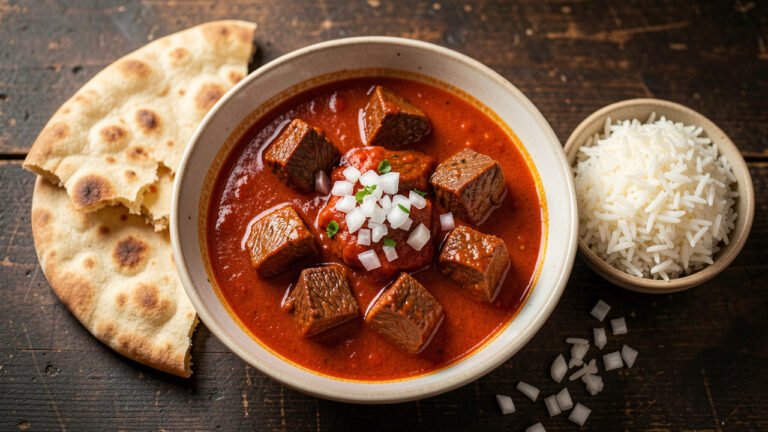
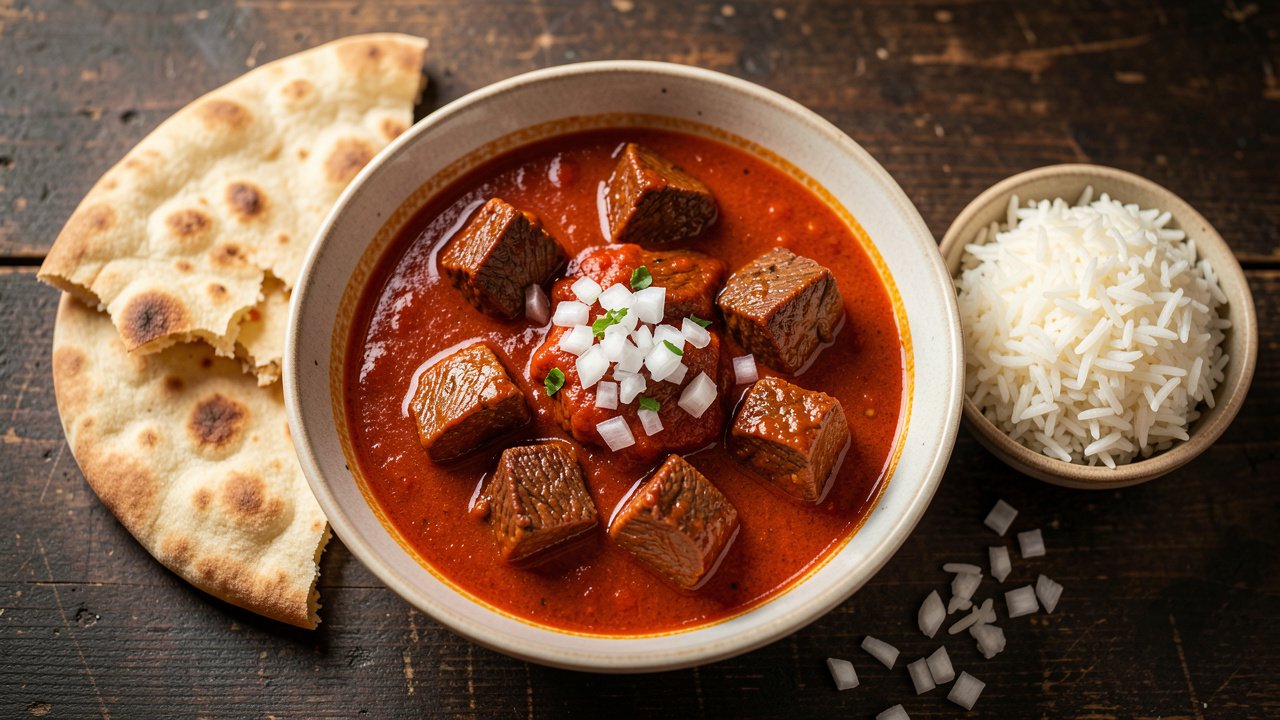
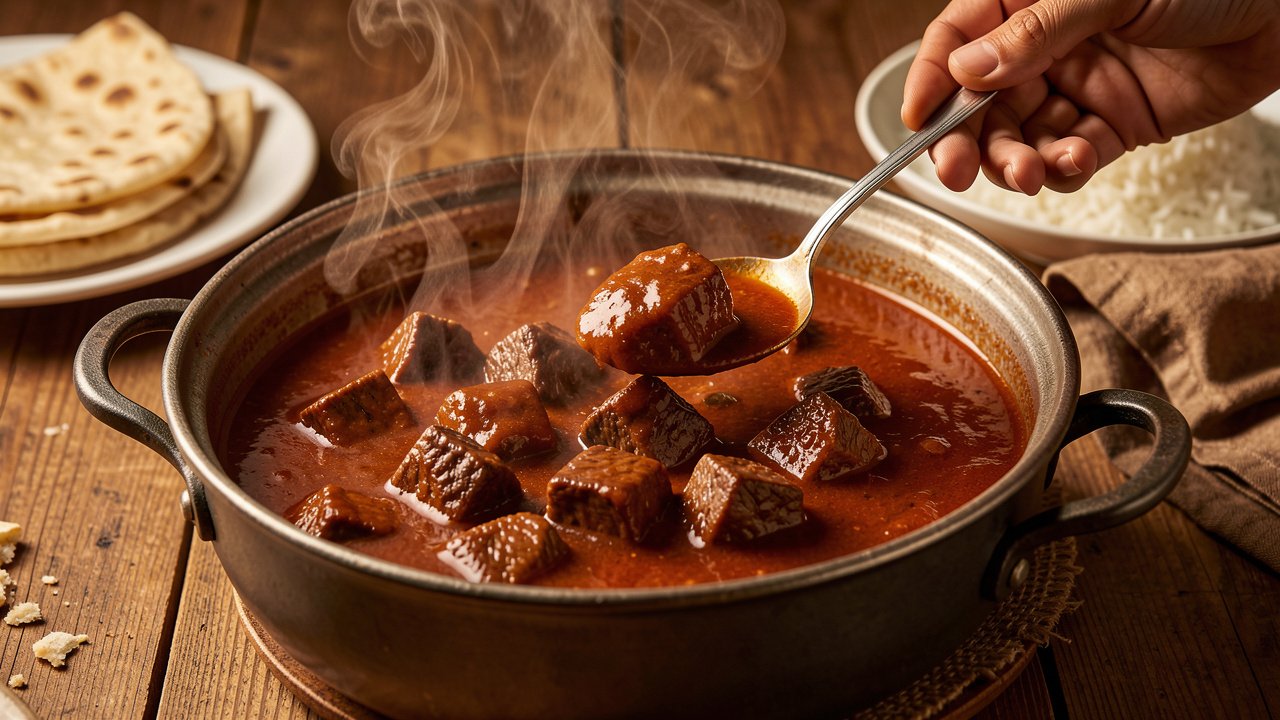
Dama is the kind of stew that defines a Sudanese kitchen on an ordinary weeknight. It is not fancy, and it does not need to be. A pot of onions, a generous spoon of tomato paste, a handful of warm ground spices, and some good beef become something greater than the sum of their parts once you give them time on the stove. The reward for that patience is a thick, red-brown gravy that clings to every piece of meat.
The first time I made dama, I was in too much of a hurry. I crowded the pan with cold beef, rushed the tomato paste, and pulled the pot off the heat after forty minutes because I was hungry. The result was pale, thin, and chewy. The lesson stuck: dama rewards a slow hand. Brown the beef properly, cook the tomato paste until it darkens, and then let the stew simmer gently until the meat surrenders.
Why This Sudanese Dama Works
Dama is built on three simple moves done well: browning the beef, cooking the tomato paste, and braising low and slow. Each stage builds a layer of flavor, and skipping any one of them leaves a noticeable gap in the finished stew. When you respect all three, a short list of pantry staples turns into a gravy with real depth.
Browning is where the savory backbone comes from. When the beef hits a hot, dry-ish pan, its surface darkens and develops the deep, roasted notes that plain simmering can never create. That crust also leaves fond stuck to the bottom of the pot, and every bit of it dissolves back into the sauce later.
Cooking the tomato paste is the step most home cooks rush. Frying the paste in oil with the onions for a couple of minutes drives off its tinny, raw edge and concentrates it into something sweet and almost caramel-dark. This is what gives dama its signature red-brown color rather than a bright, thin red.
Then comes the braise. A gentle, covered simmer breaks down the tough connective tissue in stewing beef into soft gelatin, which is exactly what makes the meat tender and the gravy silky. There is no shortcut for this; it is simply time and low heat doing quiet work.
Pro observation: The sauce is ready when a spoon dragged across the bottom of the pot leaves a trail that fills in slowly, and a thin layer of oil pools at the surface. That sheen tells you the tomato has cooked through and the gravy has reduced properly.
Ingredients
Kitchen Measurement Converter
Quickly convert between common cooking measurements without leaving the recipe. Pick a category, enter a value, and the result updates instantly.
Ingredient Notes & Substitutions
Beef
Use a well-marbled cut meant for slow cooking, such as chuck or shoulder, cut into even 1-inch cubes. Lean cuts dry out during the long simmer, while a little marbling keeps the meat juicy and enriches the gravy.
Tomato Paste
The paste is the heart of dama and gives the sauce its color and body. Fresh tomatoes add brightness on top of it, but the paste does the heavy lifting. Do not swap it out for ketchup, which is too sweet and sharp.
Warm Spices
Black pepper, cardamom, cumin, and coriander are the classic dama profile. Ground cardamom fades fast, so buy it in small amounts. A pinch of it goes a long way and gives the stew its distinctive fragrance.
Tomatoes
Ripe, red tomatoes freshen the paste-based sauce. Out of season, half a 14-ounce can of chopped tomatoes works well and is often more reliable than pale winter ones. Chop them small so they melt into the gravy.
Equipment
- Heavy pot or Dutch oven
- Wooden spoon
- Sharp knife and board
- Tongs
- Measuring spoons
- Small bowl for spices
Before You Start
1. Pat the beef dry. Blot the cubes with a paper towel before browning. Dry meat sears and colors instead of steaming in its own moisture, which is the difference between gray and golden.
2. Measure the spices together. Combine the black pepper, cardamom, cumin, and coriander in a small bowl so they can go into the pot in one confident move once the base is ready.
3. Set aside enough time. The braise is unhurried. Start the stew when you have a clear hour and a half, and let it simmer while you make kisra, gurasa, or rice.
Step-by-Step Instructions
Brown the Beef
Pat the beef cubes dry and season with a little salt. Heat 2 tablespoons of the oil in a heavy pot over medium-high heat. Working in batches so the pot is not crowded, brown the beef on all sides, about 3 to 4 minutes per batch. Transfer the browned beef to a plate and set it aside.
Build the Onion and Garlic Base
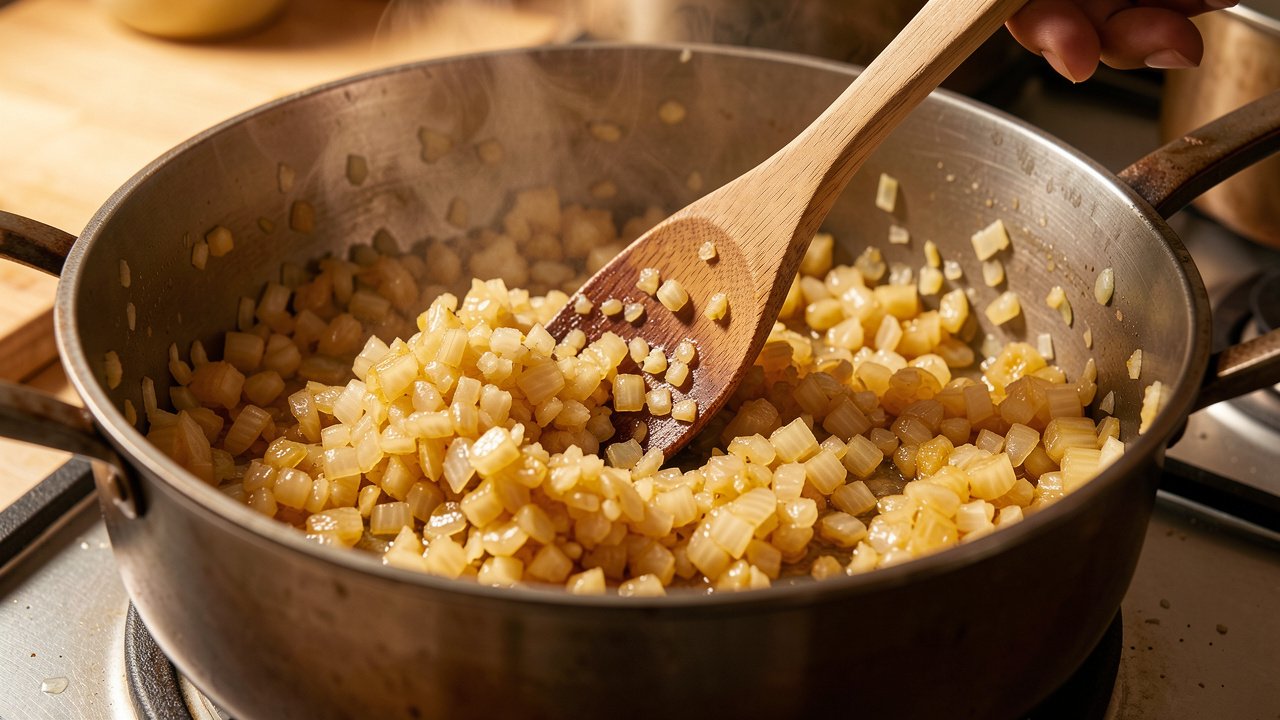
Lower the heat to medium and add the remaining tablespoon of oil. Add the chopped onions and cook 8 to 10 minutes, stirring often, until soft and deeply golden. Stir in the minced garlic and cook 1 minute more, until fragrant and no longer raw.
Bloom the Spices and Tomato Paste
Add the black pepper, cardamom, cumin, and coriander to the onions and stir for 30 seconds until fragrant. Add the tomato paste and cook, stirring constantly, for 2 to 3 minutes until it darkens from bright red to a deep brick color and smells sweet rather than sharp.
Add Tomatoes and Return the Beef
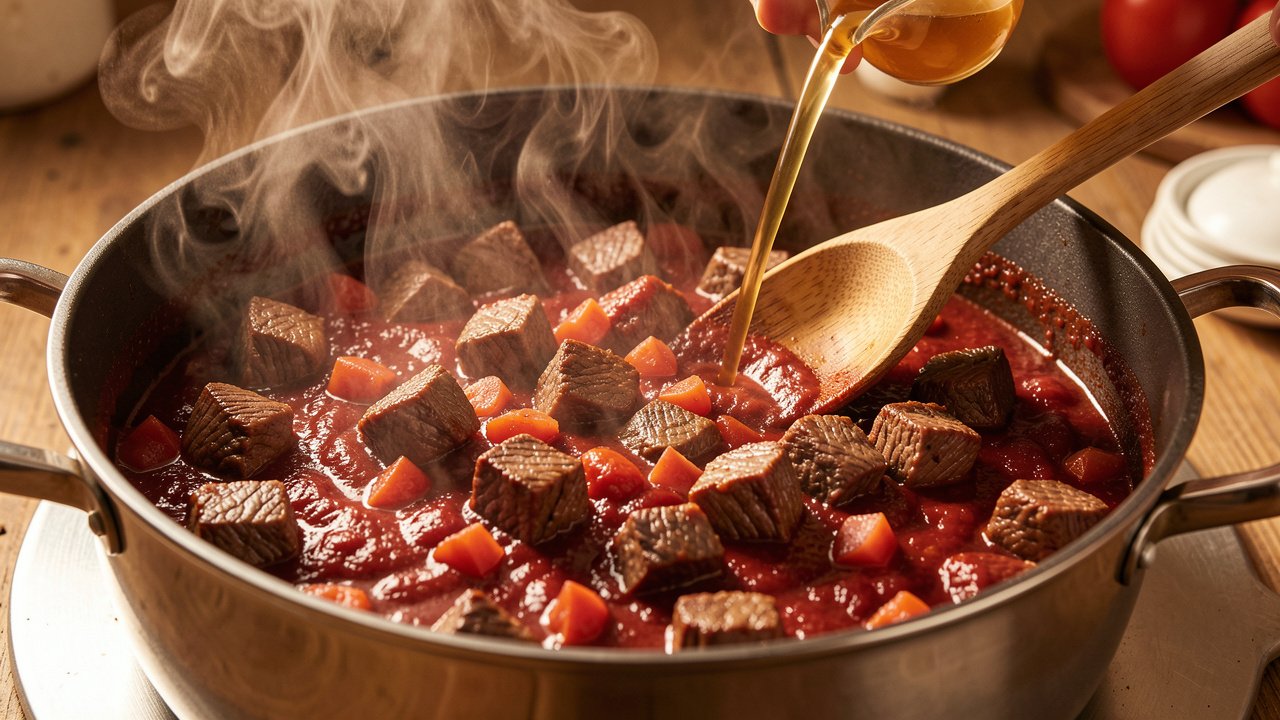
Stir in the chopped fresh tomatoes and cook 5 minutes until they soften and release their juices. Return the browned beef and any resting juices to the pot, then pour in the water or broth and add the salt. Stir well, scraping up the browned bits from the bottom.
Braise Low and Slow
Bring the pot to a gentle simmer, then cover and reduce the heat to low. Cook 75 to 90 minutes, stirring occasionally, until the beef is fork-tender. If the sauce looks too dry along the way, add a splash of hot water; if it stays too thin near the end, uncover for the last 15 minutes to reduce.
Finish and Serve
Taste the gravy and adjust with more salt or pepper. The sauce should be thick, glossy, and coating the beef, with a little oil pooling at the surface. Let it rest off the heat for a few minutes, then serve hot with kisra, gurasa, or steamed rice.
Chef’s Tips From Real Kitchen Testing
Brown the beef in batches. Crowding the pot traps steam, and the meat boils gray instead of forming the dark crust that flavors the whole stew.
Fry the tomato paste until it darkens. Two or three minutes in the oil transforms it from raw and tinny into sweet and deep, and it is the secret to dama’s color.
Keep the braise at a bare simmer. A hard boil toughens the meat and can dry out the sauce; slow, lazy bubbles give you tender beef every time.
Recipe Variations
Serving Suggestions
- Kisra, the thin Sudanese fermented flatbread
- Gurasa, a soft, thick griddle bread
- Steamed white rice to soak up the gravy
- A simple salad of tomato, cucumber, and onion
Nutrition Facts
| Nutrient | Amount per serving |
|---|---|
| Calories | 380 |
| Protein | 32 g |
| Carbohydrates | 14 g |
| Fat | 22 g |
| Saturated Fat | 7 g |
| Fiber | 3 g |
| Sugar | 7 g |
| Sodium | 640 mg |
Values are estimates per serving and vary with the exact ingredients and brands you use.
Make-Ahead & Beef Food Safety
Dama is an excellent make-ahead dish, because the flavors deepen overnight in the fridge. Cook it a day early, cool it quickly, and refrigerate. Reheat gently on the stove, adding a splash of water to loosen the gravy, which thickens as it sits.
Food safety note: Refrigerate cooked dama within two hours of cooking. Cook fresh beef to a safe minimum internal temperature of 160 F (71 C), though stewing cubes only become truly tender after a long braise well beyond that point, around 90 minutes at a gentle simmer. When reheating leftovers, bring the stew back to a full simmer, at least 165 F (74 C) throughout, before serving.
Storage, Freezing & Reheating
Common Mistakes to Avoid
Troubleshooting
Beef still tough? It simply needs more time. Return it to a low simmer and keep cooking, checking every 15 minutes until a fork slides in easily.
Sauce too thin? Uncover the pot and simmer to reduce, or lift the beef out and boil the gravy down for a few minutes before returning it.
Gravy tastes flat? It usually needs salt and a fresh grind of black pepper. A pinch more cumin near the end can also wake it up.
A Note on Sudanese Cooking
Sudanese home cooking leans on a small pantry of onions, tomato, and warm ground spices used with confidence. Stews like dama are made in one pot, meant to be shared, and almost always served with a bread that doubles as a utensil, whether the thin fermented kisra or the softer gurasa. Cardamom and cumin recur across savory and sweet dishes alike, giving the food its unmistakable aroma. If you enjoy building meals around a good tomato base, browse more ideas in our tomato recipes collection.
Frequently Asked Questions
More Tomato Recipes to Try
Last updated: September 29, 2026