Beef Recipes
Juicy Sunday Roast, Pulled at 125F
Last updated: September 29, 2026
Most dry roast beef is not a recipe problem. It is a thermometer problem. People still cook this roast to 160F because that is what their mother’s cookbook said, and by then a lean beef loin has squeezed out most of its juice.
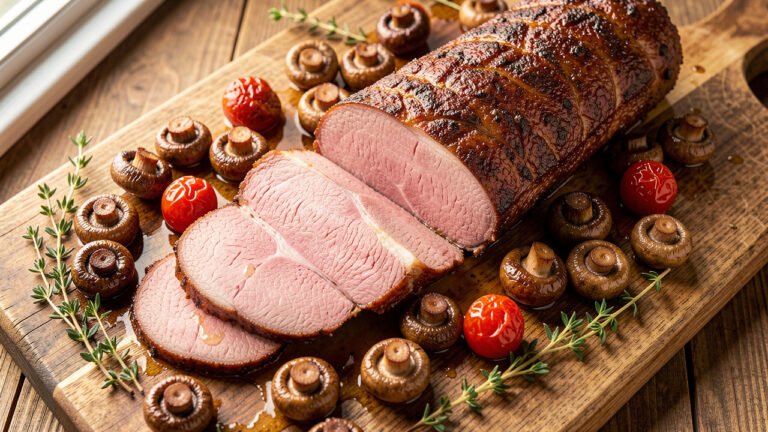
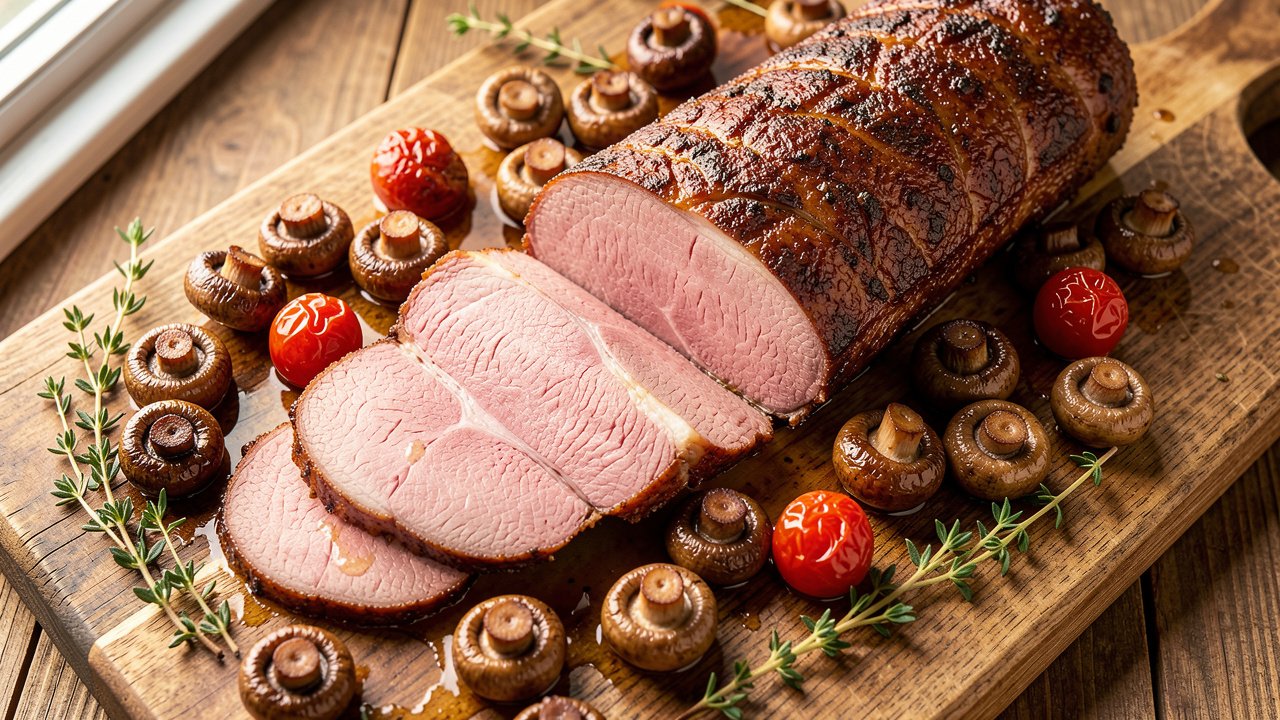
This version fixes that with three moves: a dry brine the day before, a hard sear for color, and a moderate oven with a thermometer in the thickest part. The mushrooms and tomatoes cook in the same pan and turn the drippings into a sauce.
Why This Roast Beef With Mushrooms and Tomatoes Works
A beef loin roast is one of the leanest roasts in the butcher case. There is very little fat inside the muscle to keep it moist, so the meat has almost no buffer once it passes the target temperature. That single fact drives every choice in this recipe.
The dry brine goes on 12 to 24 hours ahead. Salt has time to travel into the meat instead of sitting on the surface, and the uncovered fridge time dries the outside so it browns fast instead of steaming.
The mushrooms and tomatoes are not just a side. Mushrooms give the pan a deep savory backbone, and the tomatoes break down into a light, acidic sauce that cuts through a rich roast. Together they keep a lean cut from tasting plain.
Pro observation: Watch the pan, not the clock. When the mushrooms stop hissing and start squeaking against the pan, their water is gone and the browning is about to begin.
Beef Loin Roast Is Not Beef Tenderloin
These two cuts get mixed up at the meat counter every single day, and the mistake ruins dinner. A beef loin roast is a wide, thick roast, usually 2 to 4 pounds, often sold with a fat cap on one side. This recipe uses a 3-pound roast, which feeds 6 with slices left over for sandwiches.
Beef tenderloin is a different muscle entirely. It is narrow, about as thick as your wrist, weighs around 1 pound, and roasts in roughly 20 minutes. If you buy a tenderloin and follow the timing below, it will be badly overcooked long before the hour is up.
The tell at the store is the shape. If it is flat and wide with a white fat layer, it is the loin roast. If it is skinny, tapered, and dark red all over, it is tenderloin.
Ingredients
Kitchen Measurement Converter
Quickly convert between common cooking measurements without leaving the recipe. Pick a category, enter a value, and the result updates instantly.
Ingredient Notes & Substitutions
The Roast
Ask for a center-cut boneless loin with the fat cap left on. Score the fat in a diamond pattern about a quarter inch deep so it renders and bastes the lean meat underneath as it cooks.
Mushrooms
Cremini have more flavor than white button and hold their shape better. Wipe them clean rather than soaking them, and quarter anything larger than a walnut so the pieces brown evenly.
Tomatoes
Cherry or grape tomatoes are the easy choice because they slump into a sauce without turning watery. In peak season, 3 chopped plum tomatoes work too. Skip large slicing tomatoes here.
Salt and Liquid
Use coarse kosher salt for the dry brine so it dissolves slowly and evenly. Beef broth with a splash of balsamic vinegar deglazes best, and low-sodium chicken stock adds body to the finished pan sauce.
Equipment
- Instant-read thermometer
- Heavy roasting pan or skillet
- Wire rack and sheet pan
- Sharp carving knife
- Tongs
- Cutting board with a groove
Before You Start
1. Salt the day before. The dry brine needs at least 12 hours to do anything useful, so plan backward from dinner.
2. Take the roast out early. Let it sit on the counter 45 minutes before it goes in the oven. A fridge-cold center cooks unevenly and takes much longer to come up.
3. Test your thermometer. Stick it in ice water; it should read 32F. If it is off by several degrees, so is your roast.
Step-by-Step Instructions
Dry Brine and Score the Fat Cap
Pat the roast completely dry. Score the fat cap in a diamond pattern, cutting into the fat but not into the meat. Rub the whole roast with kosher salt and black pepper.
Set it on a wire rack over a sheet pan and refrigerate uncovered for 12 to 24 hours. The surface will look dry and slightly tacky the next day. That is exactly what you want, because dry meat browns and wet meat steams.
Sear the Roast for Crust
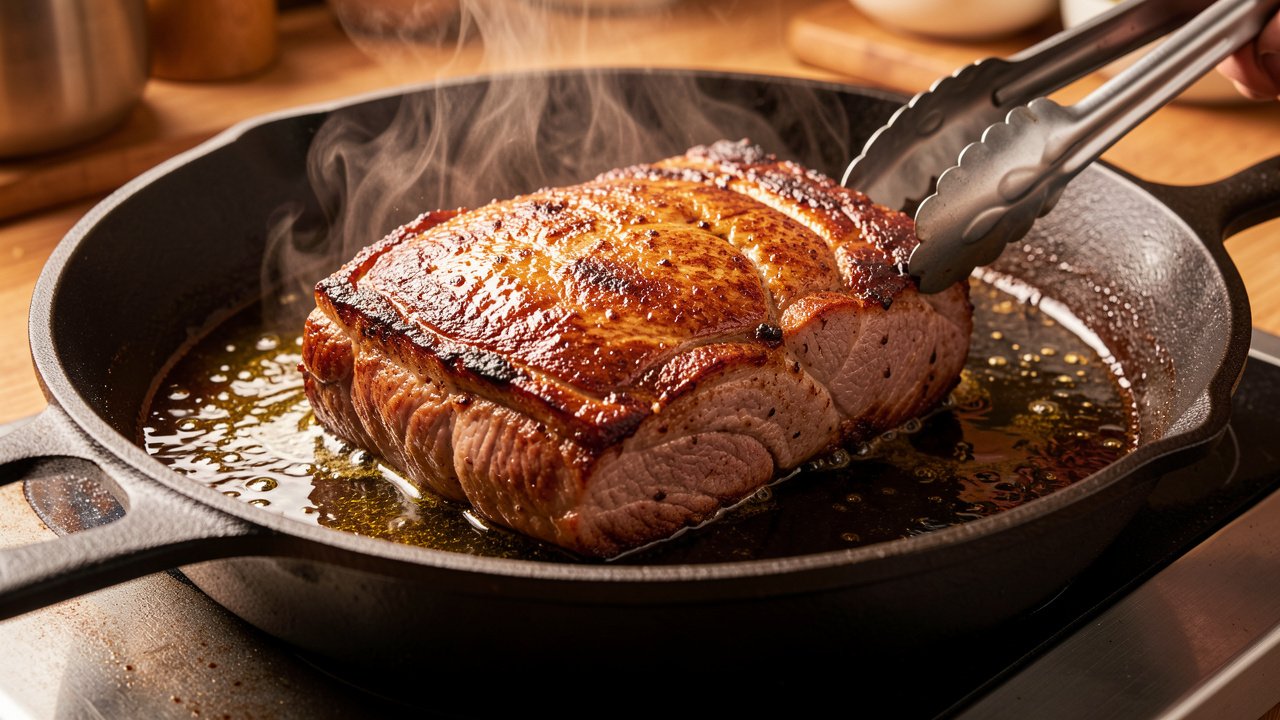
Heat the olive oil in a heavy roasting pan or oven-safe skillet over medium-high heat until it shimmers. Lay the roast in fat side down and leave it alone for 4 to 5 minutes until it releases on its own and shows a deep brown crust.
Turn and sear the remaining sides, about 3 minutes each. The sear is only for color and flavor. It does not seal in juice, which is an old kitchen myth, and it will not cook the inside.
Brown the Mushrooms Until They Squeak
Move the roast to a plate. Add the mushrooms to the same hot pan in a single layer and do not stir for the first 2 minutes. They will release a surprising amount of liquid, because mushrooms are roughly 90 percent water.
Keep the heat high and let that water cook off completely. When the hissing quiets down and the mushrooms start to squeak against the pan, they are ready to brown. Give them 3 more minutes until the edges are golden, then add the garlic and thyme for 30 seconds.
Why brown them separately: Crowded, cool mushrooms boil in their own liquid and never color. They also water down the pan, which leaves you with a thin, gray sauce later.
Deglaze and Build the Roasting Pan
Pour in the beef broth with a splash of balsamic vinegar and scrape the browned bits off the bottom with a wooden spoon. Let it bubble down by half, about 2 minutes, then add the chicken stock.
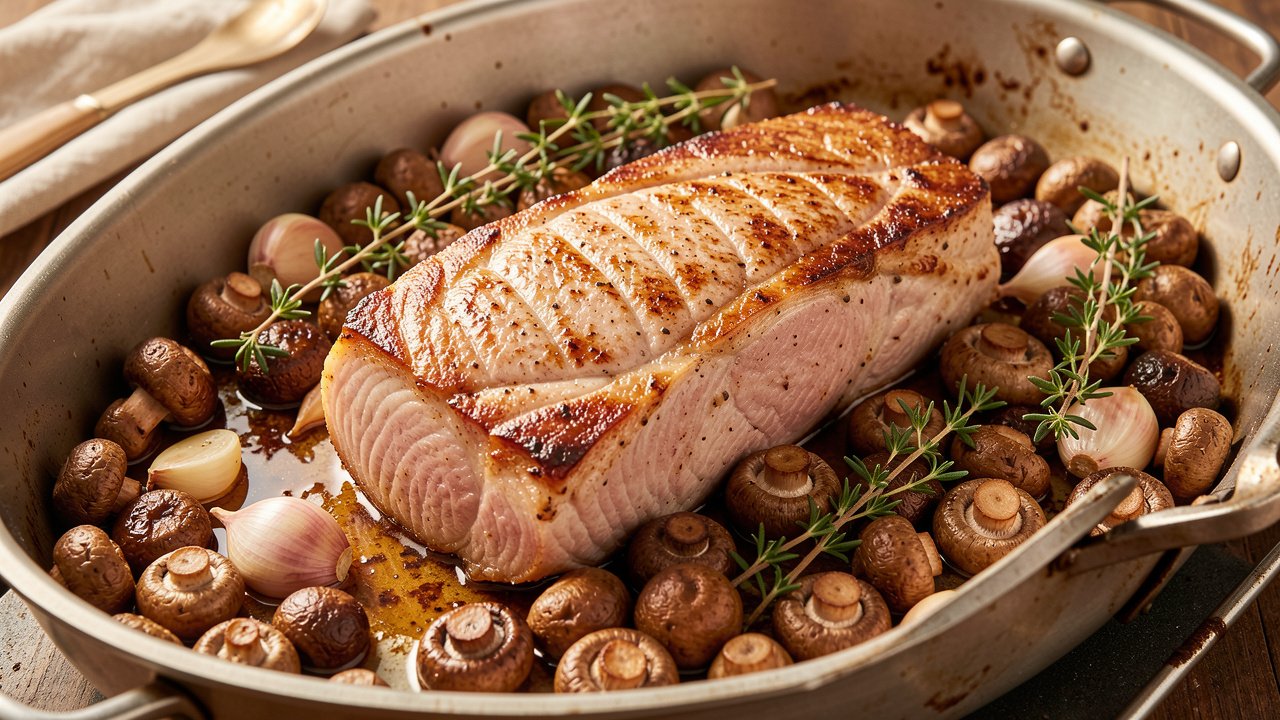
Spread the mushrooms into an even bed and set the roast on top, fat cap facing up. As that fat renders in the oven it drips down over the lean meat, which is exactly why you leave it on.
Roast at 350F and Add the Tomatoes Late
Slide the pan into a 350F oven. The hot sear already built the crust, so this moderate heat is here to cook the center gently and evenly instead of overcooking the outer inch.
After about 35 minutes, scatter the cherry tomatoes around the roast. Going in late means they blister and slump instead of disintegrating over the full cooking time, and their acid lifts the whole pan.
Start checking the temperature at 45 minutes total. A 3-pound roast usually needs 50 to 60 minutes, but ovens and roast shapes vary too much to trust a clock.
Rest, Then Slice Against the Grain
Pull the roast when the thickest part reads 125F, because a large beef roast carries over 5 to 10 degrees while it rests to a medium-rare 130 to 135F. Tent it loosely with foil and rest it 10 to 15 minutes on a grooved board.
Find the muscle fibers running the length of the roast and cut across them into half-inch slices. Slicing with the grain gives you long, chewy strands even when the beef is cooked correctly.
Spoon the mushrooms, tomatoes, and pan juices over the slices. Swirl the butter and a splash of balsamic into the pan first if you want the sauce glossier and a little sharper.
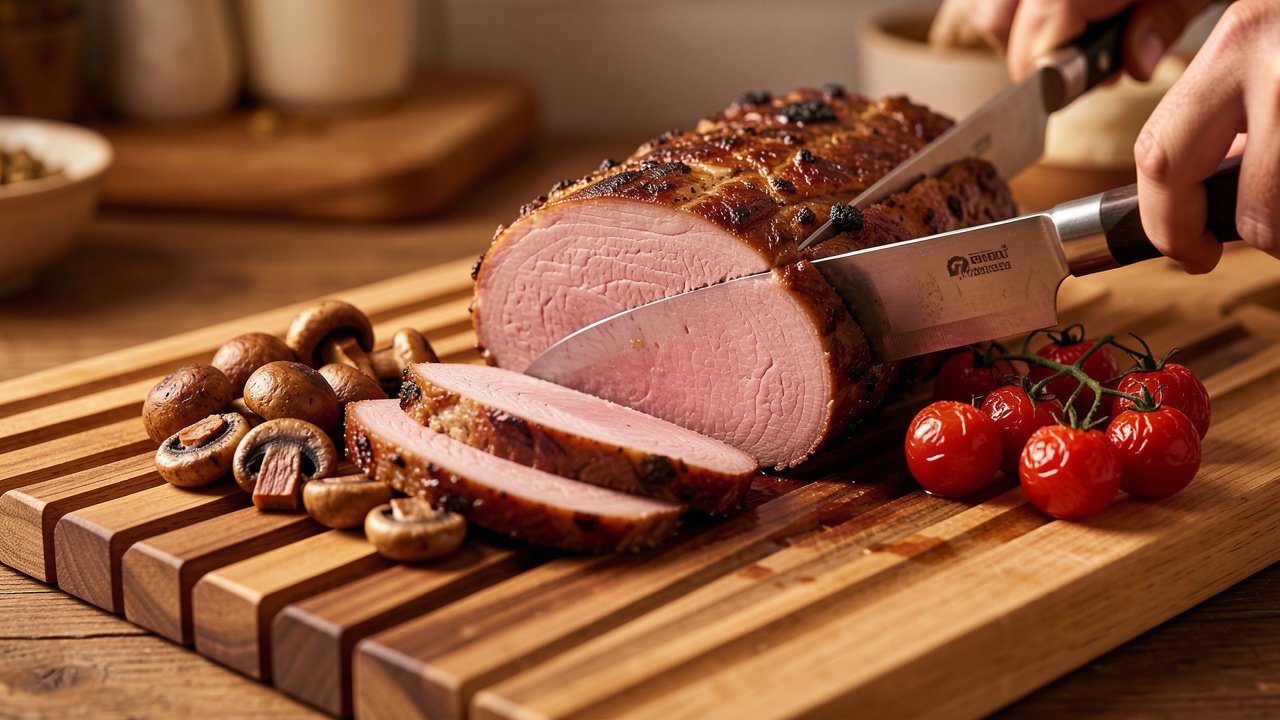
Beef Doneness: 130F for Medium-Rare, Not 160F
The USDA lists 145F followed by a 3-minute rest as the safe temperature for whole-muscle beef, but that number is a floor for safety, not the target for flavor. For a tender, juicy roast you want medium-rare, which lands at 130 to 135F.
At 130 to 135F the center of the roast is rosy pink and still holds its juice. That pink is not undercooked meat. It is medium-rare, the doneness most cooks are after for a whole cut of beef.
The old advice to cook a roast until it turned gray-brown all the way through came from an era before reliable thermometers, when cooks judged doneness by guesswork and erred on the side of overcooking. Cooking a lean beef roast to 160F out of habit is the single biggest reason people believe this cut is dry and boring.
Ground beef is the exception. Grinding spreads surface bacteria all the way through the meat, so ground beef still needs a full 160F. The medium-rare rule covers whole muscle cuts only: this roast, steaks, and tenderloin.
Take the reading in the thickest part, away from the fat cap and the pan bottom. Because this roast is much bigger than a steak, it stores more heat and carries over further, which is why you pull it early.
Chef’s Tips From Real Kitchen Testing
Tie the roast with butcher twine every 2 inches if one end tapers. An even cylinder finishes at one temperature instead of leaving you a dry tail and a raw middle.
Take two temperature readings in different spots and trust the lower one. A single probe can land in a warm pocket and talk you into pulling the roast several minutes early.
Salt the mushrooms only after they have browned. Salt added at the start pulls water back to the surface and stalls the color you just worked for.
If the pan looks dry halfway through roasting, add a few tablespoons of stock rather than turning the oven down.
Recipe Variations
Serving Suggestions
- Buttered mashed potatoes to catch the pan juices
- Soft polenta or creamy white beans
- Crusty bread for mopping the tomato sauce
- A sharp green salad with mustard vinaigrette
Drink Pairing
Roast beef is savory, so pick a drink with brightness to match the tomatoes. Sparkling water with a squeeze of lemon or a tart pomegranate juice cuts through the rich pan sauce without overpowering the meat.
If you want something warm, a spiced black tea or a lightly sweetened tamarind cooler works well, echoing the balsamic that is already deglazing your pan.
Nutrition Facts
Values are estimates for one of 6 servings with vegetables and pan juices, and shift with the size of your roast.
Make-Ahead Tips
You can brown the mushrooms up to two days ahead and refrigerate them in their pan. Reheat them in the roasting pan while the roast sears, then build the pan as written.
Do not sear the roast ahead of time. Meat that sits seared and cold for hours ends up with a soft, damp crust.
Storage, Freezing & Reheating
Common Mistakes to Avoid
Troubleshooting
Overshot to 150F or higher? Slice it thin, return the slices to the warm pan juices for a minute, and serve them wet. Sauce is the only real rescue for overcooked lean beef.
Pan sauce too thin? Lift the roast out to rest and boil the liquid hard for 3 to 4 minutes to reduce it. Never add flour, which dulls the tomato flavor.
Crust pale after roasting? Run the pan under a hot broiler for 2 minutes with the fat cap facing up, watching it the entire time.
Frequently Asked Questions
More Tomato Recipes to Try
Culinary Reviewer: Ghazala Shakeel