Cameroonian Recipes
Festive Chicken and Plantains in Tomato Sauce
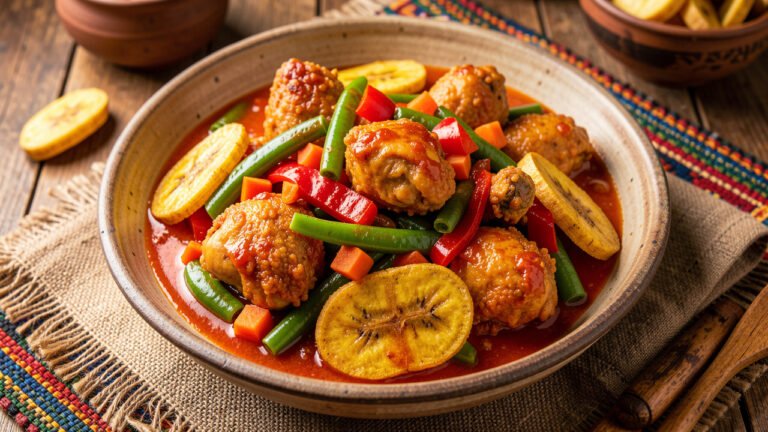
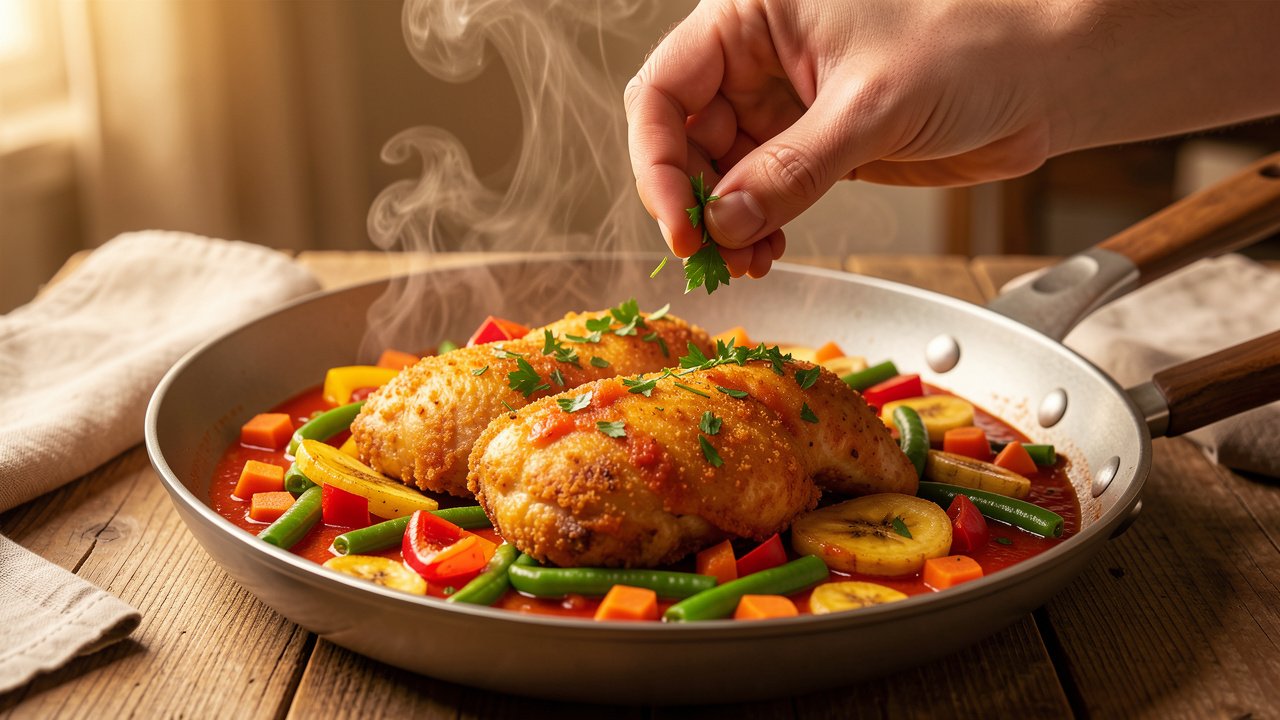
Poulet DG is the plate people ask for by name at Cameroonian gatherings, and once you taste it you understand why. Sweet fried plantains, crisp-edged chicken, and a glossy tomato sauce packed with vegetables come together into something that feels like a party on a plate. It looks like a lot of steps, but each one is simple, and the payoff is enormous.
Why This Poulet DG Works
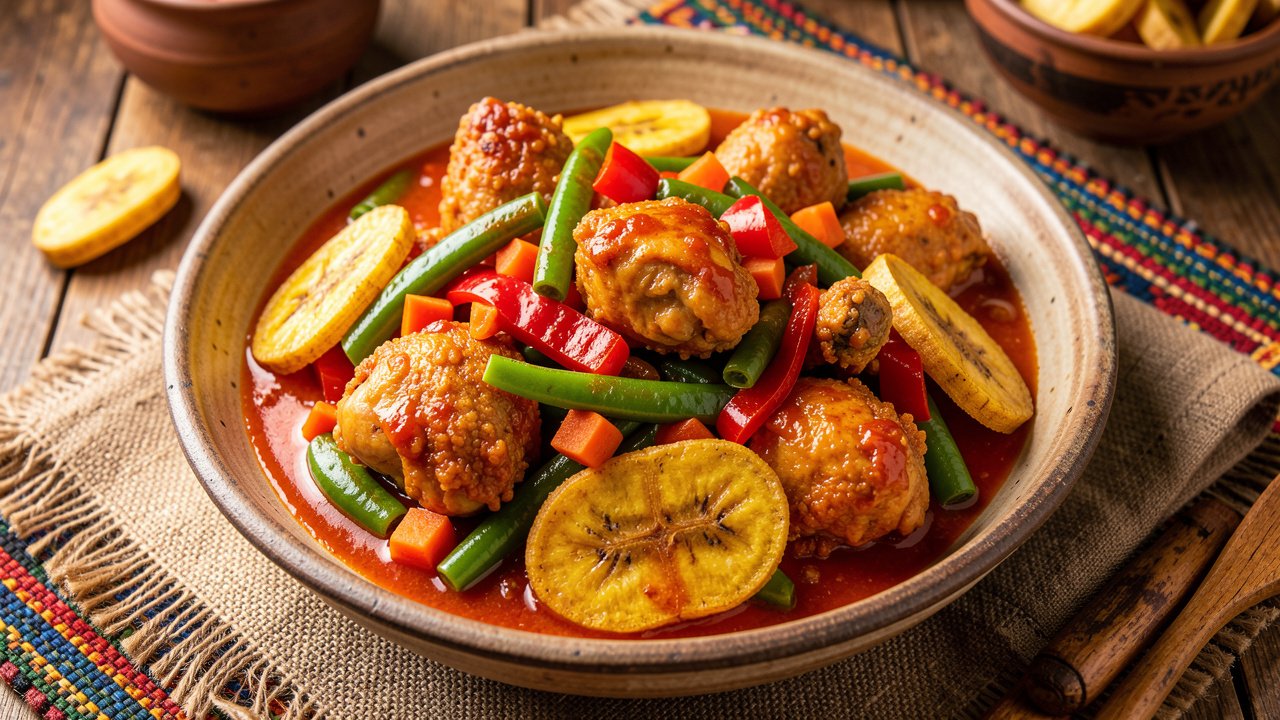
Poulet DG earns its festive reputation by layering three things that each taste great on their own: crisp fried halal chicken, sweet caramelized plantains, and a deeply savory tomato and vegetable sauce. Kept apart they are good; folded together at the very end they become something special, where every forkful gives you a little sweet, a little savory, and a little heat.
The single most important idea is that you fry the chicken and the plantains separately and add them to the sauce late. Frying gives the chicken golden edges and gives the plantains a caramelized crust that holds up in the sauce instead of dissolving into mush. If you dumped everything into one pot from the start, you would lose all of that texture.
The sauce itself is built the West and Central African way: onions, garlic, and ginger softened first, then tomatoes and tomato paste cooked down until thick and glossy, then the vegetables added in an order that keeps each one bright. A stock cube, thyme, and a single Scotch bonnet tie it together with a savory, gently fiery backbone.
It is also a flexible celebration dish. You can lean it milder for children, load it with extra vegetables, or bake the chicken and plantains instead of frying. Once you learn the rhythm of building the sauce and folding everything in, you own a plate that turns an ordinary evening into an occasion.
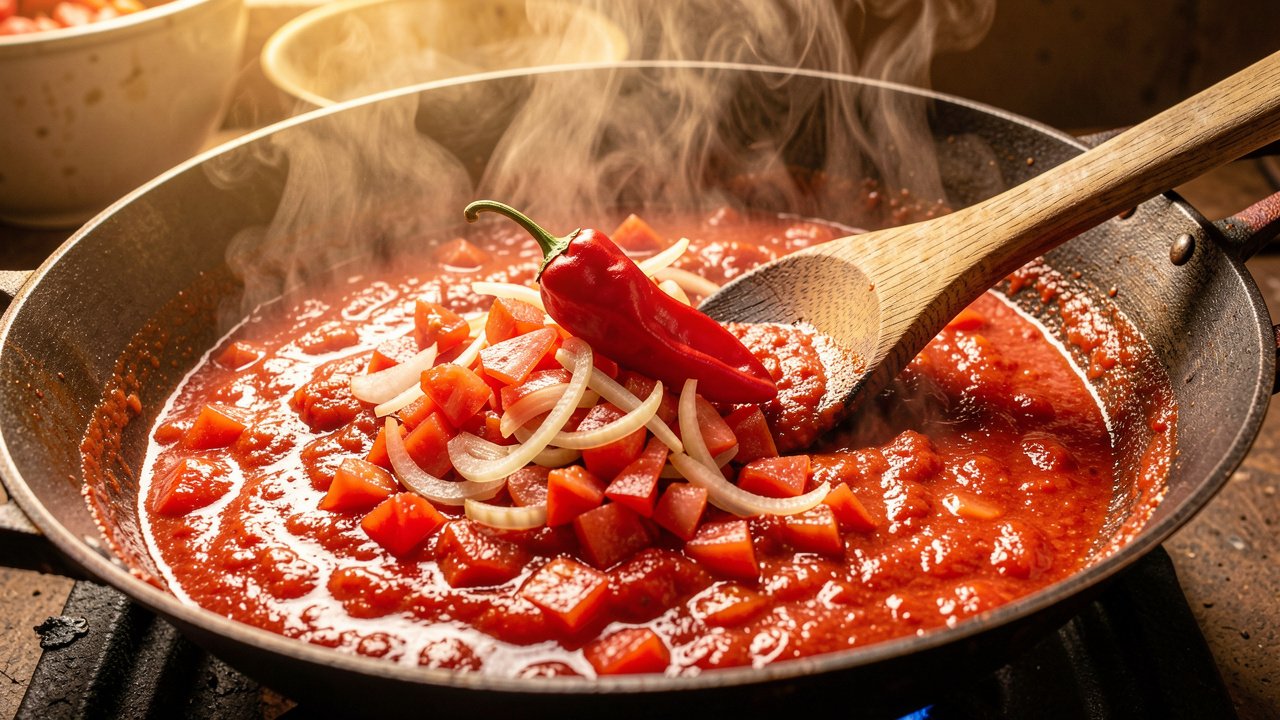
Pro observation: The tomato base is ready for the vegetables when the paste darkens to a brick-red color and the oil starts to glisten at the edges of the pan. That is the sign the raw, sharp edge has cooked off.
Ingredients
Kitchen Measurement Converter
Quickly convert between common cooking measurements without leaving the recipe. Pick a category, enter a value, and the result updates instantly.
Ingredient Notes & Substitutions
Halal Chicken
Use bone-in, skin-on halal chicken pieces for the most flavor, or boneless thighs if you prefer quicker frying. Season and, if you have time, let it marinate for 30 minutes so the spices sink in before it hits the oil.
Plantains
Choose ripe plantains with yellow, heavily spotted skins. They should be sweet and soft enough to caramelize but firm enough to hold their shape when fried. Green plantains will taste starchy and bland here.
Tomatoes and Paste
Ripe red tomatoes plus a spoonful of tomato paste give the sauce both freshness and deep color. Out of season, one 14-ounce can of chopped tomatoes stands in well and is often more reliable than pale fresh ones.
Scotch Bonnet
One Scotch bonnet brings the fruity heat that defines the dish. For a milder plate, add it whole and fish it out before serving. For more fire, chop it in. A habanero is the closest swap.
Equipment
- Wide, heavy pan or wok
- Frying pan or skillet
- Slotted spoon
- Sharp knife and board
- Paper towels for draining
- Wooden spoon
Before You Start
1. Season the chicken early. Rub the chicken with salt, pepper, a little thyme, and some of the garlic and ginger, and let it sit while you prep the vegetables so the flavor has time to develop.
2. Prep every vegetable first. The sauce comes together quickly once it starts, so dice the peppers, carrots, and green beans and slice the onions before you turn on the heat.
3. Have a draining station ready. Line a plate with paper towels for the fried chicken and plantains so they stay crisp instead of steaming in their own oil.
Step-by-Step Instructions
Season and Fry the Chicken
Season the halal chicken pieces with salt, black pepper, half the thyme, and half the garlic and ginger. Heat the vegetable oil in a wide pan over medium-high heat and fry the chicken in batches until golden brown on all sides, about 8 to 10 minutes per batch. Lift the pieces out with a slotted spoon and set them on a paper-towel-lined plate.
Food safety: The chicken finishes cooking later in the sauce. Make sure it reaches an internal temperature of 165F (74C) at the thickest part before serving; check with a meat thermometer if you are unsure.
Fry the Plantains
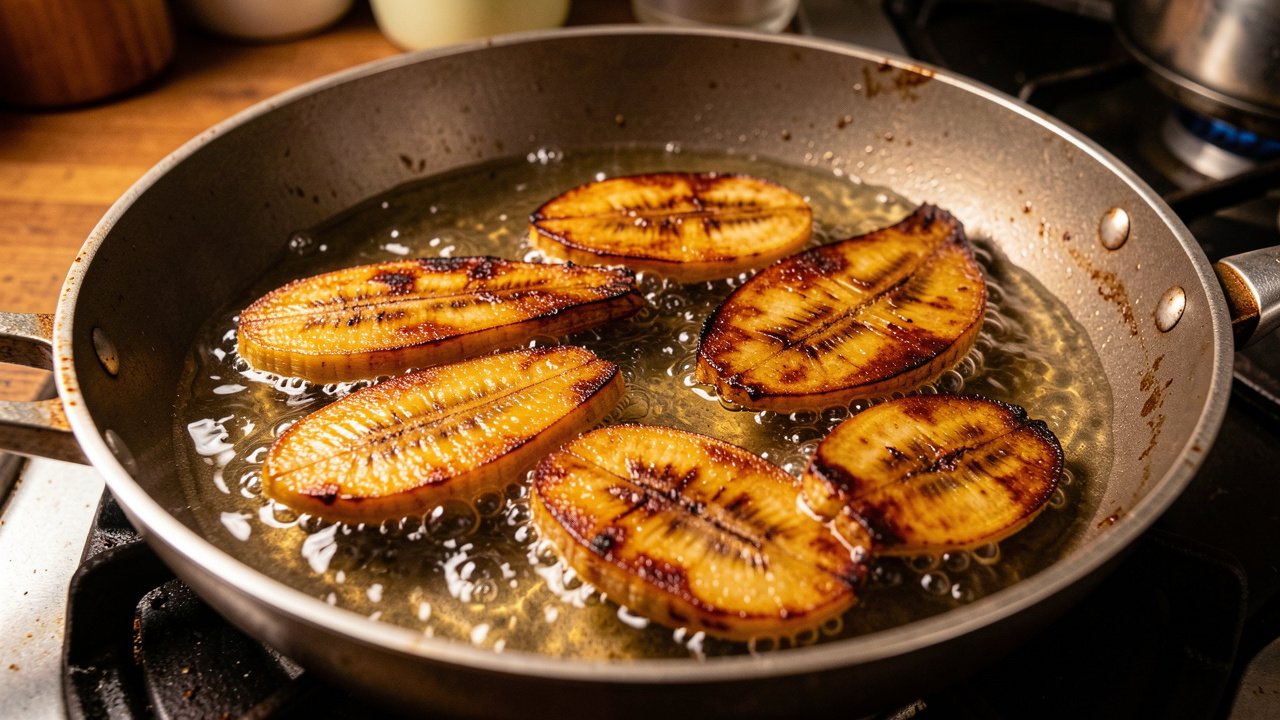
Peel the ripe plantains and slice them into thick rounds or diagonal pieces. In the same oil, fry them in a single layer until deep golden and caramelized at the edges, about 2 to 3 minutes per side. Do not crowd the pan or they will steam and turn soft. Drain them alongside the chicken.
Start the Sauce Base
Pour off most of the frying oil, leaving about two tablespoons in the pan. Add the sliced onions and cook 5 to 6 minutes until soft and golden. Stir in the remaining garlic and ginger and cook 1 minute more, until the raw smell fades and the mixture smells sweet and fragrant.
Build the Tomato Vegetable Sauce
Stir in the tomato paste and cook 2 minutes until it darkens, then add the chopped tomatoes, the crumbled stock cube, the bay leaves, and the rest of the thyme. Cook 8 to 10 minutes, stirring, until the tomatoes collapse into a thick, glossy sauce and the oil starts to glisten at the edges. Nestle in the whole Scotch bonnet.
Add the Vegetables
Add the carrots first and cook 3 minutes, since they take longest. Then add the bell peppers and green beans and cook another 4 to 5 minutes, just until the vegetables are tender but still bright and slightly crisp. Splash in a little water if the sauce looks too thick. Taste and adjust the salt and black pepper.
Combine and Finish
Return the fried chicken to the pan and turn to coat it in the sauce, then simmer gently for 5 to 7 minutes so the flavors marry and the chicken is fully cooked through to 165F (74C). Fold in the fried plantains as gently as you can right at the end so they warm through without breaking apart. Remove the bay leaves and the Scotch bonnet, scatter fresh parsley over the top, and serve hot.
Chef’s Tips From Real Kitchen Testing
Fry the plantains until they are genuinely golden and caramelized, not just warmed. Underfried plantains turn soggy the moment they meet the sauce.
Add the vegetables in stages by cooking time. Carrots first, then peppers and green beans, so nothing overcooks into mush and the plate keeps its color.
Fold the chicken and plantains in at the very end. Long simmering strips the fried edges off both and turns a textured dish into a soft one.
Recipe Variations
Serving Suggestions
- Steamed white rice or jollof rice
- Served on its own as a hearty one-plate meal
- A simple green salad on the side
- Extra fried plantains and fresh parsley to garnish
Nutrition Facts
| Nutrient | Amount per serving |
|---|---|
| Calories | 620 |
| Protein | 38 g |
| Carbohydrates | 46 g |
| Fat | 32 g |
| Saturated Fat | 7 g |
| Fiber | 6 g |
| Sugar | 15 g |
| Sodium | 740 mg |
Values are estimates per serving and vary with the exact ingredients and brands you use.
Make-Ahead Tips
You can get ahead on almost every part of poulet DG. Fry the chicken and plantains a few hours in advance and keep them at room temperature, or build the tomato-vegetable sauce a day early and refrigerate it. When you are ready to serve, warm the sauce, add the vegetables if you held them back, then fold in the chicken and plantains to heat through. Add fresh parsley only at the end so it stays green and bright.
Storage, Freezing & Reheating
Common Mistakes to Avoid
Troubleshooting
Sauce too watery? Let it simmer uncovered a few extra minutes before you add the chicken, or stir in a little more tomato paste to thicken and concentrate it.
Plantains falling apart? They were either overripe or folded in too early. Add them at the very end and stir as gently as possible.
Not enough flavor? It usually needs more salt, a second crumbled stock cube, or a touch more thyme to bring the sauce to life.
A Note on Cameroonian Cooking
Poulet DG is a genuine celebration dish in Cameroon, the kind of plate that shows up at weddings, holidays, and any gathering meant to impress. Its name translates to “chicken director general,” and the popular story goes that it was so rich and generous it was fit for a boss, a big shot, a director general. Whether or not the tale is literal, it captures the spirit: this is food that says a guest is worth the effort.
The magic is in the pairing of fried chicken and fried plantains, two things Central and West African kitchens do beautifully, brought together in a tomato sauce loaded with colorful vegetables. It is generous, unfussy, and endlessly shareable. If you enjoy hearty, tomato-forward cooking, browse more ideas in our collection of tomato recipes, or try the cozy hearty tomato lentil soup for a comforting bowl on a quieter night.
Frequently Asked Questions
More Tomato Recipes to Try
Last updated: September 29, 2026