Pakistani Recipes
Bone-In Lamb and Potato Curry in Onion-Tomato Masala
Last updated: September 30, 2026
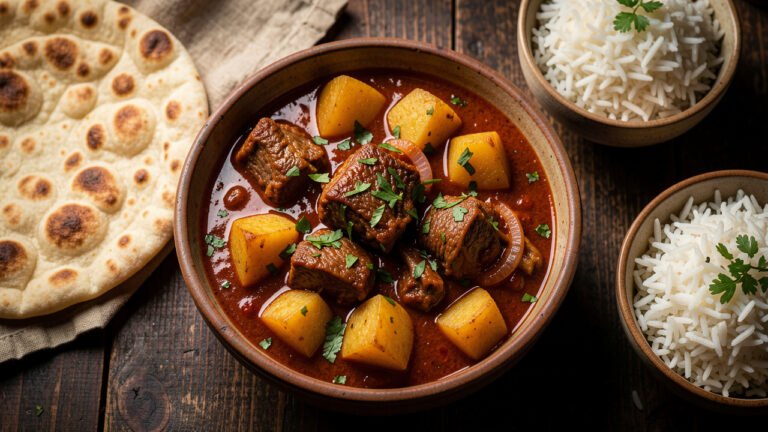
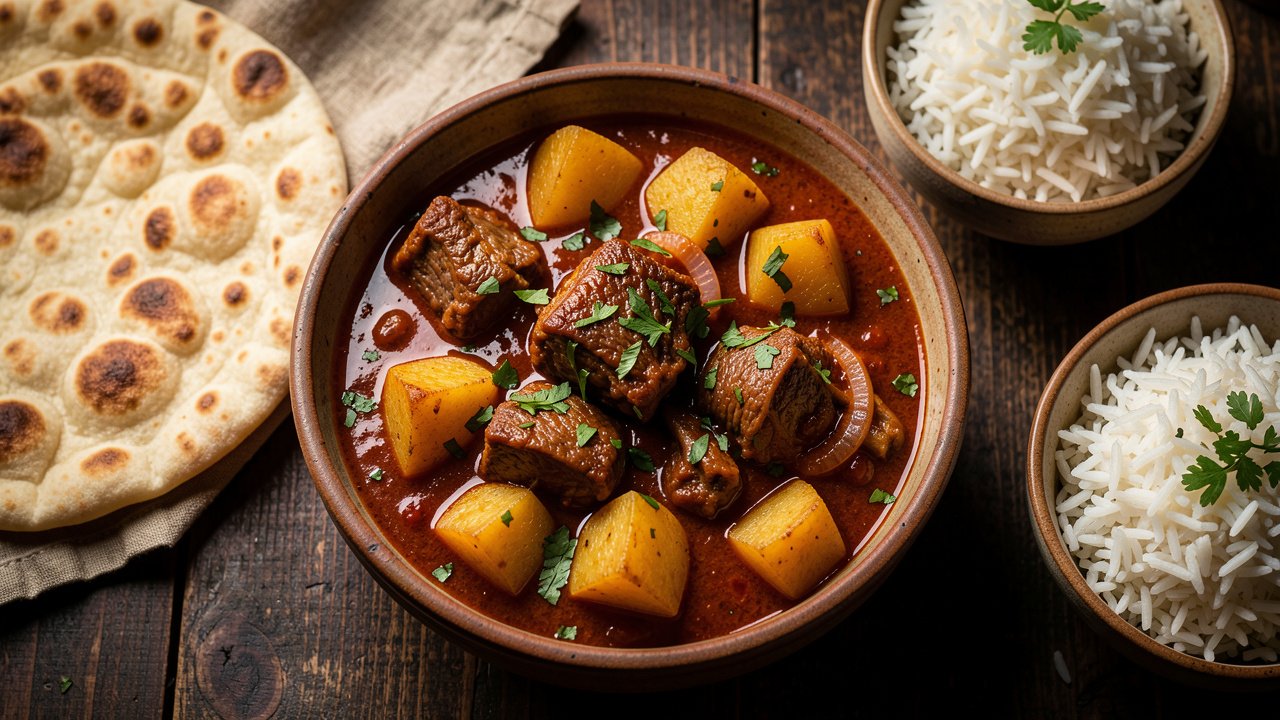
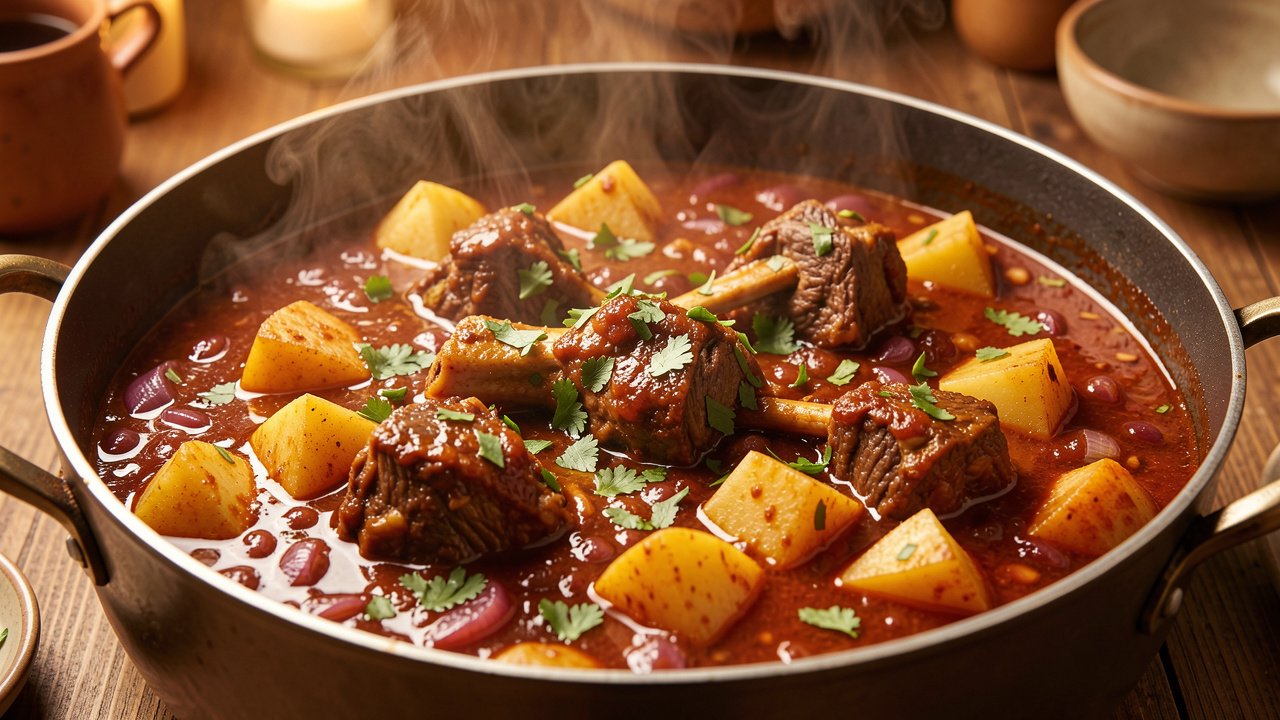
Aloo gosht is the curry that most subcontinental kitchens fall back on when they want something honest and filling with almost no fuss. Bone-in lamb and chunks of potato are braised together in a masala of fried onion, tomato, ginger, garlic, and warm ground spices until the meat gives way from the bone and the gravy turns deep and glossy.
The whole thing is built in a single pot. You brown the meat, fry the onions to a deep gold, bhuno the tomatoes and spices until the oil separates, then braise low and slow and add the potatoes near the end so they stay whole. Ladle it out soupy or thick to taste, and put a stack of hot roti or a bowl of rice on the table.
Why This Aloo Gosht Works
Great aloo gosht is really two things done well: a masala fried until it is deep and jammy, and meat braised slowly enough to fall from the bone. Get those two right and the humble list of ingredients turns into a gravy with real depth. The recipe here builds the masala the proper way, then treats the meat and the potatoes on their own timelines so neither one is overcooked.
The base starts the way most good subcontinental cooking does, with onions fried patiently in oil until they are deep golden, then ginger and garlic, and finally tomatoes and ground spices. The key move is the bhuno: you fry this masala, stirring, until the tomatoes collapse and the oil separates and pools at the edges of the pot. That step cooks out any raw, sour edge and gives the curry its color and body.
Timing the potatoes is the second half of the method. Bone-in meat needs a long, gentle braise to grow tender, far longer than a potato can survive without turning to mush. So the meat goes in first and simmers low until it yields, and the potatoes join only in the last twenty-odd minutes, long enough to cook through while still holding their shape on the spoon.
It is also endlessly forgiving. Aloo gosht is an everyday pot, so you can take the gravy soupy for a spoon-and-roti supper or reduce it thick to spoon over rice. Keep the fried onion, the tomato, and a proper bhuno constant, and you will get a pot that tastes like a home kitchen every single time.
Pro observation: Aloo gosht is fully halal as written, with no forbidden ingredients. All of its depth comes from browned meat, fried onion, tomato, ginger, garlic, and warm ground spices, so you never miss a thing.
Ingredients
Kitchen Measurement Converter
Need to convert an amount while you measure? Pick a category, enter a value, and the result updates instantly.
Ingredient Notes & Substitutions
The Meat
Bone-in lamb shoulder or leg is ideal, since the bones and connective tissue melt into the gravy and make it rich. Goat is just as traditional and every bit as good, and beef chuck on the bone works well too; it simply needs a longer braise to grow tender.
Potatoes
Use a starchy or all-purpose potato that holds together, cut into large two-inch chunks. Waxy potatoes keep the tidiest shape, while a floury one will melt a little at the edges and thicken the gravy. Either is fine; just keep the pieces big.
Onion & Tomato
The fried onion is the body of the curry, so do not skimp or hurry it. Ripe fresh tomatoes give the brightest flavor, but a can of chopped or crushed tomatoes works year round; use about fourteen ounces in place of the three fresh ones.
Spices
Coriander, chili, and turmeric build the base, while garam masala added at the end lifts everything with warmth. Toast your own whole spices if you like, or use good-quality ground ones. A pinch of crushed dried fenugreek leaves at the end adds a lovely depth.
Equipment
- Large heavy pot or Dutch oven
- Lid for the pot
- Wooden spoon
- Sharp knife and board
- Box grater for the ginger
- Ladle
Before You Start
1. Pat the meat dry and let it lose its chill before it hits the oil. A cold, wet surface will not sear; it just steams and stays grey. Blot the pieces well and give them a few minutes out of the fridge so they brown properly and leave behind the fond that gives the gravy its backbone.
2. Chop the onions fine and uniform before the oil is hot. The onion is the body of the masala, and pieces of wildly different sizes cook unevenly, so some stay raw and sharp while others scorch. Even, fine pieces melt down into a smooth golden base as they fry.
3. Cut the potatoes into large two-inch chunks and hold them in cold water. Big pieces added late in the braise cook through while still holding their shape, and the cold water stops the cut surfaces from oxidizing and going grey before they join the pot.
Step-by-Step Instructions
Aloo gosht rewards patience at two points: the bhuno of the masala and the slow braise of the meat. Prep everything first so the pot has your full attention. Chop the onions and tomatoes, grate the ginger, mince the garlic, cut the potatoes and hold them in water, and measure the spices.
Prep the Meat, Potatoes, and Aromatics
Cut the lamb into serving pieces on the bone and pat them dry. Peel the potatoes and cut them into large chunks, then keep them submerged in cold water. Finely chop the onions, chop the tomatoes, grate the ginger, and mince the garlic. Measure out the coriander, chili, and turmeric so they are ready to go.
Brown the Bone-In Meat
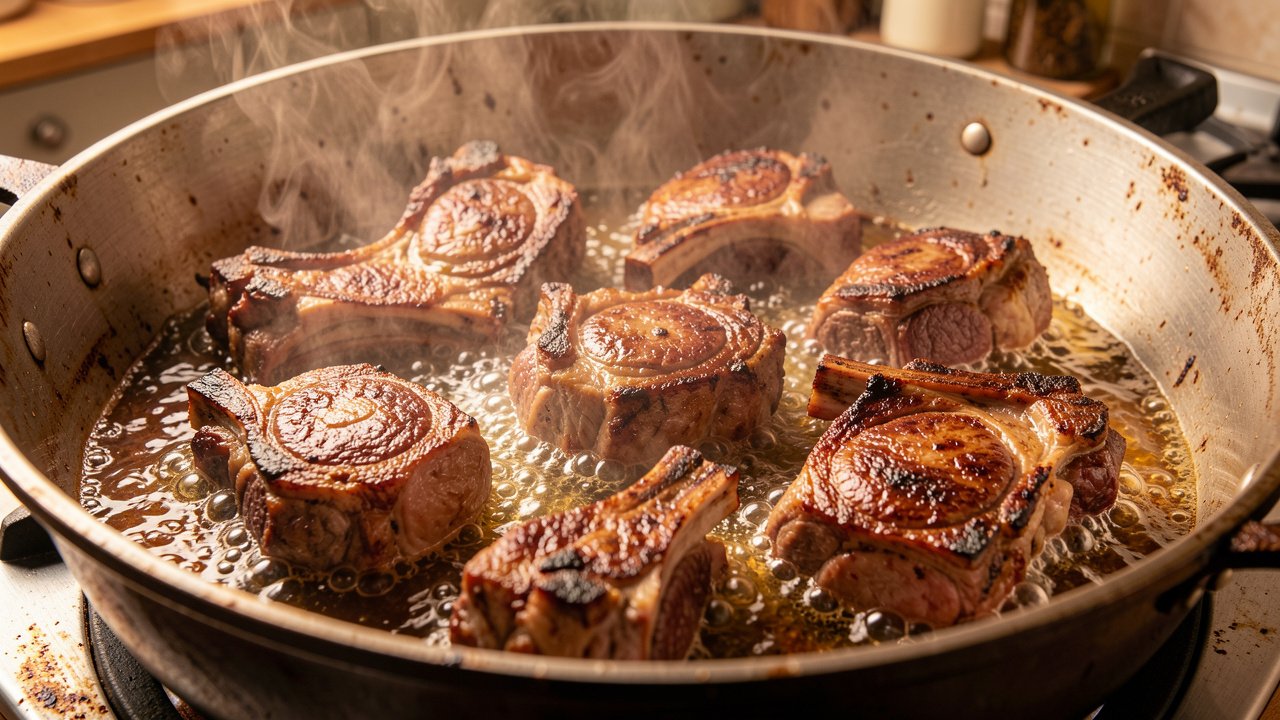
Heat the oil in a large heavy pot over medium-high heat. Working in batches so you do not crowd the pot, brown the lamb pieces on all sides until deeply colored, then lift them out and set aside. This sear builds the savory base of the curry; a crowded pot steams the meat grey instead of browning it.
Fry the Onions
Lower the heat to medium and add the onions to the same oil. Fry them, stirring often, for 8 to 10 minutes until they are deep golden and soft. Stir in the grated ginger and minced garlic and cook for another minute, until the raw smell fades and the base turns fragrant and sweet.
Bhuno the Tomato Masala
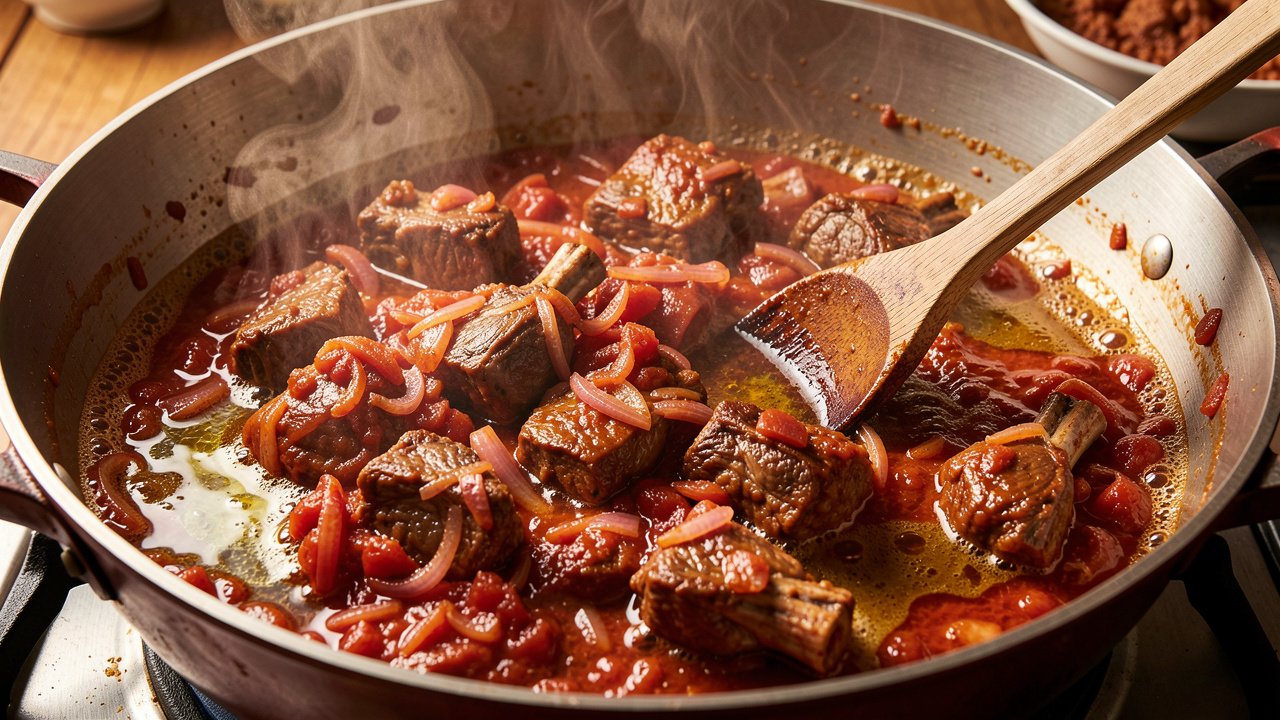
Return the meat to the pot with the chopped tomatoes, coriander powder, chili powder, turmeric, and a good pinch of salt. Fry this masala over medium heat, stirring, for 8 to 10 minutes until the tomatoes collapse and the oil separates and pools at the edges. This bhuno is what gives aloo gosht its color and depth, so do not rush it.
Braise the Meat Until Tender
Pour in enough hot water to almost cover the meat and bring it to a gentle simmer. Cover the pot and cook on low for about an hour, until the lamb is fork-tender and pulling from the bone. Stir occasionally and top up with a splash of hot water if the pot runs dry, keeping it at a bare simmer rather than a hard boil.
Add the Potatoes and Finish
Slip the drained potato chunks into the gravy and simmer, covered, for another 20 to 25 minutes, until they are tender but still hold their shape. Stir in the garam masala, taste and adjust the salt, then finish with the chopped fresh coriander. Ladle into bowls and serve hot with rice or roti.
Chef’s Tips From Real Kitchen Testing
Fry the masala until the oil separates before you add any water. That visible split of oil at the edges is your signal that the tomatoes and spices are properly cooked, and it is the difference between a deep gravy and a thin, raw-tasting one.
Braise low and slow, never at a rolling boil. A hard boil toughens the muscle and shreds the meat off the bone before it is ready, while a bare simmer lets the collagen melt and turns the lamb spoon-tender.
Add the potatoes only in the last twenty-odd minutes. They cook far faster than bone-in meat, so putting them in early turns them to mush; late is exactly long enough for them to cook through and stay whole.
Recipe Variations
Serving Suggestions
- Hot roti or naan for scooping up the gravy
- A bowl of plain steamed basmati rice
- Sliced onion, green chili, and lemon wedges on the side
- A cooling cucumber-and-mint yogurt raita
Nutrition Facts
| Nutrient | Amount per serving |
|---|---|
| Calories | 420 |
| Protein | 32 g |
| Carbohydrates | 26 g |
| Fat | 22 g |
| Saturated Fat | 7 g |
| Fiber | 4 g |
| Sugar | 6 g |
| Sodium | 720 mg |
Values are estimates per serving and vary with the exact cut of meat and brands you use.
Make-Ahead Tips
Aloo gosht is even better the next day, once the flavors have settled into the meat and gravy. You can cook it a day ahead through the braise, cool, and refrigerate; for the tidiest potatoes, add them fresh when you reheat, simmering just until they are tender before serving.
Storage, Freezing & Reheating
Common Mistakes to Avoid
Troubleshooting
Gravy too thin? Simmer it uncovered for a few extra minutes to reduce, or mash two or three potato chunks into the gravy to thicken it naturally.
Meat still tough? It simply needs more time; cover and keep it at a low simmer until it pulls easily from the bone, adding a splash of hot water if the pot runs dry.
Masala tastes flat or raw? It was not fried long enough before the water went in. Next time let it cook down until you see oil at the edges, the sign the spices have bloomed.
A Note on Pakistani Cooking
The name says exactly what it is: “aloo” means potato and “gosht” means meat, so aloo gosht is simply potato-and-meat curry. It is an everyday staple across Pakistan and northern India, the kind of dish cooked on an ordinary weeknight rather than saved for a celebration, and every household has its own hand with the spices. What unites all the versions is the method: fried onion, a well-cooked tomato masala, bone-in meat braised until tender, and potatoes that soak up the gravy.
It sits in a big family of subcontinental tomato-based curries, and it is easy to confuse with its livelier cousins. The one it is most often set against is karahi, a dry, high-heat tomato-and-chili fry cooked fast in a wok-like pan; aloo gosht is the opposite, a soupier, slow braise built around potatoes. If karahi is a Friday-night showpiece like a Pakistani chicken karahi, aloo gosht is the comforting pot of a Tuesday. It shares its soul with other homestyle braises like muscat gosht, lamb in a spicy tomato gravy, and with meatless tomato-potato curries like aloo tamatar and this bell pepper, tomato, and potato curry.
What has kept aloo gosht on kitchen tables for generations is exactly what makes it humble: it is forgiving, filling, and made from things most homes already have. Fry your onions properly, give the masala a real bhuno, braise the meat slowly, and put a stack of hot roti on the table, and you have a meal that tastes of home.