Argentine Recipes
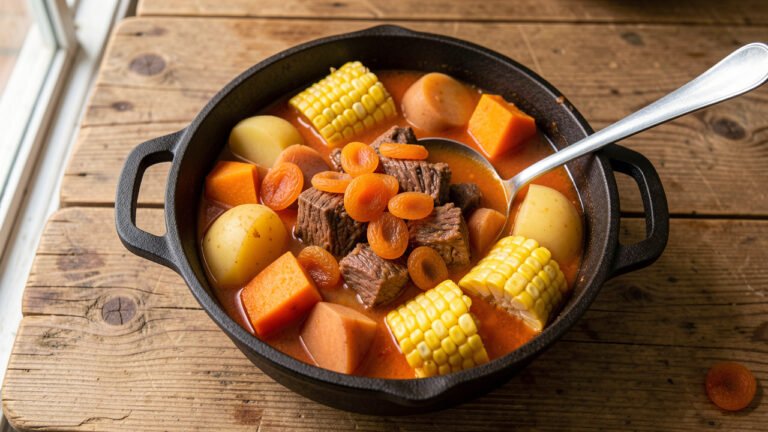
Hearty Beef, Squash and Corn Stew
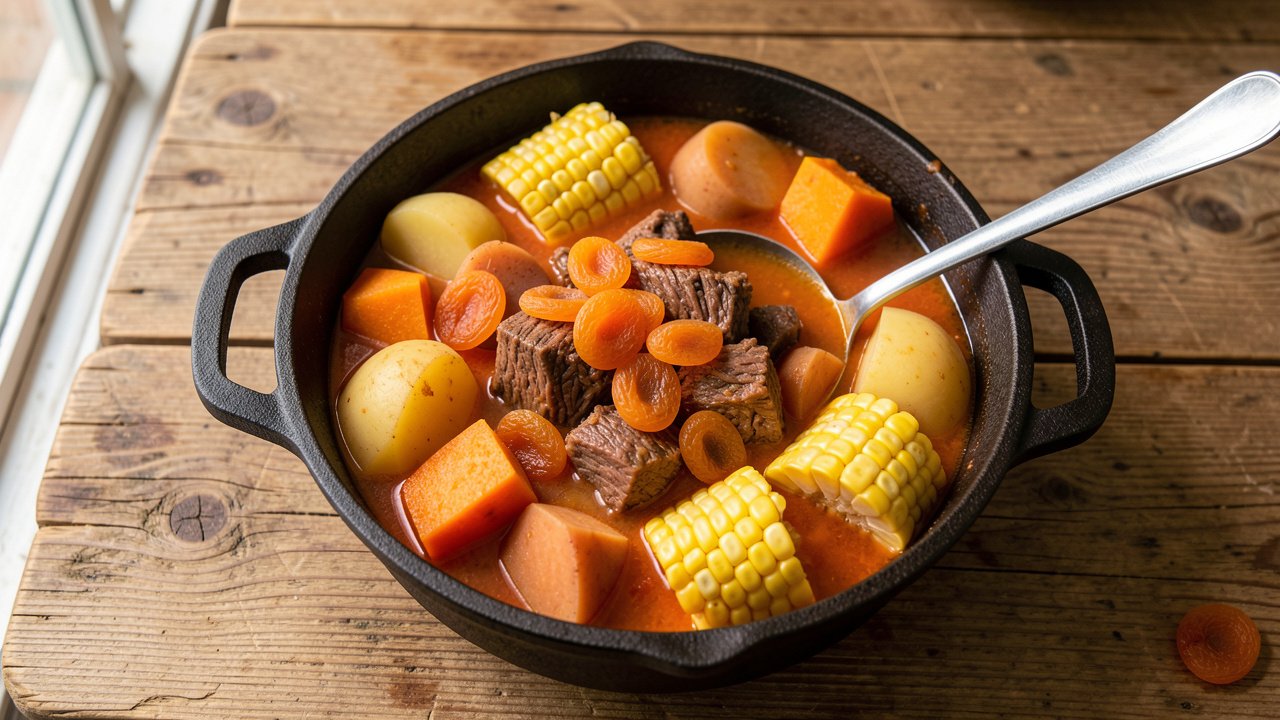
Carbonada is the kind of stew that fills a whole table without asking for much from the cook. Everything happens in one pot: you brown the halal beef, soften the vegetables, and let the broth pull it all together while the squash melts and thickens it naturally. The first time I made it I fished the corn out and cut it into neat kernels, and it was fine, but leaving the cobs in rounds is the real thing. People pick them up and eat them with their hands, and the pot feels generous.
Why This Carbonada Works
Carbonada balances three things at once: savory depth from browned halal beef, natural body from starchy vegetables, and a whisper of sweetness from dried fruit and corn. That sweet-savory balance is what makes it taste distinctly Argentine rather than like any everyday beef stew. Nothing dominates; the broth stays light even though the pot is packed with hearty ingredients.
The single most important move is browning the halal beef properly before any liquid goes in. Those caramelized edges dissolve into the broth as the stew simmers, and they give the whole pot a deep, roasted backbone that you cannot fake by simply boiling the meat. Take your time and let the pieces sit undisturbed until they release from the pan on their own.
The winter squash, or calabaza, does quiet double duty. Some of it holds its shape in tender orange chunks, while the softer pieces break down and thicken the broth into something that clings to a spoon. That is why carbonada needs no flour or cornstarch; the squash is the thickener.
It is also a forgiving, one-pot meal that scales to feed a crowd. The vegetables are humble and interchangeable, the beef is affordable stewing cuts, and the whole thing improves as it sits. Once you understand the order things go into the pot, you can build it from whatever is in the kitchen.
Pro observation: Add the vegetables in stages by how long they take to cook, not all at once. Potatoes and squash go in early, corn a little later, and the delicate fruit near the end. That staggering is the difference between a stew with texture and a pot of mush.
Ingredients
Kitchen Measurement Converter
Quickly convert between common cooking measurements without leaving the recipe. Pick a category, enter a value, and the result updates instantly.
Ingredient Notes & Substitutions
Halal Beef
Use halal beef chuck or another well-marbled stewing cut. These tougher cuts turn meltingly tender over a long simmer, where lean cuts would only dry out. Cut the meat into generous two-inch chunks so it stays juicy.
Winter Squash
Calabaza is traditional, but butternut or kabocha squash work beautifully. You want a dense, sweet squash that softens without falling completely apart. Cut it a little larger than the potatoes so it does not overcook.
The Sweetness
Dried apricots are the easiest choice and hold their shape well. In summer, fresh peach or a few pieces of pear are lovely swaps. This gentle fruit note is essential to carbonada, so do not skip it.
Tomatoes
Ripe fresh tomatoes give the broth its light body and color. Out of season, one 14-ounce can of chopped tomatoes is a reliable stand-in and often tastes brighter than pale winter tomatoes.
Equipment
- Large heavy pot or Dutch oven
- Sharp knife and board
- Wooden spoon
- Ladle
- Vegetable peeler
- Measuring cups and spoons
Before You Start
1. Pat the beef dry. Halal beef browns far better when the surface is dry, so blot the chunks with paper towel before they hit the hot pot.
2. Cut vegetables by cooking time. Keep the squash chunks slightly larger than the potatoes, and cut the corn cobs into thick rounds so they hold together in the broth.
3. Have the broth warm. Adding warm broth keeps the pot at a steady simmer instead of stalling it, which shortens the overall cooking time.
Step-by-Step Instructions
Brown the Halal Beef
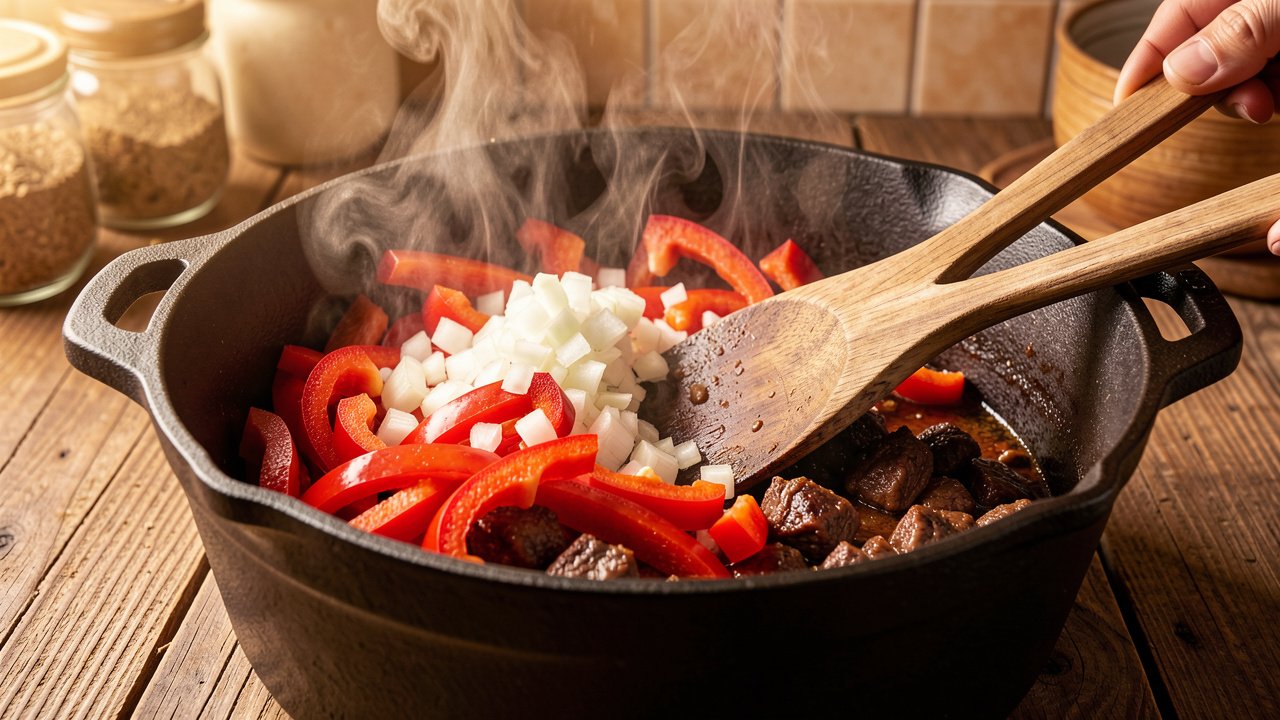
Pat the halal beef chunks dry and season with salt and pepper. Heat the olive oil in a large heavy pot over medium-high heat. Working in batches so the pot is not crowded, brown the beef on all sides until deeply colored, about 3 to 4 minutes per batch. Remove the browned pieces to a plate and set aside.
Soften the Vegetables
Lower the heat to medium and add the chopped onion and red bell pepper to the same pot. Cook 5 to 6 minutes, scraping up the browned bits from the bottom, until softened. Stir in the garlic, cumin, and paprika and cook 1 minute more until fragrant.
Build the Broth
Return the beef and any resting juices to the pot. Add the chopped tomatoes and stir for 2 minutes until they begin to break down. Pour in the warm beef broth, add the bay leaf, and bring to a gentle simmer. Cover and cook 30 minutes, so the beef starts to turn tender before the vegetables go in.
Add the Hearty Vegetables
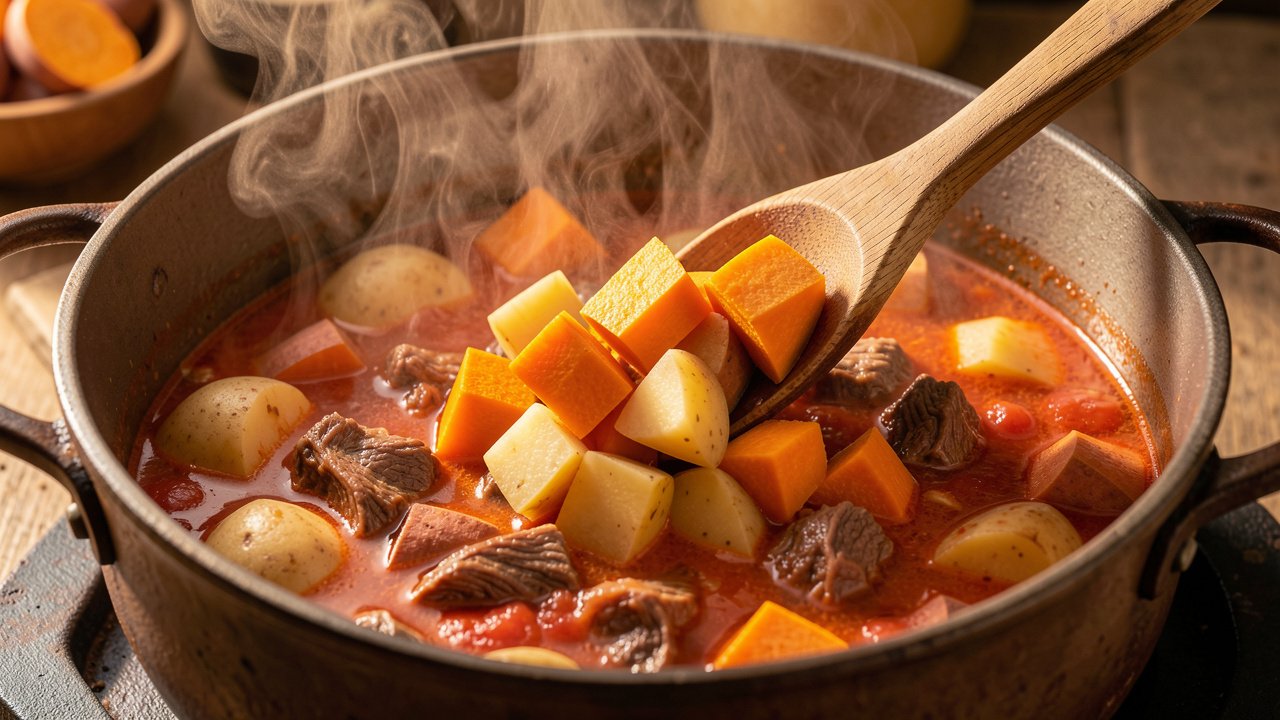
Stir in the potatoes, sweet potato, and winter squash. Keep the broth at a steady simmer and cook, partly covered, for 15 minutes. The squash will begin to soften at the edges and gently thicken the broth, while the potatoes hold their shape.
Add Corn and Fruit
Nestle in the corn rounds and the halved dried apricots. Simmer another 15 minutes, until the beef is fork-tender, the potatoes are cooked through, and the corn is bright and sweet. Add a splash more warm broth or water only if the stew looks too dry; it should stay brothy, not soupy.
Season and Serve
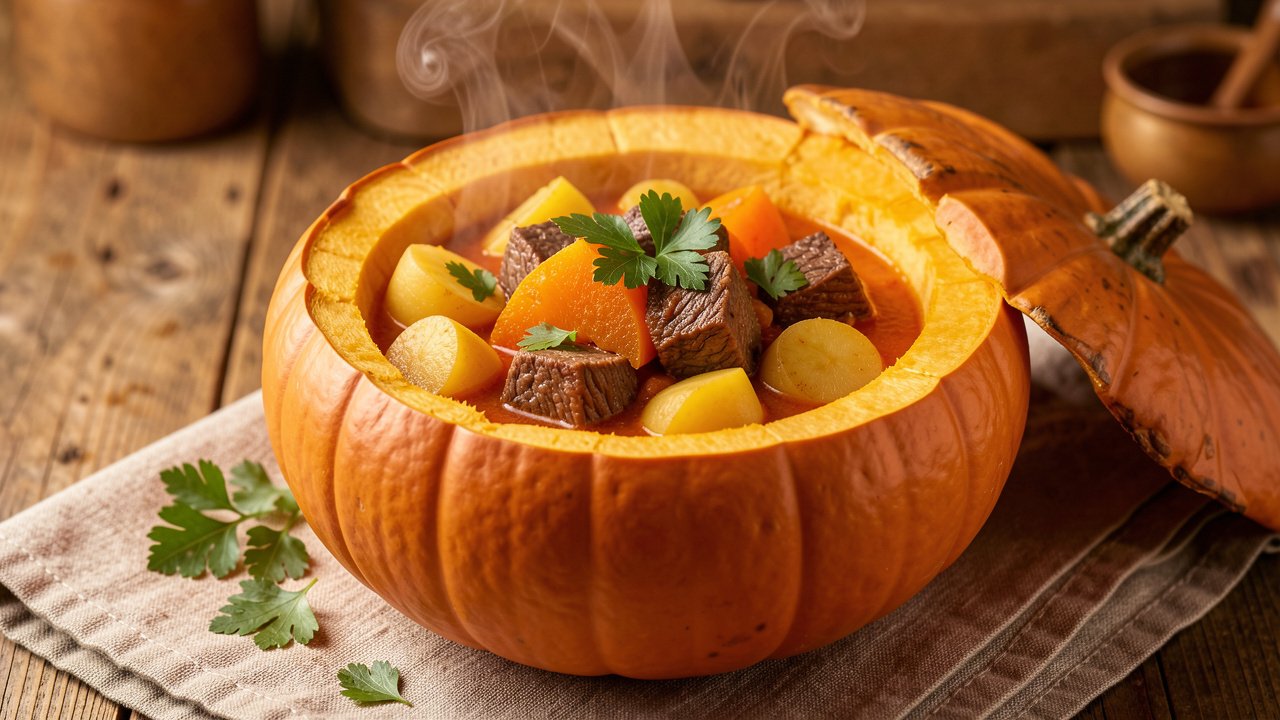
Remove the bay leaf and taste the broth, adjusting with salt and pepper. Confirm the beef is tender and fully cooked through before serving. Scatter fresh parsley over the top and ladle the carbonada into deep bowls, or serve it inside a baked pumpkin for a showstopping presentation.
Chef’s Tips From Real Kitchen Testing
Brown the halal beef in batches and never crowd the pot. Crowded meat steams instead of searing, and you lose the deep flavor that makes the broth taste like it simmered all day.
Let the beef get a head start before the vegetables. Thirty minutes of simmering on its own means the meat is tender at the same moment the potatoes and corn are done, so nothing turns to mush waiting.
Keep it at a gentle simmer, never a hard boil. A rolling boil breaks the vegetables apart and clouds the light broth that carbonada is known for.
Recipe Variations
Serving Suggestions
- Deep bowls with plenty of the light broth
- Crusty bread to soak up every spoonful
- A simple green salad dressed with oil and vinegar
- Fresh parsley and a wedge of lime alongside
Nutrition Facts
| Nutrient | Amount per serving |
|---|---|
| Calories | 410 |
| Protein | 28 g |
| Carbohydrates | 42 g |
| Fat | 14 g |
| Saturated Fat | 4 g |
| Fiber | 6 g |
| Sugar | 12 g |
| Sodium | 640 mg |
Values are estimates per serving and vary with the exact ingredients and brands you use.
Make-Ahead Tips
Carbonada is an excellent make-ahead dish because the flavors settle and deepen overnight. Cook it a day in advance, cool, and refrigerate. Reheat gently on the stove and stir in a splash of warm broth to loosen it, since the squash thickens the stew further as it rests. Add fresh parsley just before serving so it stays bright.
Storage, Freezing & Reheating
Common Mistakes to Avoid
Troubleshooting
Broth too thin? Mash a few chunks of the cooked squash or potato against the side of the pot and stir them in. They thicken the broth without any flour.
Beef still tough? It simply needs more time. Keep it at a low simmer and check again in 15 minutes; stewing cuts turn tender only when fully cooked through.
Vegetables falling apart? The heat was too high or they cooked too long. Next time keep a gentle simmer and add the delicate pieces later in the process.
A Note on Argentine Cooking
Carbonada belongs to Argentina’s family of criolla dishes, the home-style cooking that grew from colonial kitchens and the country’s abundant produce and cattle. Criolla stews are generous and unfussy, built to feed a full table from one pot, and they lean on a quiet sweet-savory balance that sets them apart. The dried fruit and corn in carbonada are exactly that signature at work. When it is made for a celebration, cooks often hollow out a whole pumpkin, bake it until tender, and serve the stew right inside it, so the pumpkin becomes both bowl and dish. It is a warming, hospitable style of cooking, and if you enjoy hearty tomato-based bowls you will find the same spirit in our hearty tomato lentil soup and across our full collection of tomato recipes.
Frequently Asked Questions
More Tomato Recipes to Try
Last updated: September 29, 2026