Turkish Recipes
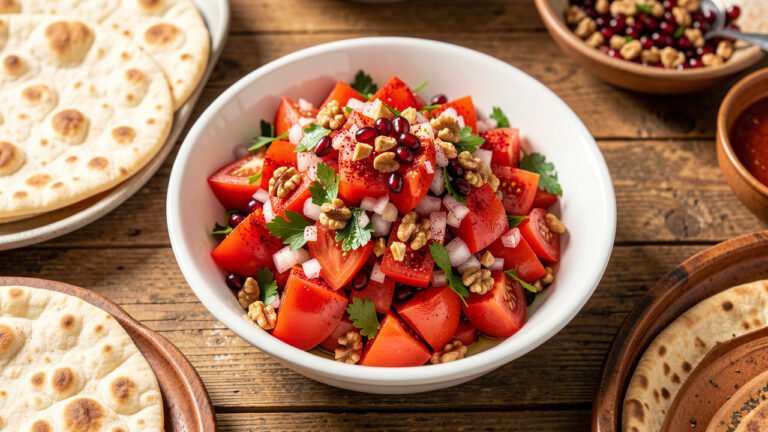
Fresh Gaziantep Tomato and Walnut Salad
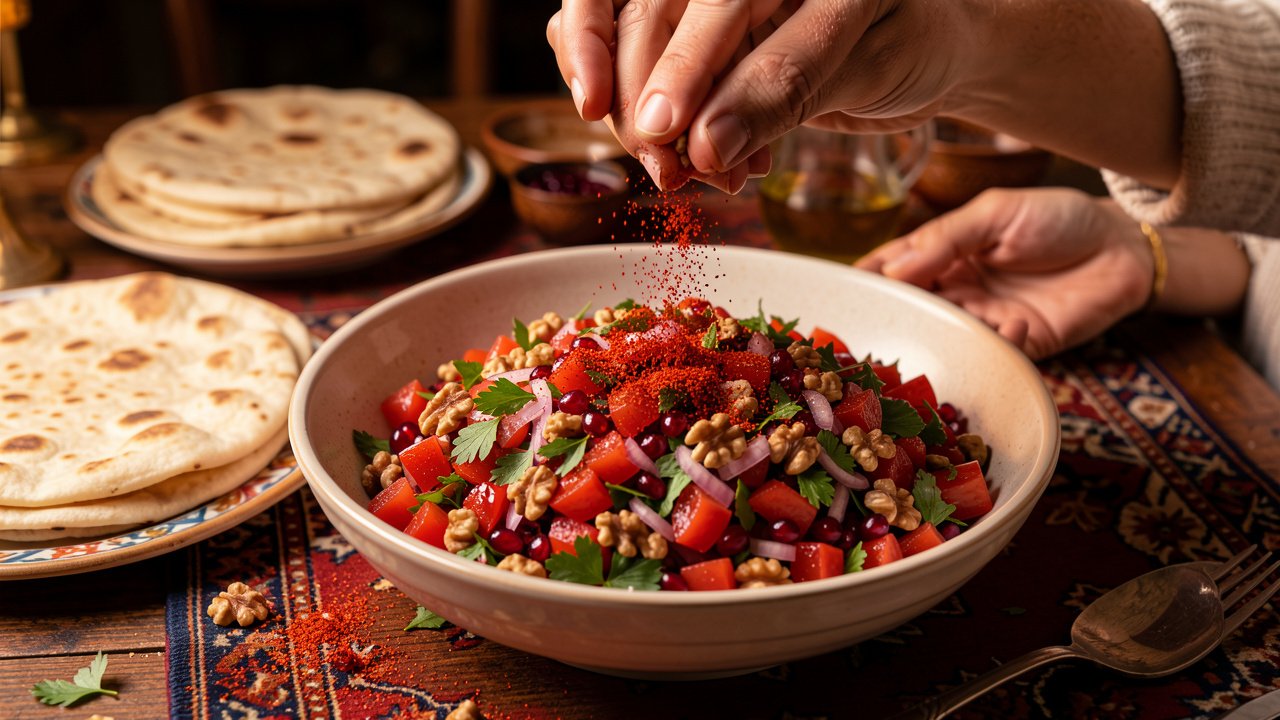
This is the salad I reach for when the tomatoes are good and the day is hot. It is bright, tangy, and crunchy all at once, with the walnuts giving it a richness that most tomato salads never have. The pomegranate molasses is what makes people ask what is in it, and the sumac gives that gentle, lemony tartness that tastes unmistakably of Antep.
The one lesson I learned early is that raw onion can bully the whole bowl. Rubbing the diced onion with salt and sumac first, and letting it sit for a few minutes, takes off that harsh bite and leaves it sweet and mellow. Skip that step and the salad tastes sharp; do it and everything falls into balance.
Why This Gavurdagi Salatasi Works
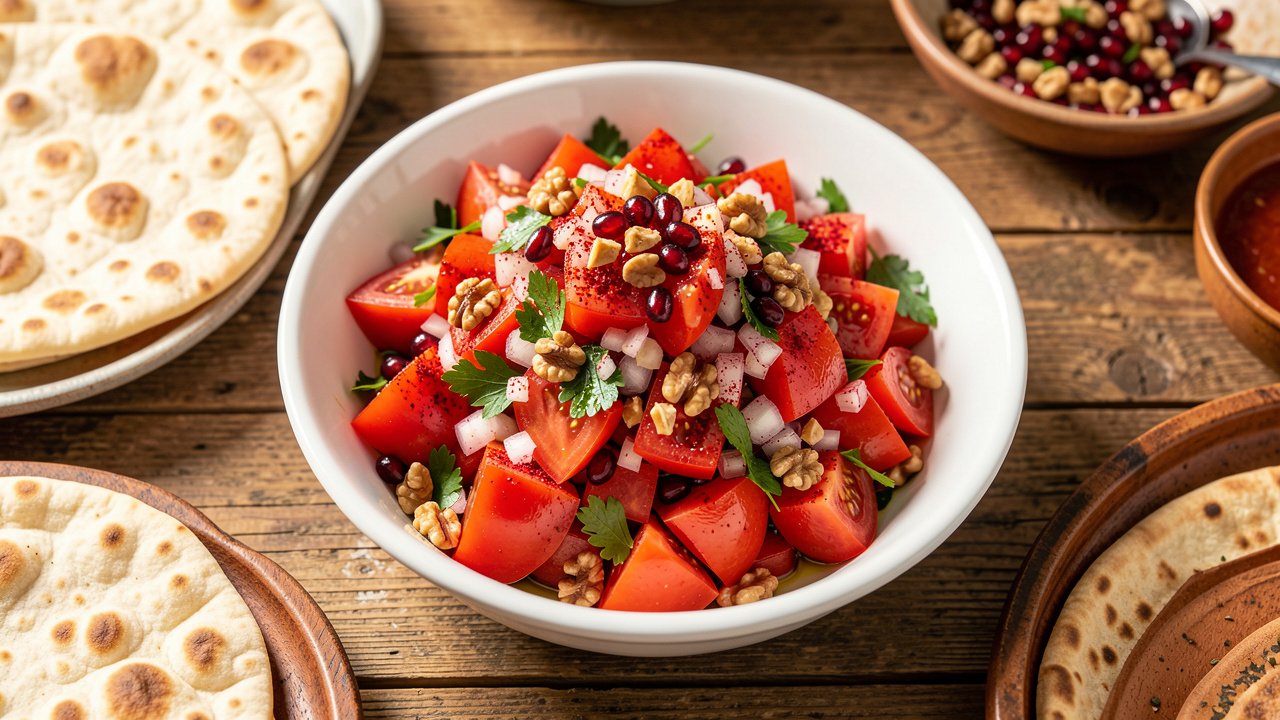
Gavurdagi salatasi succeeds because every element does one clear job. The tomatoes bring sweet, juicy body; the onion brings a savory backbone once it has been tamed; the walnuts bring crunch and a buttery richness; and the parsley keeps the whole bowl fresh and green. Nothing is fried, nothing is cooked, and yet it tastes layered and complete.
The dressing is where the magic sits. Pomegranate molasses, known in Turkish as nar eksisi, is thick, dark, and both sweet and tart at once. A couple of spoonfuls does the work of a whole vinaigrette, clinging to the tomatoes and pulling everything together. A little olive oil softens it, and a squeeze of lemon lifts it.
Sumac is the other signature. It is a deep red, coarsely ground berry with a clean, lemony sourness that is gentler than vinegar. You use it twice here, once to mellow the onion and once to finish the salad, and both times it deepens that tangy character the dish is loved for.
Best of all, it is forgiving and fast. There is no heat to manage and no timing to fret over. As long as your tomatoes are ripe and firm and you tame the onion, you have a salad that works as a meze, a side for grilled food, or a light meal scooped up with warm flatbread.
Pro observation: The salad is ready to dress when the salted onion has turned from bright white to slightly translucent and softened. That is your sign the harsh raw edge is gone and the flavors will settle sweet.
Ingredients
Kitchen Measurement Converter
Quickly convert between common cooking measurements without leaving the recipe. Pick a category, enter a value, and the result updates instantly.
Ingredient Notes & Substitutions
Tomatoes
Use firm, ripe tomatoes with real flavor and dice them small. Firmness matters here; a soft, watery tomato weeps into the bowl and turns the salad sloppy. In peak season, meaty plum or vine tomatoes are ideal.
Onion and Sumac
A regular yellow or red onion works. Rubbing it with salt and sumac tames the sharpness, so do not skip that. Sumac itself is a lemony red spice; if you must, a little extra lemon stands in, but the flavor is not the same.
Walnuts
Fresh, coarsely chopped walnuts give the salad its signature crunch and richness. Taste them first, since walnuts turn bitter when stale. A brief toast in a dry pan is optional but deepens their flavor.
Pomegranate Molasses
Nar eksisi is the heart of the dressing. Brands vary from sweet to very sharp, so add it gradually and taste. If yours is very tart, a pinch of sugar or a little extra olive oil brings it back into balance.
Equipment
- Sharp knife and board
- Large mixing bowl
- Small bowl for onion
- Measuring spoons
- Salad spoons
- Colander (optional)
Before You Start
1. Tame the onion first. The onion needs a few minutes with salt and sumac to mellow, so dice and rub it before anything else and let it sit while you prep the rest.
2. Choose firm tomatoes. Dice them small and, if they are very juicy, let the pieces drain briefly so the finished salad is not watery.
3. Dress just before serving. Everything can be prepped ahead, but hold the pomegranate molasses dressing until the last minute to keep the salad crisp and bright.
Step-by-Step Instructions
Tame the Onion
Peel and finely dice the onion. Put it in a small bowl with half a teaspoon of the salt and one teaspoon of the sumac, then rub it firmly between your fingers for about a minute. Set it aside for at least 5 minutes while you prep the rest. This softens the onion and strips away the raw, harsh bite.
Dice the Tomatoes
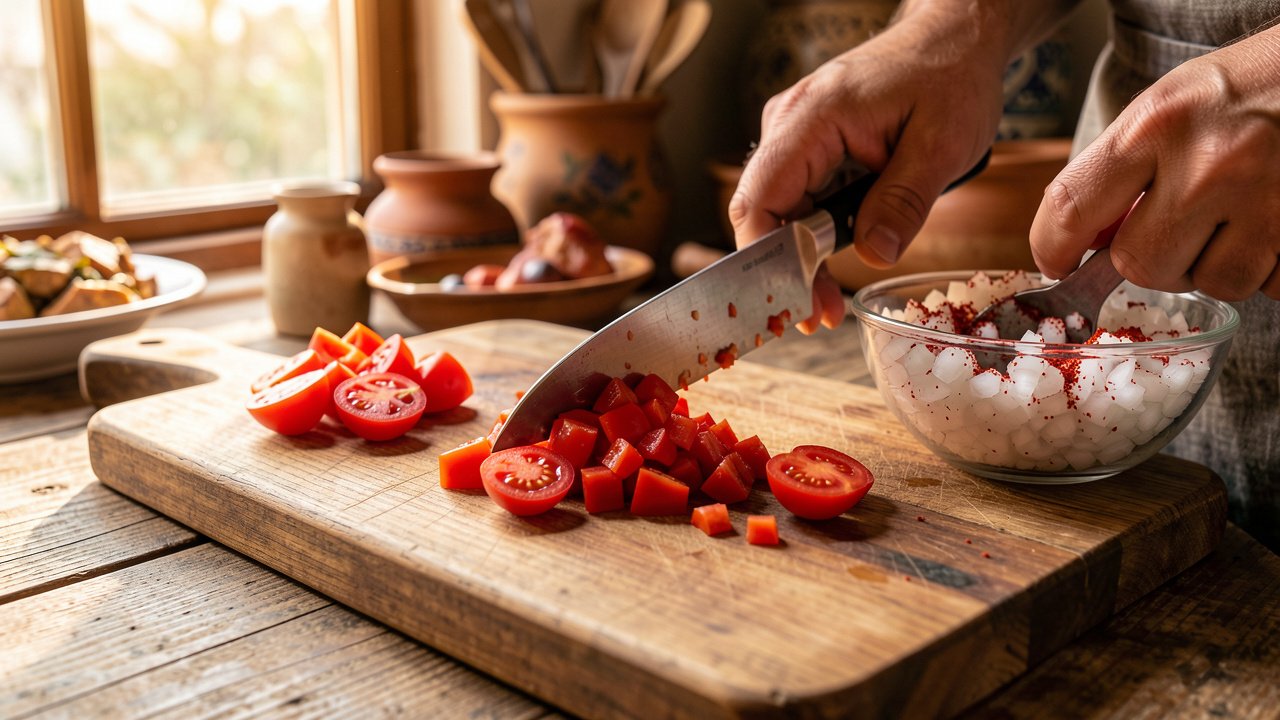
Cut the firm ripe tomatoes into small, even dice, roughly the size of the diced onion. If the tomatoes are very juicy, tip the pieces into a colander for a couple of minutes and let the loose watery seeds drain away. You want the flavorful flesh, not a puddle of juice in the bowl.
Chop the Walnuts and Parsley
Coarsely chop the walnuts so you keep some texture; you want rubbly pieces, not a fine powder. Wash and dry the flat-leaf parsley, strip the leaves from the thick stems, and chop them. A little of the tender stem is fine and adds freshness.
Mix the Dressing
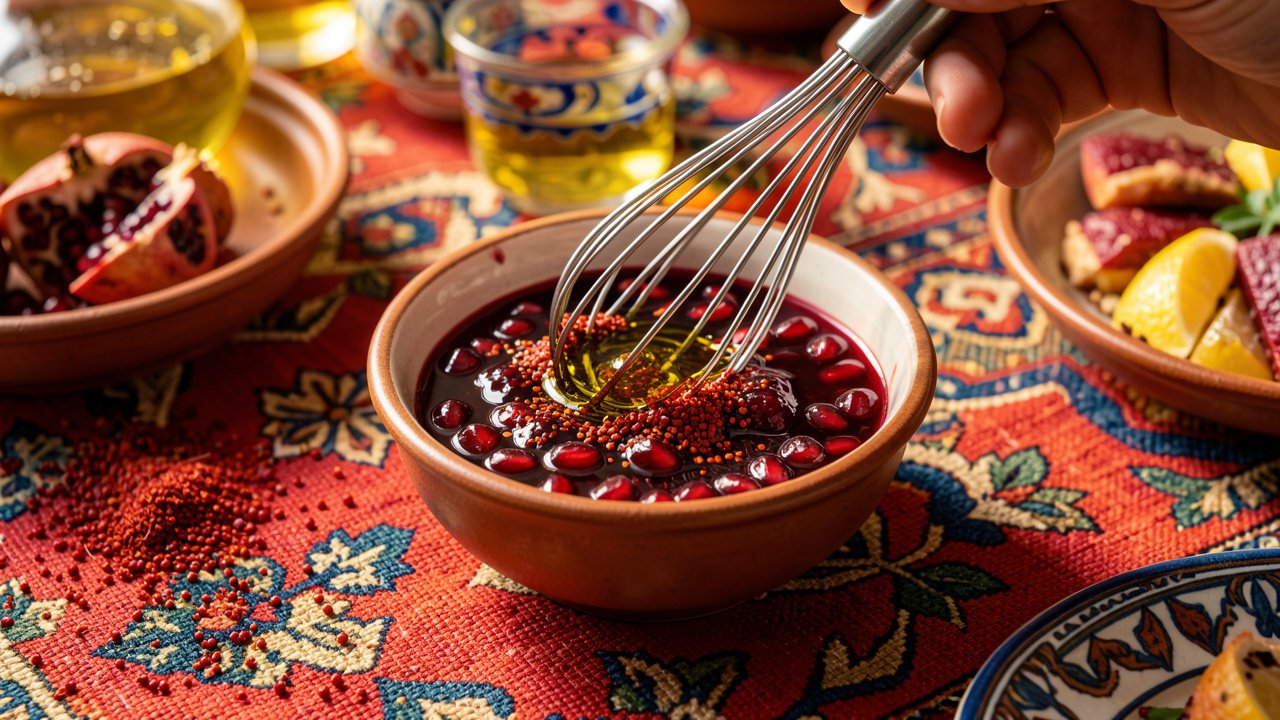
In a small bowl, whisk together the pomegranate molasses, olive oil, lemon juice, the remaining teaspoon of sumac, and the remaining half teaspoon of salt. Taste it on the tip of a spoon. It should be tangy and slightly sweet at once; if it is too sharp, add a little more olive oil, and if it is flat, add a few more drops of pomegranate molasses.
Combine Everything
Tip the diced tomatoes, the mellowed onion, the walnuts, and the parsley into a large bowl. Pour the dressing over the top and toss gently with a spoon or your hands until everything is glossy and coated. Be light-handed so the tomatoes stay intact rather than crushing into the dressing.
Rest Briefly and Serve
Let the salad sit for 5 minutes so the flavors mingle, then taste one more time and adjust with a pinch of salt, a little more sumac, or a few extra drops of pomegranate molasses. Serve at room temperature, scattered with a final dusting of sumac, alongside warm flatbread and grilled food.
Chef’s Tips From Real Kitchen Testing
Rub the onion with salt and sumac and give it real time to sit. Those few minutes are the single biggest difference between a harsh salad and a mellow, balanced one.
Taste your pomegranate molasses before you commit. Brands swing from mild to mouth-puckering, so start with a little and build up rather than dumping it all in at once.
Keep the walnuts coarse. Big rubbly pieces give bursts of crunch and richness, while finely chopped walnuts disappear into the dressing and turn it heavy.
Recipe Variations
Serving Suggestions
- Warm flatbread or pide to scoop it up
- Grilled kebabs, kofte, or chicken
- A wider meze spread with hummus and haydari
- Plain rice pilaf for a light meatless meal
Nutrition Facts
| Nutrient | Amount per serving |
|---|---|
| Calories | 210 |
| Protein | 3 g |
| Carbohydrates | 13 g |
| Fat | 17 g |
| Saturated Fat | 2 g |
| Fiber | 3 g |
| Sugar | 7 g |
| Sodium | 400 mg |
Values are estimates per serving and vary with the exact ingredients and brands you use.
Make-Ahead Tips
You can do almost all the prep ahead. Dice the tomatoes, tame the onion, chop the walnuts and parsley, and whisk the dressing, then keep each element separate and covered in the fridge for a few hours. Toss it all together only when you are ready to serve, so the tomatoes stay firm and the walnuts stay crunchy. A salad that has been dressed and left to sit turns watery and loses its lift.
Storage & Freshness
Common Mistakes to Avoid
Troubleshooting
Salad turned watery? The tomatoes were too soft or it sat too long after dressing. Drain the liquid, add a handful of fresh walnuts and parsley, and dust with sumac to revive it.
Onion still too sharp? It did not rest long enough. Next time give it a firmer rub with salt and sumac and let it sit 10 minutes; for now, a little extra olive oil softens the bite.
Dressing too sour? Your pomegranate molasses was on the sharp side. Stir in a little more olive oil or a small pinch of sugar to bring it back into balance.
A Note on Antep Cooking
Gaziantep, often just called Antep, is the culinary capital of southeastern Turkey, a city famous for its pistachios, kebabs, and a deep love of sour, tangy flavors. Pomegranate molasses and sumac appear across its tables, brightening everything from salads to grilled meats, and gavurdagi salatasi is one of the purest expressions of that taste. It sits on the meze table as a cool, tangy counterpoint to rich, smoky dishes. If you enjoy fresh tomato dishes, our tomato salsa shares the same chopped, no-cook spirit, and you can find more ideas in our full collection of tomato recipes.
Frequently Asked Questions
More Tomato Recipes to Try
Last updated: September 29, 2026