Eritrean Recipes
Fiery Berbere Beef Stew
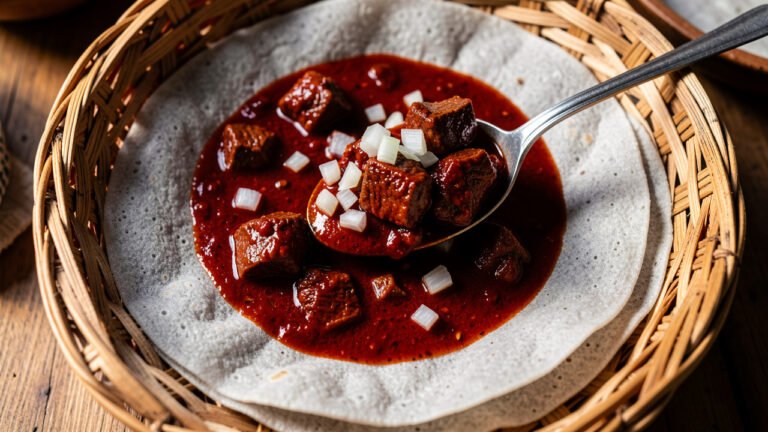
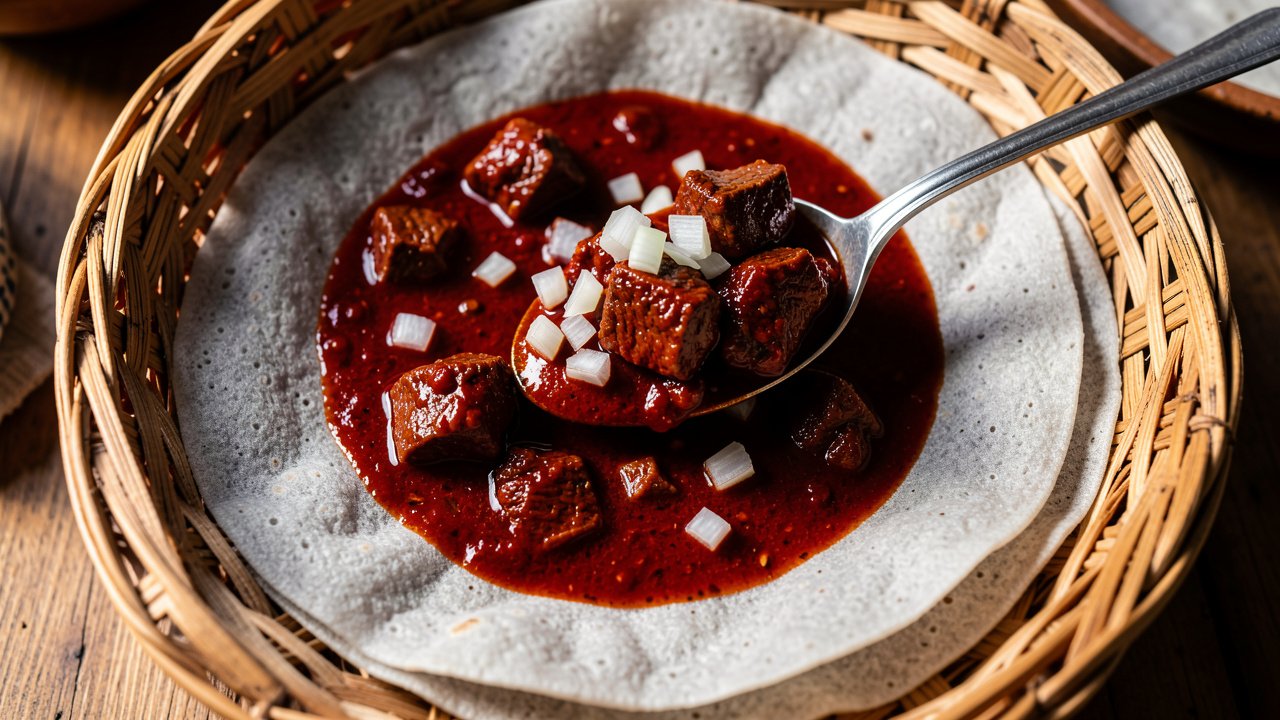
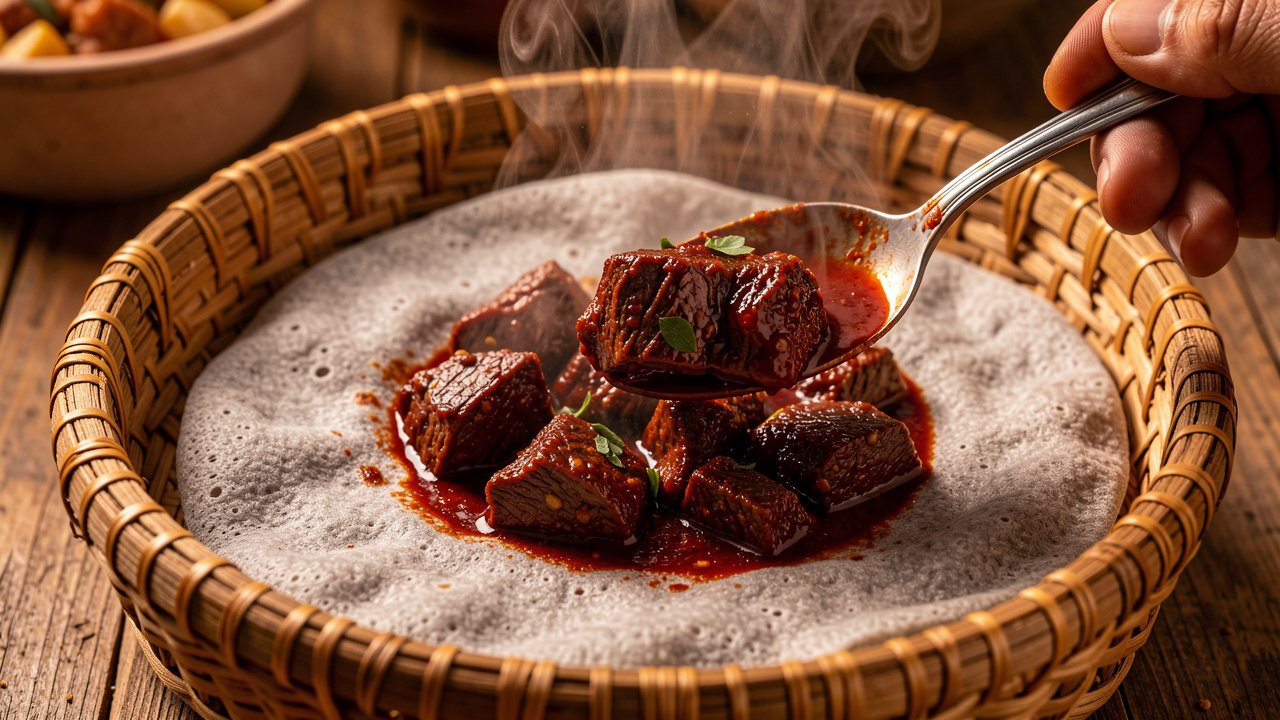
Zigni is the stew Eritrean cooks reach for when a meal has to matter. It is unapologetically spicy, deeply savory, and built on patience rather than a long shopping list. The magic is not in any single ingredient but in the order and the slow heat: onions first, dry, until they turn into a soft golden base, then oil, then berbere, then tomato, then the halal beef that drinks all of it in over a long, quiet simmer.
The first time I made it I rushed the onions and wondered why the sauce tasted thin and a little sharp. Cooked properly, that same handful of onions becomes the whole foundation of the dish. Everything after that is just layering flavor on top of a base you took the time to build.
Why This Zigni Works
Eritrean cooking is built on slow, deliberate layering, and zigni is the clearest example of it. There is no cream, no stock cube, and no shortcut sauce. All the depth comes from three things done in the right order: onions cooked down dry until they nearly melt, berbere bloomed in oil until it turns fragrant and glossy, and halal beef given enough time to turn tender and soak up the sauce.
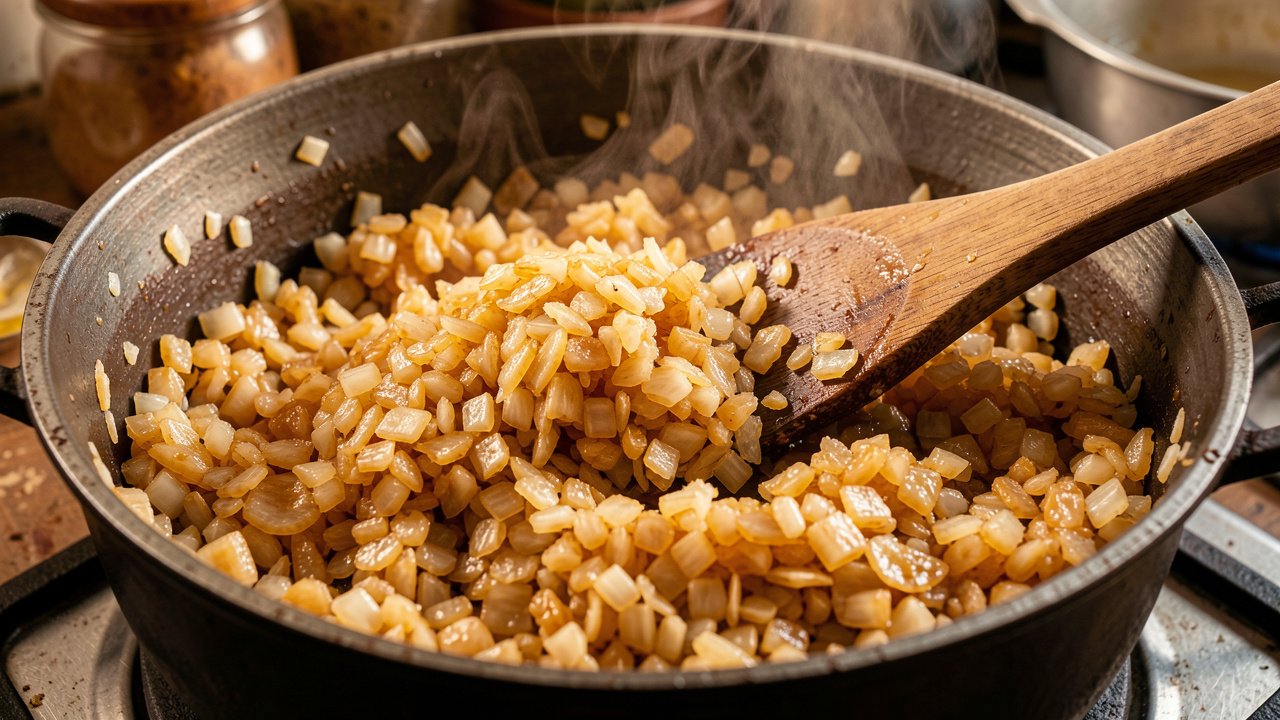
The single most important step is the dry onion foundation. You cook a big pile of finely diced onions in a dry pot, with no oil at first, stirring until they collapse into a soft, sweet, jammy base. This concentrates their flavor and removes the raw sharpness that would otherwise cut through the whole stew. Skip it and the sauce always tastes a little thin.
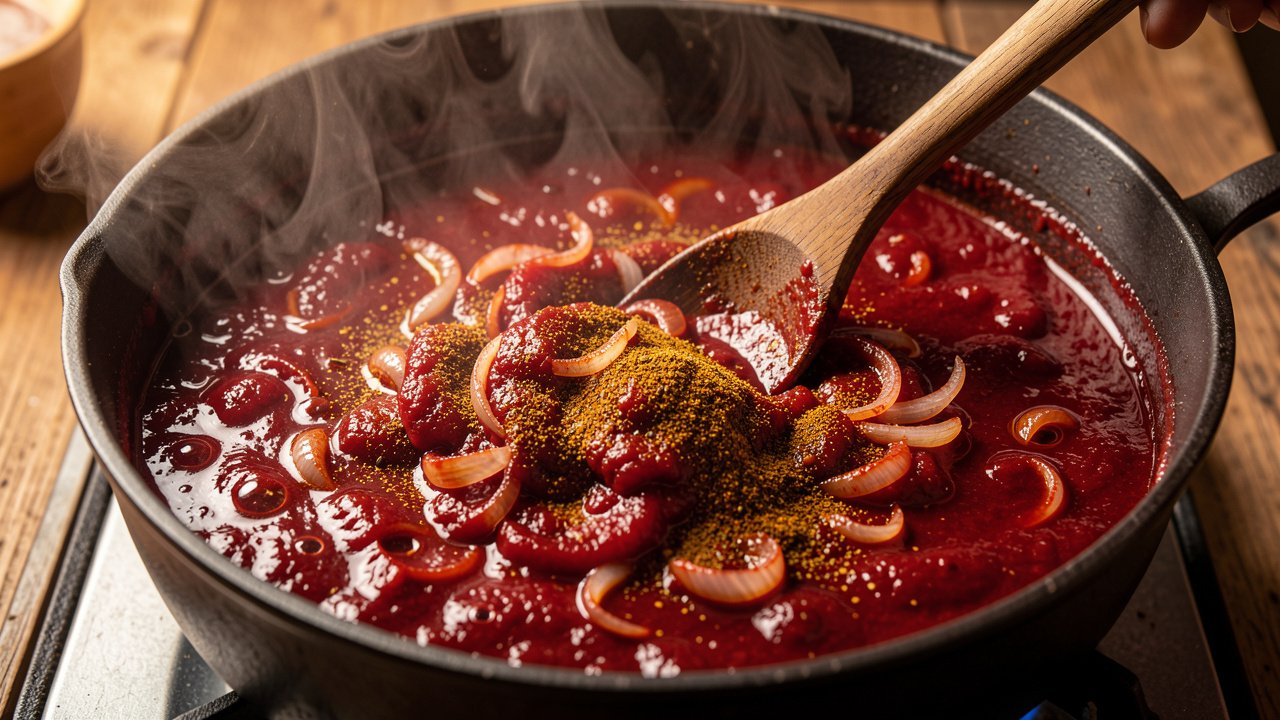
Berbere is the second pillar. It is a warm, complex chili blend, and zigni uses it generously. Blooming it in the oil, rather than stirring it into liquid later, wakes up the spices and gives the stew its signature deep red color and rounded heat. A generous hand here is what makes zigni taste like zigni rather than a mild tomato beef stew.
The tomatoes and tomato paste bridge everything together. They add body, a gentle sweetness, and just enough acidity to balance the richness of the beef and oil. Cooked down slowly, they thicken the sauce into something you can genuinely scoop up with injera.
Pro observation: The berbere base is ready for the beef when the oil starts to bead and pool at the surface in reddish droplets. That sheen means the spices have cooked through and the raw, dusty edge is gone.
Ingredients
Kitchen Measurement Converter
Quickly convert between common cooking measurements without leaving the recipe. Pick a category, enter a value, and the result updates instantly.
Ingredient Notes & Substitutions
Halal Beef
Use a well-marbled halal stewing cut such as chuck or shoulder, cut into bite-size chunks. It stays tender through the long simmer. Halal beef or lamb both work beautifully here; lamb gives a richer result.
Berbere
This is the soul of the dish. Use a good berbere blend of chili, garlic, ginger, fenugreek, and warm spices. Brands vary in heat, so start with the listed amount and add more once you taste the sauce.
Onions
You need more onion than feels normal, because it cooks all the way down into the base. Dice it finely and evenly so it softens at the same rate. Yellow or brown onions are ideal.
Tomatoes
Ripe red tomatoes plus tomato paste give the sauce its body and gentle tang. Out of season, a small can of chopped tomatoes works well and is often more reliable than pale fresh ones.
Equipment
- Heavy pot or Dutch oven
- Wooden spoon
- Sharp knife and board
- Box grater or microplane
- Measuring spoons
- Lid for the pot
Before You Start
1. Dice the onions finely and generously. They are the foundation, not a garnish, so take the time to cut them evenly. A fine, uniform dice melts down into a smooth base.
2. Trim and cube the beef. Cut halal beef into even bite-size chunks so it cooks at the same rate. Pat it dry so it browns rather than steams.
3. Measure the berbere and paste. Have the berbere, tomato paste, garlic, and ginger ready by the stove, because the blooming stage moves quickly once the onions are down.
Step-by-Step Instructions
Prep the Beef and Aromatics
Cut the halal beef into even bite-size chunks and pat them dry. Finely dice the onions, mince the garlic, and grate the ginger. Measure the berbere and tomato paste into small bowls so everything is ready to go the moment the onions are down.
Cook the Onions Down Dry
Put the diced onions into a heavy dry pot over medium heat, with no oil yet. Stir often and let them slowly release their moisture and collapse, about 12 to 15 minutes, until soft, deep golden, and jammy. If they threaten to catch, lower the heat and add a spoonful of water. This dry foundation is the flavor base of the whole stew, so do not rush it.
Add Oil, Garlic, and Ginger
Pour the vegetable oil into the softened onions and stir. Add the minced garlic and grated ginger and cook 1 to 2 minutes, stirring, until the raw smell disappears and the mix smells sweet and fragrant. The onions will loosen into a glossy paste as the oil coats them.
Bloom the Berbere and Build the Sauce
Stir in the berbere and tomato paste and cook for 2 to 3 minutes, stirring constantly, so the spices bloom and turn deep red and glossy. Add the chopped tomatoes and the black pepper, and cook 8 to 10 minutes until the tomatoes collapse and the oil starts to bead reddish at the surface. This is your deep red zigni base.
Add the Beef and Simmer Slowly
Add the halal beef chunks and stir to coat them in the red sauce. Cook 5 minutes so the surface of the meat seizes and takes on color. Pour in the warm water and the salt, stir, then bring to a gentle simmer. Cover and cook on low for 60 to 75 minutes, stirring now and then, until the beef is fork-tender and the sauce has thickened.
Rest, Adjust, and Serve on Injera
Uncover and check the beef; it should be tender enough to pull apart with a spoon. If the sauce is thin, simmer uncovered a few minutes to reduce; if too thick, add a splash of warm water. Taste and adjust salt or berbere. Let it rest 5 minutes off the heat, then serve hot over injera or rice.
Chef’s Tips From Real Kitchen Testing
Give the onions their full time in the dry pot. That slow melt is what separates a rich zigni from a thin, sharp one, and it cannot be hurried with higher heat.
Taste your berbere before you commit. Blends vary a lot in heat and salt, so add the listed amount, cook it, then adjust once the sauce comes together.
Keep the simmer low and lidded. A gentle, steady heat over an hour is what turns the beef silky; a hard boil tightens the meat and makes it tough.
Recipe Variations
Serving Suggestions
- Soft injera for scooping, the classic pairing
- Steamed rice for an easy weeknight version
- A cooling side of plain yogurt or ayib-style fresh cheese
- Sauteed collard greens or a simple tomato-onion salad
Nutrition Facts
| Nutrient | Amount per serving |
|---|---|
| Calories | 420 |
| Protein | 32 g |
| Carbohydrates | 14 g |
| Fat | 26 g |
| Saturated Fat | 8 g |
| Fiber | 4 g |
| Sugar | 7 g |
| Sodium | 680 mg |
Values are estimates per serving and vary with the exact cut of beef, oil, and berbere you use.
Make-Ahead Tips
Zigni is a wonderful make-ahead dish, because the berbere and beef deepen overnight in the fridge. Cook it a day ahead, cool, and refrigerate. Reheat gently on the stove and stir in a splash of warm water to loosen the sauce, since it thickens as it sits. The flavor is often even better on the second day.
Storage, Freezing & Reheating
Common Mistakes to Avoid
Troubleshooting
Sauce tastes thin or sharp? The onions likely needed longer in the dry pot. Simmer a little longer to concentrate the sauce and add a small spoon of tomato paste to round it out.
Beef still tough? It simply needs more time. Add a splash of warm water, cover, and keep it at a low simmer until it pulls apart easily.
Too fiery? Serve it with extra injera or rice and a cooling side of plain yogurt, which tempers the heat without changing the stew.
A Note on Eritrean Cooking
Eritrean home cooking is patient, communal, and built around berbere and the slow onion foundation you see in zigni. Berbere, a warm and fiery chili blend, is the backbone of countless stews, and the ritual of cooking onions down dry before any oil or spice goes in is what gives those stews their signature depth. Meals are traditionally shared from a single platter of injera, the soft, slightly sour flatbread that doubles as plate and utensil, with stews spooned across its surface for everyone to scoop.
Eritrean and Ethiopian stews are close cousins, since the two cuisines share berbere, injera, and a family of slow-simmered dishes. Zigni sits right alongside the Ethiopian key wat, and cooks on both sides make it their own with small differences in spice and technique. If you enjoy deep, warming tomato-based bowls, our hearty tomato lentil soup shares the same comforting, spice-forward spirit.
Food-safety note: Cook the halal beef until it is fork-tender and piping hot all the way through, with no pink at the center of the chunks. Whole beef pieces are safe once the outside is seared and the interior reaches a hot, steady simmer for the full cooking time.
Frequently Asked Questions
More Tomato Recipes to Try
Last updated: September 29, 2026