Czech Recipes
Sweet-Sour Tomato Sauce with Beef and Dumplings
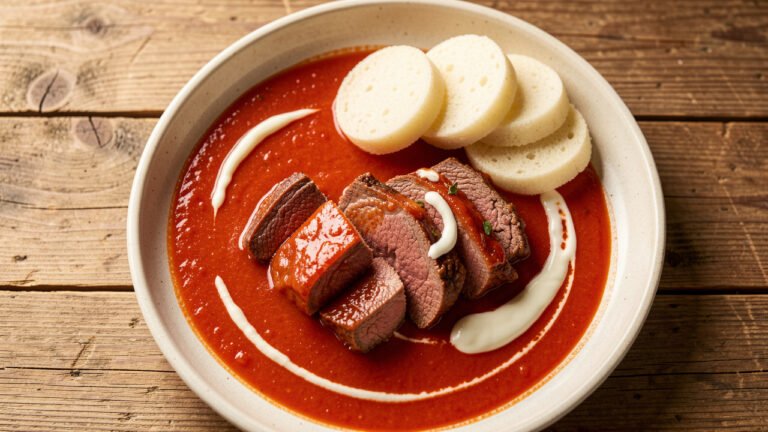
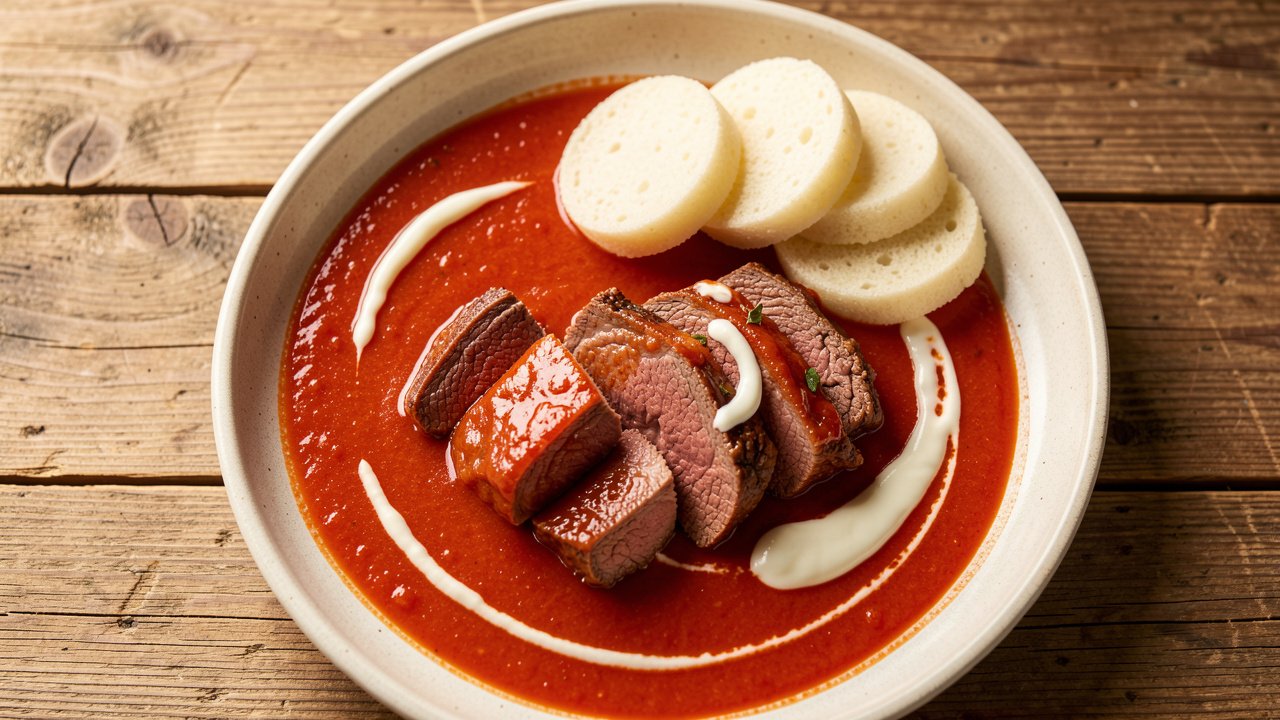
Rajska omacka, sometimes written rajska omacka or simply called Czech tomato sauce, is the kind of dish that turns a plain weekday into something worth sitting down for. Slices of slow-cooked halal beef rest in a velvety red sauce that is sweet, tangy, and warmly spiced all at once, and the whole thing is built to be mopped up with soft slices of bread dumpling.
The first time I made it, I rushed the sauce and served it thin and sharp. The magic, I learned, is patience: a slow simmer that tenderizes the meat, a roux cooked just enough to lose its raw taste, and a careful hand balancing sugar against vinegar until the two sit in perfect tension.
Why This Rajska Omacka Works
Czech cooking loves a sauce, and rajska omacka is one of its most beloved. The whole dish rests on a single idea: a tomato sauce that is neither a soup nor a ketchup, but a smooth, spoonable sauce with real body. That body comes from two things working together, a light roux and finely grated vegetables, which give the sauce its signature silky cling without any lumps or grit.
The flavor is what makes people ask for seconds. Sugar and vinegar are added in careful balance so the sauce lands squarely between sweet and sour, the way a good glass of tart cordial does. Warm whole spices, bay, allspice, peppercorns, and just a hint of cinnamon, steep in the simmering liquid and give the sauce a rounded, almost mulled depth that plain tomato sauces never reach.
The halal beef is the quiet hero. Cooked low and slow in the sauce, tougher, more flavorful cuts break down into fork-tender slices while lending the sauce a savory richness that no shortcut can copy. By the time it is done, the meat and the sauce taste like they belong together.
Finally, a splash of cream at the end softens any sharp edges and gives the sauce that glossy, restaurant sheen. Ladled over pillowy bread dumplings, it becomes exactly the kind of Sunday lunch that Czech families have made for generations.
Pro observation: The sauce is ready when a spoon drawn across the bottom of the pot leaves a trail that fills back in slowly. That coating consistency is the sign your roux and reduction have done their job.
Ingredients
Kitchen Measurement Converter
Quickly convert between common cooking measurements without leaving the recipe. Pick a category, enter a value, and the result updates instantly.
Ingredient Notes & Substitutions
Halal Beef
Choose a well-marbled, slow-cooking cut of halal beef such as chuck or brisket. These tougher cuts turn meltingly tender over a long simmer and give the sauce its savory backbone. Leaner cuts can dry out, so avoid them here.
Tomato Puree
Smooth tomato puree or passata gives the cleanest, glossiest sauce. If you only have chopped tomatoes, blend them first so the finished sauce stays velvety rather than chunky.
Sweet and Sour
Sugar and vinegar are the soul of this sauce. Plain white vinegar is traditional and halal-friendly for the sour note. Add both gradually and taste as you go, since the ideal balance depends on how acidic your tomatoes are.
Whole Spices
Bay, allspice, peppercorns, and a small piece of cinnamon steep whole and are fished out before serving. A tea infuser or small muslin bundle makes them easy to retrieve.
Equipment
- Heavy pot or Dutch oven
- Wooden spoon
- Box grater
- Whisk
- Fine sieve or blender
- Sharp knife and board
Before You Start
1. Bring the beef to room temperature. Pat the cubes of halal beef dry so they brown well rather than steam, which builds deeper flavor from the first minute.
2. Bundle the whole spices. Tie the bay, allspice, peppercorns, and cinnamon in a small piece of muslin or drop them in a tea infuser so you can lift them out cleanly at the end.
3. Start the dumplings or rice. Bread dumplings take time to steam, so get them going early, or put on a pot of rice if you prefer a quicker side.
Step-by-Step Instructions
Brown the Halal Beef
Pat the cubes of halal beef dry and season lightly with salt. Heat the butter or oil in a heavy pot over medium-high heat and brown the beef on all sides in batches, about 6 to 8 minutes total. Do not crowd the pot. Lift the browned meat out and set it aside while you build the sauce base.
Soften Onion and Carrot
Lower the heat to medium and add the finely chopped onion to the same pot. Cook 5 to 6 minutes until soft and golden, scraping up the browned bits left by the meat. Stir in the grated carrot and cook 2 minutes more until it starts to soften and sweeten the base.

Make the Roux
Sprinkle the flour over the vegetables and stir constantly for 2 to 3 minutes, letting it toast to a pale golden color. This light roux is what thickens the sauce, so cook it long enough to lose its raw, floury smell but not so long that it browns and turns bitter.
Build the Sweet-Sour Sauce
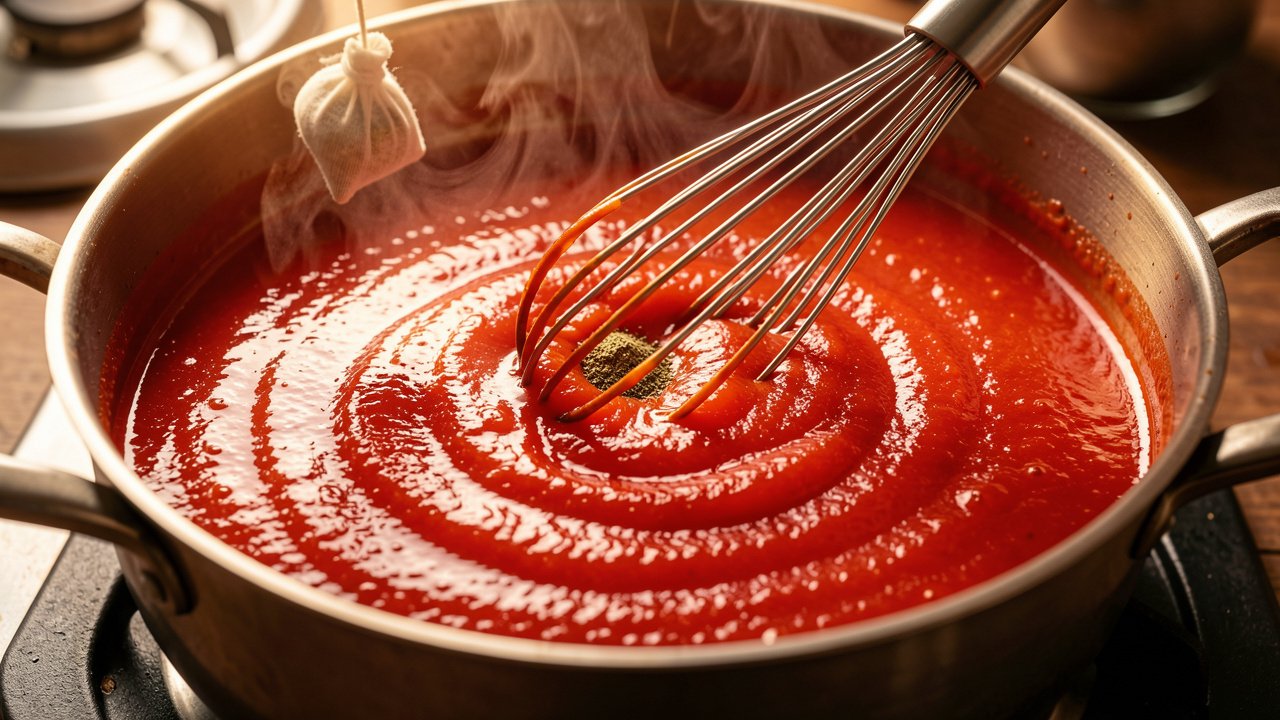
Pour in the tomato puree and beef stock a little at a time, whisking after each addition so the roux blends in smoothly with no lumps. Add the sugar, vinegar, salt, and the bundle of bay, allspice, peppercorns, and cinnamon. Stir until the sauce is glossy and even.
Simmer the Beef Until Tender
Return the browned halal beef and any resting juices to the pot. Bring the sauce to a gentle simmer, then cover and cook on low for 75 to 90 minutes, stirring now and then, until the meat is fork-tender. Add a splash of stock or water if the sauce reduces too far before the beef is done.
Finish with Cream and Serve
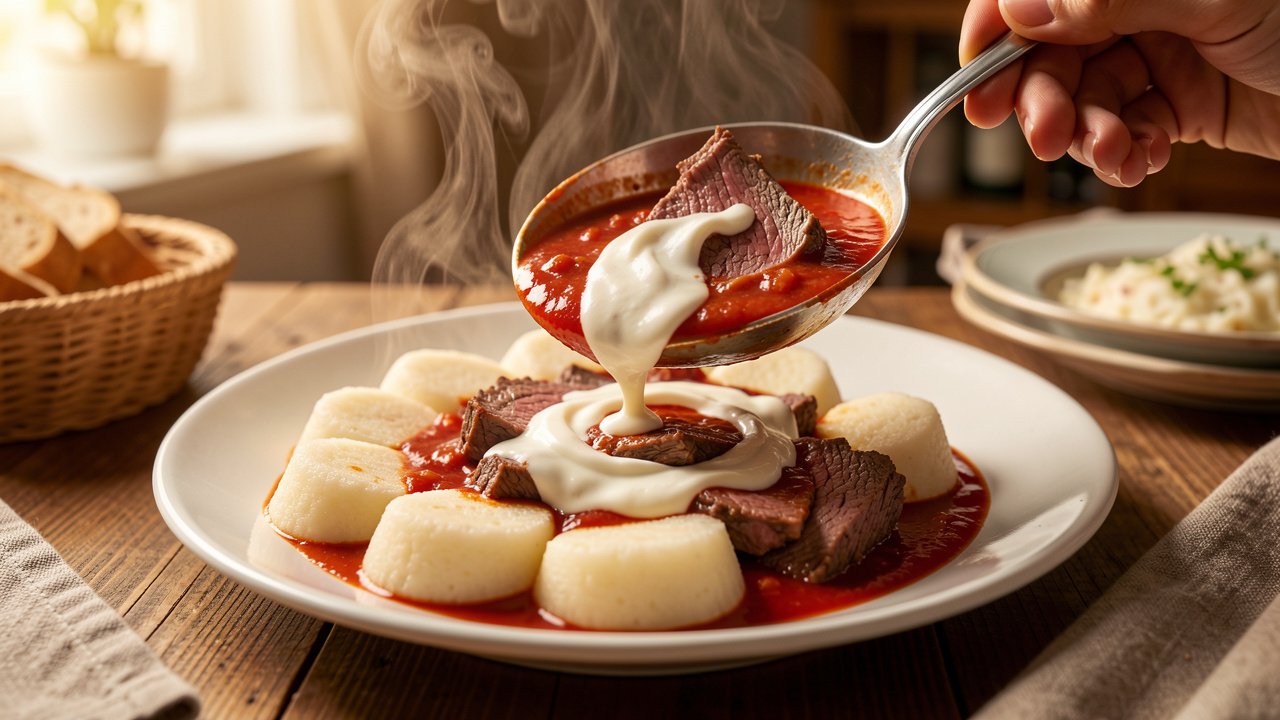
Lift out the spice bundle. Taste and adjust the balance, adding a pinch more sugar or a few drops of vinegar until the sweet and sour sit in harmony. For a silkier finish, stir in the cream off the boil and warm through gently without letting it bubble. Ladle the sauce and beef over bread dumplings and serve hot.
Chef’s Tips From Real Kitchen Testing
Cook the roux until it smells nutty and toasty before adding liquid. A raw roux leaves a pasty taste, while a well-cooked one thickens cleanly and tastes richer.
Balance sweet and sour at the very end, not the start. As the sauce reduces the flavors concentrate, so save your final adjustment of sugar and vinegar for the last few minutes.
Give the halal beef the time it needs. A gentle, unhurried simmer is the only way to reach that fork-tender texture; high heat only makes the meat tighten and toughen.
Recipe Variations
Serving Suggestions
- Soft bread dumplings (knedliky), the classic pairing
- Steamed white rice for a quicker side
- Boiled potatoes or buttered egg noodles
- A crisp green salad to cut the richness
Nutrition Facts
| Nutrient | Amount per serving |
|---|---|
| Calories | 380 |
| Protein | 32 g |
| Carbohydrates | 20 g |
| Fat | 18 g |
| Saturated Fat | 8 g |
| Fiber | 3 g |
| Sugar | 12 g |
| Sodium | 620 mg |
Values are estimates per serving and vary with the exact ingredients and brands you use.
Make-Ahead Tips
Rajska omacka is even better the next day, once the spices have had time to settle into the sauce and the halal beef has soaked up more flavor. Make it a day ahead, cool it, and refrigerate. Reheat gently on the stove, loosening with a little stock or water since the sauce thickens as it sits, and stir in the cream only after warming so it does not split.
Storage, Freezing & Reheating
Common Mistakes to Avoid
Troubleshooting
Sauce too thin? Simmer uncovered for a few minutes to reduce, or whisk a teaspoon of flour into a little cold water and stir it in, then cook until it thickens.
Sauce has lumps? Blend it briefly with a stick blender or pass it through a fine sieve, then return it to the pot and reheat.
Beef still tough? It simply needs more time. Cover and keep simmering gently, checking every 15 minutes until the meat pulls apart easily.
Too sour or too sweet? Correct it in tiny increments, a pinch of sugar to tame the tang or a few drops of vinegar to lift a flat, sugary sauce.
A Note on Czech Cooking
Czech home cooking is built around a family of thick, spoonable sauces, called omacky, that are ladled generously over meat and dumplings. Rajska omacka, the tomato one, sits alongside cousins like svickova and koprova, and all of them share the same comforting logic: a smooth sauce with a clear sweet-sour or creamy character, designed to be soaked up rather than sipped.
The bread dumplings, knedliky, are almost as important as the sauce itself. Steamed from an enriched dough and sliced into soft rounds, they act like edible spoons, catching every drop. For many Czech families this dish is Sunday lunch, the meal that gathers everyone around the table. If you enjoy warming, saucy tomato dishes, our hearty tomato lentil soup shares the same cozy, well-spiced spirit, and you can browse more ideas in our full collection of tomato recipes.
Food-safety note: Because rajska omacka uses a slow-cooked cut, the halal beef should be simmered until fully cooked and fork-tender, with no pink remaining, which corresponds to a safe internal temperature of at least 145 F for whole cuts (or 160 F if you use ground beef in the meatball variation), rested before serving.
Frequently Asked Questions
More Tomato Recipes to Try
Last updated: September 29, 2026