Malagasy Recipes
Madagascar’s National Dish of Beef and Leafy Greens
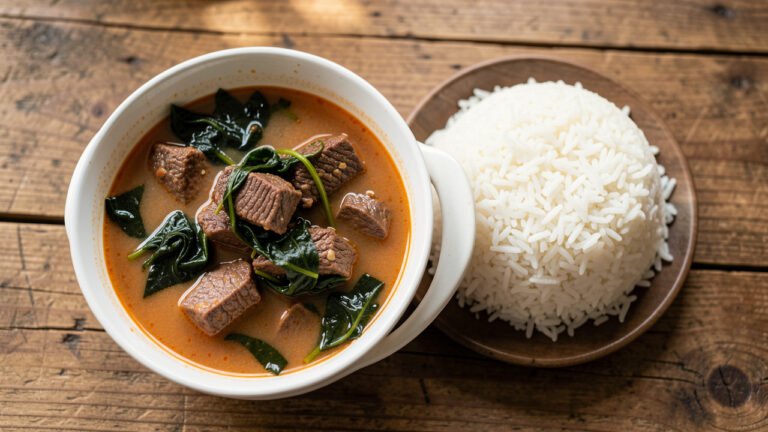
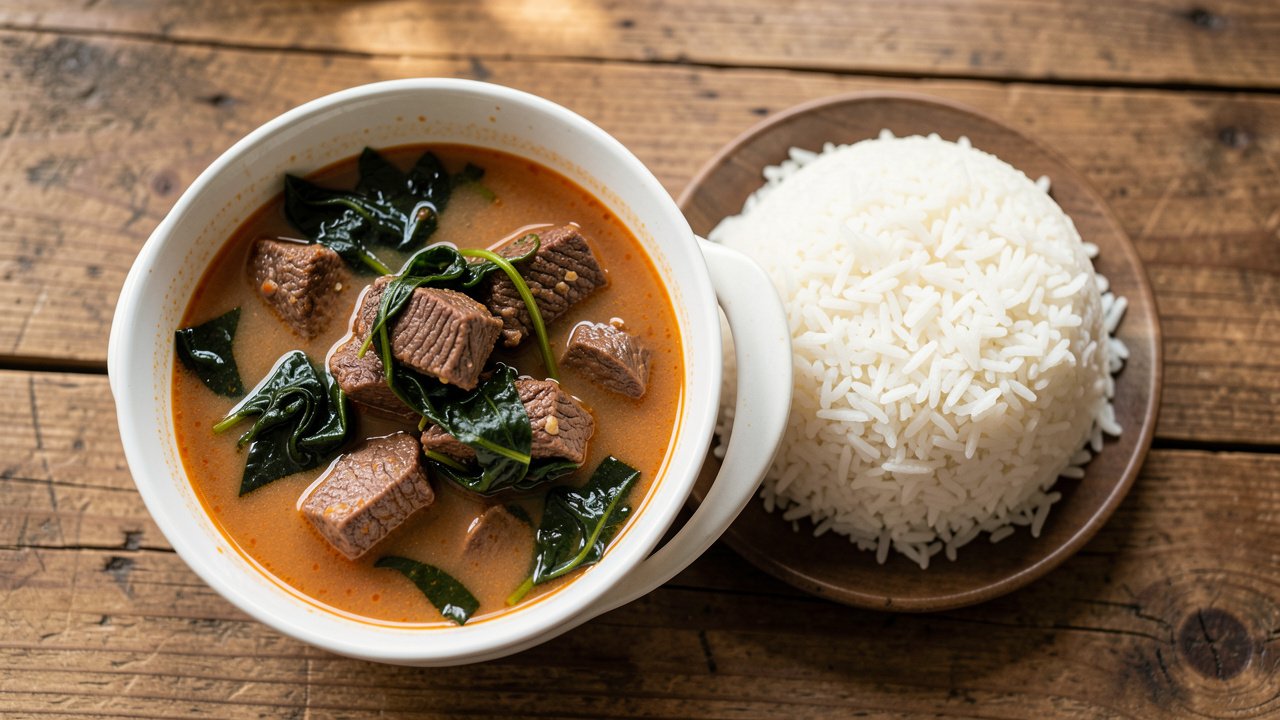
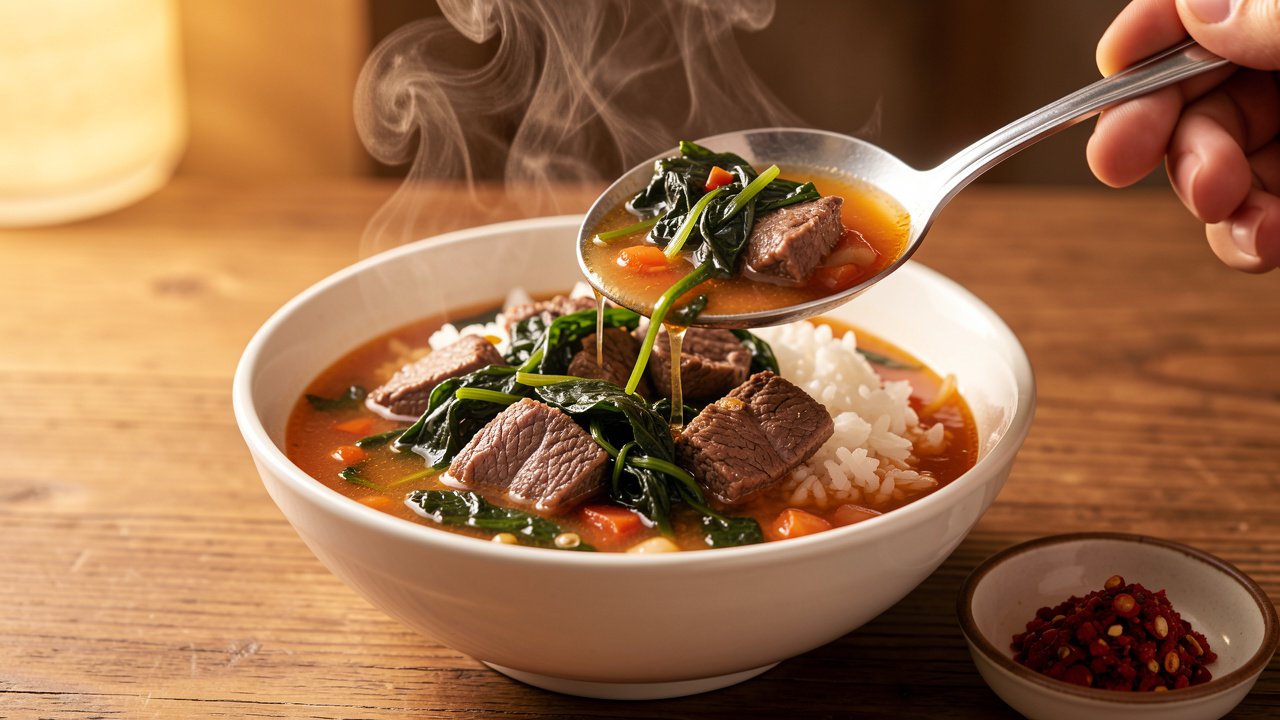
Romazava looks humble in the pot and tastes like far more than the sum of its parts. A clear, gingery tomato broth carries tender pieces of halal beef, and then a mountain of leafy greens wilts down into it at the end, turning the whole thing green, fragrant, and faintly bitter in the best way. It is comfort food and celebration food all at once in Madagascar.
The first time I made it I rushed the beef and pulled it off the heat too early; the meat stayed chewy and the broth tasted thin. The fix was simple: simmer low and slow, and add the greens only in the last few minutes so they stay bright instead of turning to mush.
Why This Romazava Works
Romazava succeeds because it does very little to a few good ingredients and lets time do the rest. There is no tricky technique and no long spice list. You build a clean base of onion, garlic, ginger, and tomato, add halal beef and water, and simmer patiently until the meat surrenders and the broth turns savory.
The single most important move is the slow simmer. Collagen-rich cuts of halal beef need low, steady heat to become fork-tender, and that same slow cooking gives the broth its depth. Rush it and you get chewy meat in watery liquid; wait it out and you get silky beef in a deeply savory broth.
The second secret is timing the greens. The traditional green is the bitter anamalao, or paracress, but a mix of mustard greens, spinach, and watercress gives the same layered, peppery-bitter character. Add them only at the very end so they wilt but stay vivid rather than dissolving into mush.
Finally, ginger is the quiet backbone. A generous amount, grated in early and simmered throughout, gives romazava its warm, herbal lift and keeps the broth feeling light even though it is a hearty meat stew.
Pro observation: The broth is ready for the greens when a piece of beef pulls apart easily under gentle pressure from a spoon. If it still resists, keep simmering; the greens can wait, but the meat cannot be rushed.
Ingredients
Kitchen Measurement Converter
Quickly convert between common cooking measurements without leaving the recipe. Pick a category, enter a value, and the result updates instantly.
Ingredient Notes & Substitutions
Halal Beef
Use a slow-cooking cut of halal beef such as chuck, shin, or shoulder. These collagen-rich cuts turn meltingly tender over a long simmer. Leaner cuts stay firm and dry, so avoid them here.
Leafy Greens
The traditional green is bitter anamalao, or paracress. Since it is hard to find abroad, a mix of mustard greens, spinach, and watercress gives the same layered, slightly bitter-peppery flavor. Use whatever combination you can get.
Ginger and Garlic
Fresh ginger defines the broth, so do not skimp or use dried. Grate it fine so it melts into the liquid. Fresh garlic adds a savory backbone; jarred paste works in a pinch but tastes duller.
Tomatoes
Ripe red tomatoes give the broth its gentle tang and color. Out of season, one 14-ounce can of chopped tomatoes is a reliable swap and often tastes better than pale winter tomatoes.
Equipment
- Large heavy pot or Dutch oven
- Wooden spoon
- Sharp knife and board
- Box grater or microplane
- Ladle
- Colander for greens
Before You Start
1. Cut the beef evenly. Trim the halal beef and cut it into similar-sized cubes so every piece cooks tender at the same rate.
2. Wash the greens well. Leafy greens can hide grit, so rinse them thoroughly in a colander, then chop them and set them aside so they are ready to go in at the end.
3. Start the rice alongside. Romazava is always served over steamed white rice, so get the rice going while the stew simmers so both are hot at the same time.
Step-by-Step Instructions
Prep the Aromatics and Meat
Chop the onion, mince the garlic, grate the ginger, and chop the tomatoes. Trim the halal beef and cut it into even cubes, roughly one inch across. Rinse and chop all the leafy greens and keep them near the stove for later.
Sear the Beef and Aromatics
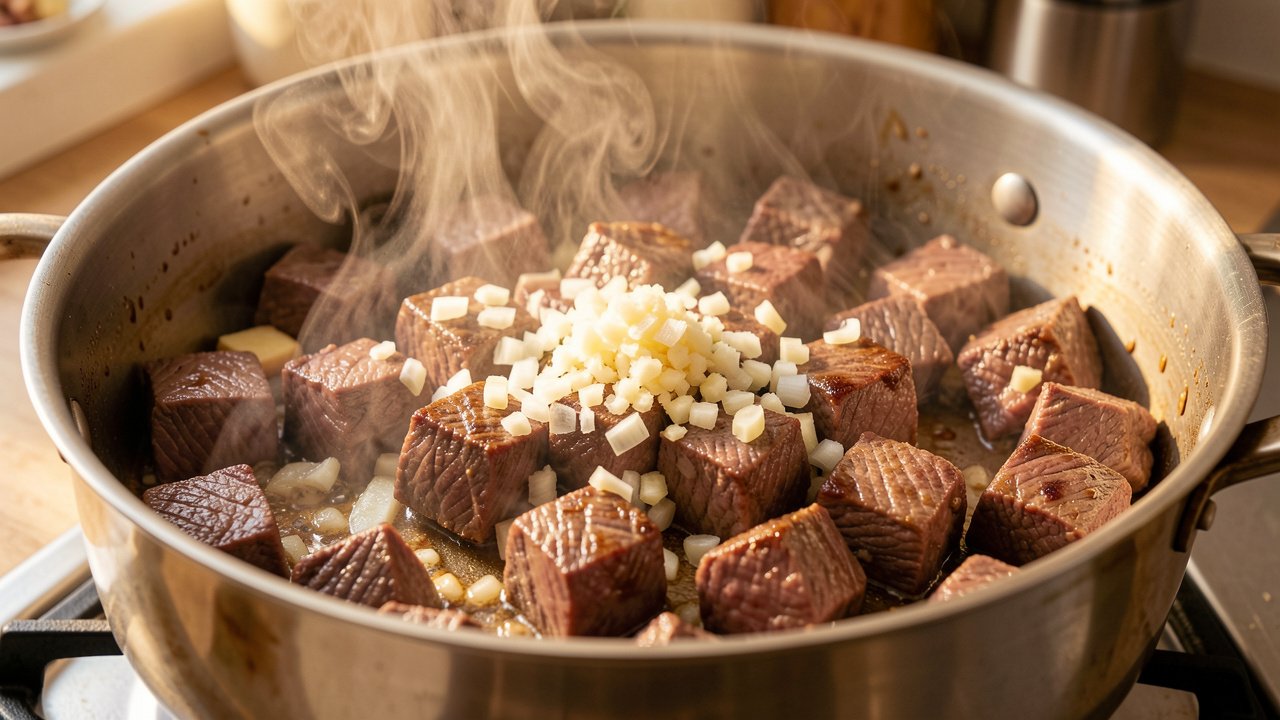
Heat the oil in a large heavy pot over medium-high heat. Add the halal beef cubes and let them color on a couple of sides for 4 to 5 minutes; aim for light browning, not a hard crust. Add the onion, garlic, and ginger, and cook 3 to 4 minutes more until the onion softens and the pot smells fragrant.
Add Tomatoes and Water
Stir in the tomatoes and cook 3 to 4 minutes until they break down and release their juice. Pour in the water or beef broth, then add the salt and black pepper. Stir well, scraping up anything stuck to the bottom of the pot to build flavor.
Simmer Low and Slow
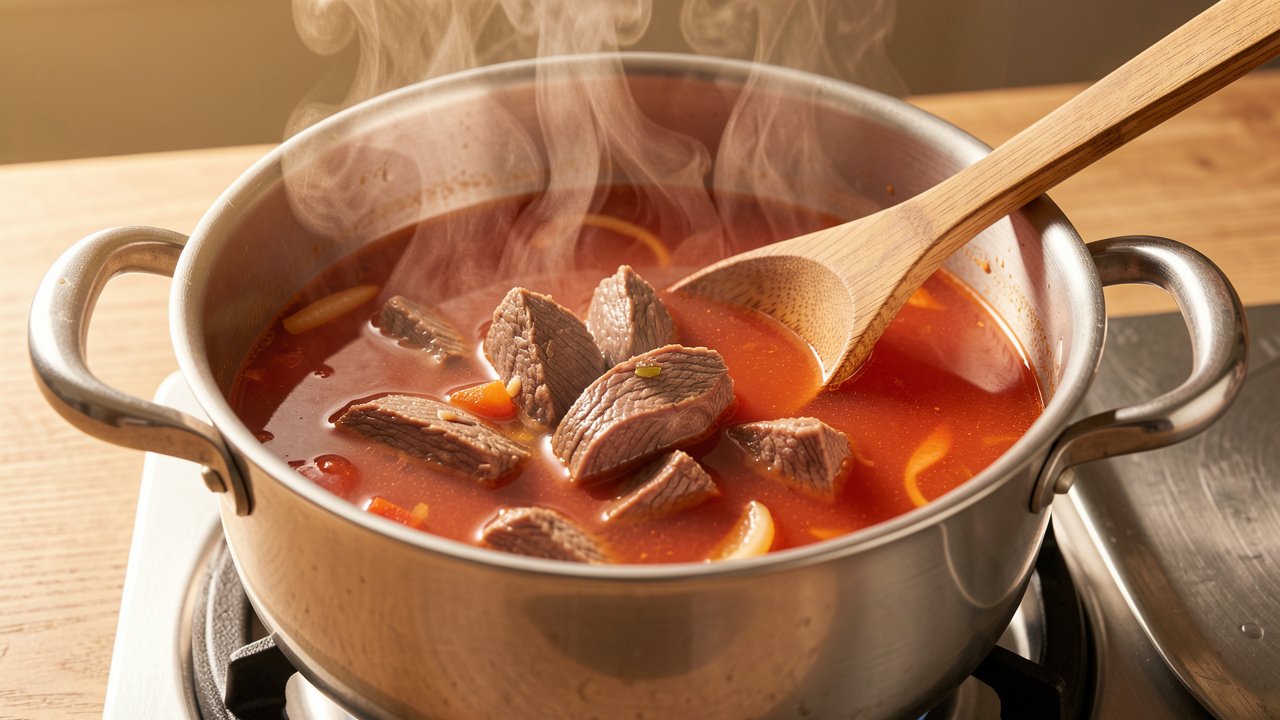
Bring to a boil, then lower to a gentle simmer and partially cover. Cook 60 to 70 minutes, stirring now and then, until the halal beef is fork-tender and the broth has reduced and turned savory. Skim off any foam that rises early for a cleaner broth.
Wilt in the Greens
When the beef is tender, add the mustard greens first, since they are the sturdiest, and simmer 3 minutes. Then stir in the spinach, watercress, and green onions. Cook just 3 to 4 minutes more, until the greens are wilted but still bright green. Taste and adjust the salt.
Serve Over Rice
Ladle the romazava into bowls, making sure each gets plenty of broth, beef, and greens. Serve piping hot over mounds of steamed white rice so it soaks up the gingery broth. Offer sakay chili paste at the table for those who want heat.
Chef’s Tips From Real Kitchen Testing
Give the beef time. A slow simmer is the whole game; if the meat still resists the spoon, keep going, because the greens can wait but tough beef will not fix itself.
Add the greens in stages, sturdiest first. Mustard greens need a few minutes head start; delicate spinach and watercress only need a couple, so they stay green and fresh.
Do not oversalt early. The broth reduces as it simmers, concentrating the seasoning, so salt lightly at the start and adjust at the very end.
Recipe Variations
Serving Suggestions
- Steamed white rice, the traditional partner
- Sakay chili paste for heat at the table
- A wedge of fresh lime or lemon
- A simple tomato and onion side salad
Nutrition Facts
| Nutrient | Amount per serving |
|---|---|
| Calories | 320 |
| Protein | 34 g |
| Carbohydrates | 14 g |
| Fat | 14 g |
| Saturated Fat | 4 g |
| Fiber | 3 g |
| Sugar | 5 g |
| Sodium | 720 mg |
Values are estimates per serving of the stew, without rice, and vary with the exact cut and ingredients you use.
Make-Ahead Tips
Romazava is a fine make-ahead dish, since the broth and beef only taste better after a rest in the fridge. Cook the stew through the simmer but hold back the greens. Refrigerate the broth and meat, then reheat gently and wilt in fresh greens just before serving. Cook the rice fresh for the best texture.
Storage, Freezing & Reheating
Common Mistakes to Avoid
Troubleshooting
Beef still tough? It simply needs more time. Keep the pot at a gentle simmer and check again in 15 to 20 minutes, adding a little water if the broth gets low.
Broth tastes thin? Let it reduce uncovered for a few minutes to concentrate, and check the salt and ginger, which are what give romazava its savory lift.
Greens turned gray? They cooked too long. Next time add them at the very end and only simmer until just wilted, so they stay green and lively.
A Note on Beef Doneness and Food Safety
Romazava is a braise, so the halal beef is simmered well past a minimum safe temperature until the connective tissue breaks down and the meat pulls apart easily. Whole cuts of beef are safe at an internal temperature of 145F with a short rest, but braising cubes stay at a gentle simmer far longer, which keeps them safely above that mark and makes them tender. For a chicken version, cook to 165F. Cool leftovers promptly, refrigerate within two hours, and reheat until steaming hot before serving.
A Note on Malagasy Cooking
Romazava is widely regarded as the national dish of Madagascar, whose food blends African, Southeast Asian, Indian, and French influences. The name refers to that signature brothy stew of meat and mixed leafy greens, and the traditional bitter green is anamalao, or paracress, which lends a distinctive tingling edge. Above all, Malagasy meals revolve around rice, the island’s true staple, eaten at nearly every meal; romazava is a companion cooked to be spooned generously over it. If you enjoy brothy, vegetable-forward bowls, our hearty tomato lentil soup shares the same nourishing spirit, and you can find more ideas in our full collection of tomato recipes.
Frequently Asked Questions
More Tomato Recipes to Try
Last updated: September 29, 2026