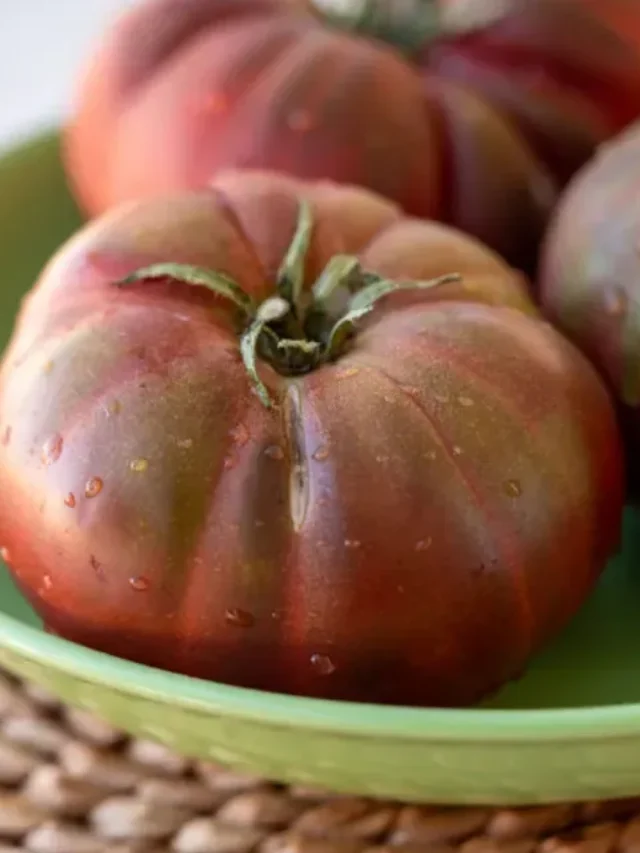
Black Beauty is a dark beefsteak that looks unreal in the garden. Where the sun hits, the skin turns a deep blue-black, while the inside stays a rich red. This guide covers its taste, growing needs, planting time, common problems, and the key facts before you plant it.
Black Beauty Tomato Quick Facts
| Type | Open-pollinated |
|---|---|
| Growth Habit | Indeterminate |
| Days to Maturity | 80 to 90 days |
| Fruit Size | 8 to 12 oz |
| Fruit Color | Deep blue-black over dark red |
| Shape | Beefsteak |
| Flavor | Rich, smoky, sweet |
| Best Uses | Slicing, salads |
| Plant Height | 6 to 8 feet |
| Spacing | 24 to 36 inches apart |
| Support | Tall stake or cage |
| Sun | Full sun, 6 to 8 hours |
| Container Friendly | Yes |
| Disease Resistance | Some |
| Origin | United States, bred by Brad Gates |
What Is a Black Beauty Tomato?
Black Beauty is a modern open-pollinated tomato bred by Brad Gates of Wild Boar Farms in California. It pushed anthocyanin breeding further than earlier purple tomatoes, producing skin that ripens nearly black where sunlight touches it. The flesh inside stays dark red and meaty. Because it is open-pollinated, you can save seeds from your best fruit and grow the same tomato next year.
Black Beauty Flavor and Best Uses
Black Beauty has a rich, smoky, sweet flavor that deepens as the fruit hangs. Unlike some dark tomatoes, the taste holds its own against the looks, with a savory depth close to the best black heirlooms.
It is best eaten fresh. Dark slices look dramatic on a sandwich or platter, and chunks turn an ordinary salad into a centerpiece.
When to Plant Black Beauty Tomatoes
Start seeds indoors 6 to 8 weeks before your last frost date. Transplant outside once frost has passed and the soil is warm, since cold soil stalls young plants. Full sun matters twice here. The plant needs it to grow, and the skin needs it to develop that signature black color.
How to Grow Black Beauty Tomatoes
Black Beauty grows like other tall tomatoes and rewards steady care.
- Sun: give plants 6 to 8 hours of direct sun in rich, well-drained soil.
- Spacing: set plants 24 to 36 inches apart for airflow.
- Support: use a tall stake or cage for the climbing vines.
- Water and mulch: water deeply and evenly, then mulch to keep soil moisture steady.
- Feeding: feed with a balanced tomato fertilizer once fruit sets.
- Pruning: prune extra suckers and lower leaves to improve airflow.
Common Problems and Disease Resistance
Black Beauty has some disease tolerance, but its dark color creates the main challenges.
- Judging ripeness: the black skin hides ripeness, so check the underside and feel for softness.
- Picking too early: unripe fruit tastes flat. Wait for the bottom to blush red-brown.
- Cracking: uneven water can crack ripe fruit. Mulch and water on schedule.
Black Beauty vs Indigo Rose
Both get their dark color from anthocyanins, so gardeners compare them. Indigo Rose is smaller, earlier, and milder, an easy first dark tomato. Black Beauty is larger, darker, and much richer in flavor. Gardeners who tried Indigo Rose and wanted more taste usually move up to Black Beauty.
When to Harvest Black Beauty Tomatoes
Pick Black Beauty when the underside turns from green to a dull red-brown and the fruit gives slightly to a gentle squeeze. The shoulders stay black, so the bottom is your honest signal. Fully ripe fruit develops the deepest, smokiest flavor, so patience pays off at harvest time.
Growing Black Beauty in Containers
Black Beauty grows well in a container of at least 15 gallons with a tall, sturdy cage. Use quality potting soil, keep it evenly moist, and place the pot in your sunniest spot so the skin colors fully. Feed regularly, since container plants depend on you for nutrients.
Companion Plants for Black Beauty
Black Beauty pairs well with basil, which may improve flavor and repel pests. Marigolds deter nematodes, and borage attracts bees for better pollination and fruit set. Keep tomatoes away from potatoes, which share diseases.
Black Beauty Nutrition
Black Beauty is one of the most antioxidant-rich tomatoes you can grow. The skin is loaded with anthocyanins, the same compounds found in blueberries, on top of the lycopene in its red flesh. It also provides vitamin C, vitamin A, and potassium with very few calories.
Where to Buy Black Beauty Seeds and Plants
Black Beauty seeds are sold by specialty and heirloom seed companies in spring, and some nurseries carry plants. Because it is open-pollinated, one packet can supply your garden for years if you save and ferment seeds from fully ripe fruit.
Care Notes
Steady watering also helps prevent blossom end rot.
Related Tomato Varieties
Frequently Asked Questions
How Long Does Black Beauty Take to Grow?
About 80 to 90 days from transplant.
Is Black Beauty Determinate or Indeterminate?
It is indeterminate and produces until frost, so it needs tall support.
Why Is Black Beauty So Dark?
Its skin is loaded with anthocyanins, the antioxidants in blueberries, which turn it nearly black in the sun.
What Does Black Beauty Taste Like?
Rich, smoky, and sweet, with a deep flavor that improves as the fruit fully ripens.
Can You Save Black Beauty Seeds?
Yes. It is open-pollinated, so saved seeds grow true to the parent.
Can You Grow Black Beauty in Containers?
Yes, in a 15 gallon or larger pot with a tall, sturdy cage.