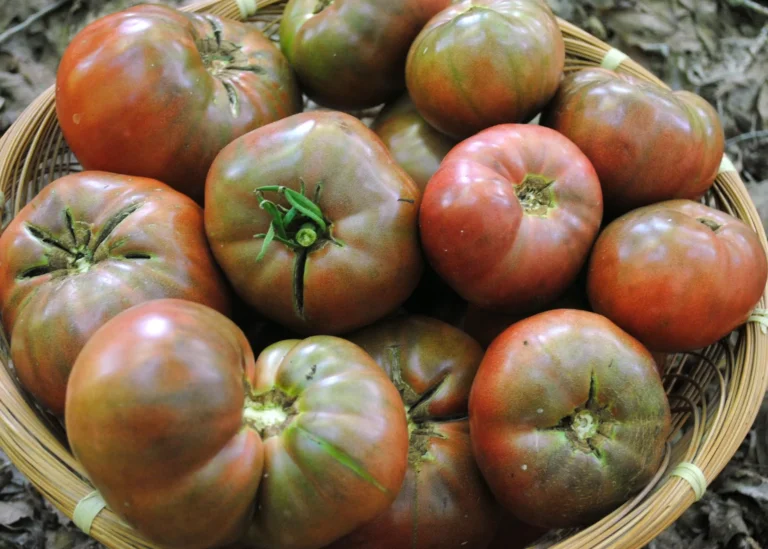
Indigo Rose was one of the first truly purple tomatoes, and it still turns heads in the garden. The dark skin is packed with the same antioxidants found in blueberries. This guide covers its flavor, growing needs, common problems, and key facts.
Indigo Rose Tomato Quick Facts
| Type | Open-pollinated |
|---|---|
| Growth Habit | Indeterminate |
| Days to Maturity | 75 to 80 days |
| Fruit Size | About 2 oz |
| Fruit Color | Purple-black over red |
| Shape | Round |
| Flavor | Mild, plummy |
| Best Uses | Salads, snacking |
| Plant Height | 4 to 6 feet |
| Spacing | 24 to 36 inches |
| Support | Tall stake or cage |
| Sun | Full sun, 6 to 8 hours |
| Container Friendly | Yes |
| Disease Resistance | Some |
| Origin | United States, Oregon State University |
What Is an Indigo Rose Tomato?
Unlike old heirloom black tomatoes, Indigo Rose was bred at Oregon State University and released in 2011 as one of the first deep-purple tomatoes. The dark color comes from anthocyanins, the antioxidants that also color blueberries and blackberries. The skin turns purple-black where sunlight touches it and stays red underneath. Because it is open-pollinated, you can save seeds and grow it again next year.
Indigo Rose Flavor and Best Uses
Indigo Rose has a mild, plummy flavor that is best when the fruit is fully ripe. The taste is gentle rather than bold, so it is grown as much for its looks and nutrition as for flavor.
It is best in fresh dishes. The glossy dark fruit looks dramatic in a salad, on a skewer, or mixed into a colorful snack bowl.
How to Grow Indigo Rose Tomatoes
Indigo Rose grows like other small to medium tomatoes, with one twist. Follow these basics.
- Sun: give plants full sun, since sunlight deepens the purple color.
- Spacing: set plants 24 to 36 inches apart.
- Support: use a tall stake or cage for the vines.
- Water: water deeply and evenly to limit cracking.
- Feeding: feed with a balanced tomato fertilizer once fruit sets.
Common Problems and Disease Resistance
Indigo Rose has some disease resistance, but its color makes ripeness hard to read.
- Judging ripeness: check the bottom, which turns from green to red-brown when ready.
- Picking too early: unripe fruit tastes flat, so wait for softness.
- Cracking: uneven water can split the fruit.
Indigo Rose vs Black Cherry
Both are dark tomatoes, so gardeners compare them. Indigo Rose is purple-black from anthocyanins, with a mild, plummy taste and an eye-catching look. Black Cherry is a brown-red cherry with a richer, sweeter flavor. Gardeners who want bold color pick Indigo Rose, while those chasing taste often choose Black Cherry.
When to Harvest Indigo Rose Tomatoes
Pick Indigo Rose when the bottom of the fruit turns from green to a dull red-brown and the tomato gives slightly to a gentle squeeze. The purple top stays dark, so use the underside and softness as your guide. Ripe fruit also loses its hard, glossy shine.
Growing Indigo Rose in Containers
Indigo Rose grows well in a container of at least 15 gallons with a tall cage. Place the pot in full sun so the fruit develops its deepest purple color. Keep the soil evenly moist, since pots dry out faster than garden beds.
Companion Plants for Indigo Rose
Indigo Rose pairs well with basil, which may improve flavor and repel pests. Marigolds deter nematodes, and borage attracts pollinators. Keep tomatoes away from potatoes, which share diseases. Good companions help the plant stay healthy and productive.
Indigo Rose Nutrition
Indigo Rose is low in calories and especially rich in antioxidants. The dark skin is loaded with anthocyanins, the same compounds found in blueberries. The fruit also provides vitamin C, vitamin A, and potassium, which makes it one of the more nutrient-dense tomatoes you can grow.
Where to Buy Indigo Rose Seeds and Plants
Indigo Rose seeds are sold at most seed companies in spring, and many nurseries carry plants because of its unusual color. Because it is open-pollinated, one packet can supply your garden for years if you save seeds from your best fruit.
Care Notes
Plant in rich, well-drained soil and mulch around the base to keep that soil evenly moist. Seed racks carry both open-pollinated and modern hybrid strains. Steady watering also helps prevent blossom end rot. Harvest every few days at peak season. Prune lower leaves and crowded stems to improve airflow.
Related Tomato Varieties
- Black Cherry Tomato
- Cherokee Purple Tomato
- How Many Cherry Tomatoes Are in a Cup
- Tomato Measurement Converter
Frequently Asked Questions
How Long Does Indigo Rose Take to Grow?
About 75 to 80 days from transplant.
Is Indigo Rose Determinate or Indeterminate?
It is indeterminate and produces until frost, so it needs tall support.
Why Is Indigo Rose Purple and Blue?
It is high in anthocyanins, the same antioxidants in blueberries, which turn the skin deep purple where sunlight hits it.
What Does Indigo Rose Taste Like?
Mild and plummy, with the best flavor when fully ripe.
How Do You Know When Indigo Rose Is Ripe?
The bottom turns from green to red-brown and the fruit softens slightly.
Can You Grow Indigo Rose in Containers?
Yes, in a 15 gallon or larger pot with a tall cage.