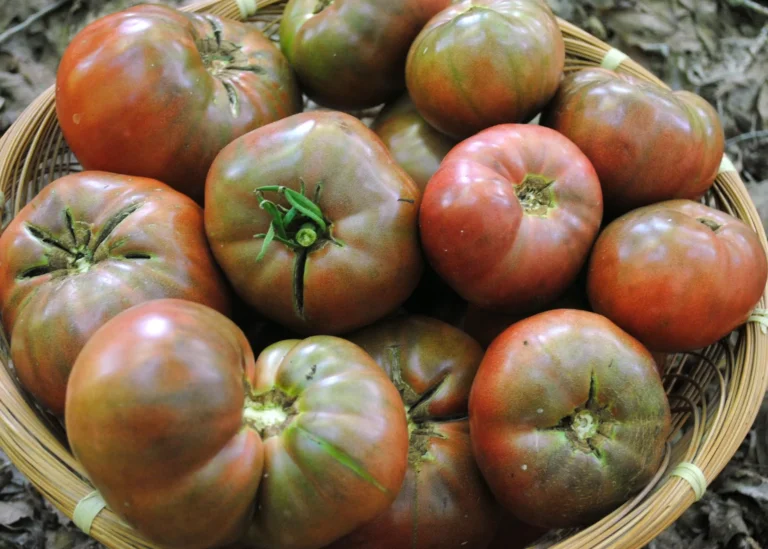
Cherokee Purple is one of the best-loved heirloom tomatoes for flavor. Its odd color hides a deep, complex taste that wins over gardeners every season. This guide covers its taste, growing needs, common problems, and the facts you need before you plant it.
Cherokee Purple Tomato Quick Facts
| Type | Heirloom, open-pollinated |
|---|---|
| Growth Habit | Indeterminate |
| Days to Maturity | 80 to 90 days |
| Fruit Size | Medium to large, 8 to 12 oz |
| Fruit Color | Dusky rose-purple with green shoulders |
| Shape | Beefsteak, slightly flattened |
| Flavor | Rich, sweet, smoky, low acid |
| Best Uses | Slicing, sandwiches, salads |
| Plant Height | 6 to 9 feet |
| Spacing | 24 to 36 inches |
| Support | Tall stake or cage |
| Sun | Full sun, 6 to 8 hours |
| Container Friendly | Yes, 15 gallon or larger |
| Disease Resistance | Low (heirloom) |
| Origin | United States, Tennessee |
What Is a Cherokee Purple Tomato?
Cherokee Purple is an heirloom tomato from Tennessee. The story goes that its seeds came from the Cherokee people more than a hundred years ago. A gardener named Craig LeHoullier named and shared it in the 1990s, and it quickly became a favorite across the country.
Because it is open-pollinated, you can save seeds from your fruit and grow the same tomato again next year. The plant has regular leaves and a sturdy, tall vine.
Cherokee Purple Flavor and Best Uses
Flavor is why people grow Cherokee Purple. The taste is rich, sweet, and smoky, with low acid and a deep savory note. Many gardeners call it one of the best-tasting tomatoes they have ever grown.
It is best eaten fresh. Thick slices are perfect on sandwiches and burgers. The dusky flesh also looks striking in a summer salad. The fruit is juicy, so it is better for fresh eating than for thick sauce.
How to Grow Cherokee Purple Tomatoes
Cherokee Purple needs a warm season and steady care. Follow these basics for a strong harvest.
- Sun: give plants 6 to 8 hours of direct sun.
- Spacing: set plants 24 to 36 inches apart for airflow.
- Support: use a tall stake or heavy cage, since vines reach 6 to 9 feet.
- Water: water deeply and evenly to prevent cracking and blossom end rot.
- Feeding: use a balanced tomato fertilizer once fruit sets.
Start seeds indoors 6 to 8 weeks before your last frost, and move plants outside only after the soil warms.
Common Problems and Disease Resistance
As an heirloom, Cherokee Purple was not bred for disease resistance, so good care matters. Watch for these common issues.
- Cracking: caused by uneven watering. Mulch and keep a steady schedule.
- Blossom end rot: a dark spot on the bottom from low calcium and uneven water.
- Green shoulders: the top stays firm and green in hot sun. Light shade in heat waves helps.
Crop rotation and good spacing keep plants healthier all season.
Cherokee Purple vs Brandywine
These two heirlooms are the top picks for flavor, so gardeners often compare them. Cherokee Purple is dusky purple with a smoky, savory taste and ripens a bit earlier. Brandywine is pink, larger, and sweeter, with a longer season. Many gardeners grow both to enjoy the range of flavor.
Where to Buy Cherokee Purple Seeds and Plants
Cherokee Purple seeds are sold at most seed companies and garden centers in spring. Young plants are easy to find at nurseries if your season is short. Since it is open-pollinated, one packet can supply your garden for years if you save seeds.
When to Harvest Cherokee Purple Tomatoes
Cherokee Purple can be tricky to judge because it never turns bright red. Look for a deep dusky color with a slight softness when you press gently. The shoulders may stay a little green, and that is normal for this variety. Pick the fruit when it gives slightly, then let it finish on the counter for a day or two. Picking a touch early also helps you beat cracks and pests.
Saving Cherokee Purple Seeds
Because Cherokee Purple is open-pollinated, the seeds grow true to the parent plant. Scoop the seeds and their gel into a jar, add a little water, and let it sit for 2 to 3 days to ferment. Rinse the seeds clean, dry them on a paper plate, and store them in a cool, dark place. Saved seeds stay good for 4 to 6 years.
Care Notes
Rich, well-drained soil drives steady growth, so refresh the soil with compost each spring. Prune lower leaves and crowded stems to improve airflow.
Related Tomato Varieties
Frequently Asked Questions
How Long Do Cherokee Purple Tomatoes Take to Grow?
About 80 to 90 days from transplant.
Is Cherokee Purple Determinate or Indeterminate?
It is indeterminate and produces until frost, so it needs tall support.
What Does a Cherokee Purple Tomato Taste Like?
Rich, sweet, and smoky with low acid. It is one of the most flavorful heirlooms.
What Color Is a Ripe Cherokee Purple Tomato?
A dusky rose-purple with green shoulders. Ripe fruit can look almost brown.
Can You Grow Cherokee Purple in Containers?
Yes, in a 15 gallon or larger container with a strong stake or cage.
Are Cherokee Purple Tomatoes Supposed to Be Soft?
They are ripe when they give slightly to a gentle squeeze. Very soft fruit is overripe.