Cape Verdean Recipes
Cape Verde’s Slow-Simmered National Stew
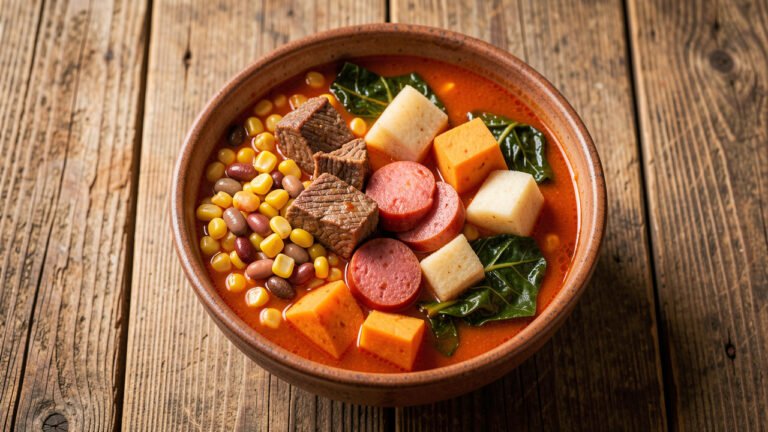
Cachupa is the kind of dish that tastes like a whole culture in one bowl. It is humble, generous, and unhurried, built from corn, beans, roots, and greens that stretch to feed a full table. Every family on the islands has its own version, and the pot often sits and simmers for the better part of an afternoon while the flavors slowly settle into each other.
I have cooked this stew many times now, and the biggest lesson was simple: you cannot rush the corn. The first time I tried to hurry it, the hominy stayed chalky in the center and the whole pot tasted underdone. Give it the soak and the long, low simmer it asks for, and cachupa becomes one of the most satisfying things you can make.
Why This Cachupa Works
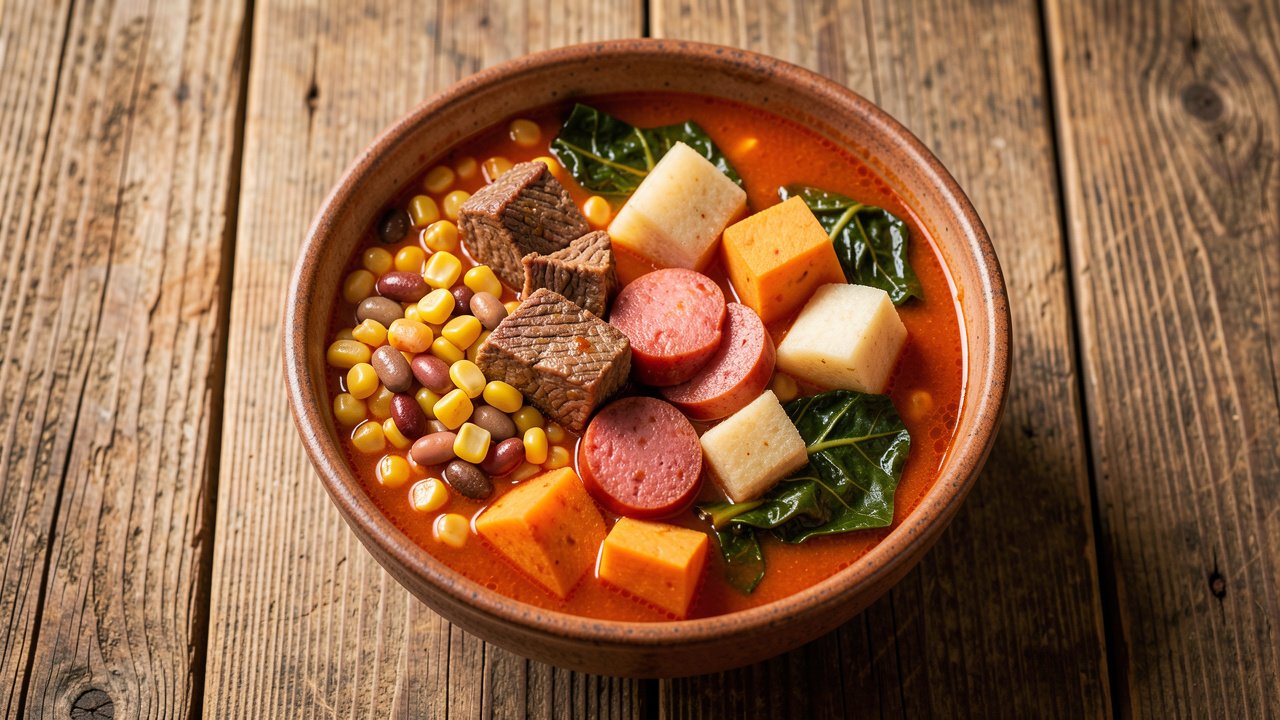
Cachupa is proof that a short list of humble ingredients can become something remarkable if you give them time. The corn and beans do the heavy lifting, releasing starch as they cook until the broth turns thick and almost creamy on its own. There is no cornstarch or flour here, just patience doing the work of a thickener.
The tomato base is what keeps this halal version tasting deep and complete. As the tomatoes and tomato paste break down, they lend a gentle acidity and a savory backbone that stands in beautifully for the older, saltier cured meats of the classic recipe. Together with browned beef and smoked beef sausage, the pot builds real depth without a single hard-to-find ingredient.
The roots are the third pillar. Sweet potato and cassava melt slightly at the edges as they simmer, thickening the broth further and adding a soft, sweet contrast to the savory beans. Some pieces hold their shape while others dissolve, giving the stew its rustic, spoonable texture.
Finally, this is a dish that only improves with time. Cachupa is famous for its leftovers, which get fried the next morning into a dish Cape Verdeans call cachupa refogada. That means you are cooking one big pot and getting at least two very different, very good meals out of it.
Pro observation: The stew is ready to serve when the broth coats the back of a spoon and the corn kernels are tender all the way through with no chalky center. If it still looks thin, let it simmer uncovered a little longer to concentrate.
Ingredients
Kitchen Measurement Converter
Quickly convert between common cooking measurements without leaving the recipe. Pick a category, enter a value, and the result updates instantly.
Ingredient Notes & Substitutions
Hominy Corn
Dried hominy corn is the soul of cachupa. Soak it overnight and cook it low and slow. If you cannot find dried hominy, canned hominy works in a pinch, but add it later since it is already tender.
The Beans
A mix of beans gives the best texture. Lima or butter beans and kidney beans are common, but pinto or black-eyed beans also work. Soak dried beans alongside the corn so they finish together.
Halal Meats
Use cubed halal beef for richness and halal smoked beef sausage for that savory, smoky note. Halal smoked turkey sausage is a lighter option and works just as well in the pot.
Tomatoes
Ripe fresh tomatoes plus a little tomato paste build the savory base. Out of season, one 14-ounce can of chopped tomatoes is more reliable and keeps the broth deep and full-bodied.
Roots
Sweet potato and cassava add body and gentle sweetness. Peel the cassava well and cut out the fibrous core. Yam or pumpkin can stand in if cassava is hard to find.
Greens
Cabbage and collard greens are classic. Kale is a fine swap. Add them near the end so they stay tender and green rather than turning gray and soft.
Equipment
- Large heavy pot or Dutch oven
- Wooden spoon
- Sharp knife and board
- Large mixing bowl for soaking
- Colander
- Measuring cups and spoons
Before You Start
1. Soak the night before. Cover the dried hominy corn and beans generously with cold water and leave them overnight. This is the single most important step for even, tender results.
2. Prep all your vegetables. Chop the onion, tomatoes, roots, and greens before you begin, because once the pot is going you will want everything within reach.
3. Plan for a long simmer. Cachupa is a weekend or slow-afternoon dish. Set aside a few hours and let the pot do its thing while you go about your day.
Step-by-Step Instructions
Cook the Corn and Beans
Drain the soaked hominy corn and beans and add them to a large pot. Cover with the water or beef stock, add the bay leaves, and bring to a boil. Lower to a gentle simmer, cover partly, and cook for about 60 to 90 minutes until the corn is starting to soften. Top up with hot water if the level drops too far.
Brown the Beef and Sausage
While the corn cooks, heat the olive oil in a wide pan over medium-high heat. Add the cubed halal beef and brown it well on all sides, about 5 minutes. Add the sliced halal smoked beef sausage and cook another 2 to 3 minutes until it colors and releases its aroma. Set the meats aside with their juices.

Build the Tomato Base
In the same pan, cook the chopped onion until soft and golden, about 5 minutes, then stir in the garlic for one minute. Add the chopped tomatoes, tomato paste, and paprika and cook 5 to 6 minutes until the tomatoes collapse into a thick, glossy sauce. Scrape this fragrant base into the pot of corn and beans.
Add the Meats and Roots
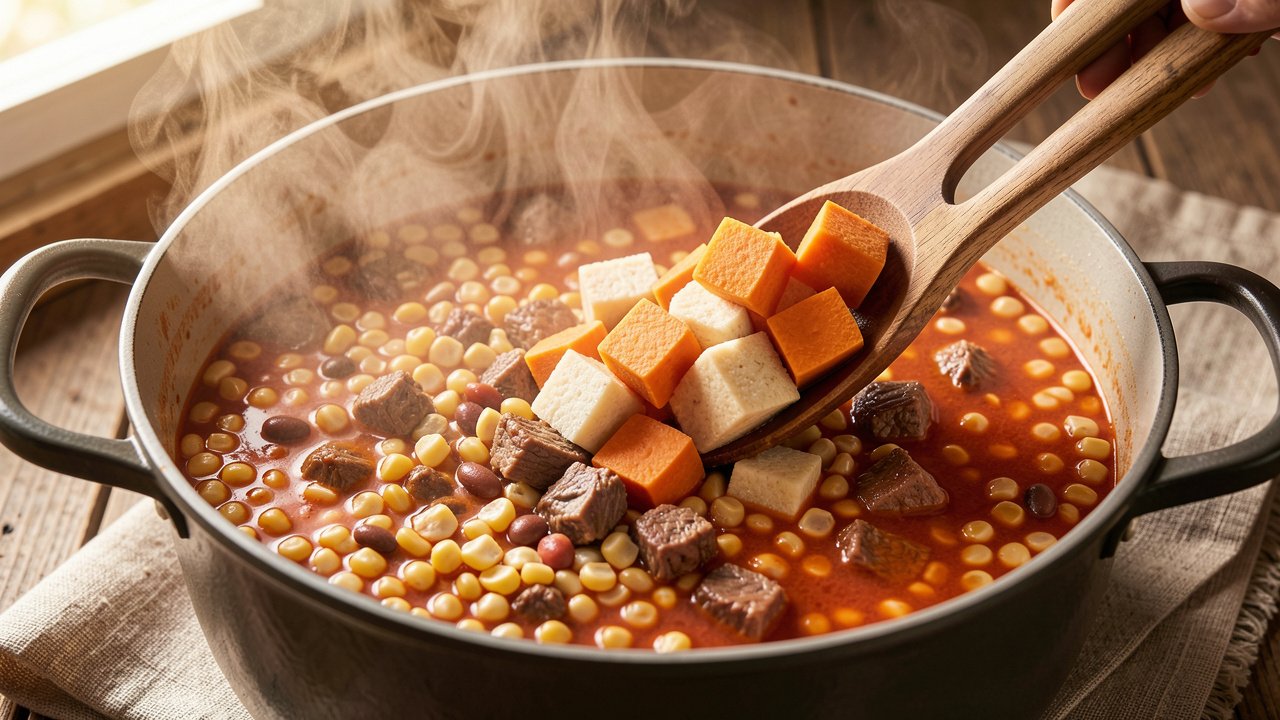
Return the browned beef and sausage to the pot along with the sweet potato and cassava. Season with the salt and black pepper. Stir well, bring back to a gentle simmer, and cook uncovered for 45 to 60 minutes. The corn should be fully tender, the roots soft, and the broth thick and reddish.
Add the Greens
Stir in the shredded cabbage and sliced collard greens. Cook 15 to 20 minutes more, until the greens are tender but still hold their color. Taste and adjust the salt now, since the broth has concentrated. If it looks too thick, loosen it with a splash of hot water.
Rest and Serve
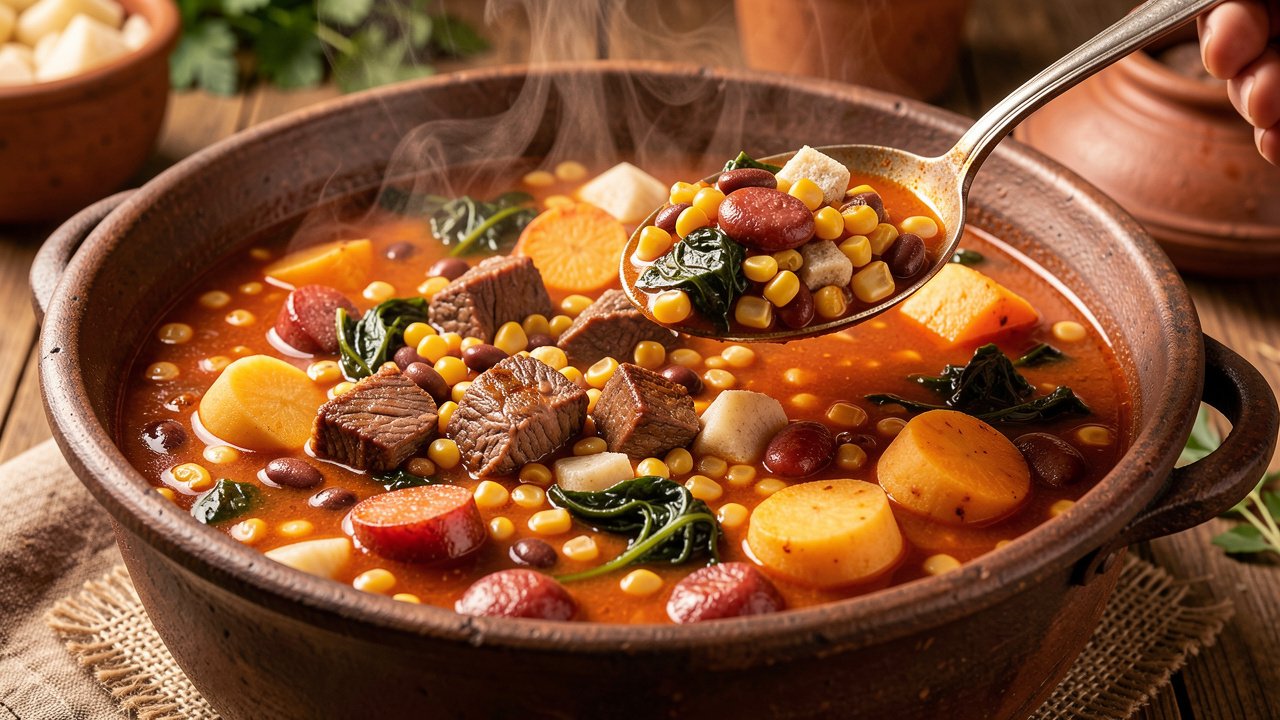
Turn off the heat and let the pot rest for 10 to 15 minutes so the flavors settle and the broth thickens further. Remove the bay leaves, ladle the cachupa into deep bowls, and serve hot. Any leftovers can be pan-fried the next day into cachupa refogada, a beloved second life for the stew.
Chef’s Tips From Real Kitchen Testing
Soak the corn and beans overnight without fail. A quick soak leaves the hominy chalky in the middle no matter how long you simmer it afterward.
Brown the meats separately before they join the pot. That seared crust dissolves into the broth and gives the whole stew a savory depth you cannot fake.
Add the greens last. Thrown in too early they turn drab and mushy, but added near the end they stay tender, bright, and fresh-tasting.
Recipe Variations
Serving Suggestions
- A crusty loaf of bread to mop up the broth
- Plain steamed rice for an even heartier plate
- A fried egg on top for the morning refogada
- A squeeze of lime and fresh chopped cilantro
Nutrition Facts
| Nutrient | Amount per serving |
|---|---|
| Calories | 520 |
| Protein | 32 g |
| Carbohydrates | 55 g |
| Fat | 18 g |
| Saturated Fat | 6 g |
| Fiber | 12 g |
| Sugar | 9 g |
| Sodium | 780 mg |
Values are estimates per serving and vary with the exact ingredients and brands you use.
Make-Ahead Tips
Cachupa is a natural make-ahead dish, and many islanders would say it tastes best on the second day. Cook the full pot, cool it, and refrigerate overnight so the flavors settle and deepen. The broth thickens considerably as it sits, so reheat gently and stir in a little hot water or stock to loosen it back to a spoonable stew. Add fresh greens or herbs when reheating if you want a brighter finish.
Storage, Freezing & Reheating
Common Mistakes to Avoid
Troubleshooting
Corn still chalky? It simply needs more time. Keep simmering gently and add hot water as needed until the kernels are tender all the way through.
Broth too thin? Uncover the pot and let it reduce, or mash a few pieces of cassava and sweet potato against the side to thicken it naturally.
Tastes flat? A long-simmered stew needs generous seasoning. Add salt gradually and a little extra paprika, tasting as the broth concentrates.
A Note on Cape Verdean Cooking
Cape Verde is an island nation off the West African coast, and its food reflects a crossroads of African, Portuguese, and coastal influences shaped by what could be grown and stored on the islands. Corn, beans, and hardy roots became staples precisely because they are filling, affordable, and forgiving, and cachupa grew out of that resourcefulness into the dish people now consider the heart of the national table. It is eaten at family gatherings, sold at roadside stands, and reinvented in every home.
What makes cachupa special is not any single luxury ingredient but the patience and generosity behind it. A big pot feeds a crowd, stretches across days, and turns into a whole new breakfast the following morning. That spirit of slow, unhurried, hearty cooking is easy to bring into your own kitchen. If you love deep, savory tomato-based dishes like this one, browse our wider collection of tomato recipes for more ideas built on the same comforting foundation.
Beef and Sausage Food-Safety Note
Because this stew uses beef and smoked beef sausage, a few simple habits keep it safe as well as delicious. Cook the beef until it is fully done and no longer pink inside, and keep the pot at a steady simmer rather than a bare warm hold during the long cook. When storing leftovers, cool the stew quickly and get it into the refrigerator within about two hours; a large pot cools faster if you divide it into shallow containers. Reheat leftovers until they are steaming hot all the way through before serving, and only reheat the portion you plan to eat rather than the whole batch repeatedly.
Frequently Asked Questions
More Tomato Recipes to Try
Last updated: September 29, 2026