Paraguayan Recipes
Hearty Beef and Rice Soup with Tomato
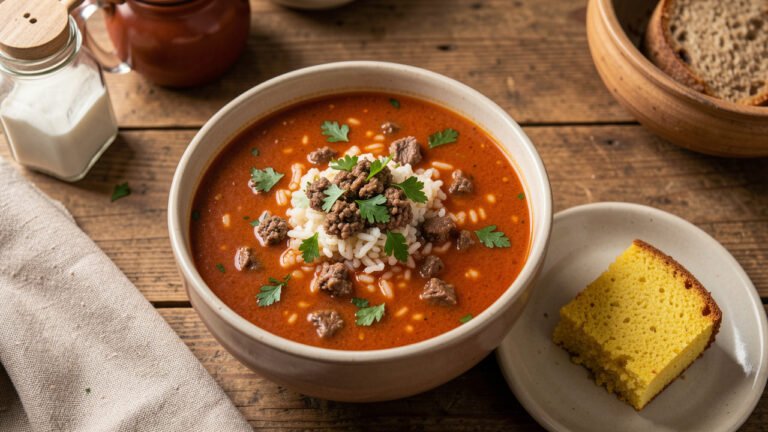
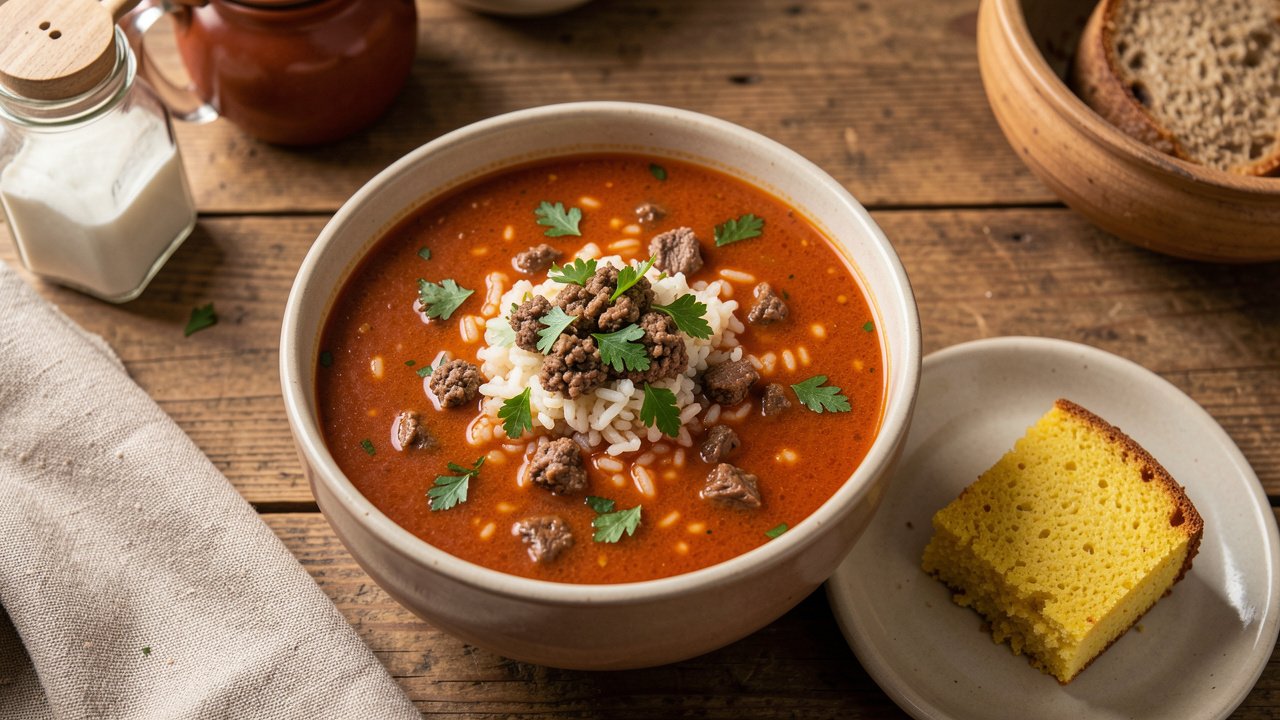
So’o-yosopy is the kind of soup that tastes like a whole kitchen worked on it, even though the method is simple and forgiving. The name comes from Guarani, where so’o means meat and yosopy points to something crushed or pounded, a nod to the finely minced halal beef that gives the broth its body. It is a weeknight classic across Paraguay, cooked in one pot and ladled out generously.
What makes it sing is the sofrito. Onion, green pepper, tomato, and garlic melt into a fragrant base before the broth ever goes in, and that patience is what separates a rich, savory bowl from a thin, watery one. The rice does the rest, loosening its starch into the broth so the soup turns silky without any cream at all.
Why This So’o-yosopy Works
Paraguayan home cooking is built on a few humble ingredients treated with care, and this soup is a textbook example. There is no long shopping list and no special equipment, yet the finished bowl tastes deeply savory. The secret is layering: you build flavor at each stage rather than dumping everything in at once.
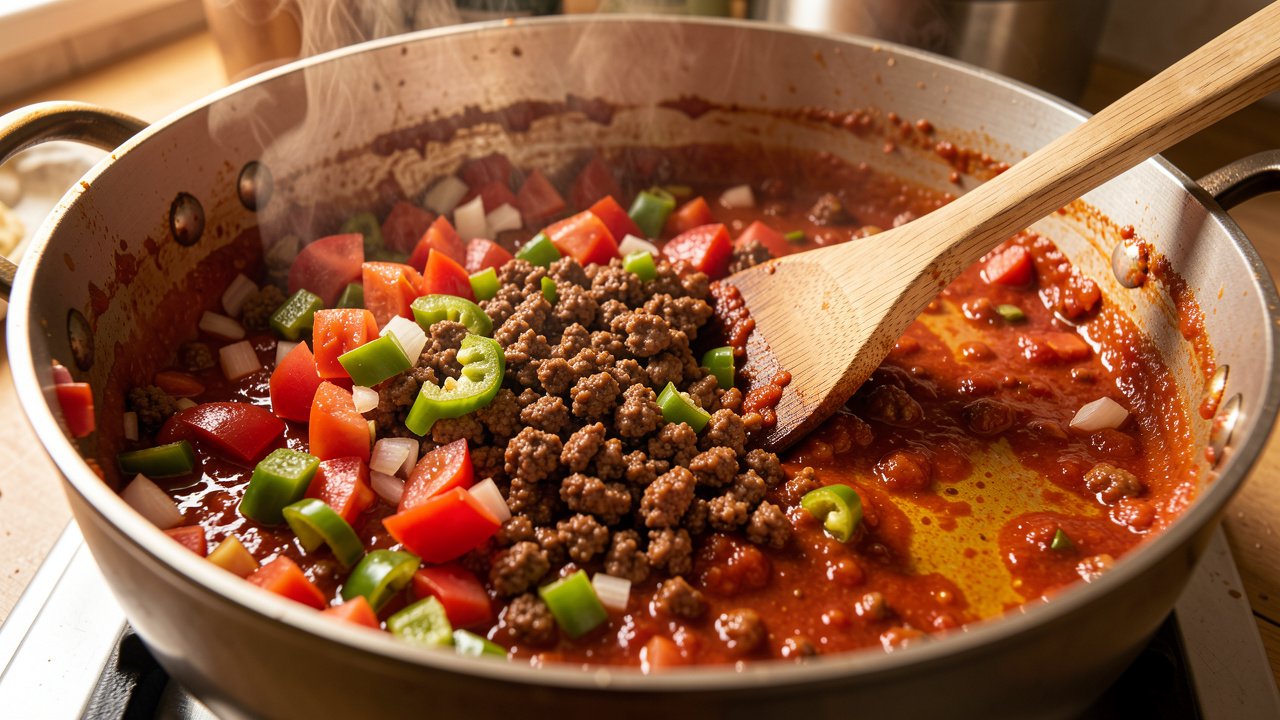
The single most important step is the sofrito. Cooking the onion, green pepper, tomato, and garlic down slowly draws out their sweetness and concentrates the tomato, which is exactly what gives the broth its color and backbone. Rush this and the soup tastes thin no matter how long it simmers afterward.
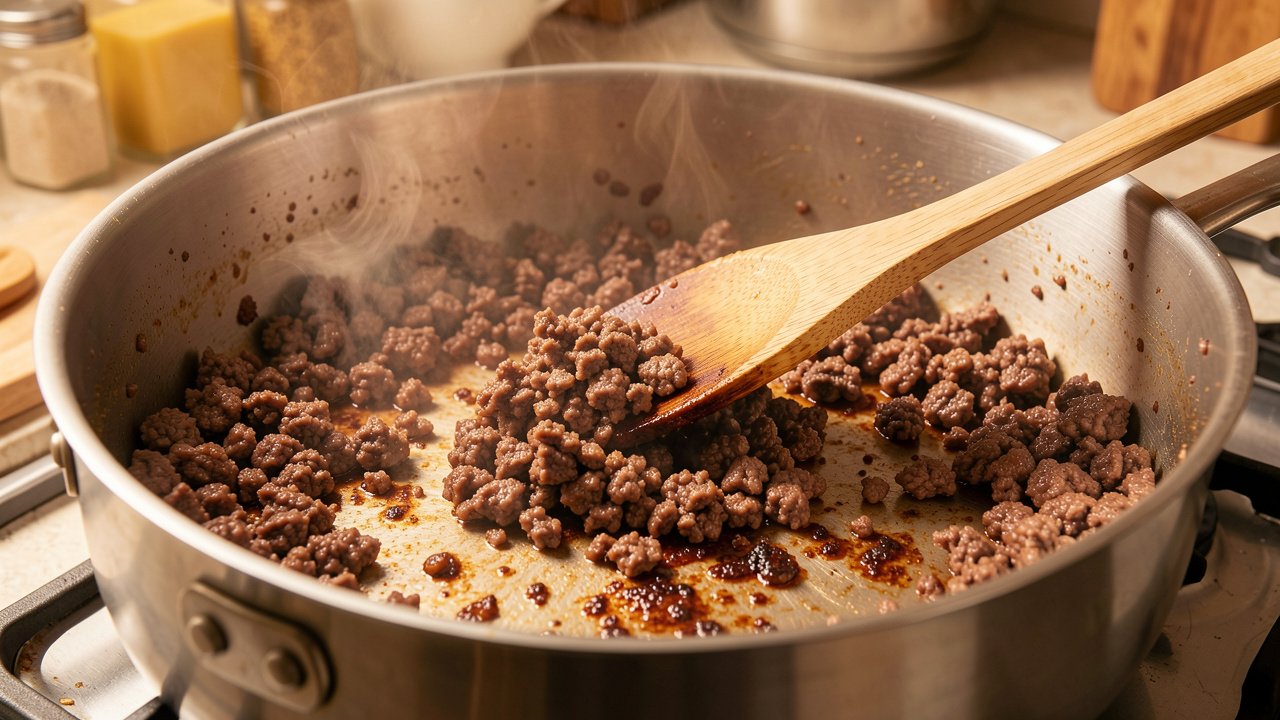
Browning the halal beef first is the other quiet secret. Those browned bits stuck to the bottom of the pot are pure flavor, and they dissolve into the broth once the liquid goes in. Finely minced beef also means every spoonful carries meat, which is what a good so’o-yosopy should do.
The rice is what makes it distinctive. As it simmers it releases starch that thickens the broth just enough, turning a plain soup into something with body and a gentle cling. Add it late and stop cooking when it is just tender, and the soup stays soupy rather than turning into porridge.
Pro observation: The sofrito is ready for the broth when the tomatoes have collapsed and the mixture looks jammy and darkened, with the oil glistening at the edges. That deep color is the flavor you will taste in every spoonful.
Ingredients
Kitchen Measurement Converter
Quickly convert between common cooking measurements without leaving the recipe. Pick a category, enter a value, and the result updates instantly.
Ingredient Notes & Substitutions
Halal Beef
Use finely ground or hand-minced halal beef with a little fat for flavor. Traditionally the meat is chopped small so it disperses through the broth. Leaner cuts work too; just brown them well for depth.
Tomatoes
Ripe, red tomatoes give the best sweet-tart base. Out of season, one 14-ounce can of chopped tomatoes works well and is often more reliable than pale fresh ones. The tomato paste boosts color and body.
Rice
Medium or long-grain white rice is standard. It should thicken the broth while staying separate. Rinse it first to keep the soup from turning gluey, and add it late so it does not overcook.
Broth
A good halal beef broth carries the soup, but water with an extra pinch of salt works in a pinch. Keep it at a gentle simmer so the flavors concentrate without the liquid boiling away too fast.
Equipment
- Large heavy pot or Dutch oven
- Wooden spoon
- Sharp knife and board
- Fine strainer for rice
- Measuring cups and spoons
- Ladle for serving
Before You Start
1. Chop everything small. The onion, pepper, garlic, and tomatoes should be finely diced so they melt into a smooth sofrito and cook evenly.
2. Rinse the rice. Rinsing under cold water until it runs clear removes surface starch, which keeps the soup pleasantly loose rather than sticky.
3. Warm the broth. Adding warm broth keeps the pot at a steady simmer and shortens the cooking time. Have it ready before you build the base.
Step-by-Step Instructions
Prep and Mince
Finely chop the onion, green pepper, tomatoes, and garlic, keeping them in separate piles. If your halal beef is not already finely ground, chop it small with a sharp knife. Rinse the rice under cold water until it runs clear, then set everything within reach of the stove.
Brown the Halal Beef
Heat the olive oil in a large pot over medium-high heat. Add the minced halal beef and cook, breaking it up with a spoon, for 6 to 8 minutes until it loses its pink color and starts to brown. Let some of it catch on the bottom of the pot, because those browned bits carry a lot of flavor. Cook the beef until it reaches a safe internal temperature of 160 F.
Build the Sofrito
Add the chopped onion and green pepper to the pot and cook 5 to 6 minutes until soft. Stir in the garlic and cook 1 minute more until fragrant, scraping up the browned bits from the bottom. This aromatic base is the heart of the soup, so do not rush it.
Make the Tomato Base
Stir in the chopped tomatoes, tomato paste, cumin, and oregano along with the salt and black pepper. Cook 8 to 10 minutes, stirring often, until the tomatoes collapse into a thick, jammy sauce and the oil glistens at the edges. This is where the broth gets its deep color and savory depth.
Add Broth and Simmer
Pour in the warm beef broth and tuck in the bay leaves. Bring to a boil, then lower the heat to a gentle simmer and cook uncovered for 15 minutes so the flavors meld and the broth reduces slightly. Skim off any foam that rises to the top for a cleaner soup.
Stir in Rice and Finish
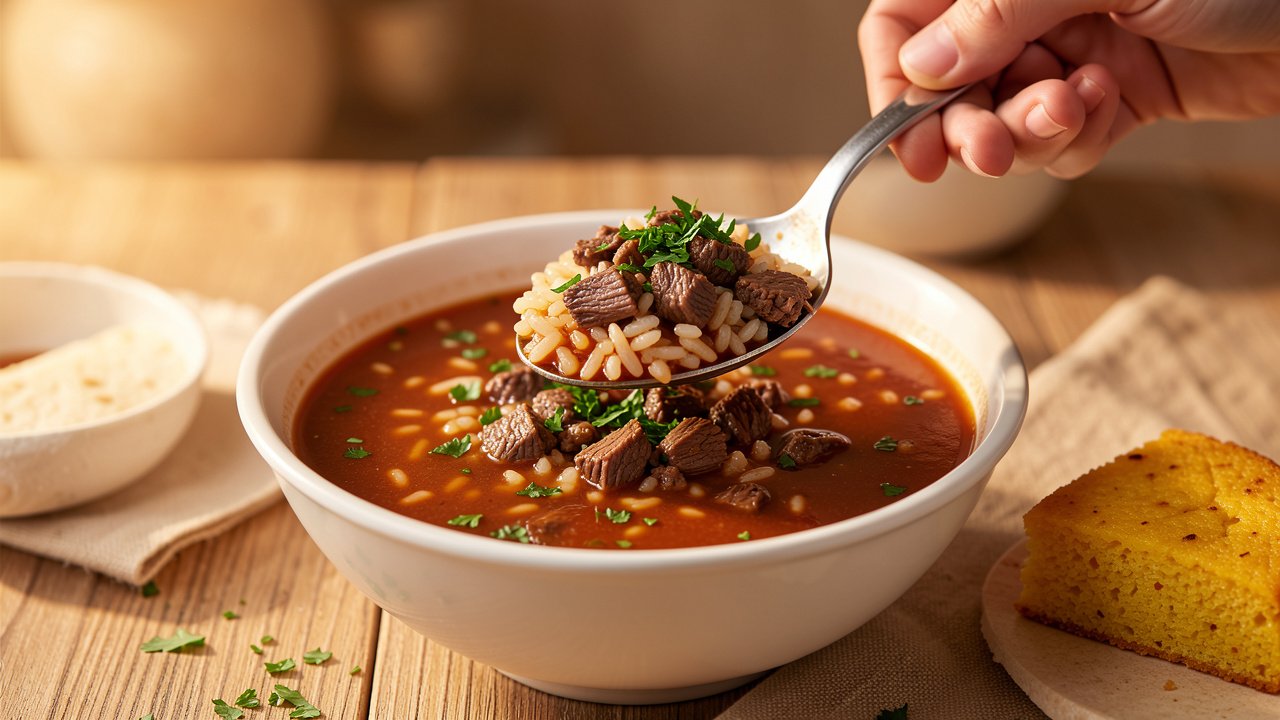
Add the rinsed rice and simmer 15 to 18 minutes, stirring now and then so it does not stick, until the rice is just tender and the broth has thickened slightly. Remove the bay leaves, taste and adjust the salt, then stir in most of the parsley. Ladle into bowls, scatter the rest of the parsley on top, and serve hot with sopa paraguaya on the side.
Chef’s Tips From Real Kitchen Testing
Add the rice late and stop cooking the moment it is just tender. Rice keeps absorbing liquid, so overcooking turns a soupy bowl into a thick porridge.
Do not skimp on the sofrito. Give the onion, pepper, tomato, and garlic real time to cook down, because that jammy base is where all the savory depth comes from.
Keep extra warm broth on hand. The soup thickens as it stands, so a splash of broth at serving time brings it right back to that ideal soupy consistency.
Recipe Variations
Serving Suggestions
- A warm slice of sopa paraguaya (cornbread)
- Crusty bread for dunking in the broth
- A simple green salad with a lime dressing
- Extra chopped parsley and a wedge of lime
Nutrition Facts
| Nutrient | Amount per serving |
|---|---|
| Calories | 320 |
| Protein | 23 g |
| Carbohydrates | 24 g |
| Fat | 15 g |
| Saturated Fat | 5 g |
| Fiber | 3 g |
| Sugar | 5 g |
| Sodium | 680 mg |
Values are estimates per serving and vary with the exact ingredients and brands you use.
Make-Ahead Tips
So’o-yosopy is a fine make-ahead dish, though the rice will keep drinking up the broth as it sits. If you plan to cook it well in advance, undercook the rice slightly and store the soup a little looser than you want it. Reheat gently on the stove and stir in a good splash of warm broth to bring it back to a soupy consistency. Add fresh parsley only just before serving so it stays bright.
Storage, Freezing & Reheating
Common Mistakes to Avoid
Troubleshooting
Soup too thick? The rice has soaked up the broth. Stir in warm broth or water a little at a time until it loosens back to a soupy consistency, then adjust the salt.
Broth tastes flat? It usually needs salt and a longer-cooked base. A squeeze of lime and an extra pinch of cumin at the end also wake it up.
Rice went mushy? It cooked too long. Next time add it later and pull the pot off the heat as soon as the grains are just tender; they keep softening in the hot broth.
A Note on Paraguayan Cooking
Paraguayan food sits at the crossroads of Guarani and Spanish heritage, and its recipe names often carry both languages at once. So’o-yosopy is a perfect example: so’o is the Guarani word for meat, while yosopy points to something crushed or pounded, describing the finely minced halal beef that defines the dish. It is comfort food in the truest sense, cooked in one pot and shared at family tables.
No Paraguayan soup meal feels complete without sopa paraguaya, a dense, savory cornbread that, despite its name, is not a soup at all. A slice of it alongside a steaming bowl of so’o-yosopy is the classic pairing. If you enjoy warming, spoonable tomato bowls, our hearty tomato lentil soup shares the same cozy, one-pot spirit, and you can browse more ideas in our full collection of tomato recipes.
Frequently Asked Questions
More Tomato Recipes to Try
Last updated: August 15, 2026