Tomato Condiments
Smooth Roasted Tomato and Garlic Spread for Toast, Sandwiches and Crackers
Last updated: July 23, 2026
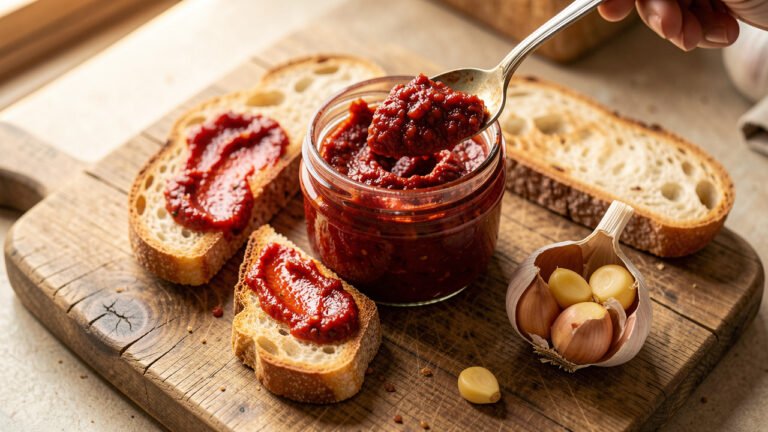
This is the jar I reach for when there is nothing in the fridge and a hungry person in the kitchen. It goes on toast, into a grilled cheese, or onto a cracker with sharp cheddar.
It is not a sauce and it is not tomato paste. A spread has to sit on bread without weeping, and that one requirement drives almost every choice below.
Why This Garlic Roasted Tomato Spread Works
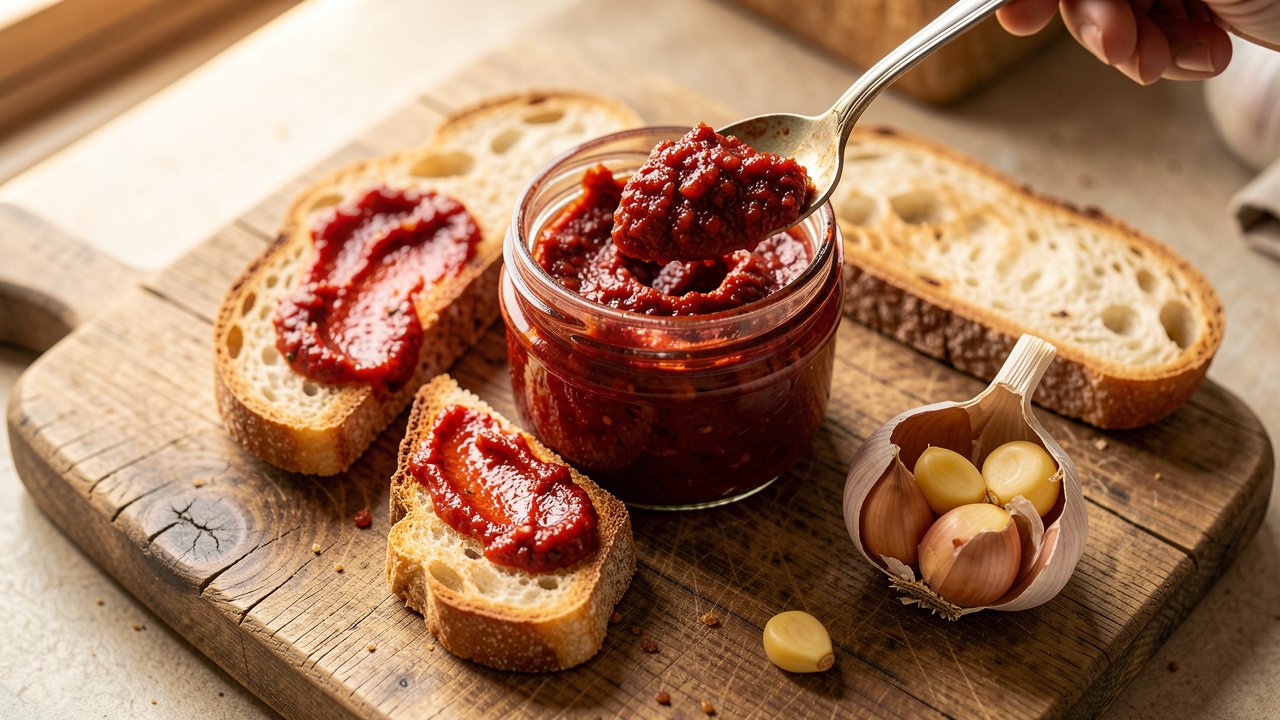
Two things happen in the oven at once, and both are the point. The tomatoes lose most of their water while their sugars concentrate, and the garlic stops being sharp and turns sweet.
Neither change can be faked on the stovetop in ten minutes. Dry heat browns the edges of the tomatoes and gives the spread its faintly smoky depth.
Blending comes last, which keeps you in control of the texture. Stop at rustic or run the machine to silky.
Pro observation: The tomatoes are ready when the cut faces look wrinkled and collapsed and the tray has almost no liquid in it. If there is still a puddle, they need more time.
Ingredients
Kitchen Measurement Converter
Convert between common cooking measurements without leaving the recipe. Pick a category and enter a value.
Ingredient Notes and Smart Substitutions
Paste Tomatoes
Roma, San Marzano, or any oval paste variety works best, because thick walls and little jelly mean more survives the roast. Beefsteaks need longer and lose more volume.
Garlic Heads
Buy firm heads with tight papery skin and no green shoots. Soft or sprouting garlic turns bitter as it roasts, and there is no fixing that later.
Olive Oil
Use a decent extra virgin oil. Some goes on the tray and a little goes in at the end for gloss.
Vinegar or Lemon
Red wine vinegar is my default and sherry is better still. Lemon juice works but fades faster in the fridge.
Smoked Paprika
A small amount deepens the roasted flavor without tasting of barbecue. Leave it out for a cleaner, purely tomato version.
Fresh Herbs
Thyme goes on the tray and stands up to the heat. Basil goes in at the end, off the heat, or it turns dark and dull.
Equipment
- Rimmed sheet pan
- Parchment paper
- Aluminum foil
- Blender or food processor
- Small spoon for seeding
- Clean glass jar
Before You Start
1. Heat the oven fully to 400F. A cold start steams the tomatoes instead of roasting them, and steam is the opposite of what you want.
2. Line the pan with parchment. Tomato sugars stick hard, and the tastiest browned bits end up on the scrubbing brush.
3. Give everything room. Crowded tomatoes trap moisture between them, so use two pans if the halves are touching.
How to Make Roasted Tomato Garlic Spread Step by Step
Halve and Seed the Tomatoes
Halve the tomatoes lengthwise, then run a small spoon through the seed cavities and scrape the jelly into the sink. That jelly holds most of the free water.
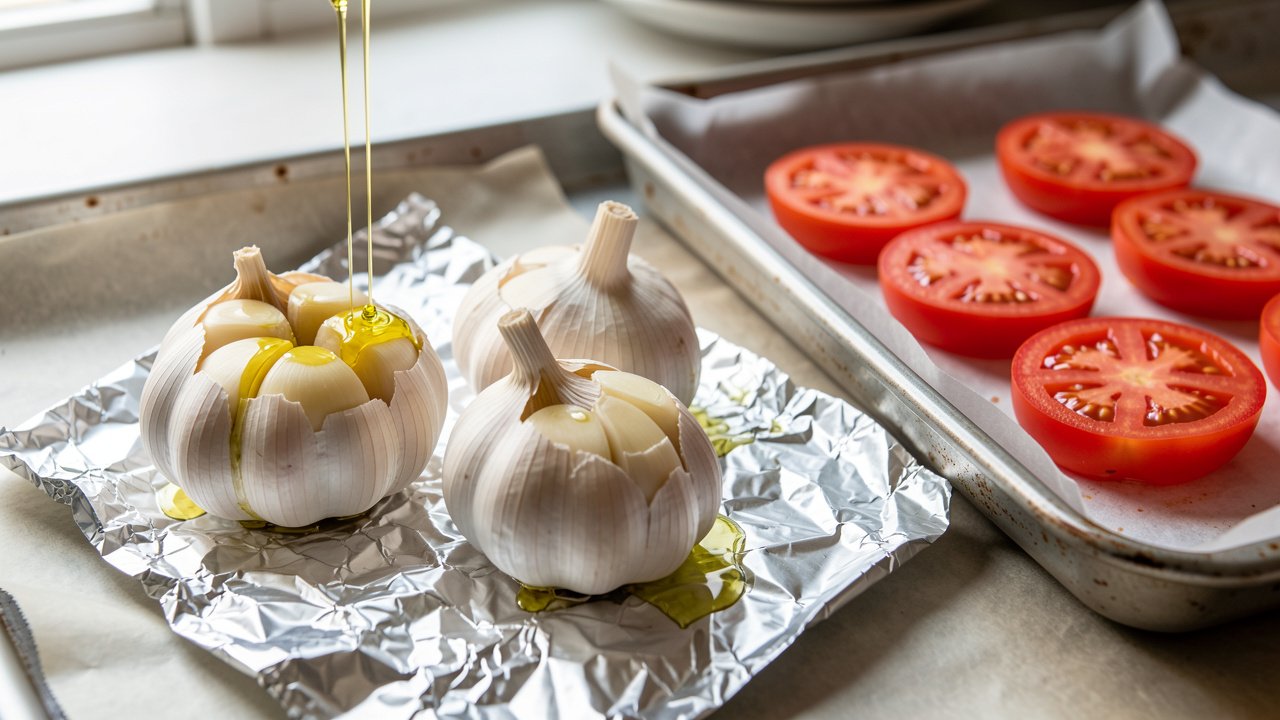
Toss the halves with 2 tablespoons of oil, the salt, and the paprika, and lay them cut side up on the lined pan.
Wrap the Whole Garlic Heads
Slice a quarter inch off the pointed top of each head so the clove tips show. Do not peel or separate the cloves.
Set each head on foil, drizzle the cut tops with the remaining teaspoon of oil, and scrunch the foil closed. The foil keeps direct heat off the cut faces, so the cloves go soft and golden instead of scorched.
Roast Everything at 400F
Tuck the parcels onto the same pan, scatter the thyme over the tomatoes, and roast in the middle of the oven. Give the garlic about 40 minutes and the tomatoes about 45.
Check the garlic at 35 minutes by pressing a clove with a spoon. It should collapse with no resistance and smell sweet and nutty, and if any clove has darkened, pull the parcels at once.
Judge the Tomatoes by Sight, Not the Clock
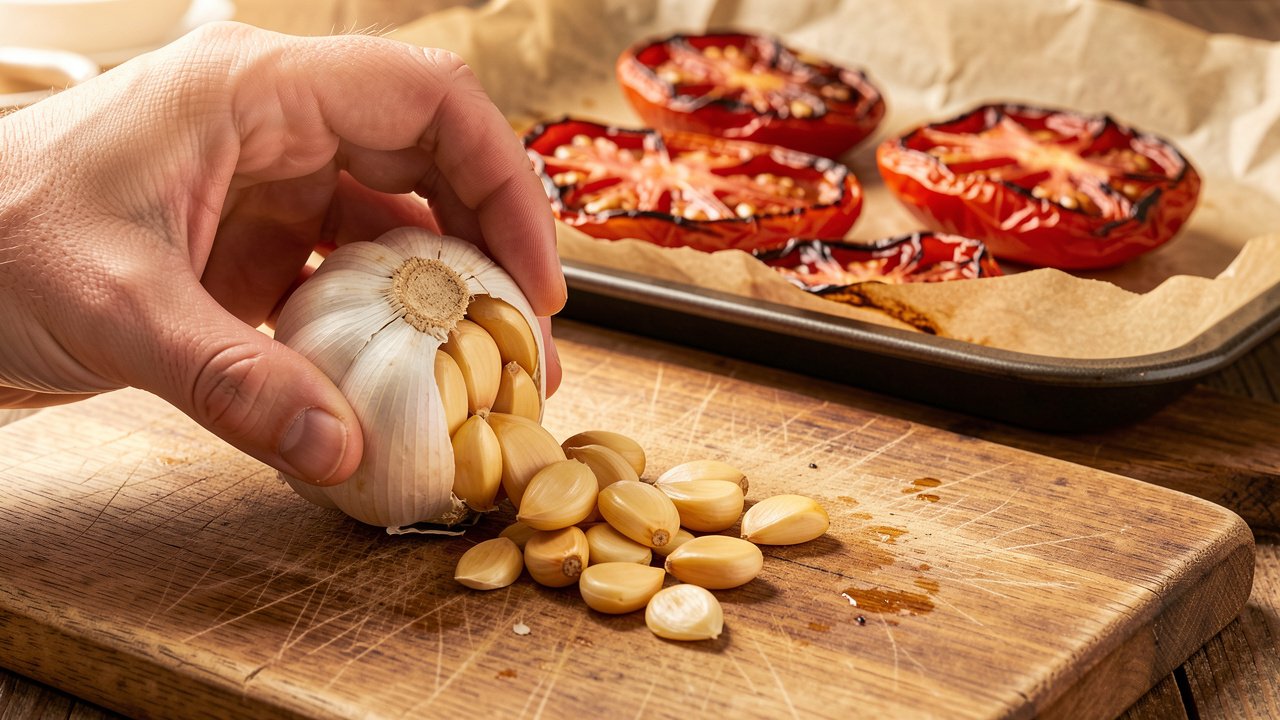
Finished tomatoes look shrunken, wrinkled, and blistered where they touched the pan, and browned edges are flavor rather than damage. If liquid is still pooling, give them another 8 to 10 minutes.
Cool for 10 minutes, then squeeze each garlic head from the base so the cloves slide out in one motion.
Blend to the Texture You Want
Put the tomatoes, garlic, and pepper in the blender. Pulse five or six times for a rustic spread, or run it on low for 20 to 30 seconds for a smooth one.
Leave the skins in. They roast down to almost nothing and add fiber, and fishing them out costs texture for very little gain.
Season, Finish and Jar It
With the blender off, stir in the last tablespoon of oil by hand along with the vinegar and basil.
Taste now and only now. Roasting concentrates the salt you added at the start, so a spread seasoned before the oven often lands too salty.
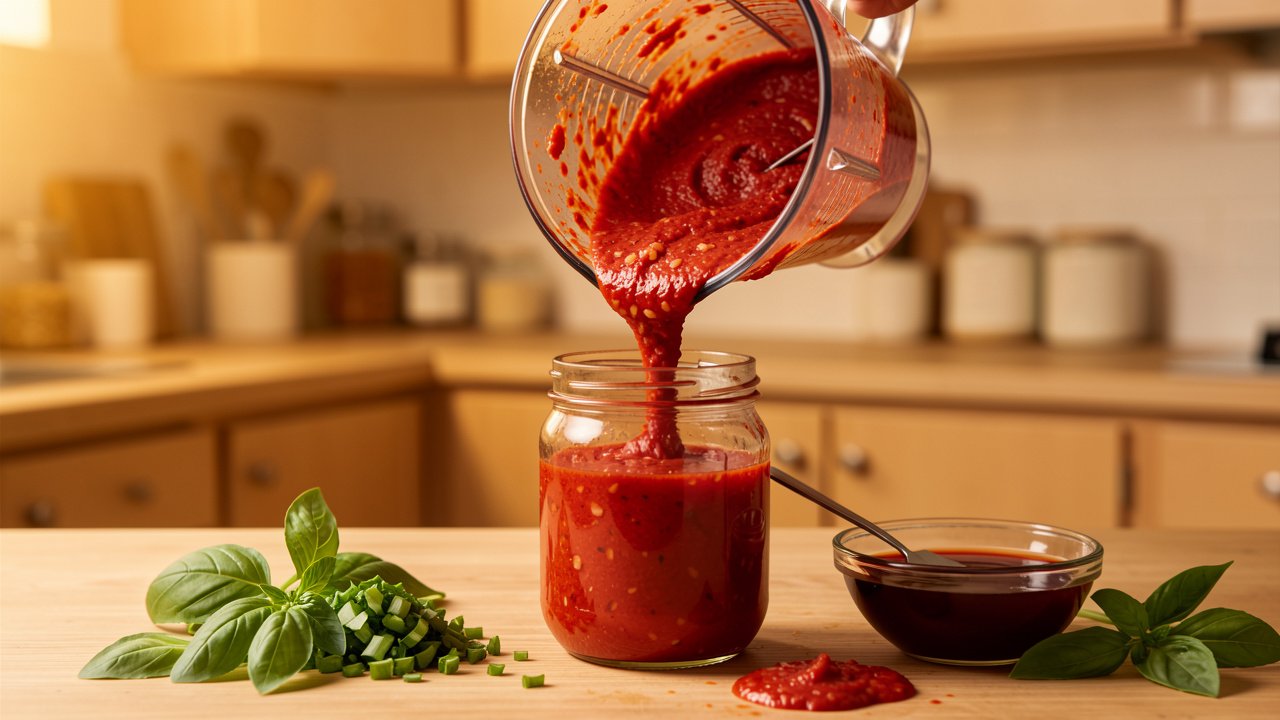
Scrape it into a clean jar and refrigerate, where it thickens a little more.
Why Roasted Garlic Tastes Nothing Like Raw Garlic
Raw garlic is not actually pungent while it sits in the bulb. The sharpness is created the moment you damage the cells.
Cutting or crushing a clove breaks open compartments that were keeping two things apart: a stored compound called alliin and an enzyme called alliinase. When they meet they react and produce allicin, which is the hot, biting, slightly metallic taste we all recognize as raw garlic.
Heat deactivates that enzyme. Roasting whole cloves in their skins means the cells are never cut open, so very little allicin ever forms.
What forms instead is sweetness. Stored sugars concentrate as water evaporates, and browning builds the nutty, faintly caramel flavor that makes roasted garlic taste closer to onion jam than to anything from a garlic press.
That is why this recipe roasts whole heads instead of dropping minced cloves into the blender. Minced garlic would put fresh allicin into a spread that has no cooking left to do, and that harsh note would sit on top of everything.
Watch the color: Burnt garlic is a different problem and cannot be diluted or covered up. Dark brown cloves taste acrid, and one scorched head ruins the batch, so pull the parcels the moment they go soft and golden.
Water Is the Enemy of a Good Tomato Spread
A ripe tomato is roughly 94 percent water. A sauce can carry that water because pasta soaks it up, but a spread has to sit on a cracker for two minutes without turning it into a soggy disc.
The only route there is removing most of that water before you blend.
Seed and Drain Before Roasting
Scooping the jelly out takes about 30 seconds per pound. If the tomatoes are very juicy, salt the halves lightly and stand them cut side down on a rack for 20 minutes first.
Roast Long Enough to Concentrate
The oven evaporates water and concentrates the sugars and savory compounds that make the spread taste deeply of tomato rather than faintly of it. Tomatoes that are merely warmed through blend into thin soup, so wait for shrunken and jammy.
If It Is Still Loose, Cook It Down
Sometimes the tomatoes were juicier than they looked. Scrape the spread into a wide skillet and cook over medium-low, stirring, until it holds a clean line when you drag a spoon through it.
Do not try to fix a watery spread with more olive oil. Oil does not absorb water, so you end up with a loose spread that tastes greasy and separates in the jar.
Chef’s Tips From Real Kitchen Testing
Taste a raw tomato first. Roasting concentrates whatever is already there, so a pale out-of-season tomato just becomes a concentrated pale flavor.
Hold back three or four roasted halves and chop them in at the end. A smooth base with jammy pieces through it reads as homemade rather than processed.
Let the jar sit an hour before the final call on seasoning. Cold flattens salt and acid, so a spread that tasted right while warm often needs a correction.
Ways to Change the Spread
Ways to Serve Roasted Tomato and Garlic Spread
- Thick on warm sourdough toast with flaky salt
- Inside a grilled cheese, on the bread rather than the pan side
- On crackers with a slice of sharp cheddar or a spoon of ricotta
- Spooned over a fried or soft boiled egg
- As the base layer on a flatbread before the cheese
Nutrition Facts
Estimates for one serving of about 2 tablespoons. Values shift with how far the tomatoes reduce.
Make-Ahead Notes
Roasting and blending do not have to happen on the same day. Roast the tomatoes and garlic, cool them, and keep them covered in the fridge for up to two days before blending.
For a party, blend that morning. Basil and vinegar are brightest in the first 24 hours.
Storage, Freezing and One Real Safety Rule
Do not keep this on the counter. Roasted garlic sitting in oil is a low-acid, low-oxygen food, which is exactly the environment where Clostridium botulinum spores can grow and produce toxin at room temperature. The teaspoon of vinegar is nowhere near enough acid to change that.
This is not a canning recipe and it is not shelf-stable. Keep it refrigerated or frozen, and throw out any jar left out for more than two hours.
For tomatoes you can store in the pantry, see our guide to canning crushed tomatoes.
Common Mistakes to Avoid
Troubleshooting Your Tomato Spread
Pale, creamy and looser than it was? The oil emulsified. Running a blender hard with oil in it whips the mixture into something closer to a dressing, so add oil at the end, by hand, and go slowly.
Tastes sweet and flat? Roasted tomato and roasted garlic are both sweet, so nothing pushes back. A teaspoon of vinegar or lemon at the end supplies the contrast.
Bitter or acrid? The garlic burned, and no ingredient hides that. Taste the cloves alone before they go in the blender, and roast a fresh head if they are dark.
Garlic Roasted Tomato Spread FAQs
More Tomato Recipes to Try
Browse all our tomato recipes.