Argentinian Recipes
Grilled Rib Eye with Tomato Salad and Chimichurri Steak, Acid, and Herbs
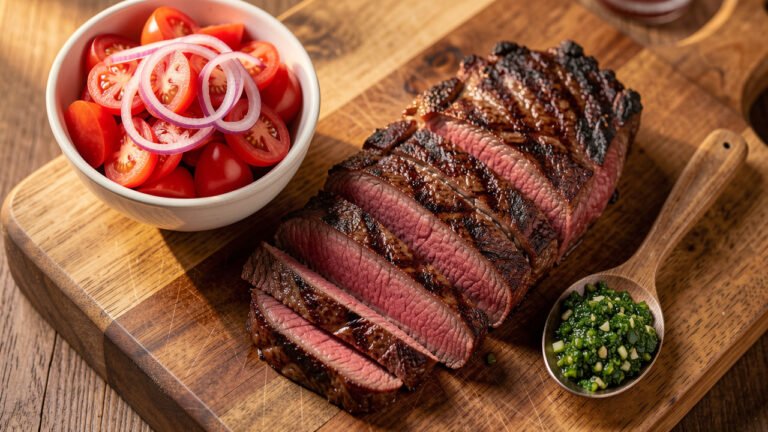
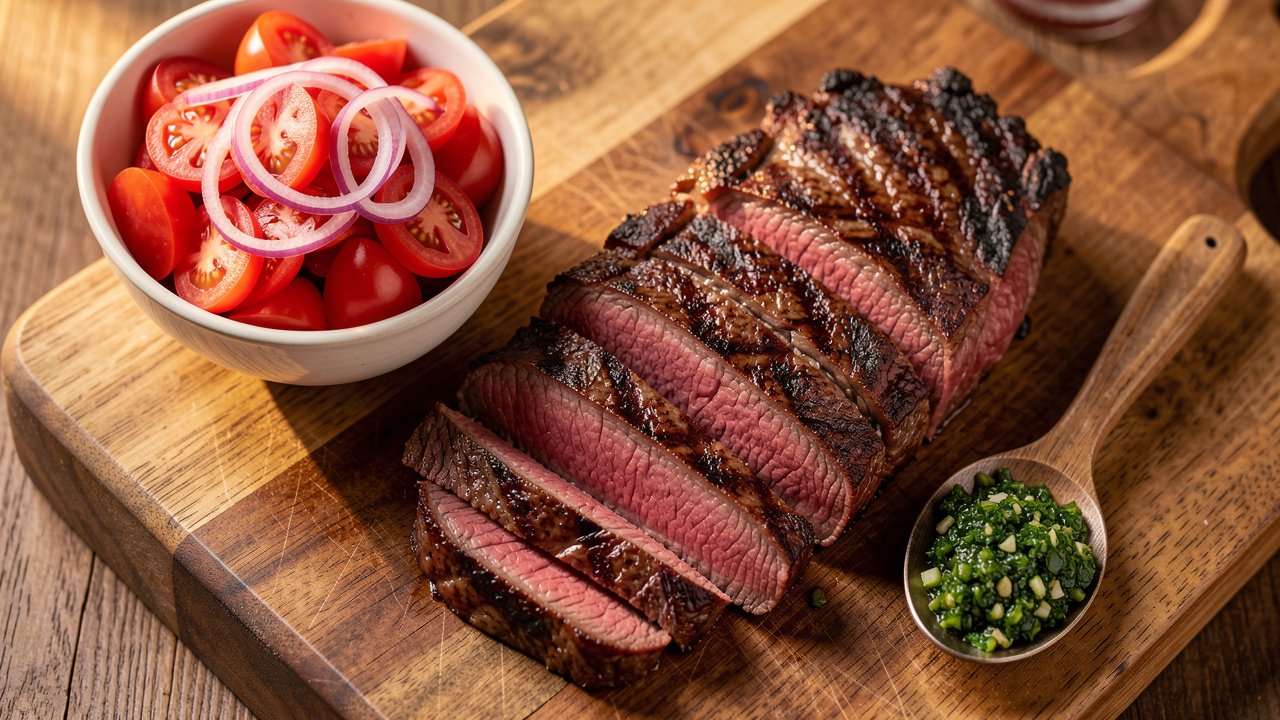
Every part of this plate has a job. The rib eye brings fat and char, the tomatoes bring cold acid that resets your palate between bites, and the chimichurri bridges the two with vinegar and raw garlic. Skip any one and the meal gets heavy fast. I stopped guessing at doneness years ago; a nine-dollar instant-read thermometer fixed more steaks than any technique I ever learned.
Why This Grilled Rib Eye with Tomato Salad and Chimichurri Works
Rib eye is the fattiest of the common steaks, and fat is exactly what makes it delicious and what makes it tiring by the fourth bite. Raw tomatoes and vinegar are the answer. Acid cuts through rendered fat on the palate the same way it does in a vinaigrette, so each bite tastes as bright as the first.
The steak itself is not complicated. It needs a dry surface, aggressive heat, and a thermometer. Everything else is noise. Salting ahead and leaving the steak uncovered in the fridge pulls surface moisture away, and a dry surface is what lets the Maillard reaction build a real crust instead of steaming the meat gray.
Two-zone grilling is the other half. One side of the grill runs as hot as it will go for the crust, the other side stays cool so a thick cut can climb to temperature without the outside turning to carbon. Thin steaks do not need this. A 1.5-inch rib eye absolutely does.
Chimichurri finishes the plate because it does two things at once: the vinegar keeps the acid theme going, and the raw parsley, oregano, and garlic add a green bite that grilled beef has none of. It also happens to be the easiest part of this recipe, as long as you keep the blender in the cupboard.
Pro observation: Pull the steak from the grill about 5 degrees below your target. It keeps cooking on the board. That carryover is not a rounding error; it is the difference between medium-rare and a well-done edge you cannot undo.
Ingredients
Kitchen Measurement Converter
Quickly convert between common cooking measurements without leaving the recipe. Pick a category, enter a value, and the result updates instantly.
Ingredient Notes & Substitutions
The Rib Eye
Buy two steaks at least 1.5 inches thick rather than four thin ones. Thick cuts give you room to build a crust before the center overshoots. Bone-in has more flavor near the bone; boneless cooks more evenly.
Tomatoes
This salad is raw, so the tomatoes have nowhere to hide. Use ripe, heavy, in-season fruit and never refrigerate them, which kills their aroma. Mixed heirlooms or a beefsteak both work.
Parsley and Oregano
Flat-leaf parsley only; curly is tough and tastes of nothing. Fresh oregano is traditional, but 2 teaspoons of dried oregano rehydrated in the vinegar is genuinely good and easier to find.
Vinegar and Oil
Red wine vinegar is the standard for chimichurri. Sherry vinegar works. Use a plain, mild olive oil for the sauce and save the peppery finishing oil for the tomatoes, where you can taste it.
Equipment
- Grill with a lid
- Instant-read thermometer
- Tongs
- Sharp chef’s knife
- Cutting board with a groove
- Serrated knife for tomatoes
Before You Start
1. Salt the steaks early. At least 45 minutes ahead, ideally the night before. Salt draws moisture out, then the meat reabsorbs it seasoned, and the surface dries in the process. A wet steak cannot brown.
2. Make the chimichurri first. It needs 30 minutes at room temperature for the garlic to mellow and the oregano to soften. Made and served immediately, it tastes sharp and disconnected.
3. Cut the tomatoes but do not salt them. Salt pulls water out within minutes. Everything else can wait on the board until the steak is resting.
Step-by-Step Instructions
Salt and Dry the Steaks
Pat the rib eyes completely dry with paper towels, then season all over with kosher salt and coarse black pepper. Set them on a rack over a plate and leave them uncovered in the fridge for at least 45 minutes, or up to 24 hours. Pull them out 30 minutes before grilling so they lose the fridge chill, and pat the surface dry one more time right before they hit the grate.
Hand-Chop the Chimichurri
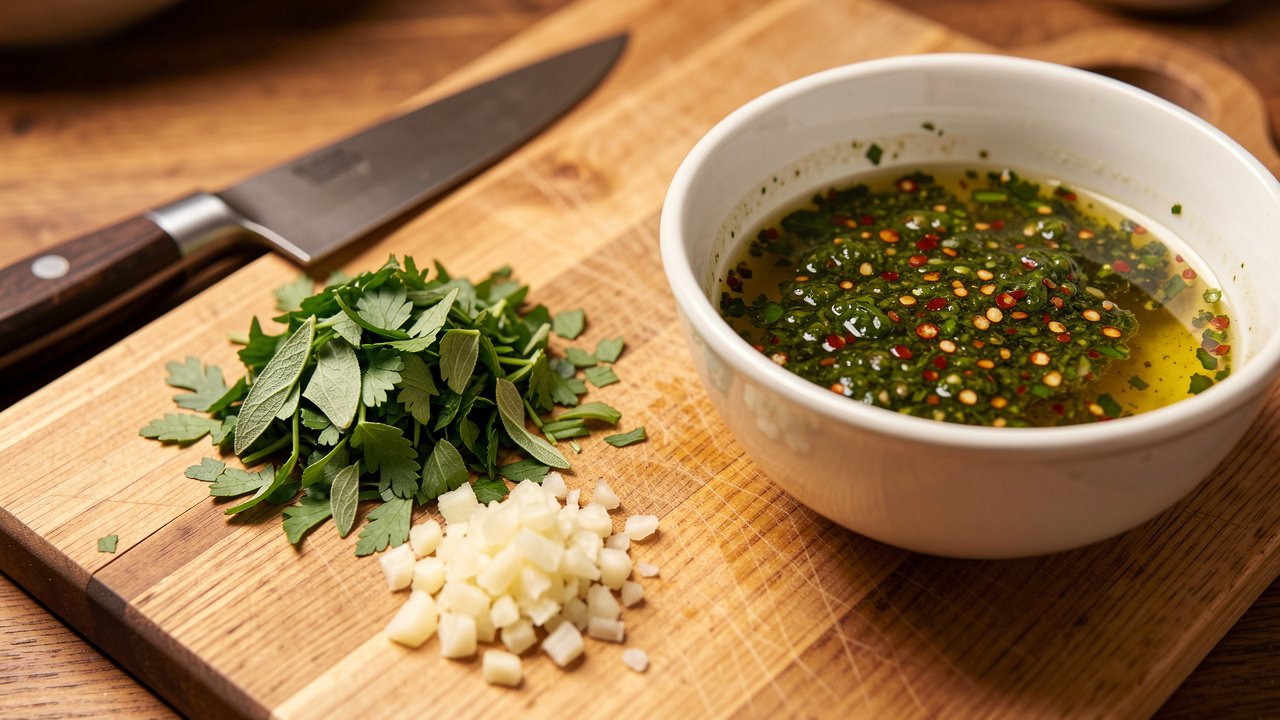
Do not use a blender. Chop the parsley and oregano by hand until fine but still recognizable as leaves, then mince the garlic. Stir the herbs, garlic, chili flakes, and salt into the red wine vinegar with a tablespoon of warm water and let that sit for 5 minutes so the salt dissolves and the vinegar starts working on the garlic. Whisk in the olive oil last. Leave it on the counter for at least 30 minutes.
Build a Two-Zone Fire
Bank all the coals to one side of the grill, or on gas, run one burner wide open and leave the others off. You want the hot side genuinely hot: hold a hand five inches above the grate and you should not last more than two seconds. Scrape the grate clean and wipe it with an oiled towel. A clean, hot grate is what keeps the crust on the steak instead of on the grill.
Sear Over Direct Heat
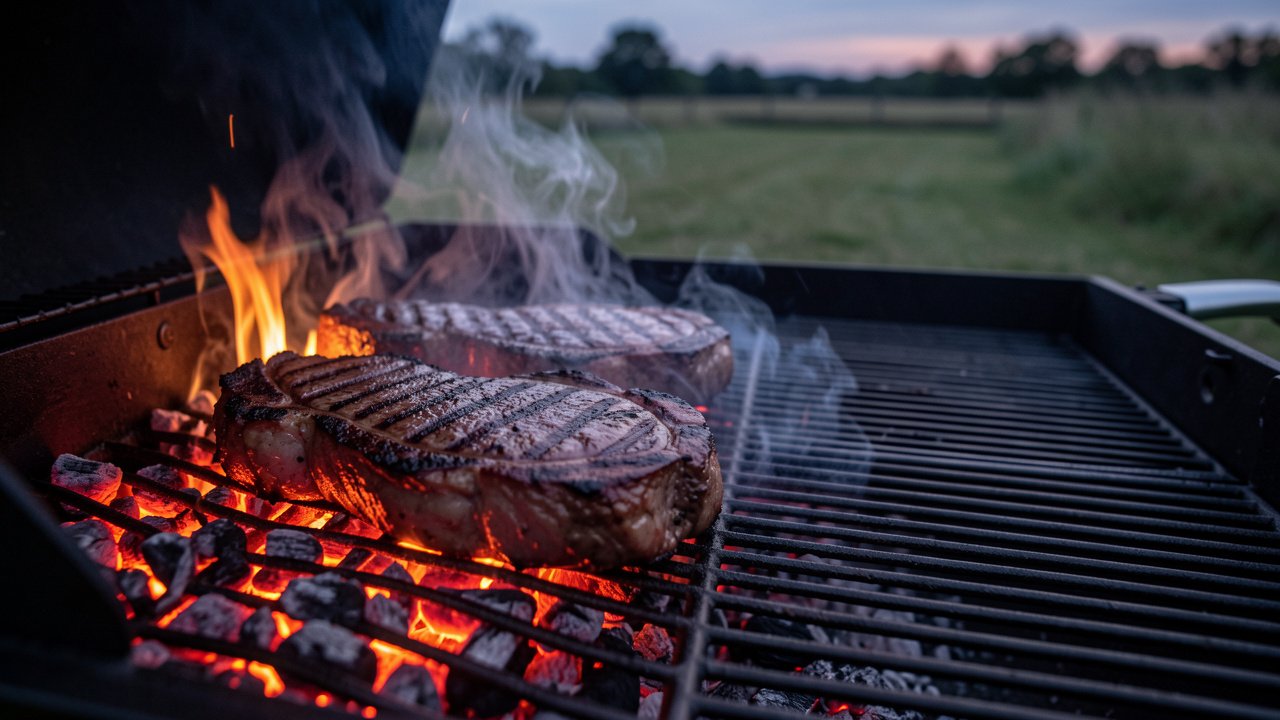
Lay the steaks over the hot side and leave them alone for 3 minutes. Listen for a steady, aggressive sizzle; a quiet grill means the surface is still wet or the fire is weak. Flip and sear the second side for 3 minutes. If a fat flare-up gets out of hand, move the steak to the cool side rather than trying to fight the flames.
Finish on the Cool Side and Check the Temperature
Move the steaks to the unlit side, close the lid, and let them coast up to temperature. Start checking after 4 minutes by pushing the thermometer into the thickest part from the side, avoiding the bone. Pull at 120 to 125F for rare, 130 to 135F for medium-rare, or 135 to 145F for medium. Remember the steak climbs roughly 5 degrees while it rests, so pull it low.
Rest, Salt the Salad, and Slice
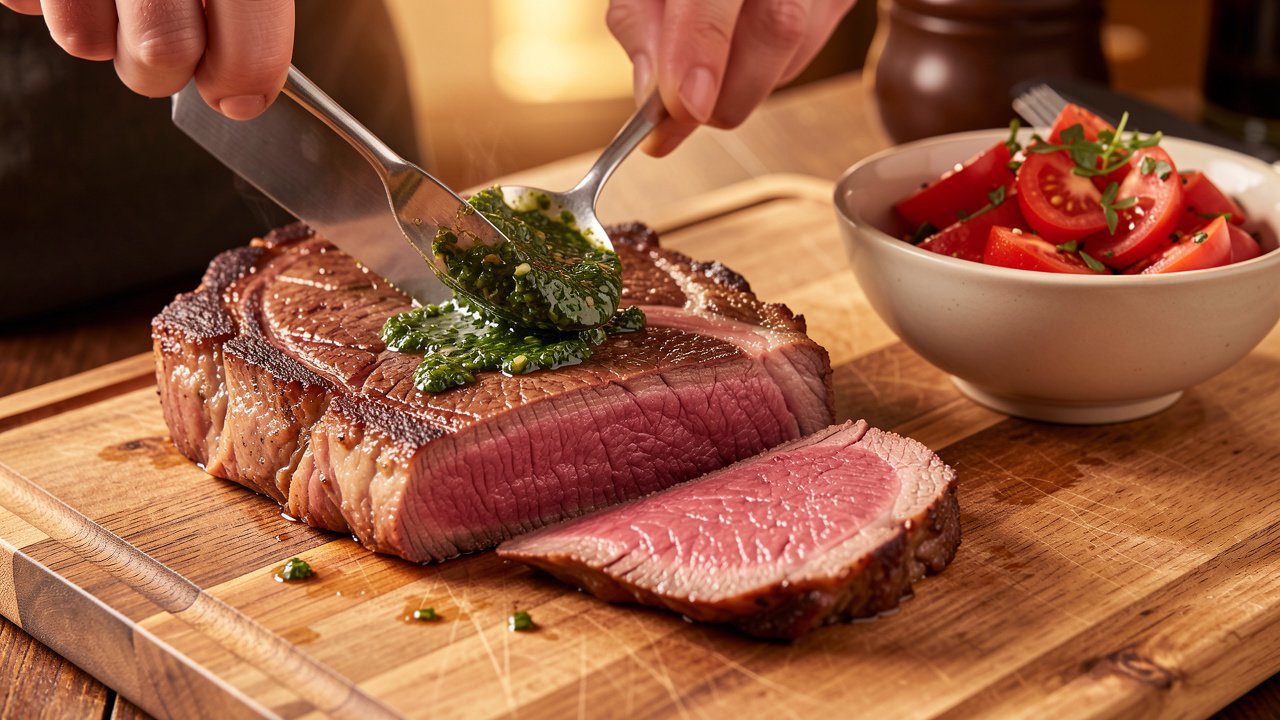
Move the steaks to a board and rest them 5 to 10 minutes. While they rest, toss the tomatoes and red onion with the vinegar, olive oil, and flaky salt, and only now, so they stay firm and the juices stay in the fruit. Find the direction the muscle fibers run and slice across them at a slight angle. Spoon the chimichurri over the sliced meat and pour any board juices back over the top.
Chef’s Tips From Real Kitchen Testing
Trust the thermometer over the clock. Grill temperature, steak thickness, and starting chill all move the timing, but 130F is 130F on any grill in any weather.
Resting works because the muscle fibers relax and reabsorb the juice they squeezed out under heat. Cut into it at minute one and that juice runs onto the board; wait ten and it stays in the slice.
Hold the fat cap against the hot grate with tongs for 30 seconds before you lay the steak flat. Rendered rib eye fat is the best thing you can grease a grate with.
Recipe Variations
Serving Suggestions
- Grilled bread rubbed with a raw garlic clove
- Blistered padron or shishito peppers
- Salted potatoes crisped in the beef fat
- A cold, tannic Malbec
Nutrition Facts
Values are estimates per serving and vary with the marbling of your steak and how much chimichurri you spoon on.
Make-Ahead Tips
The chimichurri is the make-ahead component, and it improves for the first day or two as the garlic loses its raw edge. Make it up to three days early and keep it covered in the fridge, then let it come back to room temperature before serving, since cold olive oil turns thick and cloudy.
Salt the steaks the night before if you can. Do not build the tomato salad in advance; a dressed tomato is a watery tomato within the hour.
Storage, Freezing & Reheating
Common Mistakes to Avoid
Troubleshooting
Steak is gray with no crust? The surface was wet or the fire was too cool. Dry it harder next time and get the grate ripping hot before anything touches it.
Overshot to well-done? Slice it thin against the grain and let the chimichurri do the work. Sauce and thin slices cover a multitude of sins.
Chimichurri tastes harsh? It has not sat long enough. Give it another 20 minutes, or add a pinch of salt and a splash of water to soften the vinegar.
Salad went watery? Drain off the liquid, mix it with a little extra oil, and pour it over the steak as a dressing rather than throwing it out.
A Note on Chimichurri and the Argentine Grill
Chimichurri belongs to the Argentine and Uruguayan asado tradition, where beef is cooked slowly over wood coals and the sauce exists to season and brighten, not to disguise. That is why the classic version has no basil, no lemon, and certainly no food processor. It is parsley, oregano, garlic, vinegar, oil, and chili, chopped and left to sit.
The tomato salad plays the same role from a different direction. If you like that acid-against-richness idea, our chimichurri tomato pizza and tomato mozzarella salad run on exactly the same logic.
Frequently Asked Questions
More Tomato Recipes to Try
Culinary Reviewer: Ghazala Shakeel
Last updated: [mc_modified_date]

Urooj Mukhtar is a classically trained chef and food blogger at TomatoAnswers.com, creating healthy, seasonal, plant-based recipes that put tomatoes at the center of the plate. She focuses on making nutritious, flavour-forward home cooking both accessible and delicious.