Preserves & Canning
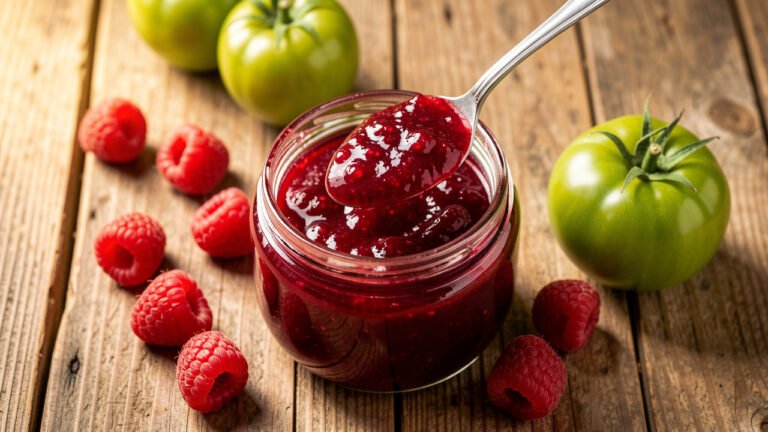
Green Tomato Raspberry Jam No Added Pectin
Every gardener ends up with a bowl of hard green tomatoes when the first frost is coming. This jam is what that bowl is for. Cooked with sugar, lemon, and a heap of raspberries, they turn into something that tastes like a bright, slightly wild berry preserve. Nobody guesses what is in it.
Why Green Tomato Raspberry Jam Works
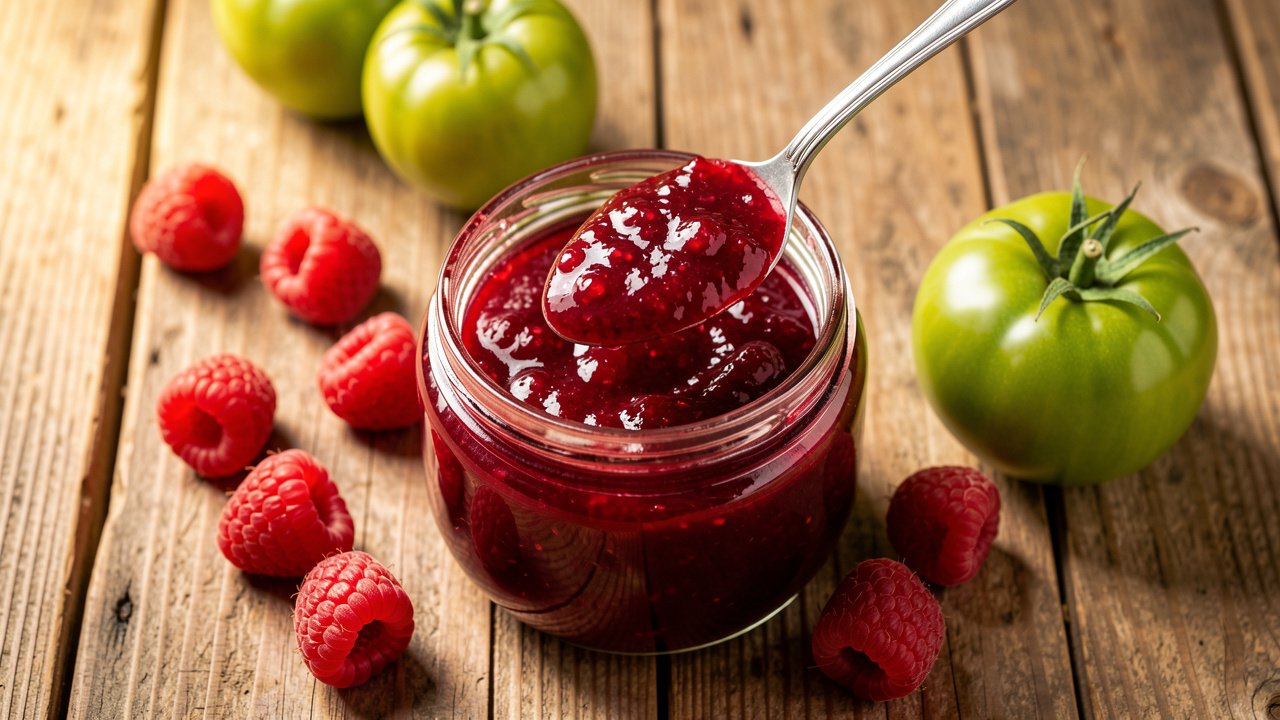
A jam sets when pectin, acid, and sugar reach the right balance at the right temperature. Most fruit fails on at least one of those, which is why so many recipes reach for a box of commercial pectin. Green tomatoes fail on none of them. Pectin peaks in unripe fruit and drops as it ripens and softens, and green tomatoes are more acidic than red ones. That combination is the whole reason this old preserve exists.
What green tomatoes do not have is flavor worth building a jam around. On their own they cook down into something pale, vegetal, and faintly sour. Raspberries fix that. They bring the aroma, the color, and enough of their own tartness to make the finished jam read as a berry preserve rather than a novelty. The tomatoes become texture and structure instead of flavor, leaving a soft-set jam flecked with tiny bits of skin that most people mistake for seeds.
Why the lemon juice is not optional: It does two jobs. It pushes the pH low enough that pectin molecules stop repelling each other and link into a gel, and it keeps the batch safely acidic if you plan to water-bath can it. Use bottled lemon juice for canned jam, since its acidity is standardized and a fresh lemon’s is not.
Ingredients
Kitchen Measurement Converter
Quickly convert between common cooking measurements without leaving the recipe. Pick a category, enter a value, and the result updates instantly.
Ingredient Notes & Substitutions
Green Tomatoes
Use fully unripe tomatoes that are hard and solid green, not ones blushing pink. The blushing ones have already started losing pectin. Any variety works. Core them and cut out any tough white center, but leave the skins on; they soften completely and carry pectin.
Raspberries
Fresh or frozen both work, and frozen are often better value out of season. If using frozen, do not thaw first; add them straight to the pot and expect an extra five minutes of cooking to drive off the extra water.
Sugar
Plain granulated sugar. Sugar is not just sweetness here; it binds water so the pectin can link up, and it is what makes the jam keep. Cutting it back significantly will give you a loose syrup and a much shorter fridge life.
Lemon Juice
Bottled lemon juice if you are canning, fresh if the jam is going straight to the fridge. The zest is optional but adds a clean edge that keeps the sweetness from going flat. Do not swap in vinegar; you will taste it.
Equipment
- Wide heavy-bottomed pot
- Candy or instant-read thermometer
- Chilled saucers for testing
- Six half-pint jars and lids
- Wide funnel and ladle
- Long-handled skimming spoon
Before You Start
1. Chill two saucers in the freezer. You will need a cold surface to test the set on, and you want it ready before the jam is close, not after.
2. Plan the maceration. The chopped tomatoes and sugar need at least four hours together, and overnight in the fridge is easier. Sugar pulls juice out of the fruit by osmosis, so you start with liquid already in the pot instead of scorching dry fruit, and the pieces hold their shape better through the long cook.
3. Decide fridge or canned now. If you are canning, wash and sterilize your jars while the jam cooks so they are hot when you fill them. If this is refrigerator jam, clean jars are enough.
Step-by-Step Instructions
Chop and Macerate
Core the green tomatoes and chop them into roughly quarter-inch pieces. Small pieces release pectin faster and break down evenly. Toss them in the pot with the sugar, lemon juice, and zest, stir, cover, and refrigerate at least 4 hours or overnight. You will come back to an inch of pale syrup in the bottom and the sugar mostly dissolved.
Bring It Up to a Boil
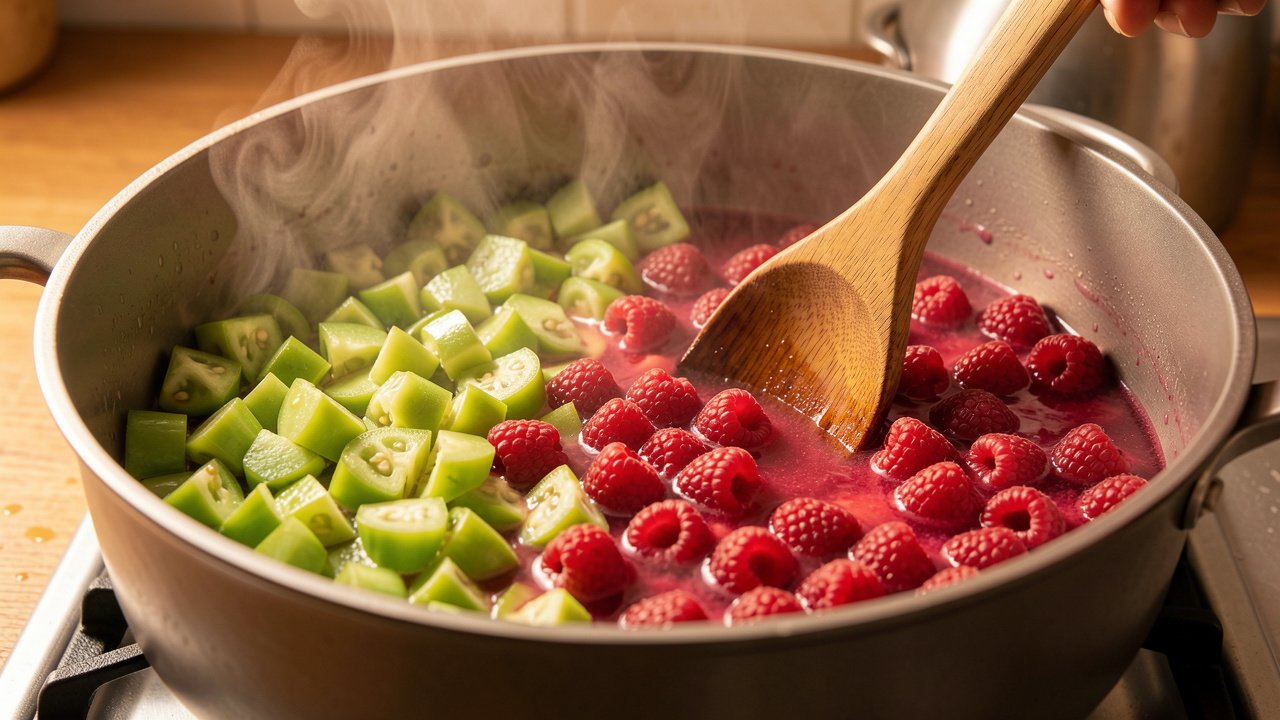
Set the pot over medium heat and stir until any remaining sugar granules dissolve. Do not let it boil before the sugar is gone, or you risk a grainy jam. Add the raspberries and the pinch of salt, raise the heat, and bring it to a full boil that keeps rolling when you stir it. The raspberries collapse almost immediately and the whole pot turns from murky green to red.
Skim the Foam
A pale pink foam builds up around the edges in the first ten minutes. Skim it off and discard it. It is only trapped air and protein, so it is harmless, but leaving it in gives you cloudy jam and a greyish, bubbly surface in the jar. Stirring in the optional half teaspoon of butter now cuts the foam down sharply if you would rather not stand there skimming.
Cook to the Setting Point
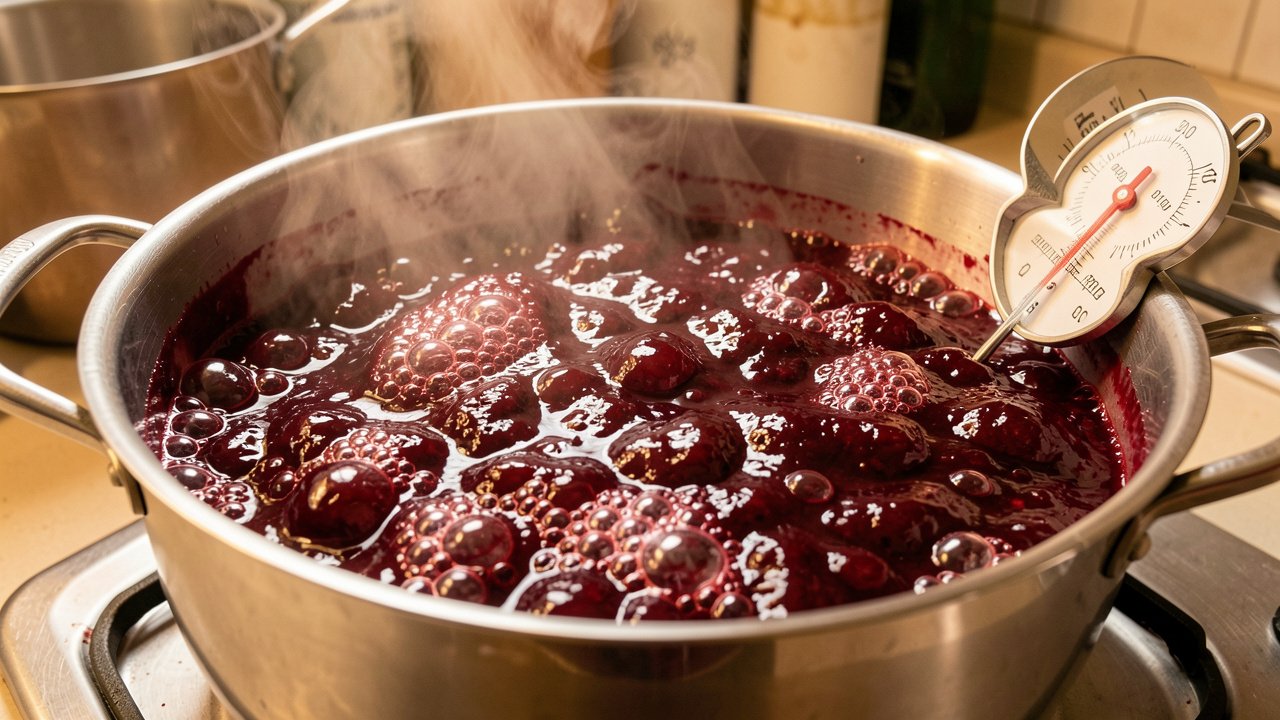
Keep it at a steady boil, stirring often as it thickens so the bottom does not catch. Expect 35 to 45 minutes. The sound changes as you get close: the rapid splashy boil turns into slower, heavier plops. The bubbles get bigger and glossier. Your thermometer should read 220F at sea level, which is the temperature where the sugar concentration is right for a set.
Test It, Do Not Trust the Clock
The clock lies, because your tomatoes, your pot, and your stove are not the ones the recipe was written on. Test instead. Pull the pot off the heat, drop a teaspoon of jam onto a frozen saucer, wait 60 seconds, then push it with your fingertip. If the surface wrinkles and holds the furrow, it is done. If it floods back, boil 5 more minutes and test again on the second saucer. A second check: lift the spoon and let the jam run off. Ready jam sheets off in a single curtain instead of dripping in separate drops.
Jar It and Store It
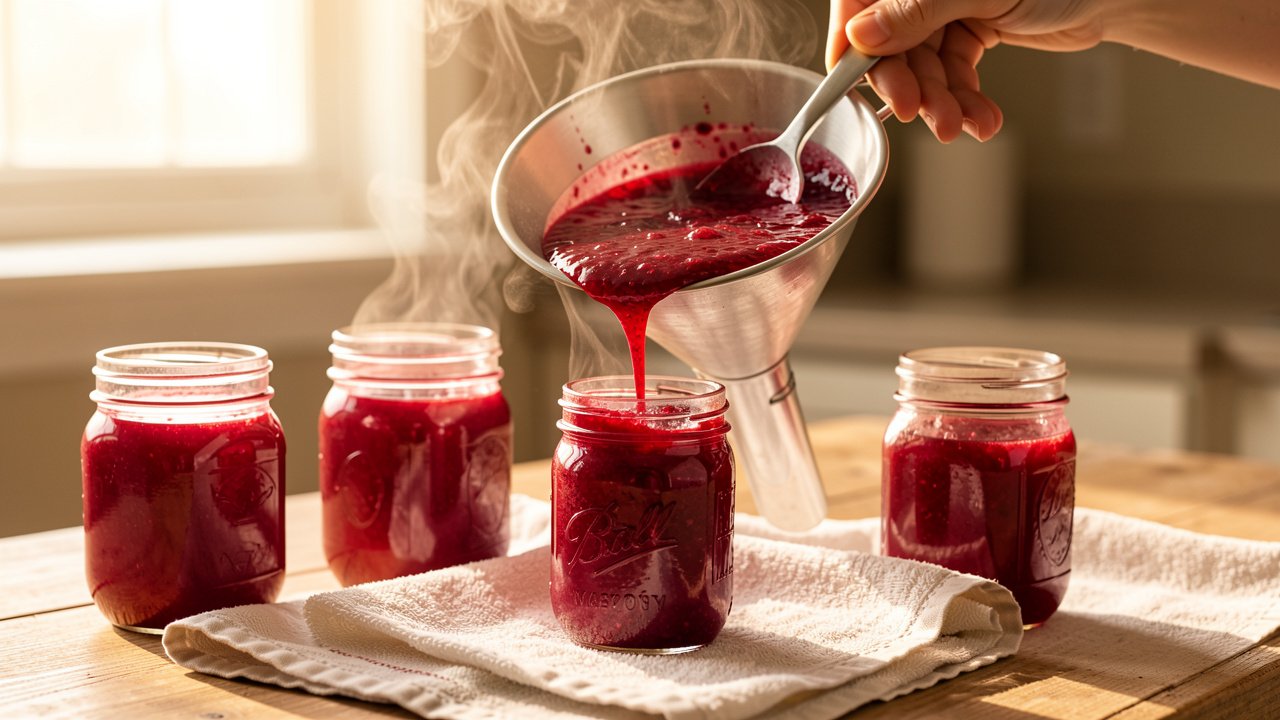
Let the jam sit 5 minutes off the heat and stir once so the fruit distributes instead of floating to the top. Ladle into jars through a funnel. For refrigerator jam, leave half an inch of space, cool uncovered, then lid and refrigerate. For canning, see the section below and follow it exactly.
Chef’s Tips From Real Kitchen Testing
Use the widest pot you own. Jam thickens by evaporation, and surface area does that work. A narrow deep pot can add twenty minutes and gives the sugar more chance to scorch.
Adjust the target temperature for altitude. Subtract about 1F from 220F for every 500 feet above sea level. At 3,000 feet you are aiming for roughly 214F, and cooking to 220F there will give you a stiff, overcooked jam.
Under-set is fixable, over-set is not. If in doubt, stop early. Loose jam can be poured back and boiled another few minutes the next day; jam boiled into candy cannot be walked back.
Recipe Variations
Serving Suggestions
- Toast with salted butter, the classic test
- Spooned over thick plain yogurt
- On a cheese board with sharp cheddar or goat cheese
- Warmed and brushed on roast pork or duck
Nutrition Facts
Values are estimates per 1 tablespoon serving and vary with the final thickness of your batch.
Make-Ahead Tips
The maceration is the make-ahead step and the one worth planning around. Chop the tomatoes, mix them with the sugar and lemon, and refrigerate up to 24 hours before you cook. Beyond that they soften too much and the finished jam loses its texture. The jam itself also improves after a few days in the jar, as the flavor rounds out and the set firms slightly while the pectin network finishes forming.
Storage, Canning & Shelf Life
Never do this: Do not invert jars to force a seal, do not process in an oven, and do not use paraffin wax. These are legacy methods that produce weak or false seals and are no longer considered safe. A water bath is the only home method that belongs here.
Common Mistakes to Avoid
Troubleshooting
Jam did not set? Give it a full 48 hours in the jar first, since pectin keeps setting as it cools. If it is still loose, pour it back, add 2 tablespoons of lemon juice, and boil hard 5 to 10 minutes more, testing on a cold saucer.
Too stiff or rubbery? It went past the setting point. Warm the jar gently in a pan of water and stir in a spoonful of hot water to loosen it.
Fruit floating at the top? You jarred it too hot. Next time rest the jam 5 minutes and stir before ladling.
Tastes flat or too sweet? It needs acid, not less sugar. A tablespoon of lemon juice stirred in sharpens everything.
Where This Preserve Comes From
Green tomato preserves show up across American and British farm cookery for one plain reason: frost. Tomatoes that will not ripen are not a delicacy, they are a deadline. Pairing them with a strongly flavored berry was the standard trick, because the tomato supplied the set and the berry supplied the identity. Our guide to canning crushed tomatoes covers the same water-bath process for the ripe half of your harvest.
Frequently Asked Questions
More Tomato Recipes to Try
Culinary Reviewer: Ghazala Shakeel
Last updated: [mc_modified_date]

Urooj Mukhtar is a classically trained chef and food blogger at TomatoAnswers.com, creating healthy, seasonal, plant-based recipes that put tomatoes at the center of the plate. She focuses on making nutritious, flavour-forward home cooking both accessible and delicious.