Greek Recipes
Rustic Vegan Roasted Vegetable Bake
Last updated: September 29, 2026
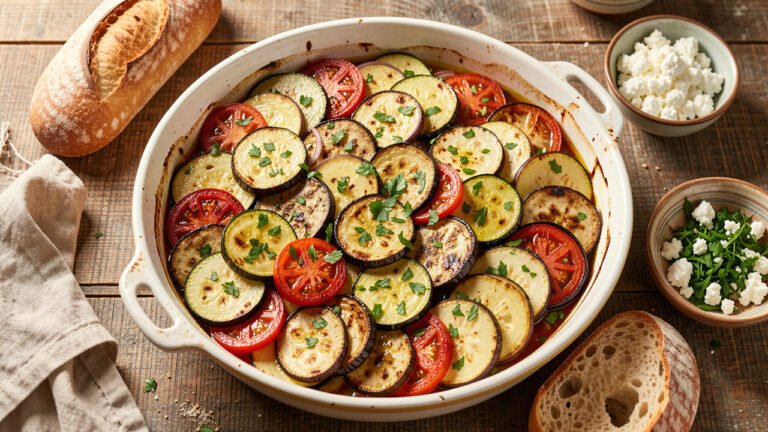
I fell for Briam because it turns a pile of plain summer vegetables into something my family keeps asking for. There is no browning in batches and no fussy layering to fret over. I slice, toss, and roast, and the oven does the real work while the edges catch and caramelize.
Why This Briam Recipe Works
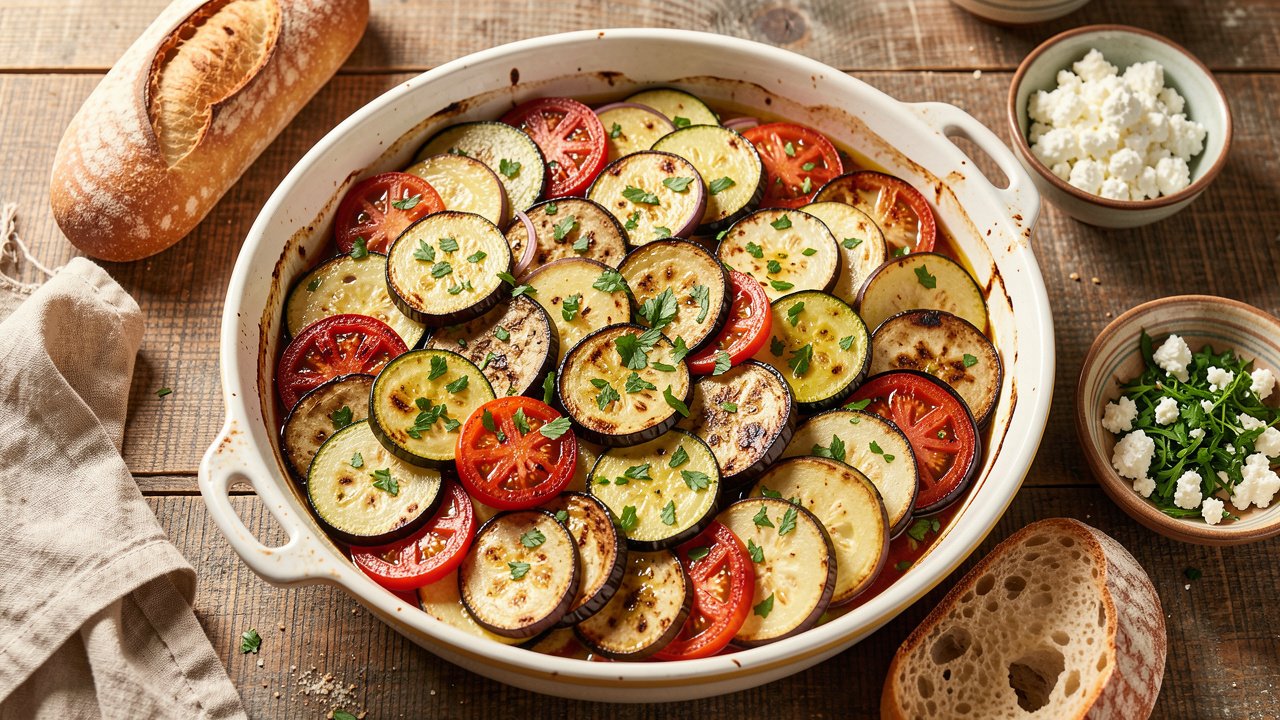
This recipe works because I treat slow roasting as a flavor tool, not just a way to soften vegetables. Low, steady heat pulls water out of the zucchini and eggplant, cooks the tomatoes down into a light sauce, and gives the potato slices time to go tender all the way through. Nothing ends up watery or raw in the middle.
The olive oil does far more than grease the pan. As the vegetables release their juices, the oil and tomato melt together into a loose, glossy sauce that clings to every slice. The few times I have skimped on oil the bake came out dry and pale, so now I pour with a confident hand.
Slicing everything to a similar thinness is the quiet trick that makes it cook evenly. When the potato, zucchini, and eggplant are close in size, they finish at the same moment instead of leaving me with soft zucchini and still-firm potato.
It is also a forgiving dish. Briam is vegan and gluten-free with no swaps, it reheats well, and I honestly think it tastes better the next day once the flavors have settled.
Pro observation: I know the bake is ready when the top vegetables are deeply browned and a knife slips through a potato slice with no resistance. If the potatoes still feel firm, I give it more time no matter how good the top already looks.
Ingredients
Kitchen Measurement Converter
Quickly convert between common cooking measurements without leaving the recipe. Pick a category, enter a value, and the result updates instantly.
Ingredient Notes & Substitutions
Potatoes
Waxy or all-purpose potatoes hold their shape best. I slice them thin so they cook through in step with the softer vegetables, since they are always the last to turn tender.
Zucchini & Eggplant
I look for firm, glossy zucchini and a heavy eggplant with tight skin. Both are mostly water, so a low oven and enough time keep them from going to mush before they brown.
Tomatoes
Ripe, red tomatoes give the sweetest sauce. Out of season, I stir in a cup of passata or a can of chopped tomatoes so the bake still has enough liquid to braise the vegetables.
Olive Oil & Herbs
I use a generous pour of good extra-virgin olive oil, since it is the backbone of the flavor rather than just fat. Dried oregano is traditional, and a handful of fresh parsley stirred in at the end keeps everything bright.
Equipment
- Large roasting pan or dish
- Sharp knife and board
- Large mixing bowl
- Colander for the eggplant
- Measuring cups and spoons
- Foil for the pan
Before You Start
1. Heat the oven fully. Briam roasts low and slow, so set the oven to 375 F and let it come all the way up to temperature before the pan goes in.
2. Salt the eggplant early. Give the eggplant slices 15 to 20 minutes with a little salt to draw out moisture and any bitterness while you prep the rest.
3. Use a wide, shallow pan. A crowded, deep dish steams the vegetables. Spread them out so the tops can brown and the edges can caramelize.
Step-by-Step Instructions
Slice Everything Evenly
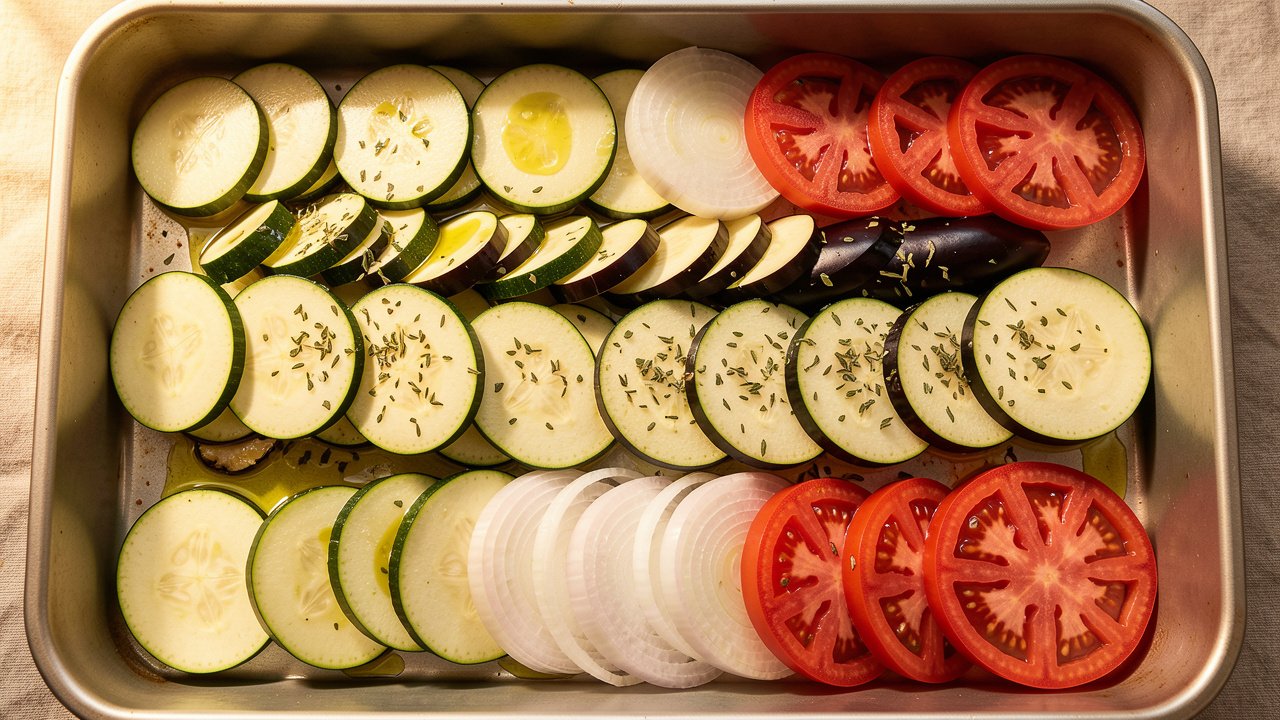
Cut the potatoes, zucchini, and eggplant into thin rounds about a quarter inch thick, and slice the onion the same way. Aim for a similar thickness across the board so nothing finishes early. Even slices are the difference between a tender bake and a mix of raw and mushy pieces.
Salt and Drain the Eggplant
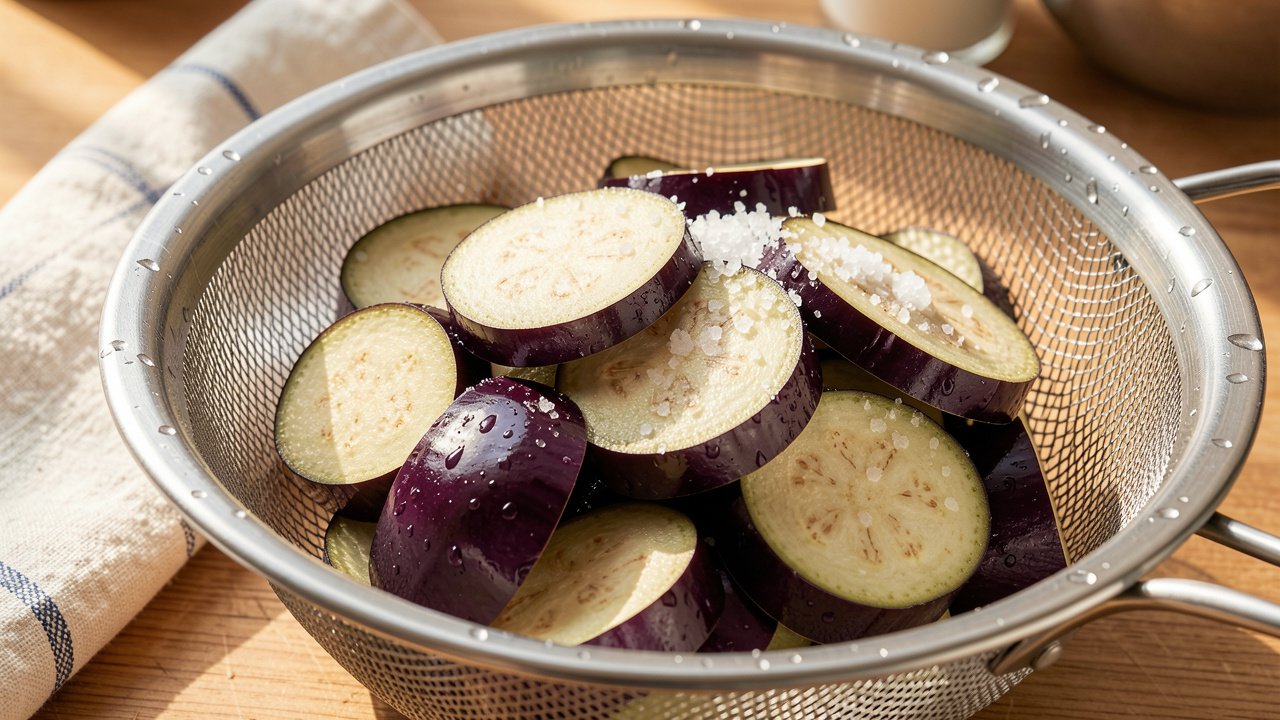
Lay the eggplant slices in a colander, sprinkle them with a little salt, and let them sit 15 to 20 minutes. You will see beads of moisture form on the surface. Pat them dry with a towel. This step keeps the eggplant from turning watery and takes away any bitter edge.
Toss With Oil, Garlic, and Herbs
Pile all the sliced vegetables into a big bowl. Add the chopped tomatoes, passata, minced garlic, oregano, salt, pepper, and most of the olive oil. Use your hands to toss until every slice is coated and glossy. Do not be shy with the oil here; it becomes the sauce.
Arrange in the Pan
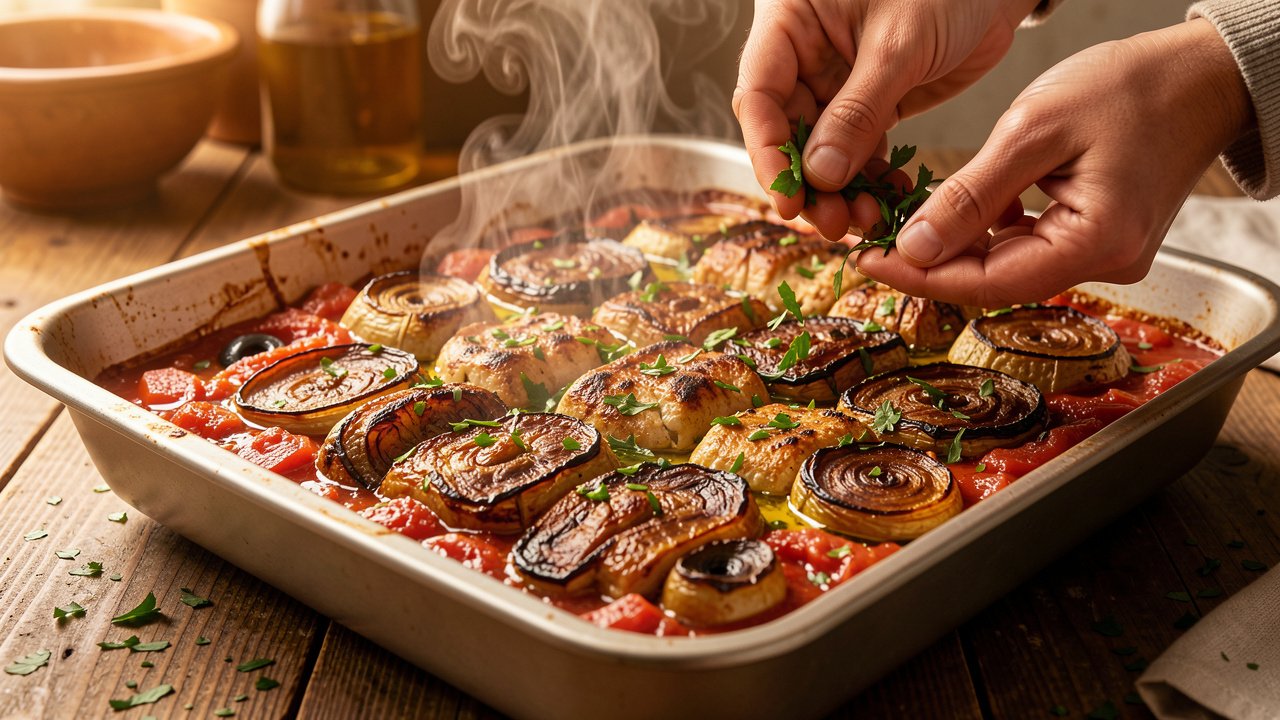
Tip everything into a wide roasting pan and spread it into a fairly even layer, nudging some slices upright so they overlap like shingles. Pour any oil and tomato left in the bowl over the top. Drizzle with the last of the olive oil so the surface stays moist as it roasts.
Roast Low and Slow
Cover the pan with foil and roast at 375 F for about 40 minutes, then remove the foil and roast 30 to 40 minutes more. Stir gently once when you take the foil off so the vegetables cook evenly. The kitchen should fill with the smell of roasting garlic and sweet tomato.
Check Doneness and Rest
Briam is done when the potatoes are fork-tender, the tops are deeply browned, and the tomato and oil have cooked into a thick sauce at the bottom. Let it rest 10 minutes so the flavors settle. Scatter fresh parsley over the top and serve warm or at room temperature.
Chef’s Tips From Real Kitchen Testing
I always finish with the foil off. That uncovered stretch is what browns the tops and gives Briam its roasted taste, so I plan for it even when the covered time already looks done.
I keep a little olive oil back for the very end. A raw drizzle over the hot bake, right before it goes to the table, wakes up the flavor in a way baked-in oil never quite matches.
I resist the urge to stir. One gentle turn when the foil comes off is all it needs, because too much stirring breaks the slices apart and stops the tops from browning.
Recipe Variations
Serving Suggestions
- Crusty bread to mop up the olive oil and tomato sauce
- A wedge of feta and a handful of olives on the side
- Plain rice or orzo to soak up the juices
- A simple green salad with lemon and oil
Nutrition Facts
Values are estimates per serving and vary with how much olive oil you use.
Make-Ahead Tips
Briam is a natural make-ahead dish, since it is traditionally eaten at room temperature and the flavors only deepen as it rests. I often bake it fully a day ahead, cool it, and refrigerate, then bring it back to room temperature or warm it gently in a low oven before serving. When I am really pressed, I slice and toss all the vegetables a few hours early and keep the covered bowl in the fridge until it is time to roast.
Storage, Freezing & Reheating
Common Mistakes to Avoid
Troubleshooting
Vegetables watery, not roasted? The pan was too crowded or covered too long. Spread them out and finish uncovered so the moisture cooks off.
Potatoes still firm? They were sliced too thick or the oven ran cool. Cover again and give them another 15 minutes.
Bake tastes flat? It usually needs salt and a raw drizzle of olive oil at the end, plus fresh parsley for lift.
A Note on Briam and Greek Cooking
Briam belongs to the Greek family of oven-baked vegetable dishes cooked in olive oil, known as ladera, which simply means cooked in oil. People often call it Greek ratatouille, and the two are close cousins, but Briam leans on oregano, uses a heavier pour of olive oil, and roasts in the oven instead of simmering on the stove.
Dishes like this sit at the heart of the Mediterranean way of eating, where vegetables and olive oil do the heavy lifting, and they carry the same tradition as tomatoes in the Mediterranean diet. Research has even linked a daily spoonful of extra-virgin olive oil to a longer life, which makes me feel good about pouring it freely here.
I like Briam best as a main with bread and feta on the side. If you enjoy slow-baked vegetable dishes, our tomato and eggplant lasagna and hearty tomato puree cabbage share the same comforting, tomato-rich spirit.