Syrian Recipes
Peas and Carrot in a Cinnamon-Warmed Tomato Broth
Last updated: November 4, 2026
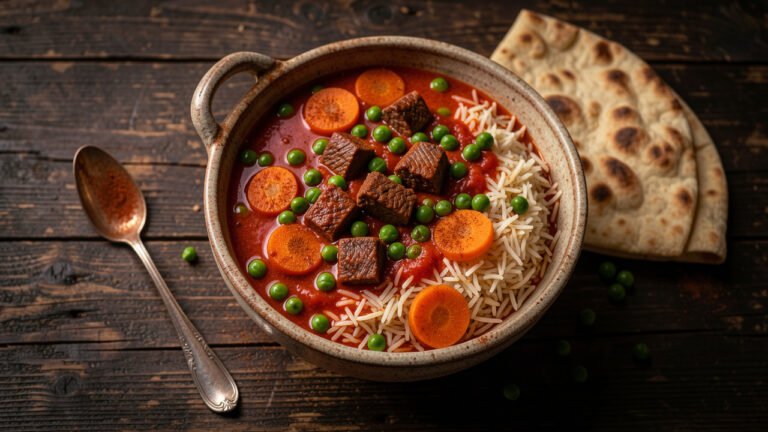
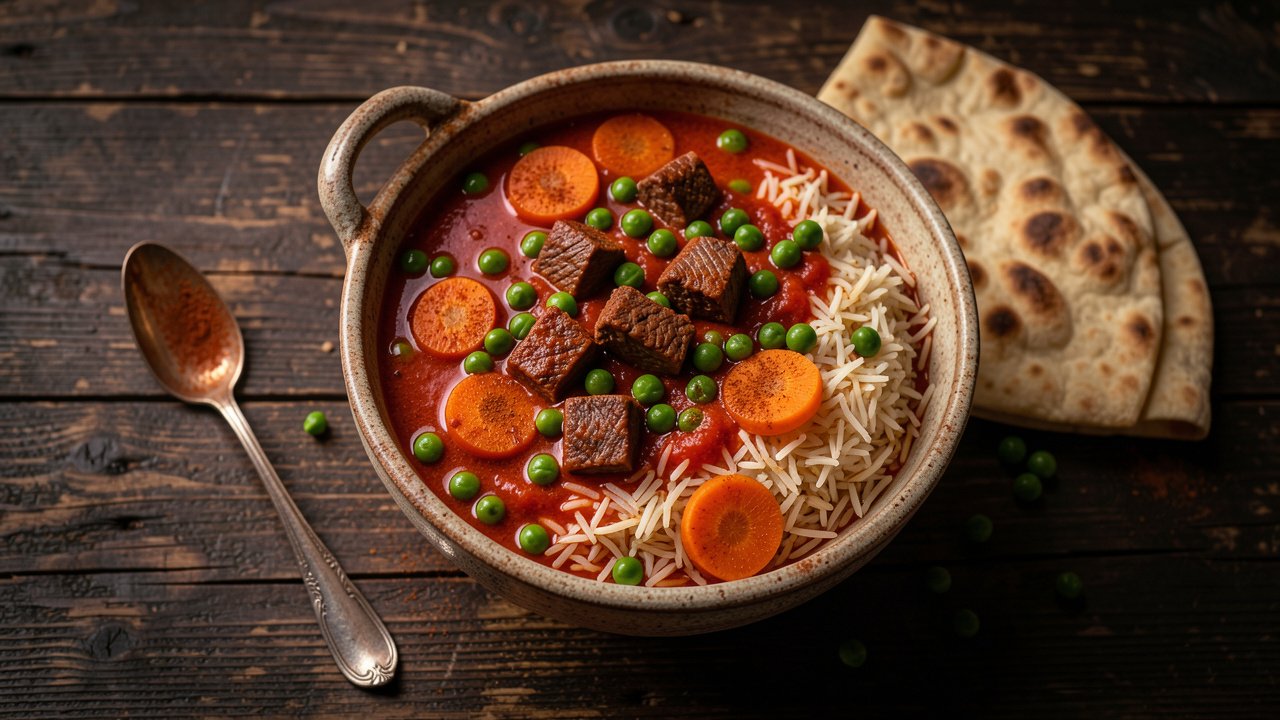
Yakhnet bazella is the kind of stew that shows up on Syrian tables week after week and never wears out its welcome. Sweet green peas and soft rounds of carrot bob in a tomato broth that is gently warmed with cinnamon and allspice, while cubes of beef turn meltingly tender in the pot. It is humble, deeply savory, and made almost entirely from pantry and freezer staples.
The method is forgiving and mostly hands-off. You brown the beef, build a spiced tomato base, then let everything simmer low and slow until the meat is fork-tender and the broth is rich. Peas and carrots join near the end so they stay bright and sweet, and the whole pot is ladled over buttery vermicelli rice.
Why This Yakhnet Bazella Works
Great yakhnet bazella is really two things done well: beef simmered long enough to go fork-tender, and a tomato broth warmed just so with cinnamon and allspice. Get those two right and the peas and carrots almost take care of themselves. The recipe here browns the meat for depth, builds a quick spiced base, then lets the pot do the slow work.
The base starts the way most good tomato cooking does, with onion and garlic softened in olive oil, then tomato paste stirred in and toasted for a minute to concentrate its sweetness. A whisper of cinnamon and allspice goes in with it, blooming in the hot oil so the spice tastes warm and rounded rather than raw and dusty.
Timing the vegetables is the quiet secret. The beef needs a long, gentle simmer to soften, so it goes in early with the tomatoes and broth. The carrots follow partway through, and the peas are held back until the final minutes, which keeps them plump, sweet, and bright green instead of wrinkled and faded.
It is also an everyday, use-what-you-have dish. Frozen peas and a couple of carrots are enough, and the beef can be swapped for lamb or left out entirely. Keep the tomato, the cinnamon, and the slow simmer constant, and you get a pot that tastes like a Damascus kitchen every single time.
Pro observation: Yakhnet bazella is fully halal as written, with no forbidden ingredients. The broth gets all of its depth from browned beef, tomato, garlic, and a careful pinch of warm spice, so nothing is missing from the bowl.
Ingredients
Kitchen Measurement Converter
Need to convert an amount while you measure? Pick a category, enter a value, and the result updates instantly.
Ingredient Notes & Substitutions
Beef
Use a well-marbled stewing cut such as chuck, cut into even 1-inch cubes so it cooks at the same rate. Chuck turns silky over a long simmer, where lean cuts dry out. Lamb shoulder is a traditional swap; add it the same way and give it the same slow cook.
Peas
Frozen peas are ideal here and need no thawing; they stay sweeter and greener than canned. Add them only at the end so they keep their pop. Fresh shelled peas work in spring, but give them a few extra minutes in the broth to soften.
Carrots & Aromatics
Cut carrots into coins thick enough to hold their shape through the simmer. Onion and garlic build the savory base, and a little extra garlic never hurts. A bay leaf dropped in with the broth adds a quiet background note if you have one.
Tomatoes & Spices
Crushed tomatoes give a smooth, brothy body, while tomato paste deepens the color and flavor. The cinnamon and allspice are the signature of the dish, so keep them gentle. A squeeze of lemon at the end lifts the whole pot and balances the sweetness.
Equipment
- Large heavy pot or Dutch oven
- Lid for the pot
- Wooden spoon
- Sharp knife and board
- Ladle
- Vegetable peeler
Before You Start
1. Brown the beef in a single uncrowded layer. Pile the cubes in all at once and they steam to a dull grey, giving up the deep browned crust that flavors the whole broth. Sear in two batches so each side actually colors before you build the base.
2. Toast the cinnamon and allspice in the hot oil for about thirty seconds. Stirred straight into the liquid they stay raw and dusty on the tongue, while a few seconds in the oil wakes them up so the spice reads warm and rounded instead of harsh.
3. Hold the peas back until the final ten minutes. Added early they wrinkle and fade to a drab army green and lose their sweetness, while a late addition keeps them plump, bright, and distinctly sweet against the savory beef.
Step-by-Step Instructions
Most of the work here is the slow simmer, so set yourself up first. Cube the beef, slice the carrots into coins, chop the onion, and mince the garlic, then start the vermicelli rice partway through so the whole meal reaches the table together.
Prep the Beef and Vegetables
Cut the beef chuck into even 1-inch cubes and pat them dry so they sear rather than steam. Peel and slice the carrots into coins, finely chop the onion, and mince the garlic. Keep the frozen peas in the freezer until the very end so they stay firm and sweet.
Brown the Beef
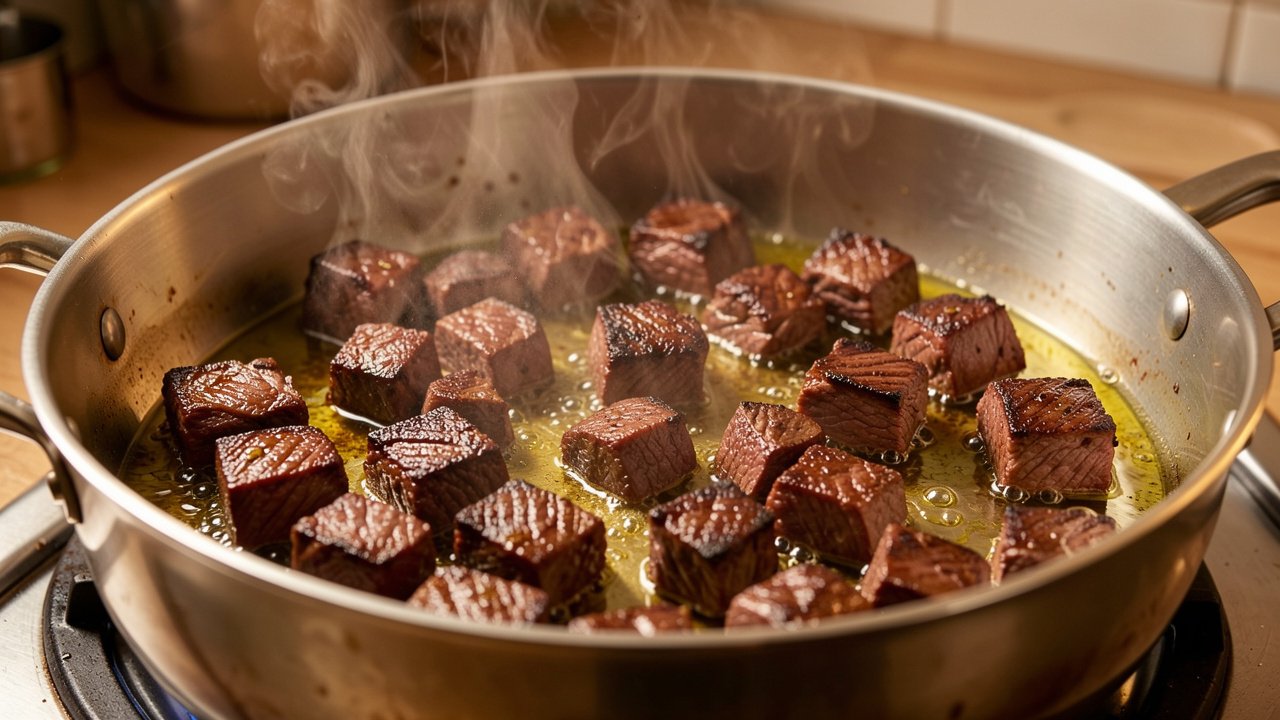
Warm the olive oil in a large heavy pot over medium-high heat. Add the beef in two batches, in a single layer, and sear 3 to 4 minutes per batch until the cubes are well browned on most sides. Lift the beef out onto a plate and set it aside while you build the base.
Build the Spiced Tomato Base
Lower the heat to medium and add the onion with a pinch of salt; cook 4 to 5 minutes until soft. Stir in the garlic and cook 1 minute, then add the tomato paste, cinnamon, and allspice and stir for about a minute so the paste darkens and the spices bloom and smell warm and fragrant.
Simmer the Beef Until Tender
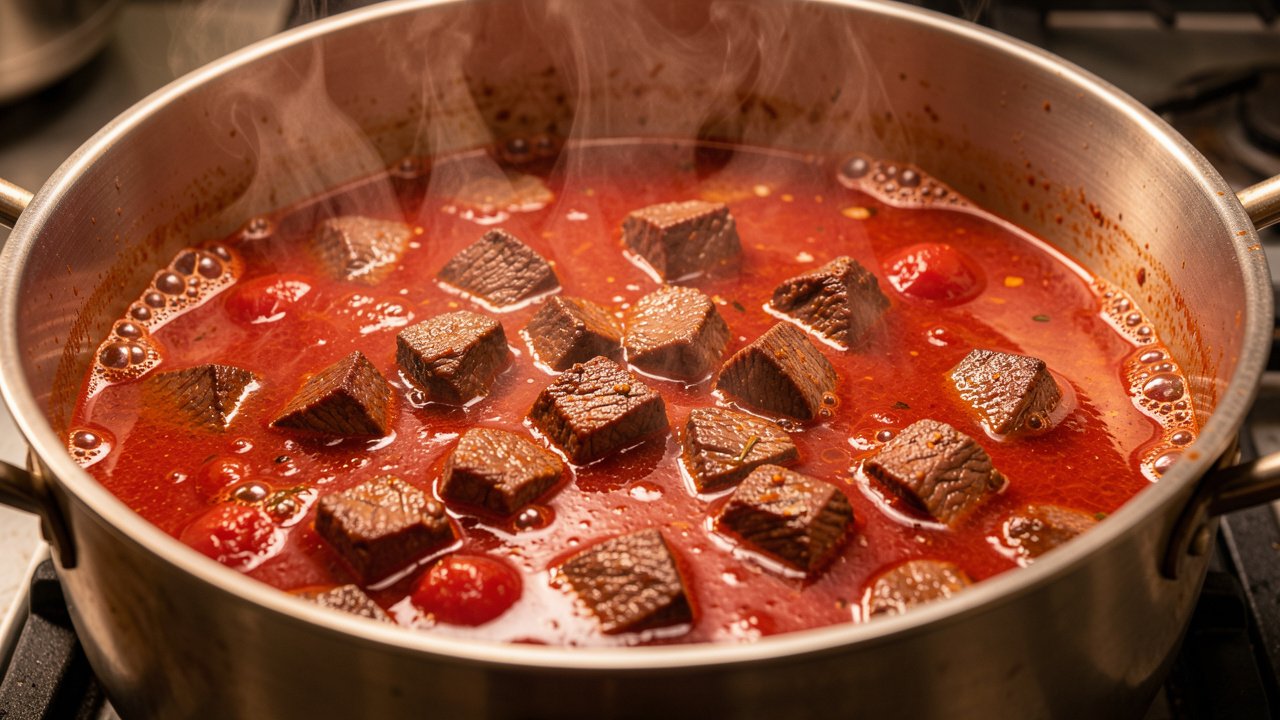
Return the beef and its juices to the pot, pour in the crushed tomatoes and beef broth, and add a good pinch of salt and black pepper. Bring to a gentle simmer, cover, and cook 40 to 45 minutes, stirring now and then, until the beef is fork-tender and the broth has deepened.
Add the Carrots and Peas
Stir in the carrot coins and simmer, covered, for about 10 minutes until they start to soften. Add the frozen green peas and cook 8 to 10 minutes more, until the carrots are tender and the peas are bright and hot through. Add a splash of water or broth if the stew looks too thick.
Finish and Serve Over Rice
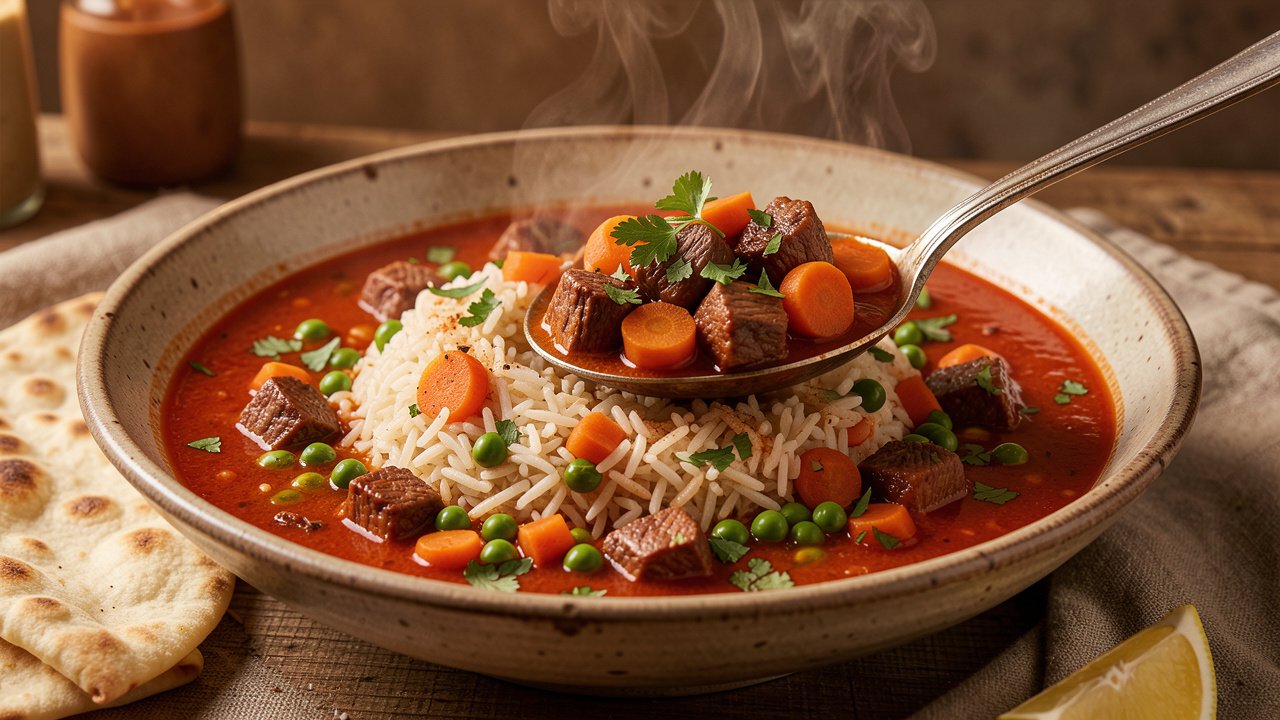
Take the pot off the heat, stir in the chopped cilantro and a squeeze of fresh lemon, then taste and adjust the salt. Ladle the stew over warm vermicelli rice, spooning plenty of broth over the top, and serve right away with flatbread alongside for scooping.
Chef’s Tips From Real Kitchen Testing
Give the beef the time it needs. Chuck only turns silky after a long, gentle simmer, so resist the urge to hurry; if it is still chewy at 45 minutes, keep going with the lid on until it yields.
Keep the spice a whisper. Cinnamon and allspice should round out the tomato, not announce themselves, so measure them level and let the beef and broth stay the stars of the bowl.
Stagger the vegetables. Carrots go in with time to soften while peas join only at the end, so each keeps its texture instead of one turning to mush before the other is done.
Recipe Variations
Serving Suggestions
- Buttery vermicelli rice to soak up the broth
- Warm flatbread for scooping
- A cool cucumber and yogurt salad on the side
- Extra lemon wedges for squeezing over each bowl
Nutrition Facts
| Nutrient | Amount per serving |
|---|---|
| Calories | 380 |
| Protein | 28 g |
| Carbohydrates | 26 g |
| Fat | 18 g |
| Saturated Fat | 6 g |
| Fiber | 7 g |
| Sugar | 10 g |
| Sodium | 720 mg |
Values are estimates per serving and vary with the exact cut of beef and brands you use.
Make-Ahead Tips
Yakhnet bazella is even better the next day, once the spices and tomato settle into the beef. Cook it through completely, cool, and refrigerate; the flavor deepens overnight. Reheat gently on the stove with a splash of broth, and cook the vermicelli rice fresh just before serving.
Storage, Freezing & Reheating
Common Mistakes to Avoid
Troubleshooting
Beef still tough? It simply needs more time. Cover the pot and keep it at a gentle simmer, checking every 10 minutes; chuck can take an hour or more to fully soften.
Broth too thin? Simmer uncovered for a few minutes to reduce, or stir in an extra spoonful of tomato paste to thicken and deepen the color.
Stew too sweet or flat? Brighten it with a squeeze of lemon and a pinch of salt, which cuts the natural sweetness of the peas, carrots, and tomato.
A Note on Syrian Cooking
The name says exactly what the dish is: in Levantine Arabic, yakhne means a stew or braise, and bazella means peas, so yakhnet bazella is simply “peas stew”. It belongs to a whole family of Syrian home-style yakhanni, everyday pots of meat and a single vegetable in a tomato broth that anchor the midday meal across the Levant.
It is most often confused with the Egyptian version, bisella. Both are tomato-and-pea stews, but the Syrian one is warmed with a touch of cinnamon and allspice and is almost always ladled over vermicelli rice, where the Egyptian pot leans plainer and is served with plain rice or bread. That gentle spice is the signature that marks a bowl as Syrian. It sits comfortably beside other Levantine and Persian comfort stews, like a tray of kousa mahshi or a pot of khoresh gheimeh, all of them built on the same patient simmer.
What has kept yakhnet bazella on the table for generations is exactly its humility: it is cheap, forgiving, and made from staples that keep in the freezer and pantry. Keep the tomato and the warm spice constant, let the beef take its time, and you have a meal that tastes of home no matter where it is cooked.