Nigerian Recipes
Fried Nigerian Pepper and Tomato Stew
Last updated: November 4, 2026
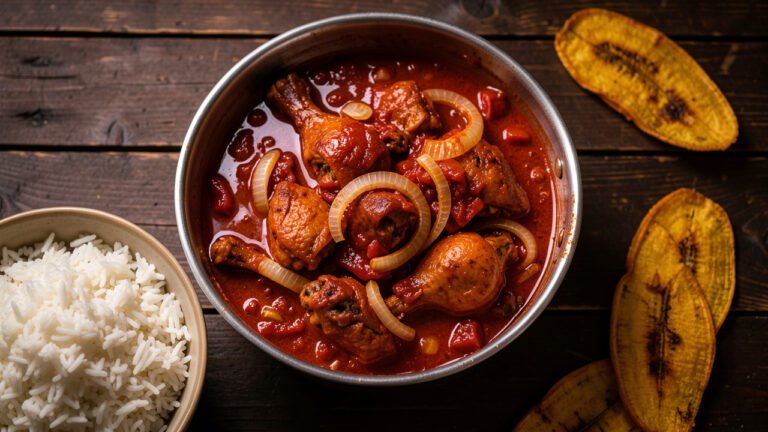
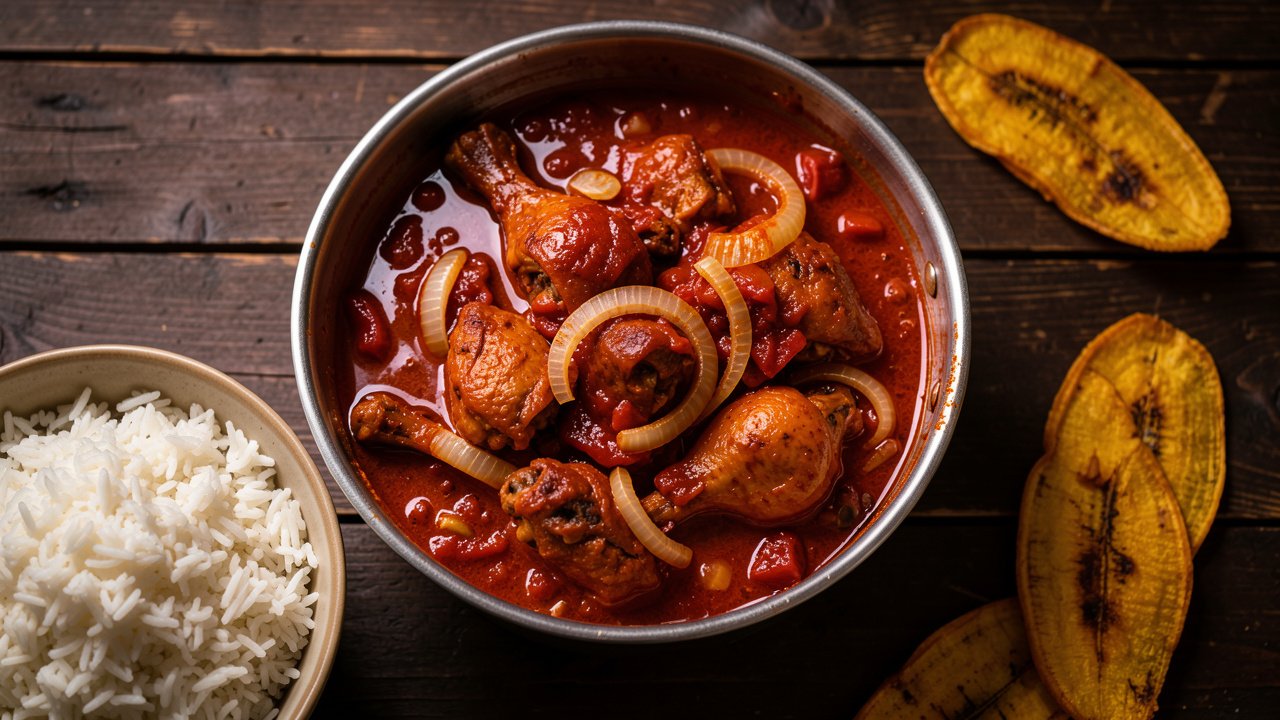
Obe ata dindin is the beating heart of the Nigerian kitchen: a bold, fried pepper-and-tomato stew that sits at the center of countless Yoruba meals. The name tells you exactly what it is, a pepper stew that has been fried, and that frying is the whole point. Blended tomatoes, red bell peppers, fiery scotch bonnet, and onion are cooked down and fried in oil until the raw edge disappears and the base turns a deep, glossy red.
What makes it special is patience. You boil the blended peppers down to drive off the water, then fry the thick paste in a generous pool of oil until it caramelizes and the oil separates and rises clear to the top. That rising oil is the signature of ata dindin. Fold in chicken and a little stock and you have a stew that tastes of roasted pepper, sweet onion, and gentle smoke, ready to spoon over rice, yam, or plantain.
Why This Obe Ata Dindin Works
Great obe ata dindin is really two things done well: a pepper base cooked down until it is thick and sweet, and a long, patient fry that drives off every last trace of raw tomato. Get those two right and everything else follows. The recipe here reduces the blended peppers first, then fries them slowly in oil until the color deepens and the flavor roasts, so you end up with a base that tastes cooked, not just hot.
The method starts the way the best Nigerian stews do, with a smooth blend of tomatoes, red bell pepper, scotch bonnet, and onion. That blend goes into a dry pot and boils down by about a third, because raw pepper puree holds a surprising amount of water. Only then does it meet the oil, where it fries rather than simmers, and frying is what builds the signature flavor.
Timing the fry is the heart of it all. The paste needs 20 to 30 minutes on a steady medium flame, stirred often so the bottom never scorches, until the color turns from bright to deep brick-red and the oil breaks free and floats clear on top. That clear oil is your doneness cue, the same way shells opening tells you shellfish is ready in a pot of Jamaican brown stew chicken that the sauce has caramelized.
It is also wonderfully flexible. Obe ata dindin is a base more than a fixed recipe, so the protein is up to you. Keep the pepper blend and the long fry constant, swap in chicken, beef, goat, or fish, and you get a stew that tastes like a Lagos kitchen every single time.
Pro observation: Obe ata dindin is naturally halal as written, with no forbidden ingredients. All of its depth comes from fried pepper, tomato, onion, and the roasted oil, so you never miss a thing.
Ingredients
Kitchen Measurement Converter
Need to convert an amount while you measure? Pick a category, enter a value, and the result updates instantly.
Ingredient Notes & Substitutions
Tomatoes & Red Pepper
Firm Roma or plum tomatoes blend into a thick base with less water than soft varieties. Red bell peppers, known as tatashe, add body, sweetness, and a deep red color without much heat. Together they give the stew its glossy, rich foundation once fried.
Scotch Bonnet (Rodo)
Scotch bonnet, or rodo, brings the fruity heat that defines the dish. One pod can be fierce, so start with half, blend it in, and add more after frying to taste. For a milder pot, use fewer and lean on extra red bell pepper for color.
The Oil
A neutral vegetable oil is standard and lets the pepper flavor lead. Use enough to form a real frying pool, not a thin coat, since the paste needs to fry and the oil needs to rise clear on top. Some cooks use a spoon of red palm oil for extra color and aroma.
Protein & Stock
Bone-in chicken is classic, but beef, goat, or fish all work beautifully; this is a base recipe. Par-cook the protein first and save the liquid as your stock, which carries real flavor back into the pot. A plain cube-based broth is a fine shortcut.
Equipment
- Blender or food processor
- Large heavy pot or wide pan
- Wooden spoon
- Sharp knife and board
- Ladle
- Sieve or strainer
Before You Start
1. Boil the blended pepper down before it meets the oil. Raw blended pepper and tomato carry a lot of water, and frying it wet makes the oil spit violently and leaves a sour, watery stew. Reduce the puree in a dry pot by about a third first so it fries instead of boils.
2. Pour in enough oil to actually fry, not just coat the pan. Obe ata dindin is defined by frying the paste in a generous pool of oil until the oil floats clear on top. A thin film only steams the paste grey and never builds the roasted, caramelized flavor the dish is named for.
3. Taste the scotch bonnet heat before you commit to all of it. One pod can carry the punch of several, so blend in half at first and add more after frying. You can always build heat into the pot as it reduces, but you cannot pull it back out once it is in.
Step-by-Step Instructions
Obe ata dindin rewards patience more than speed, so set yourself up before you start the fry. Blend the peppers, par-cook and season the chicken, and keep the reserved stock within reach so the stew moves smoothly from one stage to the next.
Blend and Prep
Roughly chop the tomatoes, red bell peppers, scotch bonnet, and one onion, then blend them into a smooth puree. Season the chicken with a little salt, curry, and thyme and par-cook it with a splash of water until just tender, reserving the liquid as stock. Slice the second onion for frying.
Boil Down the Blend
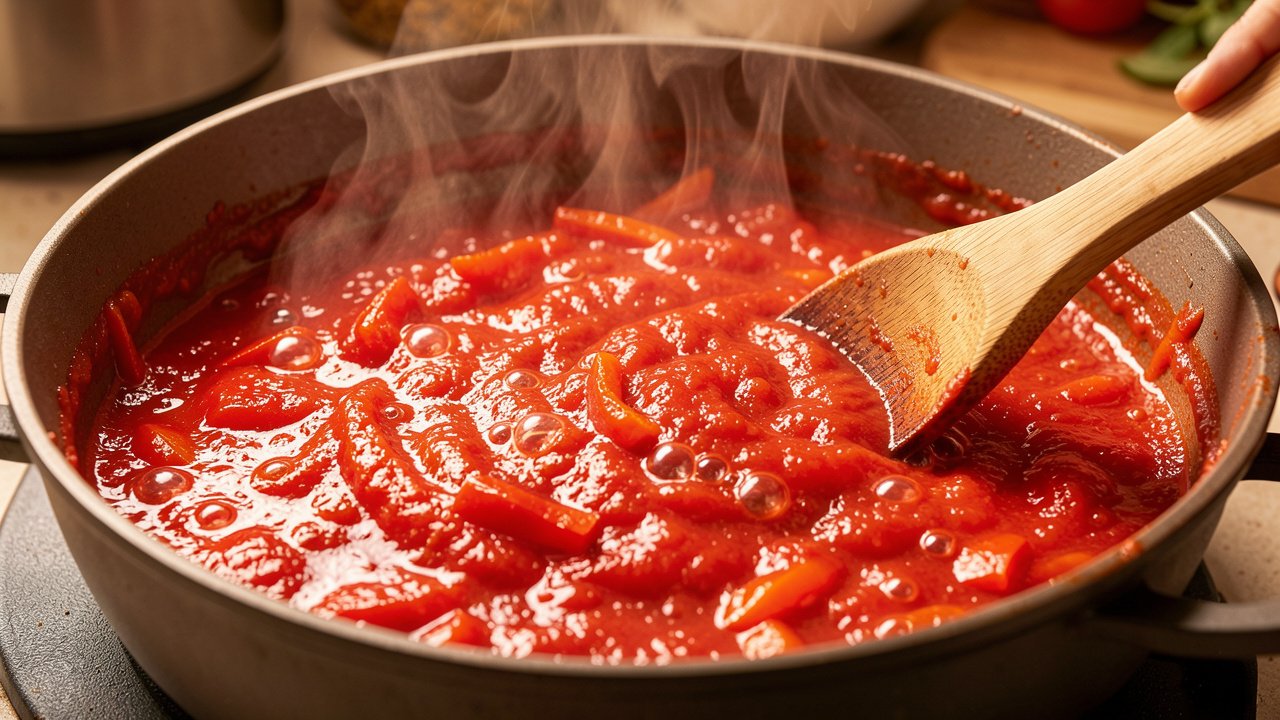
Pour the blended pepper puree into a dry pot and bring it to a boil, uncovered. Let it cook for about 10 minutes, stirring now and then, until it reduces by roughly a third and thickens noticeably. This drives off the water so the base will fry rather than simmer when it meets the oil.
Fry the Aromatics
Heat the vegetable oil in a large pot or wide pan over medium heat, then add the sliced onion and fry 3 to 4 minutes until soft and fragrant. Stir in the tomato paste and fry it for another minute or two so it darkens, loses its raw edge, and deepens the color of the oil.
Fry the Pepper Base
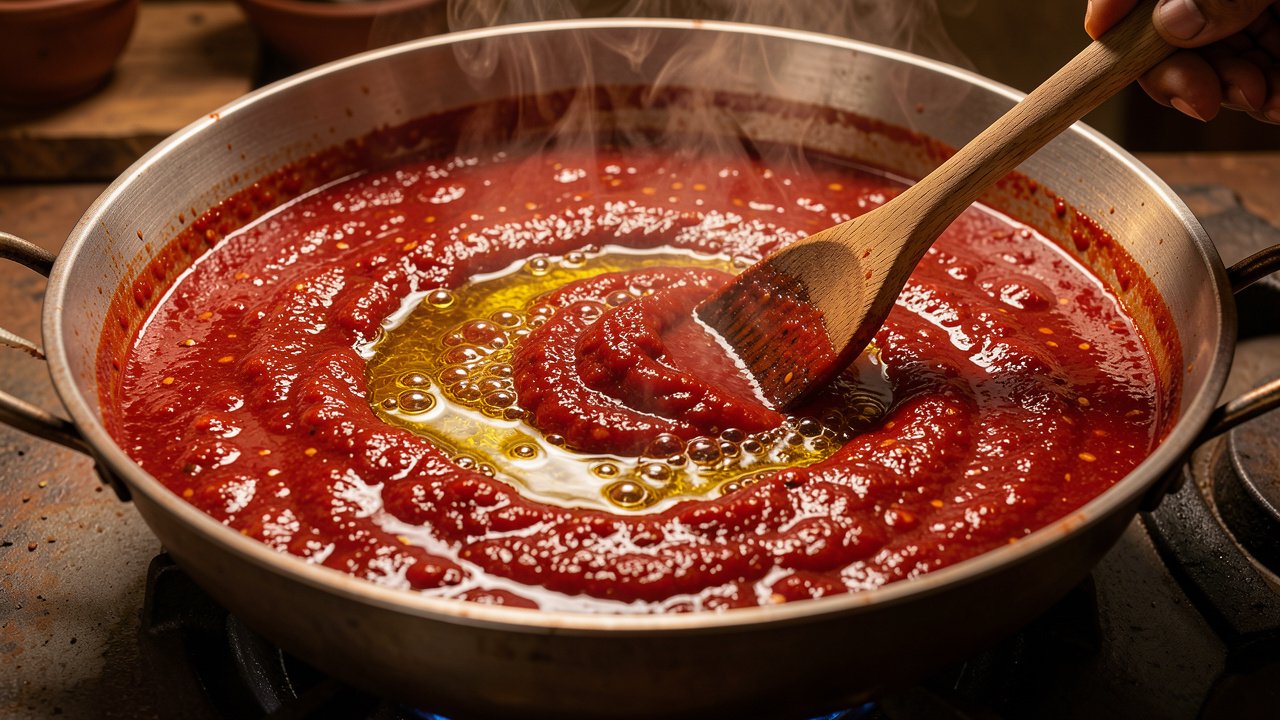
Pour the reduced pepper puree into the pot and stir in the curry powder, thyme, and bay leaves. Fry on medium, stirring often so the bottom never scorches, for 20 to 30 minutes. The color deepens from bright to brick-red, and you will see the oil break free and begin to float clear on top; that is the sign it is done.
Add the Chicken and Stock
Nestle the par-cooked chicken into the fried base and pour in the reserved stock. Season with the crumbled seasoning cubes and a little salt, then stir gently to coat the chicken. Cover and simmer for about 15 minutes so the chicken soaks up the pepper flavor and the stew thickens.
Finish and Serve
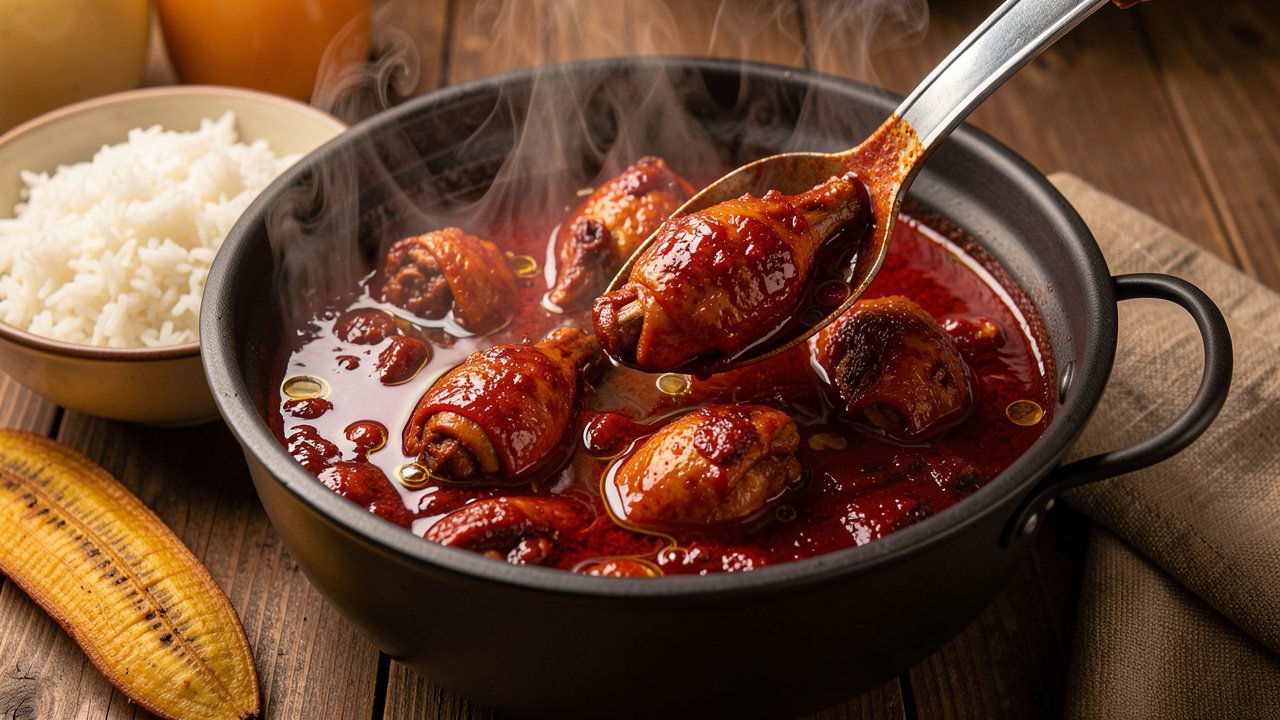
Uncover and let the stew simmer a few minutes more until the oil rises bright and clear to the surface and the sauce clings to the chicken. Taste and adjust the salt and heat, fish out the bay leaves, and serve hot over rice, yam, or plantain with the red oil spooned generously over the top.
Chef’s Tips From Real Kitchen Testing
Boil the blended puree down before it ever touches oil. Driving off the water first is what lets the base fry instead of boil, and it keeps the hot oil from spitting across your stove.
Fry low and patient, not fast and hot. The deep red color and roasted flavor come from 20 to 30 minutes on a steady medium flame, stirred so the bottom never catches and scorches.
You know it is done when the oil floats clear and bright on top. That rising oil is the signature of ata dindin and the proof the raw pepper edge has fully cooked out.
Recipe Variations
Serving Suggestions
- Fluffy white rice to soak up the red oil
- Boiled yam or sweet fried plantain (dodo)
- Soft eba, amala, or pounded yam
- A simple side of boiled eggs or steamed greens
Nutrition Facts
| Nutrient | Amount per serving |
|---|---|
| Calories | 380 |
| Protein | 24 g |
| Carbohydrates | 14 g |
| Fat | 26 g |
| Saturated Fat | 5 g |
| Fiber | 4 g |
| Sugar | 8 g |
| Sodium | 820 mg |
Values are estimates per serving and vary with the exact protein, oil amount, and brands you use.
Make-Ahead Tips
The fried pepper base is made for cooking ahead and only improves overnight as the flavors settle. Fry it fully through the point where the oil rises clear, cool, and refrigerate. When you are ready to eat, reheat the base, add your freshly par-cooked protein and stock, and finish the simmer so the meat never overcooks.
Storage, Freezing & Reheating
Common Mistakes to Avoid
Troubleshooting
Stew too sour or sharp? It needs more frying time. Keep it on a low flame until the oil separates and rises, and a small pinch of sugar or a little extra fried onion will round out the edge.
Oil not rising to the top? The puree still holds too much water. Keep frying patiently on medium until it thickens further and the oil breaks free and floats clear; this is the whole point of dindin.
Too spicy? Stir in more fried blended tomato, or drop in a peeled whole potato to simmer and absorb some heat, then lift it out before serving.
A Note on Nigerian Cooking
Obe ata dindin comes from the Yoruba kitchens of southwestern Nigeria, and its name is a plain description of the method. In Yoruba, obe means stew and ata means pepper, while dindin means fried. Put together, it is simply “fried pepper stew”, and the frying is exactly what sets it apart from a quicker boiled sauce. It is the mother base behind so many Nigerian meals, ladled over rice, yam, beans, and plantain across the week.
The dish it is most often confused with is obe ata lile, the lighter boiled pepper stew. Where ata lile is cooked down more simply and stays fresher and looser, ata dindin is fried low and slow in a generous pool of oil until the oil floats clear on top, which gives it a deeper, roasted, more concentrated flavor. That long fry is the whole distinction. It shares its soul with other pepper-rich stews across the region, like a pot of Nigerian buka stew, the deeply fried bukateria classic.
What keeps obe ata dindin at the center of the Nigerian table is exactly what defines it: it is a patient, flexible base rather than a single fixed dish. Fry the pepper properly, keep the oil generous, and choose whatever protein you like, and you have a stew that tastes of home from Lagos to anywhere a Nigerian kitchen travels.