Algerian Recipes
Torn Flatbread Soaked in a Spiced Lamb and Chickpea Tomato Sauce
Last updated: September 30, 2026
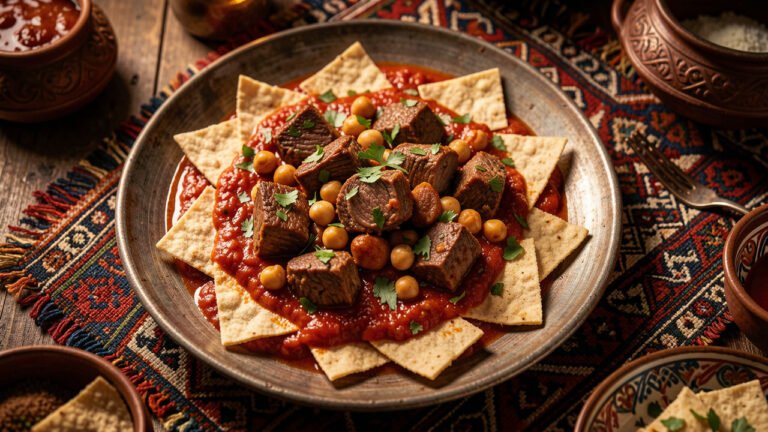
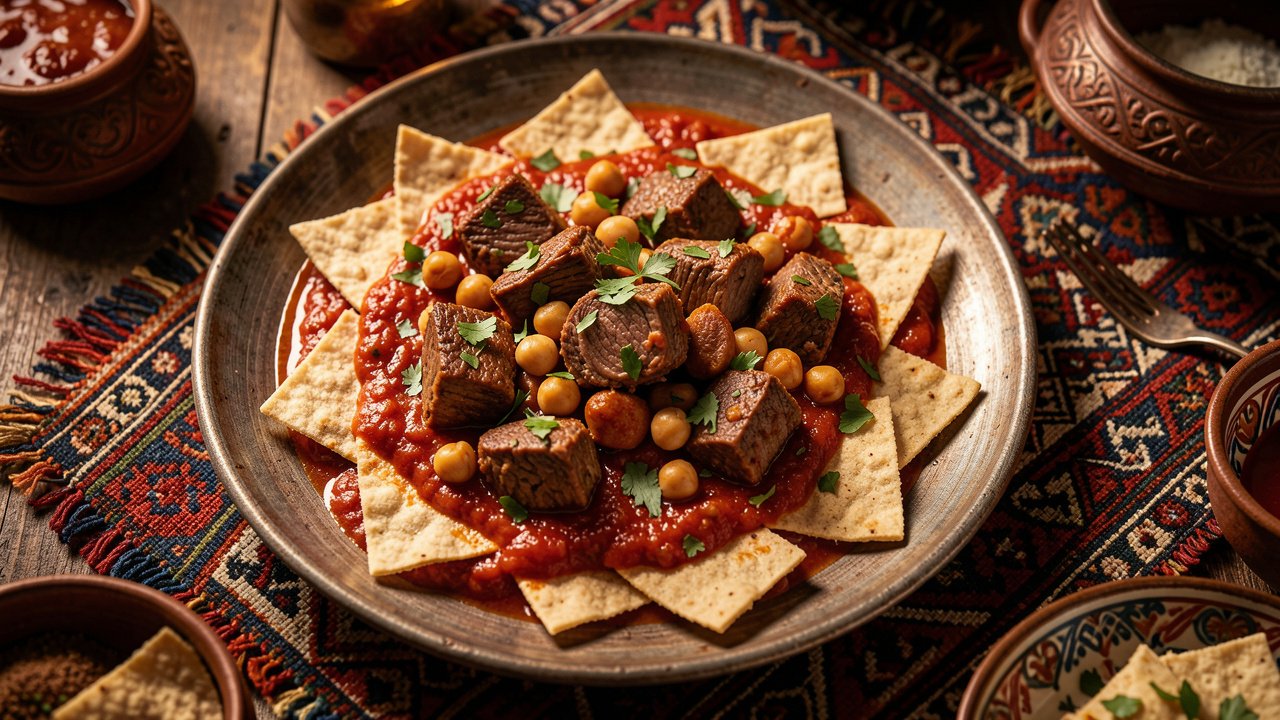
Chakhchoukha is comfort food with a sense of occasion. Thin sheets of semolina flatbread are torn into small pieces, then bathed in a deep, spiced tomato sauce called marqa that has slowly simmered with lamb and chickpeas until the meat is meltingly tender. The bread drinks up the sauce and softens into something between a stew and a savory bread pudding.
It is a dish of two halves that meet at the last minute. You build the marqa on its own, coaxing real depth from tomato, onion, garlic, and warm spices while the lamb braises. Then, just before the table is called, you moisten the torn bread with ladles of hot sauce in stages, mound it up, and crown it with the meat and chickpeas. It is the dish Algerian families reach for to break the fast.
Why This Chakhchoukha Works
Great chakhchoukha is really two things done well: a marqa with deep, layered flavor, and bread moistened to the exact point where it is soft but still holds its shape. Get those two right and everything else takes care of itself. The recipe here builds a slow, full-flavored sauce, then treats the bread on its own timeline so it never dissolves into paste.
The marqa starts the way most good North African cooking does, with onion and garlic softened in olive oil, lamb browned for color, and tomato paste stirred in and toasted for a minute to concentrate its sweetness. Chopped tomatoes, warm spices, and enough water to braise join to make a loose, brothy sauce rather than a thick paste, because the bread needs plenty of liquid to drink up.
Timing is the heart of the method. The lamb braises low and slow until it pulls apart, and the chickpeas simmer alongside so they take on the spice. The torn bread, meanwhile, waits dry and only meets the hot sauce in the final minutes, moistened in stages so it softens evenly instead of turning to mush.
It is also a dish built for a crowd. Chakhchoukha is what Algerian families make to feed a table, especially during Ramadan, so it scales up gracefully. Keep the sauce deep and the bread torn small and even, and you get a platter that tastes of home every single time.
Pro observation: Chakhchoukha is fully halal as written, with no forbidden ingredients. The marqa gets all of its depth from lamb, tomato, garlic, and a warm North African spice blend, so you never miss a thing.
Ingredients
Kitchen Measurement Converter
Need to convert an amount while you measure? Pick a category, enter a value, and the result updates instantly.
Ingredient Notes & Substitutions
The Flatbread
Traditional chakhchoukha uses rougag, a paper-thin semolina flatbread torn into small squares. If you cannot find it, a thin unleavened flatbread, msemen, or even torn soft tortillas make a fair stand-in. What matters is a thin bread that softens quickly without turning gluey.
Lamb
Boneless lamb shoulder is ideal, since its marbling stays tender through a long braise. Bone-in pieces add even more flavor to the marqa if you have the time. Beef chuck works as a swap; just give it the same slow simmer until it pulls apart easily.
Chickpeas
Cooked chickpeas from a can keep this weeknight-friendly and go straight into the sauce. If you soak and cook dried chickpeas, use about three-quarters of a cup dried to yield this amount, and add a little of their cooking liquid for body.
Spices & Tomatoes
Ras el hanout carries the warm North African backbone, rounded out with paprika and caraway. A pinch of cinnamon or a spoon of harissa deepens it further. Chopped tomatoes plus tomato paste build the marqa; a squeeze of lemon at the end lifts everything.
Equipment
- Large heavy pot or Dutch oven
- Steamer basket or couscoussier
- Wooden spoon
- Sharp knife and board
- Ladle
- Wide serving platter
Before You Start
1. Tear the flatbread into small, even pieces. Aim for pieces about the size of a thumbnail. Large or uneven pieces soak at different rates, so you end up with dry knots in the middle and mushy patches at the edges instead of a bread that drinks the sauce uniformly.
2. Cut the lamb into even cubes and pat it dry. A wet surface steams grey instead of browning, and uneven cubes finish at different times. Dry, evenly sized pieces sear properly for a deeper marqa and all reach the pull-apart stage together.
3. Build the marqa deep before it ever touches the bread. The bread is bland by design and tastes only of the sauce it soaks up, so get the spice, salt, and tomato concentration exactly where you want them while the pot is still just sauce.
Step-by-Step Instructions
Chakhchoukha rewards a little planning, so prep everything first. Tear the bread, cube and dry the lamb, drain the chickpeas, and measure the spices so the marqa can simmer undisturbed while the bread waits to be moistened at the very end.
Steam and Tear the Flatbread
If your flatbread is dry, warm it in a steamer basket for a few minutes until pliable. Tear it into small, even pieces about the size of a thumbnail and keep them loosely covered in a wide bowl. Do this ahead, but do not add any sauce yet; the bread stays dry until the final minutes.
Brown the Lamb and Build the Base
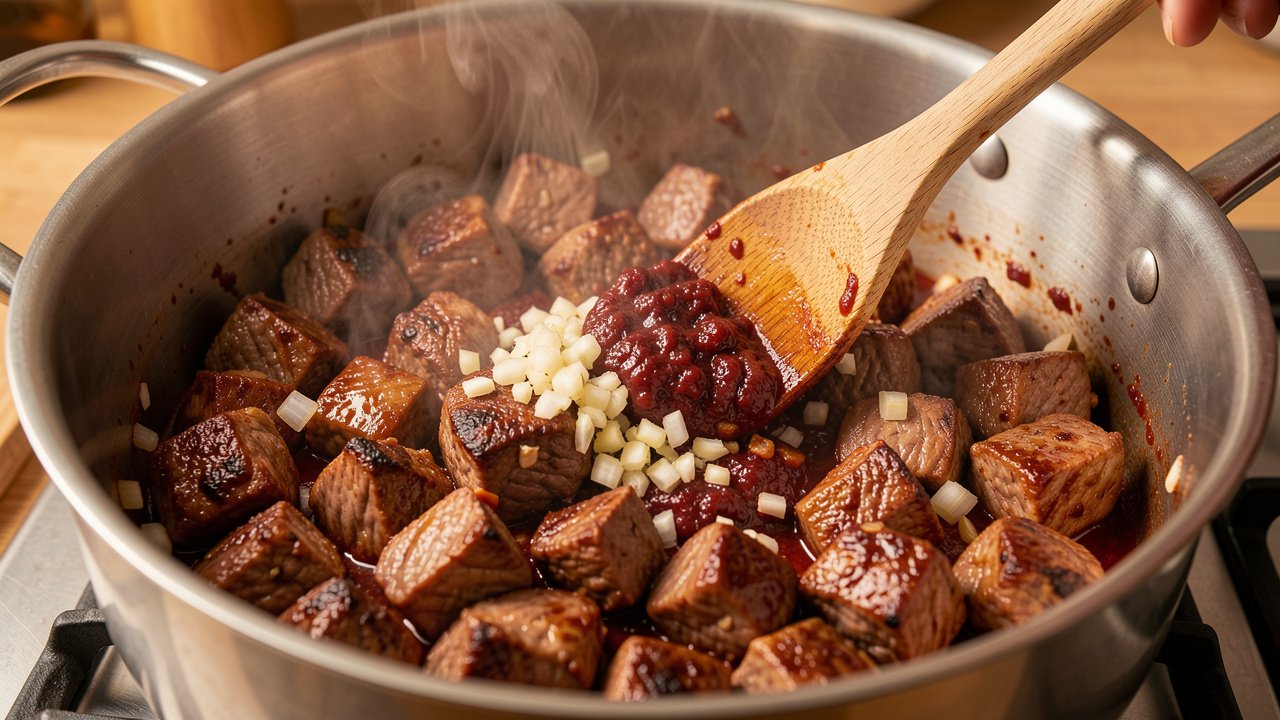
Warm the olive oil in a large heavy pot over medium-high heat. Pat the lamb dry, then brown it in batches until deeply colored on all sides and set it aside. Lower the heat, add the onion with a pinch of salt and cook 4 to 5 minutes until soft, stir in the garlic for a minute, then add the tomato paste and toast it for another minute until it darkens.
Simmer the Marqa
Return the lamb to the pot and stir in the chopped tomatoes, paprika, ras el hanout, caraway, and a good pinch of salt and black pepper. Pour in enough water to just cover the meat, bring to a gentle simmer, then cover and cook low and slow for about 75 minutes, until the lamb is fork-tender. Top up with a little water if it reduces too far.
Add the Chickpeas and Deepen the Sauce
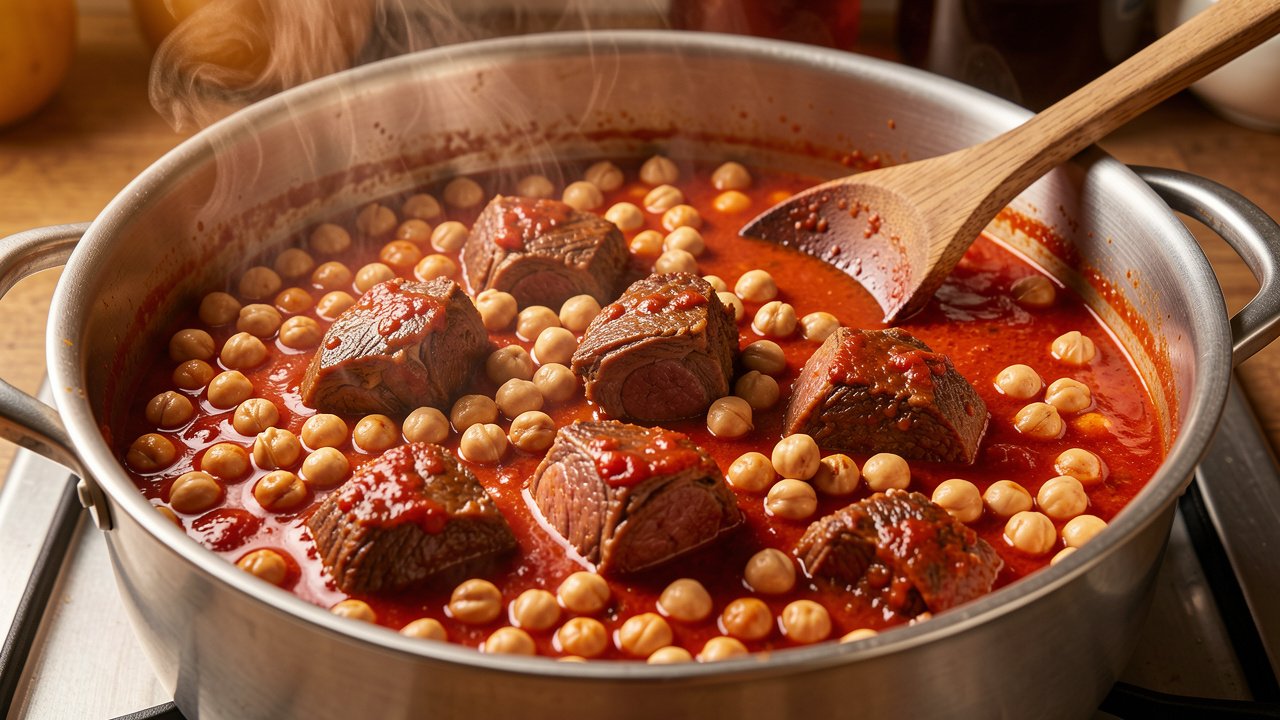
Stir in the drained chickpeas and simmer uncovered for 10 to 15 minutes, so they take on the spice and the marqa reduces into a rich, glossy sauce. Taste now and adjust the salt and spice; the sauce should taste a touch bold on its own, because the plain bread will mellow it once combined.
Moisten the Bread in Stages
Just before serving, ladle hot sauce over the torn bread a little at a time, tossing gently between additions so every piece softens evenly. Add just enough to make the bread tender and glistening, not swimming. Stop while it still has a little bite; it keeps drinking as it sits, so err on the side of less.
Assemble and Serve
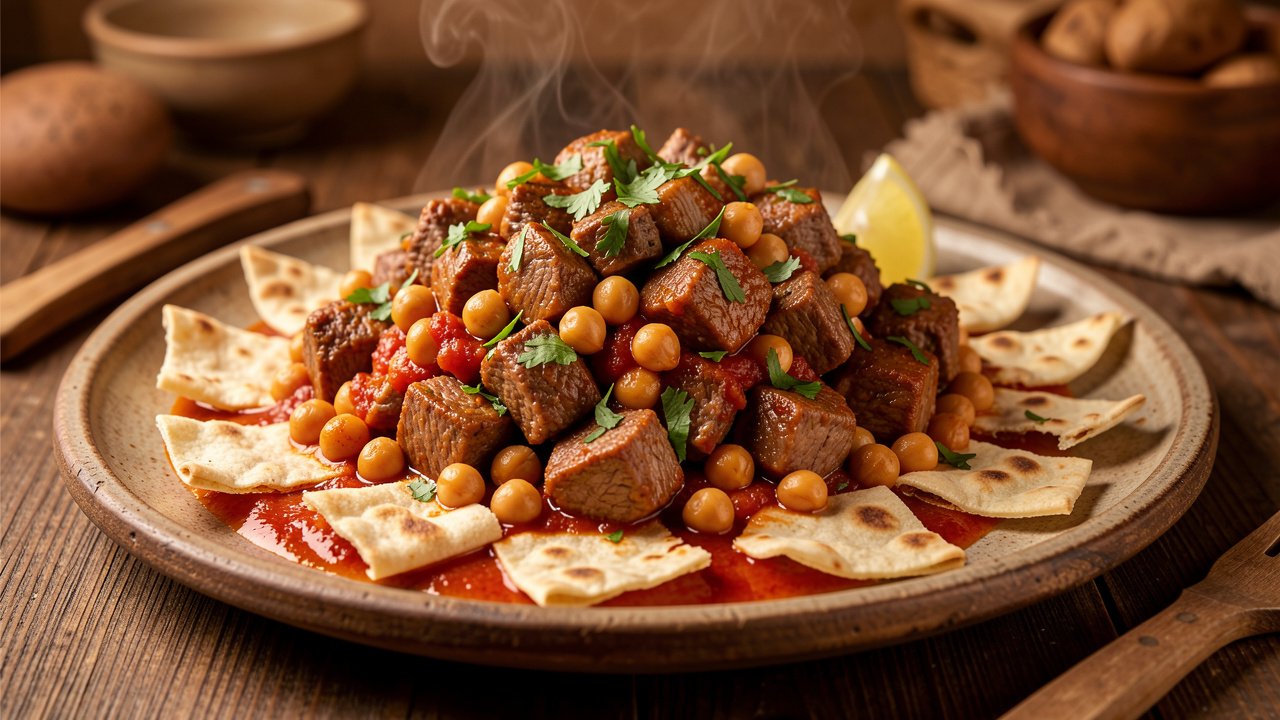
Mound the moistened bread on a wide platter and crown it with the tender lamb and chickpeas. Spoon over a little more of the hot marqa, scatter the chopped cilantro and a squeeze of lemon on top, and serve right away while everything is hot, so the bread stays soft and the sauce stays glossy.
Chef’s Tips From Real Kitchen Testing
Keep the bread and the sauce on separate timelines. Braise the marqa fully first, and only moisten the torn bread in the last few minutes so it softens without collapsing into paste.
Moisten the bread in stages, tossing between ladles of sauce. Adding it all at once floods the bread; a little at a time lets you stop at the perfect soft-but-holding texture.
Season the marqa a touch bolder than tastes right on its own. The plain bread and chickpeas dilute the spice, so a sauce that seems slightly strong lands just right once combined.
Recipe Variations
Serving Suggestions
- A bowl of tart plain yogurt on the side
- Extra hot marqa in a jug for spooning over
- A simple chopped salad of tomato, onion, and cucumber
- Fresh lemon wedges and a little harissa for heat
Nutrition Facts
| Nutrient | Amount per serving |
|---|---|
| Calories | 600 |
| Protein | 38 g |
| Carbohydrates | 52 g |
| Fat | 26 g |
| Saturated Fat | 8 g |
| Fiber | 9 g |
| Sugar | 8 g |
| Sodium | 780 mg |
Values are estimates per serving and vary with the exact cuts and brands you use.
Make-Ahead Tips
The marqa is even better made a day ahead. Cook it through the braise, cool, and refrigerate; the spices deepen overnight. When you are ready to eat, reheat the sauce to a gentle simmer, then tear and moisten the bread fresh, so it is never soggy or overcooked.
Storage, Freezing & Reheating
Common Mistakes to Avoid
Troubleshooting
Sauce too thin? Simmer it uncovered a few minutes longer before you moisten the bread, or stir in an extra spoonful of tomato paste to thicken and deepen it.
Bread turned pasty? It was soaked too heavily or too early. Next time add sauce in smaller stages and serve right after moistening, while it still holds its shape.
Lamb still tough? It simply needs more time. Return it to a low simmer with a splash of water and cover until it pulls apart easily; a hard boil will not fix it faster.
A Note on Algerian Cooking
Chakhchoukha carries its origins in its name, which comes from a Berber word for the torn or crumbled semolina flatbread the dish is built on. It belongs to the Amazigh and Arab home kitchens of eastern Algeria and the high plains, where the paper-thin rougag is made by hand, torn small, and revived with a long-simmered marqa. It is above all a dish of gathering, brought out to feed a full table, and it holds a special place on the Ramadan spread when families break the fast together.
It sits in a big family of North African tomato-and-spice cooking. The dish it is most often confused with is Tunisian chakchouka, but despite the near-identical name they are nothing alike: chakchouka is eggs poached in a tomato and pepper sauce, while Algerian chakhchoukha is torn bread in a lamb-and-tomato marqa, with no eggs at all. It shares a soul instead with the hearty soups and stews of the region, like a bowl of chorba frik or a Libyan sharba, and with tomato staples like matbucha and a pot of bamia.
What has kept chakhchoukha alive across generations is exactly what created it: it is generous, communal, and made to stretch. Build a deep marqa, tear the bread small and even, moisten it at the last minute, and you have a platter that still tastes of an Algerian home.